
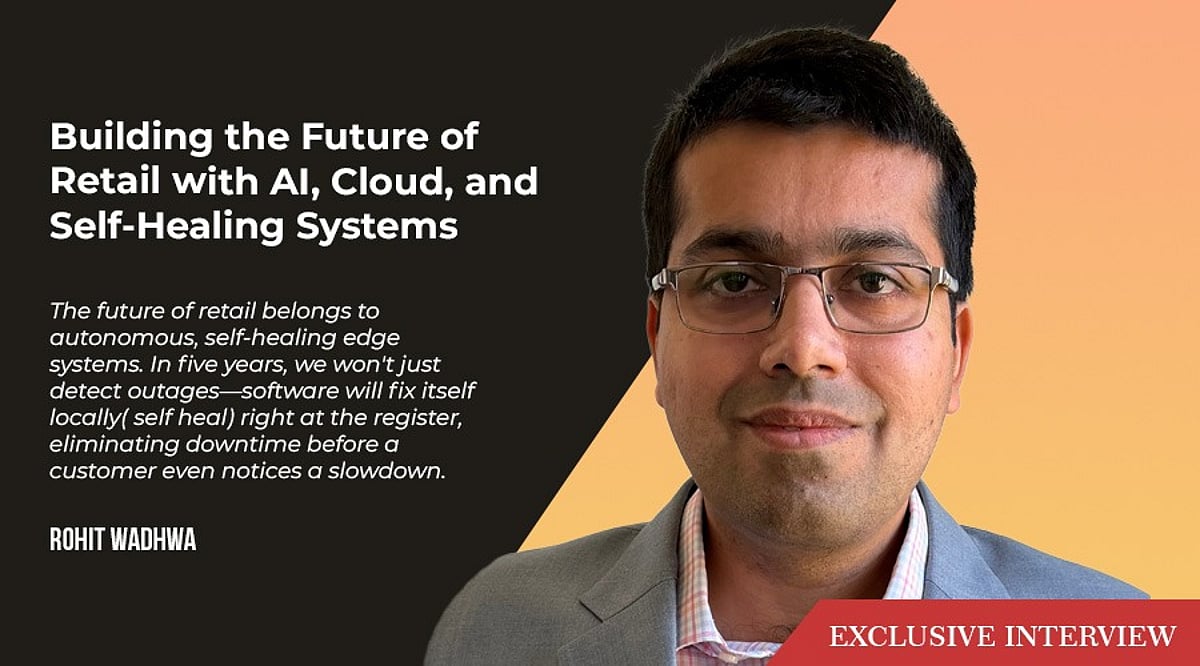
In an era where retail technology is evolving at breakneck speed, senior software engineer and architect Arundhati Kumar offers a deep dive into the innovations driving the future of omnichannel commerce. With over 15 years of experience building high-performance distributed systems across healthcare, banking, and now global retail, Kumar shares insights on how AI, cloud computing, and self-healing infrastructure are transforming the way retailers operate at scale.
The Challenges of Engineering at Massive Scale
When you’re supporting thousands of physical stores with diverse hardware—from legacy cash registers to modern mobile checkout apps—the biggest challenge is ensuring speed and reliability across unpredictable network conditions. Kumar explains that her team had to build custom adapter layers to standardize conflicting data payloads, and engineer systems that can instantly drop into offline mode, saving transactions locally and syncing back to the cloud once connectivity is restored—without losing a single cent of revenue.
Checkout Doctor: A Self-Healing Solution
Inspired by store associates struggling with checkout glitches, Kumar designed Checkout Doctor, an automated real-time diagnostic assistant. Instead of waiting for centralized IT support, the system analyzes local device logs, isolates issues like a scale malfunction or peripheral disconnect, and triggers alerts directly on the associate’s mobile device. This shifts the support model from reactive to proactive, keeping lines moving and reducing customer frustration.
How AI Is Changing Site Reliability Engineering
Large language models (LLMs) are revolutionizing incident detection by reducing the time engineers spend digging through disparate dashboards and logs. Kumar notes that feeding real-time error logs and alerts into an LLM provides on-call engineers with a plain-English summary of the problem, along with context from past incidents. This acts as an intelligent co-pilot, dramatically cutting the time to understand and resolve critical outages.
The Measurable Value of AI in Operations
Rather than fully automated fixes, Kumar believes the greatest value of AI today lies in extreme noise reduction and early triage. In massive enterprise setups, a single microservice failure can trigger cascading alerts. AI correlates telemetry spikes, filters out background noise, and points engineers directly to the root cause. Additionally, machine learning models can flag anomalies—like a spike in database latency—long before a threshold is breached, enabling preemptive patching.
Lessons from Migrating to Cloud-Native Architecture
Leading a migration from legacy relational systems to Azure Cosmos DB, Kumar learned that you can’t simply replicate old database patterns. Her team had to completely rethink data organization, grouping by store numbers and register lanes as partition keys, and accepting some data duplication. This trade-off slashed expensive cross-partition queries, kept cloud costs low, and ensured maximum availability during peak shopping seasons.
Event-Driven Architecture for Real-Time Decisions
Event-driven architecture replaces batch processing by treating every register action—a barcode scan, a voided item, a payment—as an instant event broadcast via websocket servers. This gives business leaders a live view of store performance and enables automated decisions, such as sending an alert to a nearby associate when an unusual pattern is detected during a live checkout session. It catches faults and errors before the customer leaves the lane.
Combating Retail Shrink with Intelligent Automation
Retail shrink is a multi-billion-dollar problem, but Kumar’s approach prevents losses at the checkout lane by linking real-time register logs with overhead camera feeds. If a missed scan or barcode mismatch is detected, the system pauses the session mid-transaction with a friendly nudge to rescan. If the issue persists, a silent notification goes to an associate’s mobile device, protecting the bottom line while keeping the experience seamless.
Emerging Trends: Autonomous Infrastructure
Looking ahead, Kumar is most excited about autonomous, self-healing infrastructure and edge-computed intelligence. Instead of using AI reactively to summarize logs after an outage, future systems will run predictive models directly on local edge hardware—like thousands of retail registers. These models will monitor health and transaction patterns, fixing anomalies autonomously (e.g., routing around a slowing database) long before a human engineer is alerted. This marks the end of the traditional on-call nightmare, turning software into something that actively looks after itself.
Advice for Enterprise AI Implementation
Kumar offers two key pieces of advice for leaders: First, build systems that survive locally without relying on the cloud. Local hardware must be smart enough to run in offline mode, catch errors, and make decisions on the spot. Second, treat AI as an intelligent co-pilot, not a replacement. Use a tiered intervention model: let the system handle noise reduction and simple self-healing, but when complex failures occur, use AI to arm engineers with a plain-English context summary rather than letting the machine guess blindly. Build guardrails that empower teams, not black boxes.
As retail continues to evolve, the integration of AI, cloud, and self-healing systems is not just a trend—it’s a necessity. Kumar’s insights provide a roadmap for building resilient, customer-friendly technology that can handle the demands of modern commerce.