Tag: retail technology

  • The Future of Retail: 2027 Trends in AI, Robotics, and Connected Store Technology

    The Future of Retail: 2027 Trends in AI, Robotics, and Connected Store Technology

    Retail is entering a new phase as artificial intelligence, computer vision, connected stores, and automated commerce become more deeply integrated into the shopping experience. The transformation is no longer limited to online marketplaces — physical stores are also deploying advanced technologies to improve inventory management, personalize customer journeys, and reduce checkout friction.

    Research from Deloitte, Gartner, McKinsey, NRF, KPMG, and Intel points to several technologies that could shape the smart retail landscape in 2027. Here’s a closer look at the trends retailers and consumers should watch.

    Agentic AI Could Change How People Shop

    AI agents are emerging as a new retail channel. These systems can search for products, compare prices, build shopping baskets, and eventually complete purchases on behalf of consumers. Deloitte advises retailers to prepare product data and technology systems for this shift, making information accessible to AI-driven purchasing decisions.

    AI-Driven Personalization

    Artificial intelligence is playing a growing role in how retailers tailor recommendations, promotions, and customer experiences. Deloitte’s 2026 retail outlook found that 67% of surveyed retail executives expected AI-driven personalization capabilities within the following year. The goal is to deliver more relevant experiences based on customer behavior and preferences.

    Computer Vision Enters Physical Stores

    Computer vision is becoming an important part of the smart-store technology stack. Camera-based systems can monitor shelves, understand customer behavior, automate checkout, and identify potential losses. This helps stores respond to situations in real time while reducing manual monitoring for routine retail operations.

    RFID Improves Inventory Tracking

    RFID systems can detect multiple items simultaneously and provide better item-level inventory information. Compared with traditional barcode scanning, RFID offers a more efficient way to track products, stock levels, restocking, and checkout processes.

    Smart Carts and Frictionless Checkout

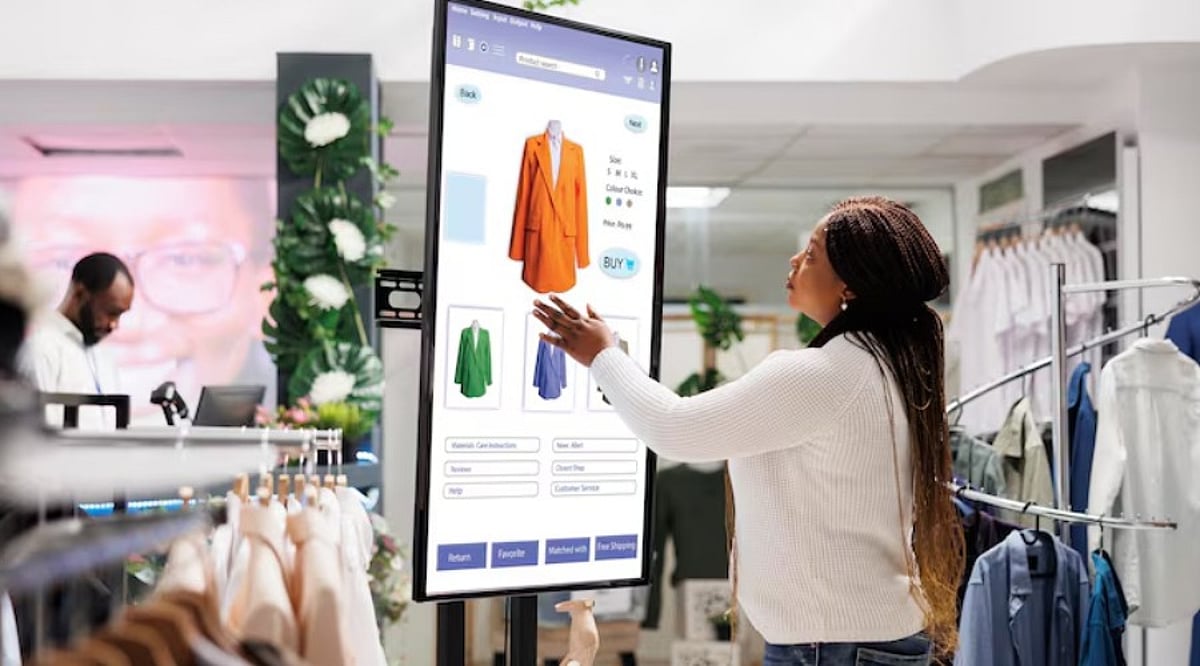
    Smart carts are gaining attention as a way to minimize friction at checkout. These carts combine sensors, displays, payment options, and AI to help customers navigate the store without necessarily passing through a traditional checkout counter. Gartner lists smart carts as a technology retailers should consider.

    Edge Computing Gains Importance

    The growing number of cameras, sensors, AI systems, and connected devices in stores is increasing demand for faster data processing. Edge computing processes data closer to where it is generated, reducing latency and supporting real-time decisions. Intel and Comcast identify edge computing as a key part of connected retail infrastructure.

    Robotics Moves into Retail Operations

    Robots and smart automation are moving beyond warehouses and into day-to-day store tasks, including stock tracking and other frontline jobs. Gartner expects robots and drones to be used more widely across companies, so stores may adopt self-directed systems over the next few years.

    AR Brings Immersive Shopping Experiences

    Augmented reality could play a larger role in shopping. AR lets consumers visualize products, try items virtually, or see how products fit into their surroundings before buying. Shopify identifies 3D and AR shopping experiences as an important part of retail’s digital transformation, especially as retailers bridge digital and physical shopping.

    Stores Become More Connected

    The traditional distinction between online and offline shopping is becoming less important as retailers connect inventory, customer data, fulfillment, and store experiences. McKinsey expects physical stores to increasingly focus on fulfillment, convenience, product validation, and differentiated experiences, transforming them into connected parts of a wider retail network.

    AI Governance and Cybersecurity

    As retailers let AI systems operate more independently, security, privacy, and clear rules become more important. NRF has pointed to dangers tied to agentic AI, while KPMG highlights governance gaps, fragmented technology platforms, and cyber risk as key roadblocks for wider AI use in retail.

    Heading into 2027, retail technology decisions won’t just be about plugging in AI tools. Retailers will need strong back-end systems and guardrails to handle the security and privacy issues that come with more connected stores. Overall, the trends point to a retail world where AI, automation, connected systems, and physical locations continue to blend. Each retailer may choose different tools, but the direction is clear: more tasks become automated, shoppers get more tailored help, and the point of sale becomes less of a hassle.

    FAQ: Smart Retail Trends for 2027

    What are the biggest smart retail trends for 2027?

    AI agents, smart carts, computer vision, RFID, robotics, augmented reality, and connected stores are expected to shape retail experiences.

    How could AI agents change shopping?

    AI agents could search products, compare prices, build shopping baskets, and eventually complete purchases automatically for consumers.

    What role will computer vision play in retail?

    Computer vision can monitor shelves, understand customer behavior, support automated checkout, and help retailers identify potential losses.

    Why are smart carts becoming important?

    Smart carts combine sensors, displays, payment systems, and AI, helping shoppers navigate stores while reducing checkout friction.

    Will physical stores remain important in 2027?

    Yes. McKinsey expects stores to increasingly focus on fulfillment, convenience, product validation, and differentiated shopping experiences.
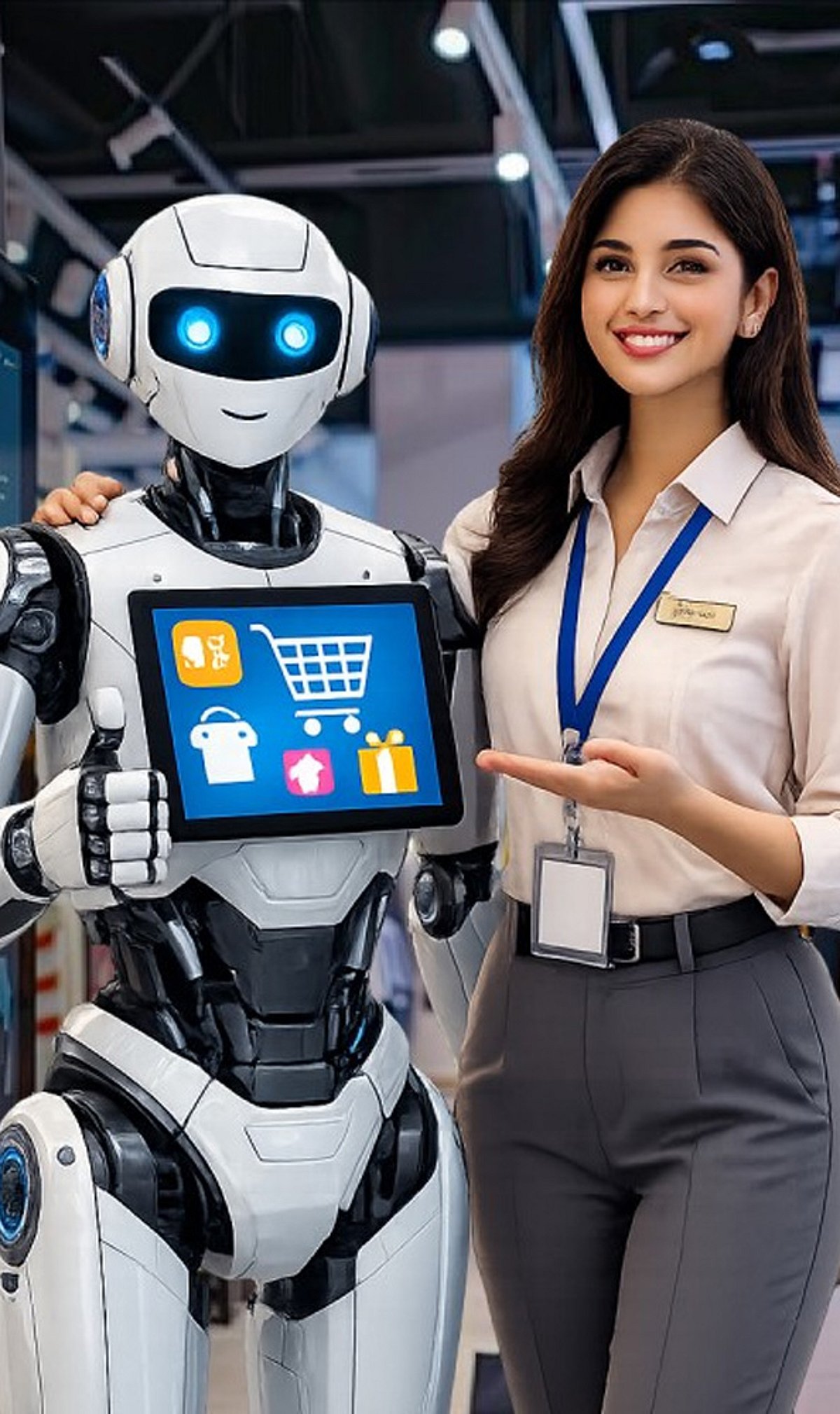
  • AI Shopping Assistants Transform Product Comparison: How They Work and Why Shoppers Love Them

    AI Shopping Assistants Transform Product Comparison: How They Work and Why Shoppers Love Them

    Online shopping used to mean opening multiple browser tabs, manually comparing spec sheets, and scrolling through hundreds of reviews. That process is changing fast. AI shopping assistants now handle most of the legwork, letting shoppers describe what they want in plain language and receive a shortlist within seconds. From tools built into ChatGPT and Gemini to dedicated retail assistants like Amazon’s Rufus, this shift is reshaping how people discover and compare products online.

    How AI Shopping Assistants Compare Products

    An AI shopping assistant combines natural language understanding with access to large, real-time product databases. Instead of typing a short keyword like “running shoes,” a shopper can describe something specific, such as “trail shoes under $150 for wide feet that handle wet roads well.” The assistant then reads through structured product data, price listings, and verified reviews to match those exact requirements. According to McKinsey’s ConsumerWise survey, 62 percent of consumers have already used AI to compare brands, models, prices, or reviews while shopping — showing this behavior has moved well past early adopters.

    Review Synthesis Makes Comparison Faster

    One of the most useful features is the ability to turn thousands of scattered reviews into a short, readable summary. Rather than reading through pages of comments, a shopper gets a quick breakdown of common pros and cons across verified buyers. This addresses a real problem: fake or misleading reviews have long made comparison shopping harder than it should be. By pulling only from verified purchase data, assistants give a more honest picture of how a product actually performs, cutting down the guesswork that used to come with trusting online reviews blindly.

    From Browsing to Describing

    Traditional shopping relied on filters, categories, and keyword searches, putting the burden of comparison entirely on the shopper. AI assistants flip that model. A person can simply describe their situation — like needing a warm coat for a cold winter — and the assistant narrows down options based on material, price, and delivery timelines. Adobe Analytics reported that AI-referred traffic to retail sites grew 138 percent year over year as of May 2026, a clear sign that more shoppers are starting their search inside a chat window rather than a search bar.

    Why This Shift Benefits Everyday Shoppers

    The biggest advantage is time saved and better decision confidence. Bain reported that 30 to 45 percent of U.S. consumers now use generative AI for product research and comparison, and Adobe’s own consumer survey found that 85 percent of people who tried AI shopping assistants said it improved their experience. Beyond convenience, these tools reduce the anxiety of picking the wrong product, since the comparison work now happens instantly instead of over multiple browsing sessions spread across days.

    What This Means for Brands and Retailers

    This shift also changes what brands need to focus on. Assistants can only recommend products they can clearly understand, which means clean, structured product data matters more than ever. A brand with strong pricing and good reviews can still lose visibility if its product information is not easy for an AI system to read and compare. This has pushed many e-commerce brands to rework how they present specifications, pricing, and reviews, since ranking well in traditional search no longer guarantees a spot in an AI-generated shortlist.

    AI shopping assistants have turned product comparison from a time-consuming chore into a quick conversation, letting shoppers describe what they need and get a trustworthy shortlist within seconds. As adoption grows across major platforms, this shift is fast becoming the new starting point for how people shop online.

    Frequently Asked Questions

    How do AI shopping assistants compare products?

    They read structured product data, pricing information, and verified reviews, then match all of it against a shopper’s specific requirements, like budget or size, to generate a shortlist.

    Are AI shopping assistant recommendations trustworthy?

    Most reputable assistants pull only from verified purchase data and real-time pricing, which makes recommendations more reliable than manually sifting through unverified reviews. Still, it helps to double-check final details before buying.

    Which platforms currently offer AI shopping assistants?

    ChatGPT Shopping, Google Gemini, Perplexity, and Amazon Rufus are among the most widely used AI shopping assistants right now, each pulling from slightly different data sources.

    Do AI shopping assistants cost anything to use?

    Most consumer-facing assistants, like those built into ChatGPT or Amazon, are free to use for shoppers. Businesses that build dedicated shopping assistants for their own stores may pay for the underlying technology.

    Can AI shopping assistants complete a purchase?

    Some advanced assistants now support this, handling checkout and even comparing shipping across multiple retailers. However, most assistants today are still focused mainly on research and comparison rather than completing transactions.

  • Retail Revolution: 7 Ways AI Will Transform Shopping by 2026

    Retail Revolution: 7 Ways AI Will Transform Shopping by 2026

    The Future of Retail Is Intelligent

    Artificial intelligence is quickly moving from the background to the center of retail. By 2026, AI will shape how shoppers discover, evaluate, and buy products both online and in stores. Here are seven major ways AI is changing shopping.

    1. AI Shopping Agents Are Reinventing Search

    Shoppers no longer need to wade through endless search results. Instead, they can describe what they need in plain language, and AI agents will compare products, prices, reviews, and availability—and even help complete the purchase.

    2. Shopping Becomes Deeply Personal

    AI studies browsing history, past orders, stated preferences, and real-time activity to recommend products that truly fit each customer. Offers and bundles now adjust per shopper, making every visit feel unique.

    3. Virtual Try-Ons Build Buyer Confidence

    Augmented reality and AI allow shoppers to see how clothes, glasses, makeup, and other products will look before they buy. This makes online shopping more interactive and reduces the fear of buying the wrong item.

    4. AI Predicts What Stores Need

    Smart inventory systems process sales data, seasons, weather, promotions, and local demand to forecast what each store will need. Retailers can avoid empty shelves and minimize costly excess stock.

    5. Pricing Becomes Dynamic in Real Time

    AI tracks demand, competitor pricing, inventory, and market signals to adjust prices and promotions on the fly. That helps retailers stay competitive while offering deals that matter to shoppers.

    6. Smart Stores Bring AI into the Physical World

    Computer vision, smart carts, RFID tags, and mobile checkout are upgrading brick-and-mortar locations. These tools improve product discovery, track inventory, shorten queues, and make store operations smoother.

    7. AI Assistants Act Like Digital Store Staff

    Chatbots and voice assistants answer questions about products, pricing, delivery, returns, and availability in seconds. Shoppers get instant help without waiting for a human representative.

    Beyond Assistance: The Rise of Agentic Commerce

    The next major shift is AI moving from suggestion to action. Shopping agents can search, compare, build carts, and, in some cases, finalize purchases—while also handling tracking and post-purchase support. For retailers, success will depend on strong data, reliable AI tools, and human backup for complex needs. The shopping journey is becoming more automated every day, and the brands that adapt will lead the next era of retail.

  • Infosys and Crocs Forge 10-Year AI-Powered IT Transformation Deal

    Infosys and Crocs Forge 10-Year AI-Powered IT Transformation Deal

    Infosys, a global leader in AI-first business consulting and technology services, has signed a ten-year strategic agreement with Crocs, Inc., the innovative casual footwear brand. The collaboration aims to modernize Crocs’ core business and IT systems using Infosys’ AI-first platforms, simplifying operations, reducing costs, and enabling scalable growth.

    As consumer expectations rise and the retail landscape evolves rapidly, Crocs is investing in a resilient digital backbone. Infosys will deliver scalable solutions across enterprise IT and business operations, breaking down silos, unifying data, and enabling real-time, insight-driven decision-making.

    “As our organization reimagines its IT landscape, we sought a collaborator who could combine deep domain expertise with a commitment to innovation and operational excellence,” said Tom Britt, CIO of Crocs, Inc. “By leveraging Infosys’ proven delivery frameworks and advanced automation capabilities, we will optimize operations, reduce costs, and scale responsibly.”

    Karmesh Vaswani, EVP & Global Head of Consumer, Retail & Logistics at Infosys, added, “The retail industry is at an unprecedented inflection point. Crocs is making a bold commitment to digital transformation. Our AI-first approach will drive purposeful performance improvements, unlock AI value across Crocs’ global operations, and accelerate profitable growth.”

    The initiative will help Crocs address key industry challenges: rising costs, inconsistent processes, and the need for agility. Standardized operations will enable the company to better respond to evolving consumer and market demands.

    Headquartered in Broomfield, Colorado, Crocs, Inc. (NASDAQ: CROX) is a world leader in innovative casual footwear, with brands including Crocs and HEYDUDE, sold in over 85 countries. Infosys (NSE, BSE, NYSE: INFY) employs over 325,000 people and serves clients in 59 countries.

  • 7 Must-Read Retail Newsletters and News Sites for Executives

    7 Must-Read Retail Newsletters and News Sites for Executives

    Retail leaders benefit from trusted, curated industry sources over broad business news. The right newsletters provide strategic insights across retail operations and technology. A focused reading stack supports faster, better-informed decisions.

    What Makes a Retail Source Worth an Executive’s Time

    Not every retail publication earns a spot in a leader’s inbox. The strongest sources share a few traits: editorial reputation built over years, a readership drawn mostly from senior retail roles, consistent publishing schedules, and analysis that moves past headlines into operational implications. Coverage should span physical retail, e-commerce, payments, logistics, and policy. The seven sources below meet that standard.

    Seven Retail Sources Built for Leadership Reading

    Retail Dive: Best for Daily Retail News

    Retail Dive moves fast, but speed alone isn’t why executives keep it in their inbox. The reporting ties each story back to something practical—what it means for store operations, e-commerce, merchandising decisions, and technology budgets. It works well as a daily habit.

    Retail Week: Best for Retail Strategy

    Retail Week earns its subscription price with proprietary research and deep market data. For leaders watching the UK and European retail scene, this is one of the few sources built specifically for that view.

    NRF SmartBrief: Best for Retail Policy News

    Backed by the National Retail Federation, NRF SmartBrief focuses on upcoming legislation, trade policy, and regulatory shifts. Reading it regularly means fewer surprises when policy changes hit a P&L statement.

    Retail TouchPoints: Best for Retail Technology

    This source lives at the intersection of customer experience and retail technology. It covers omnichannel strategy, digital transformation, and how brands rethink the path from browsing to purchase. Leaders responsible for customer engagement find more useful detail here than in general retail coverage.

    Modern Retail: Best for DTC and E-commerce

    Direct-to-consumer brands often lack serious attention from legacy retail media. Modern Retail fills that gap, following DTC players alongside older retailers adapting to change. The result is a clearer picture of where new retail models are heading.

    RetailWire: Best for Retail Expert Insights

    News is only half of what RetailWire offers. The other half is industry debate. Professionals weigh in on the same stories from different angles, revealing more than a straight news report would. It’s about seeing how retail leaders actually think.

    Retail Brew: Best Weekly Retail Newsletter

    Not every executive has time for long-form analysis daily. Retail Brew delivers the week’s key retail news in a format built to be read quickly, staying conversational without turning shallow.

    Retail News vs General Business News

    General outlets like Reuters or Fortune cover retail, but it’s one story among many. Retail-specific publications go deeper into merchandising, supply chains, store operations, and consumer behavior. Reuters is useful for the bigger economic picture; Retail Dive or Retail TouchPoints are better for figuring out what that picture means for a retail business next week. Read both for a fuller view.

    Final Thought

    Retail media is getting shorter, more curated, and tied closer to real-time data. Leaders who start reading with intent now will be ahead when that shift plays out fully. A tighter mix does more: one daily briefing for speed, one deep-analysis source for strategic thinking, and one specialist publication that matches the leader’s market. The difference isn’t how much gets read, but how deliberately it’s chosen.

  • How AI and Self-Healing Systems Are Revolutionizing Retail Technology

    How AI and Self-Healing Systems Are Revolutionizing Retail Technology

    In an era where retail transactions exceed $1 billion in volume, senior software engineer and architect Arundhati Kumar shares insights from over 15 years of building high-performance distributed systems. Her journey, from modernizing Fannie Mae’s mortgage platforms to leading global retail technology, reveals how AI, cloud, and self-healing infrastructure are redefining the shopping experience.

    From Finance to Retail: A Leap in Scale

    Kumar’s transition from banking to retail meant moving from secure, precise transactions to a flood of real-time data from thousands of physical stores. Today, she leads cross-functional teams designing omnichannel point-of-sale applications for one of the world’s largest retailers. The key challenge: ensuring software runs fast and reliably across legacy registers and modern mobile apps, even with unpredictable network connections.

    Checkout Doctor: Bridging the Visibility Gap

    Inspired by register glitches that stalled checkout lines, Kumar created Checkout Doctor—an automated diagnostic assistant that analyzes local device logs in real time. When a scale or peripheral fails, it instantly alerts associates via mobile devices, shifting support from reactive to proactive. This self-healing approach keeps lines moving and reduces downtime.

    AI in Site Reliability Engineering

    Large language models (LLMs) are transforming incident management by providing plain-English summaries from error logs, cutting down time to diagnose outages. Kumar emphasizes that AI delivers the most measurable value in noise reduction and early triage—correlating telemetry spikes to pinpoint root causes before thresholds are breached.

    Cloud Migration Lessons

    Leading a migration from legacy SQL to Azure Cosmos DB, Kumar learned that you can’t copy-paste old database mindsets. Rethinking data organization around partition keys like store numbers and lanes, and accepting eventual consistency, reduced costs and improved availability during peak shopping seasons.

    Event-Driven Architecture and Loss Prevention

    Event-driven architecture replaces batch processing with instant event streams via websocket servers. This enables real-time visibility and automated decisions—such as pausing a checkout when a barcode mismatch is detected, and prompting associates to intervene. Such techniques help combat the multi-billion-dollar challenge of retail shrink.

    The Future: Autonomous Infrastructure

    Kumar is most excited about predictive workflow integrity, where machine learning models on edge devices autonomously fix anomalies—like routing around a slowing database—before humans even see an alert. Her advice to leaders: build systems that survive locally without cloud dependency, and treat AI as a co-pilot, not a replacement for human intuition.

  • Revolutionizing Retail: How AI, Cloud, and Self-Healing Systems Are Reshaping the Industry

    Revolutionizing Retail: How AI, Cloud, and Self-Healing Systems Are Reshaping the Industry

    In an era where retail technology is evolving at breakneck speed, senior software engineer and architect Arundhati Kumar offers a deep dive into the innovations driving the future of omnichannel commerce. With over 15 years of experience building high-performance distributed systems across healthcare, banking, and now global retail, Kumar shares insights on how AI, cloud computing, and self-healing infrastructure are transforming the way retailers operate at scale.

    The Challenges of Engineering at Massive Scale

    When you’re supporting thousands of physical stores with diverse hardware—from legacy cash registers to modern mobile checkout apps—the biggest challenge is ensuring speed and reliability across unpredictable network conditions. Kumar explains that her team had to build custom adapter layers to standardize conflicting data payloads, and engineer systems that can instantly drop into offline mode, saving transactions locally and syncing back to the cloud once connectivity is restored—without losing a single cent of revenue.

    Checkout Doctor: A Self-Healing Solution

    Inspired by store associates struggling with checkout glitches, Kumar designed Checkout Doctor, an automated real-time diagnostic assistant. Instead of waiting for centralized IT support, the system analyzes local device logs, isolates issues like a scale malfunction or peripheral disconnect, and triggers alerts directly on the associate’s mobile device. This shifts the support model from reactive to proactive, keeping lines moving and reducing customer frustration.

    How AI Is Changing Site Reliability Engineering

    Large language models (LLMs) are revolutionizing incident detection by reducing the time engineers spend digging through disparate dashboards and logs. Kumar notes that feeding real-time error logs and alerts into an LLM provides on-call engineers with a plain-English summary of the problem, along with context from past incidents. This acts as an intelligent co-pilot, dramatically cutting the time to understand and resolve critical outages.

    The Measurable Value of AI in Operations

    Rather than fully automated fixes, Kumar believes the greatest value of AI today lies in extreme noise reduction and early triage. In massive enterprise setups, a single microservice failure can trigger cascading alerts. AI correlates telemetry spikes, filters out background noise, and points engineers directly to the root cause. Additionally, machine learning models can flag anomalies—like a spike in database latency—long before a threshold is breached, enabling preemptive patching.

    Lessons from Migrating to Cloud-Native Architecture

    Leading a migration from legacy relational systems to Azure Cosmos DB, Kumar learned that you can’t simply replicate old database patterns. Her team had to completely rethink data organization, grouping by store numbers and register lanes as partition keys, and accepting some data duplication. This trade-off slashed expensive cross-partition queries, kept cloud costs low, and ensured maximum availability during peak shopping seasons.

    Event-Driven Architecture for Real-Time Decisions

    Event-driven architecture replaces batch processing by treating every register action—a barcode scan, a voided item, a payment—as an instant event broadcast via websocket servers. This gives business leaders a live view of store performance and enables automated decisions, such as sending an alert to a nearby associate when an unusual pattern is detected during a live checkout session. It catches faults and errors before the customer leaves the lane.

    Combating Retail Shrink with Intelligent Automation

    Retail shrink is a multi-billion-dollar problem, but Kumar’s approach prevents losses at the checkout lane by linking real-time register logs with overhead camera feeds. If a missed scan or barcode mismatch is detected, the system pauses the session mid-transaction with a friendly nudge to rescan. If the issue persists, a silent notification goes to an associate’s mobile device, protecting the bottom line while keeping the experience seamless.

    Emerging Trends: Autonomous Infrastructure

    Looking ahead, Kumar is most excited about autonomous, self-healing infrastructure and edge-computed intelligence. Instead of using AI reactively to summarize logs after an outage, future systems will run predictive models directly on local edge hardware—like thousands of retail registers. These models will monitor health and transaction patterns, fixing anomalies autonomously (e.g., routing around a slowing database) long before a human engineer is alerted. This marks the end of the traditional on-call nightmare, turning software into something that actively looks after itself.

    Advice for Enterprise AI Implementation

    Kumar offers two key pieces of advice for leaders: First, build systems that survive locally without relying on the cloud. Local hardware must be smart enough to run in offline mode, catch errors, and make decisions on the spot. Second, treat AI as an intelligent co-pilot, not a replacement. Use a tiered intervention model: let the system handle noise reduction and simple self-healing, but when complex failures occur, use AI to arm engineers with a plain-English context summary rather than letting the machine guess blindly. Build guardrails that empower teams, not black boxes.

    As retail continues to evolve, the integration of AI, cloud, and self-healing systems is not just a trend—it’s a necessity. Kumar’s insights provide a roadmap for building resilient, customer-friendly technology that can handle the demands of modern commerce.