
Tag: roadmap

  • AI Learning Roadmap: From Beginner to Advanced Skills in Four Stages

    AI Learning Roadmap: From Beginner to Advanced Skills in Four Stages

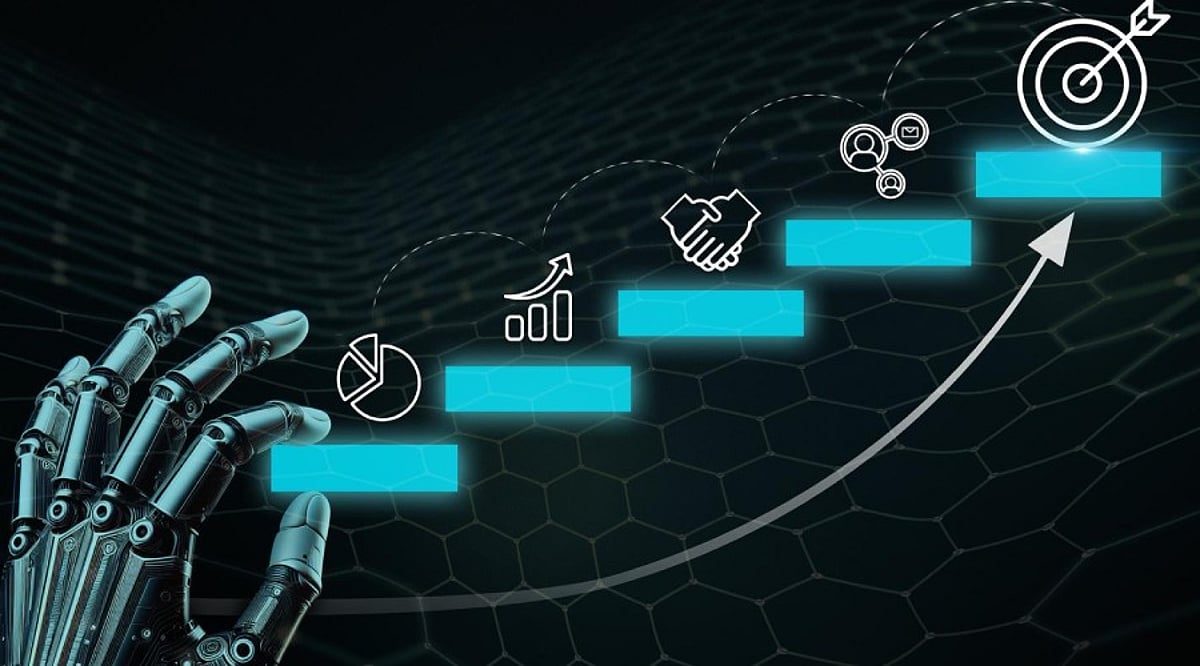
    An AI learning roadmap is a staged path that moves learners from basic literacy to advanced specialization. Rather than a random collection of courses, it provides a sequence where each level builds on the previous one. With AI skills increasingly demanded in entry-level roles, following the right progression is more important than simply accumulating knowledge.

    The Four Stages of an AI Learning Roadmap

    Stage 1: Building AI Literacy (Weeks 1–4)

    This foundation stage covers what large language models do, why they hallucinate, the difference between a model and an application built on it, and basic data and AI ethics. Employers value the ability to choose the right AI tool and verify its output over deep technical expertise. Free resources like Google’s AI Essentials, Anthropic’s documentation, and Andrew Ng’s introductory courses are excellent starting points. The goal is to be able to explain in plain terms what a model does and where its output needs a second check.

    Stage 2: Applying AI in Real Workflows (Months 2–4)

    Once the basics are set, hands-on use begins. Prompt engineering is part of this stage, but the real skill is workflow design: breaking tasks into steps, providing the right context, checking output, and automating repetitive parts. Building a pipeline that pulls data, summarizes it with AI, and flags anomalies for review is a practical achievement. A few finished workflows carry more weight than a certificate.

    Stage 3: Moving Into AI Engineering (Months 4–10)

    This is where technical depth starts. Python and SQL come first, then statistics, classical machine learning, neural networks, embeddings, and finally retrieval-augmented generation (RAG) and LLM-based applications. Each step supports the next. Learners should become comfortable with a major deep-learning framework like PyTorch or TensorFlow. Fast.ai’s practical deep learning course, DeepLearning.AI specializations, and Kaggle competitions provide strong open resources and a public portfolio.

    Stage 4: Choosing an Area of Specialization (Year 1 and Beyond)

    The field is too wide for anyone to cover all of it. This stage focuses on picking a problem to master, such as MLOps, AI security, multimodal systems, or agentic AI. Stanford’s 2026 Index shows agentic AI mentions in U.S. job postings grew over 280% in one year. Specialization turns general fluency into a defensible skill set. Advanced ability is measured by the complexity of problems solved, not the number of frameworks known.

    Why Sequence Matters

    The biggest risk in learning AI is not falling behind but learning the wrong things in the wrong order. Skipping stages explains why some self-taught learners can describe transformers but cannot ship a working chatbot. A roadmap ensures that each level builds a foundation for the next, turning scattered knowledge into practical, demonstrable skills.

    Final Thought

    The roadmap itself will shift as AI capabilities evolve—agentic AI barely existed as a hiring category two years ago. What stays fixed is the order: literacy, application, engineering, specialization. Learners who follow that sequence build something they can point to and explain, not just a list of finished courses.

  • Building a People-First Digital Transformation Roadmap: Key Phases and Strategies for Enterprise Success

    Building a People-First Digital Transformation Roadmap: Key Phases and Strategies for Enterprise Success

    Digital transformation in 2026 has reached a critical juncture: expectations are higher than ever, yet execution consistently falls short. According to Gartner’s 2026 CIO survey, 94% of CIOs anticipate major changes to their plans within 24 months, but only 48% of digital initiatives meet or exceed business targets. The gap is not ambition or investment—it’s the lack of a disciplined roadmap that turns strategy into sequenced, accountable execution.

    Why Most Transformation Roadmaps Fail

    The most common failure occurs when digital transformation is treated as a mere IT upgrade. Assigned solely to the CIO or IT department, it becomes a technology implementation rather than a holistic business change. Another error is rolling out new platforms without redesigning the processes around them—new tools on old workflows rarely deliver efficiency gains. Many companies also fail to measure ROI at intermediate stages, leaving them blind to course corrections needed mid-implementation.

    The Five Phases of an Effective Roadmap

    A strong roadmap breaks the journey into sequenced phases:

    1. Maturity Assessment: Evaluate people, process, technology, and data. Most enterprises still run 400+ fragmented applications and legacy ERP systems from the early 2000s—this baseline is essential.
    2. Strategy Definition: Align technology investments with business goals and define clear metrics.
    3. Early Execution (90-Day Quick Wins): Build momentum with small, visible successes.
    4. Infrastructure Modernization: Move to cloud-native architecture and zero-trust security.
    5. AI and Automation Integration: Embed AI into core workflows across finance, operations, and customer service.

    Governance and Ownership Determine Success

    The clearest differentiator between successful and stalled transformations is ownership. Effective roadmaps are collectively owned by the CEO, CIO/CTO, COO, CFO, and CHRO—shared accountability, not one executive’s burden. Gartner research shows CIOs who tie technology initiatives to measurable financial outcomes are 25% more likely to outperform peers, though only a third consistently do so.

    The 2026 Shift: From AI Pilots to Operational Integration

    The biggest change in roadmaps this year is the move away from isolated AI experiments that never leave pilot phases. Enterprise AI adoption has doubled year-over-year, reaching 24% in 2026 (up from 12%). Digital leaders are nearly four times more likely to achieve this maturity. Experts note that 2026 marks the year AI adoption shifts from a technical problem to a people and management challenge—roadmaps now explicitly address these human factors.

    Building a Roadmap That Survives Reality

    Winning companies in 2026 share three traits: a senior executive responsible for results (not just delivery), a dedicated budget for change management and training separate from technology, and quarterly review cadences from day one. The lesson: success comes not from bigger goals but from the discipline to execute them.

    Why This Matters

    As organizations accelerate AI adoption and cloud modernization, successful digital transformation depends on leadership, governance, and employee adoption—not technology alone. A structured roadmap reduces risk, improves ROI, and ensures transformation initiatives deliver lasting business value.