
Tag: robotics

  • Recent Breakthroughs from MIT Schwarzman College of Computing: AI, Robotics, and Beyond

    Recent Breakthroughs from MIT Schwarzman College of Computing: AI, Robotics, and Beyond

    The MIT Schwarzman College of Computing continues to drive innovation across artificial intelligence, robotics, quantum computing, and more. Here are some of the latest developments from MIT researchers and affiliates.

    LLMs Help Robots Understand Vague Instructions

    MIT researchers have developed a method using two language models: one to clarify user instructions and another to ignore irrelevant details, enabling robots to perform chores in homes and factories more effectively. (June 26, 2026)

    Exploring How Curiosity-Driven Science Fuels American Success

    Scientific American highlights the history and future of America’s scientific engine, featuring promising young scientists and icons at MIT and beyond. (June 25, 2026)

    Summer 2026 Recommended Reading from MIT

    Enjoy these recent titles from Institute faculty and staff. (June 25, 2026)

    Improving Speed and Energy-Efficiency of AI Agents

    A new system called Murakkab optimizes the design and deployment of multistep workflows that power AI applications. (June 25, 2026)

    Exploring the Societal Impacts of AI

    During the AI and Society Forum, leading MIT researchers examined critical questions about AI’s influence on employment and democracy. (June 23, 2026)

    New Chip Helps Tiny Robots Navigate Complex Environments

    Researchers combined an efficient algorithm with dedicated hardware to rapidly generate 3D maps for navigation using minimal memory and power. (June 23, 2026)

    QS Ranks MIT World’s No. 1 University for 2026-27

    Ranking at the top for the 15th consecutive year, the Institute also places first in 12 subject areas. (June 17, 2026)

    In Game Theory, Generalists Sometimes Win Out Over Specialists

    Researchers show that for certain kinds of games, an overlooked class of algorithms performs much better than expected. (June 17, 2026)

    Could AI Tell You Where You Left Your Keys?

    A new spatial memory system for robots efficiently captures details about the objects they see while exploring their environment. (June 17, 2026)

    The Tenured Engineers of 2026

    Ten faculty members have been granted tenure in five units across MIT’s School of Engineering. (June 15, 2026)

    How to Create Distinguishable States for Quantum Systems

    Researchers establish key insights for reading and writing information for quantum sensing, communication, computing, and control. (June 15, 2026)

    When It Comes to Predicting People’s Preferences, It Pays to Consider “The Power of Three”

    MIT researchers provide a major upgrade to the nearly century-old idea of random utility models. (June 11, 2026)

    MIT Affiliates Win 2026 Hertz Foundation Fellowships

    The fellowships in applied sciences, engineering, and mathematics recognize doctoral students pursuing solutions to pressing challenges. (June 11, 2026)

    To Study How Chips Really Work, MIT Researchers Built Their Own Operating System

    A new kernel called Fractal gives researchers a cleaner view of what’s happening inside a processor, and has already surfaced previously unknown behavior in Apple’s M1. (June 10, 2026)

    3D-Printed Devices Could Streamline Production of Drug-Delivery Microparticles

    The cost-effective devices, built in hours, leverage electrospray emitter technology to efficiently produce three-layered particles at scale. (June 9, 2026)

  • MIT School of Engineering: Latest Research and Innovations (June 2026)

    MIT School of Engineering: Latest Research and Innovations (June 2026)

    The MIT School of Engineering continues to drive breakthroughs across multiple disciplines. Recent highlights include a hands-on photonics boot camp at MIT.nano for community college students, new AI systems that help robots interpret vague instructions, and a chip design that enables tiny robots to navigate complex environments with minimal power. Researchers have also developed a computer model for more material-efficient bridges and buildings, and a new approach to modeling metal alloys at the atomic level. In game theory, generalists have been shown to outperform specialists in certain scenarios. The Institute was ranked the world’s No. 1 university by QS for the 15th consecutive year, and MIT’s Initiative for New Manufacturing is gaining momentum. Ten engineering faculty members were granted tenure in 2026. These stories reflect the breadth and impact of engineering research at MIT.

  • Trump’s Beijing Visit Opens Door for Nvidia Chips to Power Chinese AI Giants

    Trump’s Beijing Visit Opens Door for Nvidia Chips to Power Chinese AI Giants

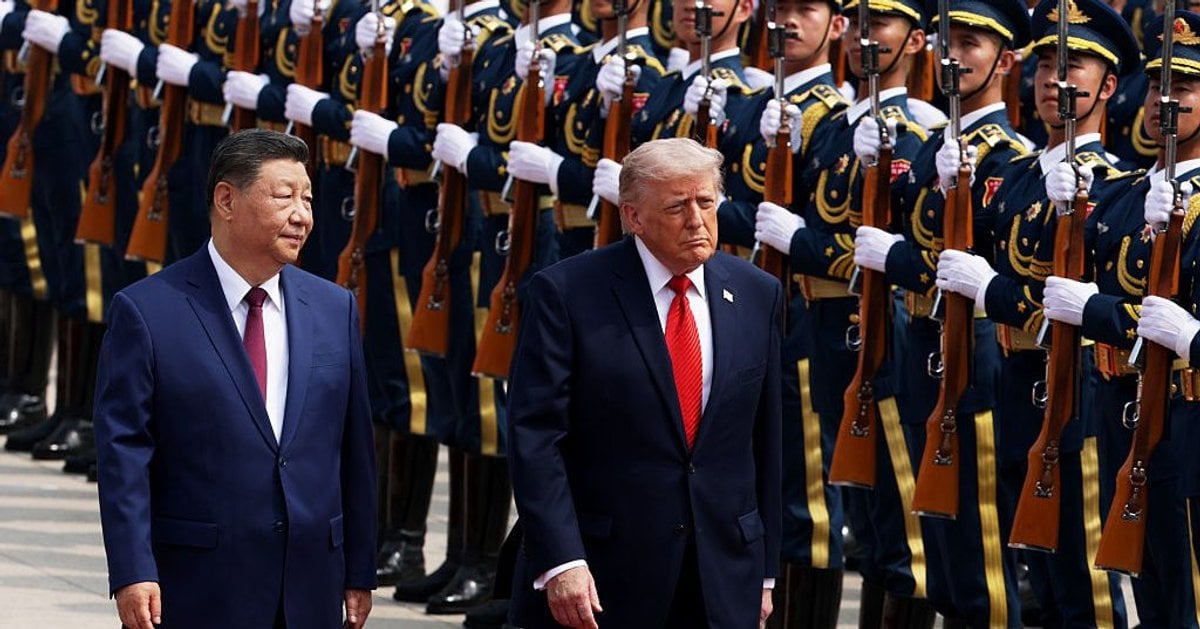
    President Donald Trump’s recent trip to Beijing, accompanied by a delegation including Apple’s Tim Cook, Tesla’s Elon Musk, and Nvidia’s Jensen Huang, signals a potential reset in AI supply chains between the U.S. and China. The visit, focused on high-level negotiations, suggests a shift toward a transactional relationship where American semiconductor technology may support Chinese AI development.

    At the state banquet, President Xi Jinping emphasized the possibility of common cause between China’s rejuvenation goals and America’s “Make America Great Again” agenda. Behind the diplomatic smiles, however, lies a strategic contest: Beijing’s “new productive forces” policy prioritizes AI, advanced manufacturing, and robotics, exemplified by the transformation of Chongqing into a high-tech megacity. Yet China remains dependent on U.S.-controlled high-end accelerators for training frontier AI models.

    Nvidia’s Jensen Huang’s presence is particularly significant. After years of tightening export controls, Washington is now considering case-by-case reviews for advanced AI compute exports. Nvidia is positioned to ship H200 data center GPUs to major Chinese cloud platforms like Alibaba and Tencent. Although not the top-tier Blackwell-class chips, the H200 is roughly six times more powerful than any domestic Chinese alternative, potentially compressing AI training timelines for Chinese firms.

    For Apple and Tesla, the mission focuses on supply chain stability and regulatory clarity. Apple aims to protect its manufacturing resilience and consumer base, where the iPhone 17 has seen success. Tesla views China as crucial for production and full self-driving deployment, seeking clarity on mapping and data policies to compete with domestic rivals.

    This delegation represents an attempt to reverse the 20% decline in U.S. imports from China. By leveraging tech leaders for targeted access—compute in exchange for market openness and IP protections—both nations may enter a more transactional era. The true metrics of success will be the speed of Chinese hyperscalers building H200 clusters and the regulatory wins secured by Apple and Tesla. Ultimately, compute access shapes capability, and this visit suggests a hard-nosed accommodation that keeps the AI flywheel spinning on both sides of the Pacific.

  • MIT Media Lab: Cutting-Edge Research at the Intersection of Technology, Innovation, and Society

    MIT Media Lab: Cutting-Edge Research at the Intersection of Technology, Innovation, and Society

    The MIT Media Lab stands as one of the world’s premier research institutions, where technology, media, science, and art converge to drive innovation. With a diverse portfolio spanning from augmented reality in healthcare to the ethics of AI, the Lab continuously pushes boundaries to solve real-world challenges.

    Augmented Reality System Could Make Medical Ultrasounds Easier to Interpret

    MIT researchers have designed an ultrasound system that creates a real-time 3D representation of the object being imaged, offering clearer visualization for medical professionals. This breakthrough could transform diagnostic procedures and improve patient outcomes.

    The Consequences of Relying on AI for Accurate News

    A Media Lab study reveals that, much like how GPS has weakened our navigation skills, AI can make us worse at detecting fake news. The research underscores the critical need for human oversight in information consumption.

    The Crucial Human Component in Computing and AI

    The MIT Ethics of Computing Research Symposium brought together experts and researchers working at the heart of ethical and social impact in technology. Discussions emphasized the importance of embedding human values into technological development.

    Startup Helps Retailers Track Their Products in Real-Time

    Using technology invented at MIT, Cartesian’s system for locating objects could also find uses in manufacturing, logistics, and robotics. This innovation enables real-time inventory management and operational efficiency.

    PATH to Boost AI Training and Career Opportunities for Industry-Aligned Jobs

    MIT RAISE and Georgia State University announce an initiative to connect universities, community colleges, industry, and government to expand industry-aligned AI training and career pathways, addressing the growing demand for skilled AI professionals.

    Tod Machover Receives George Peabody Medal for Contributions to Music and Technology

    The George Peabody Medal is the highest honor bestowed by the Peabody Institute of the Johns Hopkins University, recognizing Machover’s pioneering work at the intersection of music and technology.

    Alejandro Aravena Urges School of Architecture and Planning Graduates to Lead with Kindness, Honor the Truth

    “All of us need to feel we are valuable,” says the SA+P Commencement speaker, a Chilean architect and Pritzker Prize winner. His address inspired graduates to prioritize humanity in their professional endeavors.

    Eleven from MIT Accept 2026 Fulbright Awards

    This year, over half of MIT’s Fulbright applicants won awards. The current students and alumni will embark on research projects and teaching abroad in 2026-27, fostering global collaboration.

    Bridging Real Human Movement with Digital Technology

    MIT.nano Immersion Lab collaborates with Emerson College students to advance the art of virtual production, combining human motion capture with digital environments for creative applications.

    Mapping the Ocean with Autonomous Sensors

    Founded by Ravi Pappu SM ’95, PhD ’01, Apeiron Labs is deploying low-cost ocean sensors to improve storm forecasts, detect endangered species, and more, demonstrating how technology can aid environmental monitoring.

    Celebrating Dorm-to-Market Social Entrepreneurship at MIT

    At the 25th IDEAS Social Innovation Incubator Showcase and Awards, 21 student-led ventures joined 1,200 alumni-led ventures tackling the world’s most pressing problems through social entrepreneurship, highlighting MIT’s commitment to impact-driven innovation.

    A New Type of Electrically Driven Artificial Muscle Fiber

    Electrofluidic fibers mimic how natural muscle fibers bundle, and could enable compact, silent robotic and prosthetic systems, opening new possibilities in assistive technology.

    Turning Muscles into Motors Gives Static Organs New Life

    A new biohybrid system developed at MIT is the first living implant that uses rewired nerves to revive paralyzed organs, offering hope for patients with organ failure.

    Lasers, Robots, Action: MIT Workshop Explores Raman Spectroscopy

    Participants learn how laser “fingerprinting” can help identify materials in fields ranging from law enforcement to art restoration, showcasing the versatility of spectroscopic techniques.

    Generative AI Improves a Wireless Vision System That Sees Through Obstructions

    With this new technique, a robot could more accurately detect hidden objects or understand an indoor scene using reflected Wi-Fi signals, advancing capabilities in autonomous navigation and security.

  • MIT AeroAstro Department: Pioneering Research in AI, Robotics, and Spaceflight

    MIT AeroAstro Department: Pioneering Research in AI, Robotics, and Spaceflight

    MIT’s Department of Aeronautics and Astronautics (AeroAstro) continues to lead in aerospace engineering and technology. Below are recent highlights from the department, showcasing breakthroughs in robotics, artificial intelligence, quantum systems, and space traffic management.

    LLMs Help Robots Understand Vague Instructions

    Researchers used large language models to help robots interpret ambiguous commands and ignore irrelevant details, improving task performance in dynamic environments like homes and factories. (June 26, 2026)

    Exploring the Societal Impacts of AI

    The AI and Society Forum at MIT brought together leading researchers to discuss critical questions about AI’s influence on employment and democracy. (June 23, 2026)

    New Chip Enables Tiny Robots to Traverse Complex Environments

    A novel chip combining an efficient algorithm with dedicated hardware allows small robots to rapidly generate 3D navigation maps using minimal memory and power. (June 23, 2026)

    QS Ranks MIT World’s No. 1 University for 2026-27

    MIT secured the top spot for the 15th consecutive year, also ranking first in 12 subject areas. (June 17, 2026)

    The Tenured Engineers of 2026

    Ten faculty members received tenure across MIT’s School of Engineering, reflecting excellence in research and teaching. (June 15, 2026)

    Creating Distinguishable Quantum States

    Researchers established key insights for reading and writing information in quantum systems, advancing quantum sensing, communication, and computing. (June 15, 2026)

    New Imaging System Sees Through Murky Waters

    The ‘Sonar-MASt3R’ system combines sonar and visual data to generate real-time 3D maps even in cloudy water, aiding underwater exploration. (June 11, 2026)

    The Crucial Human Component in Computing and AI

    The MIT Ethics of Computing Research Symposium highlighted work at the intersection of ethical and social impact in technology. (June 5, 2026)

    MIGHTY: Open-Source Robot Path Planning

    A new open-source system rapidly produces smooth path plans that cut travel time and avoid obstacles, useful for disaster recovery and delivery. (May 19, 2026)

    Managing Traffic in Space

    Associate Professor Richard Linares develops techniques to help satellites navigate safely in increasingly congested orbits. (April 19, 2026)

    Flying at the Edge of the Stratosphere

    MIT students experience the Earth’s curvature through a reborn AeroAstro introductory course, combining hands-on flight with education. (April 14, 2026)

    These stories represent the breadth of innovation at MIT AeroAstro, from fundamental research to real-world applications. For more details, visit the official MIT News site.

  • BMW Expands Use of Figure 03 Humanoid Robots at Spartanburg Plant to Boost AI-Powered Manufacturing

    BMW Expands Use of Figure 03 Humanoid Robots at Spartanburg Plant to Boost AI-Powered Manufacturing

    BMW is advancing its AI-driven manufacturing strategy by expanding the deployment of Figure AI’s latest humanoid robot, the Figure 03, at its Spartanburg plant in South Carolina. This move builds on earlier trials with the Figure 02 and marks a shift from limited pilot testing to broader integration of humanoid robots in real production environments.

    The company states that the robots are introduced to improve efficiency while reducing physical strain from repetitive factory tasks. The Figure 03, developed by California-based Figure AI, features advanced artificial intelligence, computer vision, and dexterous arms, allowing it to perform tasks requiring precision, agility, and flexibility on the production line. Unlike traditional static industrial robots, the Figure 03 can move around the factory floor, manipulate materials, and work alongside human employees. It is programmed to handle repetitive tasks and adapt to changes in the production process without causing job losses.

    This deployment follows successful trials of earlier Figure robot versions at the Spartanburg plant, where they handled tasks like sheet metal manipulation. Those trials helped BMW assess safe integration into existing workflows while maintaining quality. Insights from the pilot program paved the way for deploying the Figure 03 across additional operations. The technology is intended to support workers by taking over physically demanding and ergonomically challenging jobs.

    BMW’s latest move underscores the growing role of physical AI in automotive manufacturing. Major automakers worldwide are working to deploy humanoid robots capable of performing various factory tasks instead of conventional industrial machines. At BMW, the Spartanburg plant remains a hub for testing production innovations. As AI-powered robot capabilities improve, the company is expected to expand their use while keeping people at the center of manufacturing.

  • Exploring MIT’s Latest Machine Learning Breakthroughs in Robotics and AI

    Exploring MIT’s Latest Machine Learning Breakthroughs in Robotics and AI

    MIT continues to push the boundaries of machine learning with a series of groundbreaking research developments that span robotics, AI efficiency, material science, and more. Recent projects highlight the institute’s commitment to advancing both theory and practical applications.

    In robotics, researchers have developed a system that leverages large language models to help robots interpret vague instructions and focus on crucial details, improving task performance in homes and factories. Another innovation, known as Murakkab, optimizes multistep AI workflows, enhancing speed and energy efficiency. A new low-power chip enables tiny robots to generate 3D maps for navigation with minimal memory and power consumption.

    Beyond robotics, MIT scientists are modeling metal alloys at atomic scales to predict material properties more accurately, while game theory research shows that generalist algorithms can outperform specialists in certain scenarios. A novel spatial memory system allows robots to efficiently remember object locations, and a major update to random utility models—dubbed ‘the power of three’—improves preference prediction accuracy.

    Commercial applications include a startup using MIT technology for real-time product tracking in retail, manufacturing, and logistics. The NSF has renewed support for the MIT-led Institute for Artificial Intelligence and Fundamental Interactions (IAIFI), expanding its second phase with increased funding and broader ambitions. Researchers are also teaching AI agents to ask better questions using the game Battleship, and a new dataset called ChartNet enhances vision-language models’ ability to interpret charts.

    Additional milestones include MIT economist Whitney Newey receiving the Erwin Plein Nemmers Prize, new AI chemistry models designed by Connor Coley, and the appointment of Justin Solomon as associate dean of engineering education. MIT Open Learning launched a universal AI education program, making AI fluency accessible worldwide.

    These achievements underscore MIT’s role as a leader in machine learning, driving innovations that shape the future of technology and science.