Tag: Rupee

  • India’s 7.8% GDP Growth and the 3,300-Point Sensex Drop: Understanding the Disconnect

    India’s 7.8% GDP Growth and the 3,300-Point Sensex Drop: Understanding the Disconnect

    India’s economy grew at a robust 7.8% in the first quarter of fiscal year 2027, but the stock market failed to celebrate. The Sensex, India’s benchmark equity index, lost approximately 3,300 points since August 31, and the Nifty 50 shed nearly 1,000 points. The sharp divergence between macroeconomic strength and market performance has left many investors puzzled.

    According to the Ministry of Statistics and Program Implementation, the Q1 FY27 GDP data was released on August 31. On that day, the Sensex closed at 76,957 and the Nifty at 24,080. By the morning of September 25, the Sensex had fallen to around 73,675 and the Nifty to about 23,075.

    Seema Srivastava, Senior Research Analyst at SMC Global Securities, attributed the market correction to three major factors: global macro pressure, crude oil and currency stress, and premium valuations combined with domestic sector pressures.

    Global Macro Pressure

    Rising US Treasury yields have made dollar-denominated assets more attractive, prompting global investors to shift funds away from emerging markets like India. This “risk-off” environment has created sustained liquidity pressure on Indian equities.

    Crude Oil and Currency Stress

    Geopolitical tensions have pushed crude oil prices higher. As a major importer of crude, India faces increased inflation and external balance pressures. A weakening rupee further raises the cost of dollar-denominated energy imports, adding to the strain.

    Premium Valuations and Domestic Sector Pressures

    Corporate earnings expectations have been hit across several key sectors. IT companies are contending with softer Western technology spending, while banks and non-banking financial companies (NBFCs) face higher funding costs. Additionally, investors have been booking profits after strong rallies, especially in stocks where valuations appeared stretched.

    “The market reacted to the classic ‘buy the rumour, sell the news’ dynamic,” Srivastava said, noting that institutional desks trimmed positions following the GDP announcement.

    The market’s response underscores a key distinction: GDP measures recent economic activity, but equities continuously price future earnings, liquidity, and global risk. Analysts expect volatility to persist, linked to crude prices, bond yields, currency movements, and foreign capital flows.
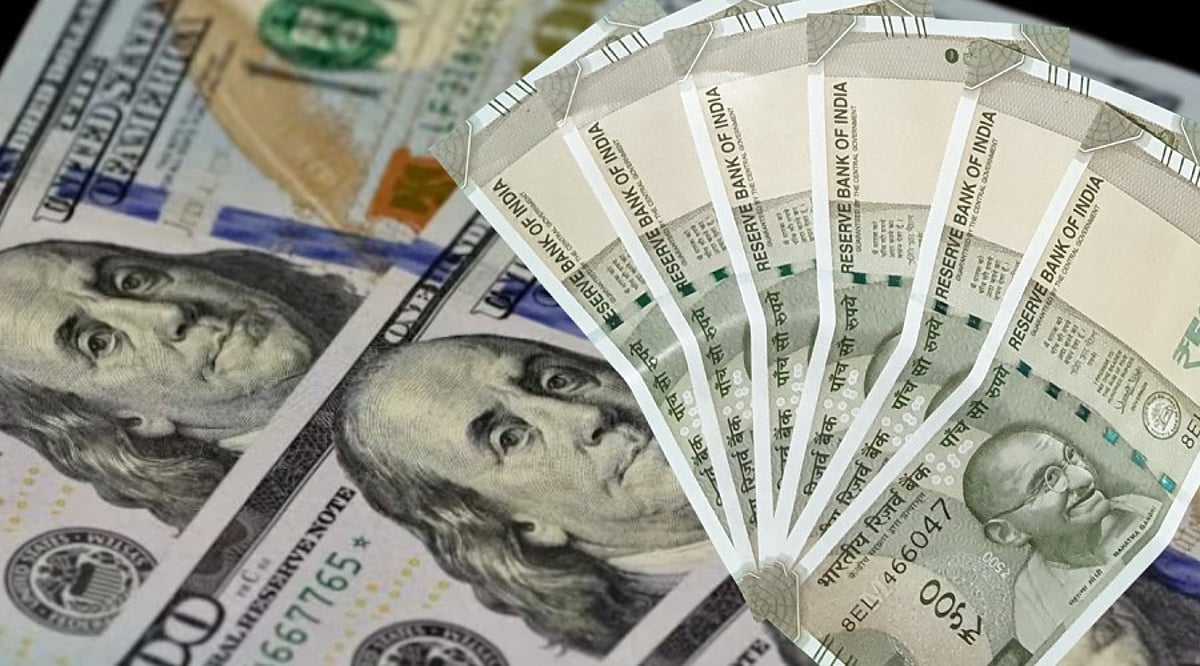

  • India’s Foreign Exchange Reserves Hit Record High of $785.7 Billion After Weekly Surge

    India’s Foreign Exchange Reserves Hit Record High of $785.7 Billion After Weekly Surge

    India’s foreign exchange reserves rose by a record USD 44.9 billion in the week ended September 4, reaching an all-time high of USD 785.7 billion, according to data released by the Reserve Bank of India (RBI) on Friday.

    The sharp increase followed a USD 11.475 billion rise in the previous week, when reserves stood at USD 740.8 billion. The latest weekly addition was the largest ever recorded, driven by stronger foreign-currency inflows under measures introduced by the RBI in June.

    RBI Measures Boost Reserves

    Earlier this year, India’s forex reserves faced pressure as the rupee weakened during the West Asia conflict. The RBI sold dollars in the foreign exchange market to curb sharp currency movements. Total reserves had fallen to USD 666.9 billion in the week ended June 26.

    However, the trend reversed after the central bank introduced concessional foreign exchange swap measures aimed at attracting foreign-currency funds and improving domestic market liquidity. By August 31, the programme had brought in about USD 136.4 billion.

    Foreign Currency Non-Resident Bank (FCNR(B)) deposits accounted for the bulk of these flows. Banks mobilized USD 127.226 billion through the scheme, while overseas foreign-currency borrowings and external commercial borrowings added to the total.

    The RBI launched the FCNR(B) window on June 8 with an initial closing date of September 30, but closed it on August 31 after stating the programme had achieved its objective ahead of schedule.

    Forex Assets Surge

    Foreign currency assets—the largest component of India’s foreign exchange reserves—increased by USD 47.498 billion during the week to USD 648.168 billion, RBI data showed. These assets include currencies such as the euro, pound, and yen, though the RBI reports their value in US dollars, so exchange rate fluctuations can affect the reported value.

    A private bank treasury head commented, “This rise in foreign exchange reserves was expected given the amount of FCNR(B) flow.” The person added, “If we exclude gold, we almost had a USD 48 billion addition to the reserves.”

    Gold reserves moved in the opposite direction, falling by USD 2.594 billion to USD 113.816 billion during the week. Special drawing rights with the International Monetary Fund declined by USD 4 million to USD 18.806 billion, while India’s reserve position with the IMF rose by USD 2 million to USD 4.916 billion.

    India Moves to No. 4

    The latest increase pushed India above Russia to become the world’s fourth-largest holder of foreign exchange reserves, behind China, Japan, and Switzerland, according to Bloomberg data. India’s reserves have increased by about USD 120 billion in the current financial year. Foreign currency assets also recovered sharply from USD 541 billion in the week ended June 26.

    Meanwhile, the rupee remained under pressure despite the reserve boost. It fell for a fourth consecutive session on Friday, September 11, closing at 95.56 against the US dollar, compared with 94.45 in the previous session. Higher crude oil prices and rising US Treasury yields weighed on the currency. Dealers said RBI intervention, including a swap alongside spot intervention, helped the rupee recover some losses.

    Foreign-currency inflows may continue through some RBI facilities. External commercial borrowings and overseas foreign-currency bonds remain eligible under the programme until December 31.

  • BMW India Plans Fourth Price Increase in 2026 as Rupee Weakens and Costs Rise

    BMW India Plans Fourth Price Increase in 2026 as Rupee Weakens and Costs Rise

    BMW Group India is preparing to raise vehicle prices for the fourth time in 2026, driven by the weakening rupee and escalating commodity costs. The luxury automaker has already implemented three price hikes this year, with total increases of up to 5% across its BMW and MINI lineups.

    Hardeep Singh Brar, President and CEO of BMW Group India, confirmed that another price revision is under consideration, potentially as early as next month. “The forex has hit us quite a bit. We have increased prices by 4-5% till now and there’s another one around the corner,” Brar said. He noted that foreign exchange conditions have deteriorated by about 18% since January 2025, putting significant pressure on margins.

    Expanding Local Production to Offset Costs

    Brar made the announcement following the launch of the new BMW 7 Series in India. The flagship luxury sedan is now available with both petrol and fully electric powertrains, including the high-performance BMW i7 M70. Bollywood actor Ranveer Singh unveiled the new models and was introduced as the brand voice for BMW India.

    To mitigate cost pressures, BMW is expanding local assembly. The new BMW i7 will be produced at the company’s Chennai plant, making India the only country outside Germany to locally manufacture the electric luxury sedan. However, the higher-performance i7 M70 will continue to be imported as a completely built-up unit.

    Pricing for the New 7 Series

    The new BMW 740 M Sport is priced at Rs 1.95 crore (ex-showroom), while the electric BMW i7 eDrive 50 xDrive M Sport carries the same ex-showroom price. The top-of-the-range BMW i7 M70 xDrive is priced at Rs 2.65 crore (ex-showroom) and will be imported.

    BMW did not specify the size of the next price increase, but Brar confirmed that another revision remains on the table as the company navigates currency volatility and rising input costs. Deliveries of the new 7 Series are expected to begin in October 2026.

  • Indian Stock Market Tumbles: Sensex Plunges 555 Points as US-Iran Tensions Push Crude Prices Higher

    Indian Stock Market Tumbles: Sensex Plunges 555 Points as US-Iran Tensions Push Crude Prices Higher

    Indian equity markets came under severe pressure on September 8, as escalating hostilities between the United States and Iran in the Persian Gulf drove crude oil prices higher and exacerbated concerns over the weakening rupee. The benchmark Sensex fell 555 points to close at 75,577, while the broader Nifty declined 144 points to end at 23,635.

    The latest decline extends the Sensex’s one-month loss to nearly 3,000 points, or 3.8%, and the Nifty’s drop to 949 points, or 3.9%. Foreign funds continued to offload Indian stocks, adding to the negative sentiment on Dalal Street.

    Foreign Investor Selling Accelerates in September

    Foreign investor activity had been cautious since mid-August, with net purchases of Rs. 2,953 crore from August 10 through the end of the month, according to combined data from NSDL and BSE. However, the trend reversed sharply in September, with foreign funds net selling stocks worth approximately Rs. 12,700 crore so far this month, further pressuring the market.

    Rupee Weakens Amid Risk-Off Mood

    The Indian rupee also remained under pressure, falling 34 paise to close at 94.83 per U.S. dollar, despite a record $136 billion inflow through the Reserve Bank of India’s special dollar deposit scheme for NRIs. According to Dilip Parmar of HDFC Securities, the rupee fell in a risk-off environment because of high crude oil prices and aggressive dollar buying.

    Market Experts Comment on Rising Tensions

    Ankur Punj, Managing Director at Equirus Wealth, noted that renewed hostility between the U.S. and Iran pushed investors toward a low-risk stance on equity assets. “Mirroring weak global cues, domestic markets extended their losing streak Tuesday amid selling in banking, IT, oil and gas, and realty shares. Increasing tension in West Asia triggered a sharp rise in crude oil prices, while depreciation in the local currency against the dollar also dampened the overall market sentiment,” he said.

    Investors Lose Rs. 35,000 Crore in a Single Day

    The sharp decline in market values resulted in losses of approximately Rs. 35,000 crore for investors on that day. The total market capitalization of BSE stood at Rs. 486.2 lakh crore. Among Sensex stocks, ICICI Bank, HDFC Bank, and Reliance Industries contributed the most to the decline. However, purchases in BEL, Hindustan Unilever, and Adani Ports helped stem further losses.

  • Indian Rupee Slips to 94.95 as Brent Crude Approaches $100 Amid US-Iran Tensions

    Indian Rupee Slips to 94.95 as Brent Crude Approaches $100 Amid US-Iran Tensions

    The Indian rupee fell 21 paise to 94.95 against the US dollar on Wednesday, September 9, 2026. Rising crude prices and escalating US-Iran tensions pressured the rupee during early trading in Mumbai.

    The currency opened at 94.80 before touching 94.95 in the interbank foreign exchange market. Tuesday’s session ended at 94.74, marking an 18-paise decline against the American currency.

    Brent crude climbed 1.41% to USD 99.30 per barrel as tensions raised supply disruption concerns. The Strait of Hormuz remains a major concern for markets tracking global oil supply routes. Anuj Choudhary, research analyst at Mirae Asset Sharekhan, highlighted the pressure on crude prices. “Indian rupee opened lower on escalating geopolitical tensions and surge in crude oil prices,” Choudhary said.

    The analyst expects USD-INR to remain under pressure while crude prices continue moving higher. He expects the USD-INR spot rate to trade between Rs. 94.70 and Rs. 95.15. A weaker dollar could provide some relief if global risk sentiment remains fragile.

    The dollar index slipped 0.03% to 98.76, offering limited support for the rupee.

    Indian equities also opened sharply lower as investors reacted to rising oil and geopolitical risks. The Sensex dropped 500.25 points, while the Nifty declined 129.40 points during early trading. Higher crude prices could increase India’s import bill and intensify inflation concerns. Investors now await inflation data from India and the US for fresh monetary policy signals. Persistent oil pressure could keep the rupee, equities, and broader markets volatile in coming sessions.

  • Indian Rupee Slides 10 Paise to 94.66 Against US Dollar as Crude Oil Prices Surge

    Indian Rupee Slides 10 Paise to 94.66 Against US Dollar as Crude Oil Prices Surge

    The Indian rupee came under pressure in early trade on September 8, falling 10 paise to Rs 94.66 against the US dollar as rising crude oil prices and escalating tensions in the Middle East weighed on investor sentiment. The currency opened at Rs 94.49 at the interbank foreign exchange market before weakening to Rs 94.66.

    This decline follows a 13-paise fall on September 7, when the rupee closed at Rs 94.56 against the dollar.

    Crude Prices Add Pressure

    The latest drop in the rupee came as Brent crude prices climbed towards USD 98 per barrel. Brent futures rose 0.63% to around USD 97.61, driven by concerns over possible disruptions to oil supplies amid escalating US-Iran tensions. Typically, rising oil prices negatively affect the rupee due to India’s heavy reliance on imported oil, as any increase in the country’s import bill leads to higher dollar requirements.

    These developments have raised concerns regarding the transport of energy through the Strait of Hormuz, a critical route for oil shipments. According to Reuters, Brent crude was at about USD 97.49 per barrel on Tuesday.

    Markets Await Key Economic Cues

    Market participants are now watching upcoming inflation data from India and the US for clues about the direction of interest rates and currency markets. The US Federal Reserve’s September 16 policy meeting will also remain a key focus.

    The dollar index stood around 98.80, while analysts expect the rupee to remain range-bound if crude prices stay elevated but RBI support continues.

  • Sensex Surges 776 Points, Nifty Nears 24,000 as Falling Oil Prices Boost Indian Markets

    Sensex Surges 776 Points, Nifty Nears 24,000 as Falling Oil Prices Boost Indian Markets

    Indian benchmark indices rebounded sharply on Monday, snapping a five-day losing streak, as easing crude oil prices and reduced geopolitical tensions lifted investor sentiment. The Sensex rallied 776.01 points, or 1.02%, to close at 76,835.78, while the Nifty ended just shy of the 24,000 mark at 23,995.95, gaining 0.96%. The Bank Nifty also advanced 393.70 points, or 0.69%, and the India VIX eased 8%, signaling a decline in market volatility.

    Broader markets outperformed, with the Nifty Midcap 100 index climbing 1.11% and the Smallcap 100 index jumping 1.31%. A sharp appreciation in the Indian rupee further boosted sentiment, as the currency surged 63 paise to settle at Rs. 95.90 per US dollar.

    Oil Prices Plunge, Easing Inflation Concerns

    The primary driver of today’s rally was a steep decline in global oil prices. Brent crude futures fell 7.93% to $89.11 per barrel, while US West Texas Intermediate (WTI) dropped 7.05% to $83.01 per barrel. The drop in oil prices reduced inflation worries and improved the outlook for corporate margins, particularly for consumer and financial stocks.

    Top Gainers: Consumer and Financial Stocks Lead

    Investor sentiment remained selective, with buying interest concentrated in consumer-facing and financial stocks. Eternal emerged as the top gainer after a strong rally, while IndiGo, Infosys, Bajaj Finance, and Max Health also advanced on optimism surrounding earnings resilience and sector-specific growth prospects.

    Top Losers: Energy Stocks Under Pressure

    On the other hand, energy stocks came under pressure, with ONGC leading the losses as oil prices fell over 7% below $90. HDFC Life traded lower, while banking heavyweights HDFC Bank and Union Bank also witnessed mild selling.

    Middle East Calm Boosts Sentiment

    Market sentiment improved after a temporary pause in hostilities between the United States and Iran appeared to hold. The US military halted two weeks of strikes on Friday as diplomats sought to give peace talks ‘some space.’ Iran has also refrained from military operations against regional targets in recent days and said it would reciprocate following a China-led effort to revive stalled diplomatic talks in Pakistan. The prospect of reduced geopolitical tensions, alongside lower oil prices and gains across Asian markets, helped lift Indian equities.

    Levels to Watch

    Analysts see immediate support around the 23,700 level, while a break below 23,650 could trigger further downside. A decisive close above 24,000–24,130 is needed to improve the near-term outlook. Immediate resistance is 24,000; a sustained break above this could trigger a rally toward 24,200 in the near term.

    Disclaimer: This article is for informational purposes only and does not constitute investment advice. Always conduct your own research before making any investment decisions.

  • Indian Markets Edge Higher: Nifty Holds 24,112, Sensex Gains 150 Points Amid Mixed Global Cues and US-Iran Tensions

    Indian Markets Edge Higher: Nifty Holds 24,112, Sensex Gains 150 Points Amid Mixed Global Cues and US-Iran Tensions

    Indian benchmark indices opened with modest gains on Wednesday, as traders navigated mixed global cues and ongoing US-Iran tensions. The Nifty 50 opened at 24,112, up 34 points, while the Sensex added 150 points. However, the Bank Nifty slipped 60 points in early trade.

    On the previous day, the Sensex rose 130.49 points, or 0.17%, to close at 77,185.43, and the Nifty 50 gained 26.45 points, or 0.11%, to settle at 24,078.50. The rupee opened at Rs. 96.25, nearly unchanged from Wednesday’s close of Rs. 96.26. Domestic institutional investors (DIIs) bought equities worth Rs. 704.93 crore on July 15, while foreign institutional investors (FIIs) turned net sellers, offloading Rs. 735.83 crore.

    Sensex Outlook

    Technically, the Sensex formed a Doji candle on the daily chart, indicating indecisiveness among traders.

    “On the positive side, 77,500 would act as a key resistance zone for traders, while 77,000 remains the crucial support zone for the bulls. Above 77,500, the market could move up to 77,800-78,000. On the flip side, dismissing the 77,000 level could accelerate selling pressure. Below this, the market could retest the level of around 76,300-76,000,” said Shrikant Chouhan, Head of Equity Research at Kotak Securities.

    Nifty 50 Outlook

    The Nifty 50 formed a long doji candle on the daily chart with shadows on both sides, reflecting intraday indecision.

    “Nifty 50 is currently hovering within a narrow range of around 24,200-24,000 levels and is showing a lack of strength to sustain the highs. A decisive move beyond the range could open sharp movement on either side,” said Nagaraj Shetti, Senior Technical Research Analyst at HDFC Securities.

    The sideways movement is expected to continue for the next 1-2 sessions, with support at 24,000 and 23,800 below that. Traders must clear the intraday hurdle of 24,200 to stage a larger breakout toward 24,500-24,600.

    Bank Nifty Outlook

    Bank Nifty has been consolidating on the daily chart over the past few sessions. The index formed a small-bodied candle with an upper wick, highlighting its inability to sustain at higher levels.

    “Going ahead, the immediate support for Bank Nifty is placed in the 57,300-57,200 zone. Any sustainable move below this zone could result in the index extending its weakness towards 56,800, followed by 56,400 in the short term. On the upside, the immediate resistance is placed in the 58,200-58,300 zone,” said Sudeep Shah, Head of Technical and Derivatives Research at SBI Securities.

  • Indian Stock Markets End Flat Amid US-Iran Tensions and Oil Price Surge

    Indian Stock Markets End Flat Amid US-Iran Tensions and Oil Price Surge

    Indian equity benchmarks ended Monday’s session on a mixed note as escalating geopolitical tensions between the United States and Iran sent crude oil prices soaring, fueling inflation concerns and dampening investor sentiment. The Sensex recovered from early losses to close 83 points higher at 77,653, while the Nifty 50 pared its intraday decline to end nearly flat at 24,202.

    Markets opened sharply lower after renewed military exchanges in the Middle East pushed Brent crude nearly 4% higher to around $79 a barrel. The surge in oil prices raised worries about India’s import bill, corporate profitability, and the possibility of prolonged higher interest rates. Weak global cues, a softer rupee, and cautious trading ahead of the first-quarter earnings season added to the pressure.

    Key Market Movers

    Despite the weak start, selective buying in heavyweight stocks helped benchmarks recover. IT stocks led the rebound, with the Nifty IT index surging around 4%. Tata Consultancy Services (TCS) rallied 8% over two sessions after announcing a multi-year AI-powered network transformation deal with ABB. Infosys and HCLTech also gained. ICICI Bank held near Rs. 1,400, while Axis Bank saw mild profit booking.

    Kalyan Jewellers extended its 47% rally after a strong Q1 business update, though analysts flagged elevated valuations. Goodluck India rose nearly 3% on a 2:1 bonus share announcement. Meanwhile, Swiggy slipped over 2% after the FSSAI issued nine notices to its Instamart unit over alleged violations.

    Geopolitical and Global Impact

    Escalating US-Iran tensions triggered a global risk-off sentiment. Brent crude climbed to $78.68 a barrel, and the US dollar strengthened. Japan’s Nikkei fell nearly 2%, and South Korea’s Kospi plunged 9% as SK Hynix tumbled 15% after profit booking. Gold prices dropped more than 1% as rising oil revived inflation fears. The Indian rupee weakened to a one-month low of 95.76 per dollar, though likely RBI intervention limited losses.

    India’s Volatility Index (VIX) surged over 9%, reflecting heightened investor caution. Foreign institutional investors (FIIs) pulled $46 billion from emerging market equities in June, with heavy selling in South Korea and Taiwan tech stocks. However, FIIs trimmed stakes in nearly 280 BSE 500 companies yet some stocks rallied up to 220% in three months.

    Analyst Views and Outlook

    Goldman Sachs turned optimistic on Indian equities, projecting the Nifty 50 to reach 26,500 by June 2027. Axis Direct’s Rajesh Palviya said the near-term trend remains positive as long as Nifty holds above 24,100, with upside targets of 24,350 and 24,550. InvestorAI remains overweight on jewellery, cement, and healthcare, betting on domestic demand resilience. However, it warned that Brent crude above $80 per barrel is the biggest near-term risk, especially if Strait of Hormuz disruptions persist.

    Market participants will closely watch US inflation data due on July 14, Fed Chair Kevin Warsh’s congressional testimony, and further developments in the Middle East for directional cues.