

Tag: San Francisco

  • New York Surpasses San Francisco as Leading US Tech Talent Hub, AI Expansion Fuels Growth

    New York Surpasses San Francisco as Leading US Tech Talent Hub, AI Expansion Fuels Growth

    New York City has overtaken the San Francisco Bay Area as the largest tech talent market in the United States, driven by rapid expansion of AI companies and the workforce supporting them. From 2022 to 2025, New York’s tech workforce grew by more than 30,000 workers; over the same period, San Francisco’s tech workforce shrank by nearly 24,000 workers.

    The shift reflects New York’s expanding role in the technology sector, supported by its diverse industries and proximity to customers, making it an increasingly attractive hub for AI firms.

    AI Firms Expand in New York

    EliseAI, an AI company, recently expanded its New York headquarters, highlighting the city’s growing importance in the sector. AI is also reshaping work: while automation takes over repetitive tasks, new roles in housing and healthcare are emerging. The changes are felt across industries as companies adopt AI to improve operations and serve customers.

    Despite New York’s growth, San Francisco remains a major technology center. The Bay Area continues to have a high concentration of tech workers and remains an important base for technology companies.

    US Tech Stocks Show Mixed Movement

    For readers tracking technology-sector stocks, data as of September 23, 2026, showed a mixed performance. Among 150 priced US tech stocks, 71 rose, and 72 fell.

    • AppLovin Corporation (APP) : stock at $318.00, down 3.26% over one day. Pluang order activity: 20% Sell, 80% Buy.
    • Expensify Inc. (EXFY) : priced at $2.42, gained 2.98%. Pluang order activity: 96% Sell, 4% Buy.
    • Gartner Inc. (IT) : rose 2.94% to $184.00. Order activity: 50% Sell, 50% Buy.

    The contrasting movements in the technology market come as New York strengthens its position as the leading US tech talent market, while San Francisco retains a significant concentration of technology workers.
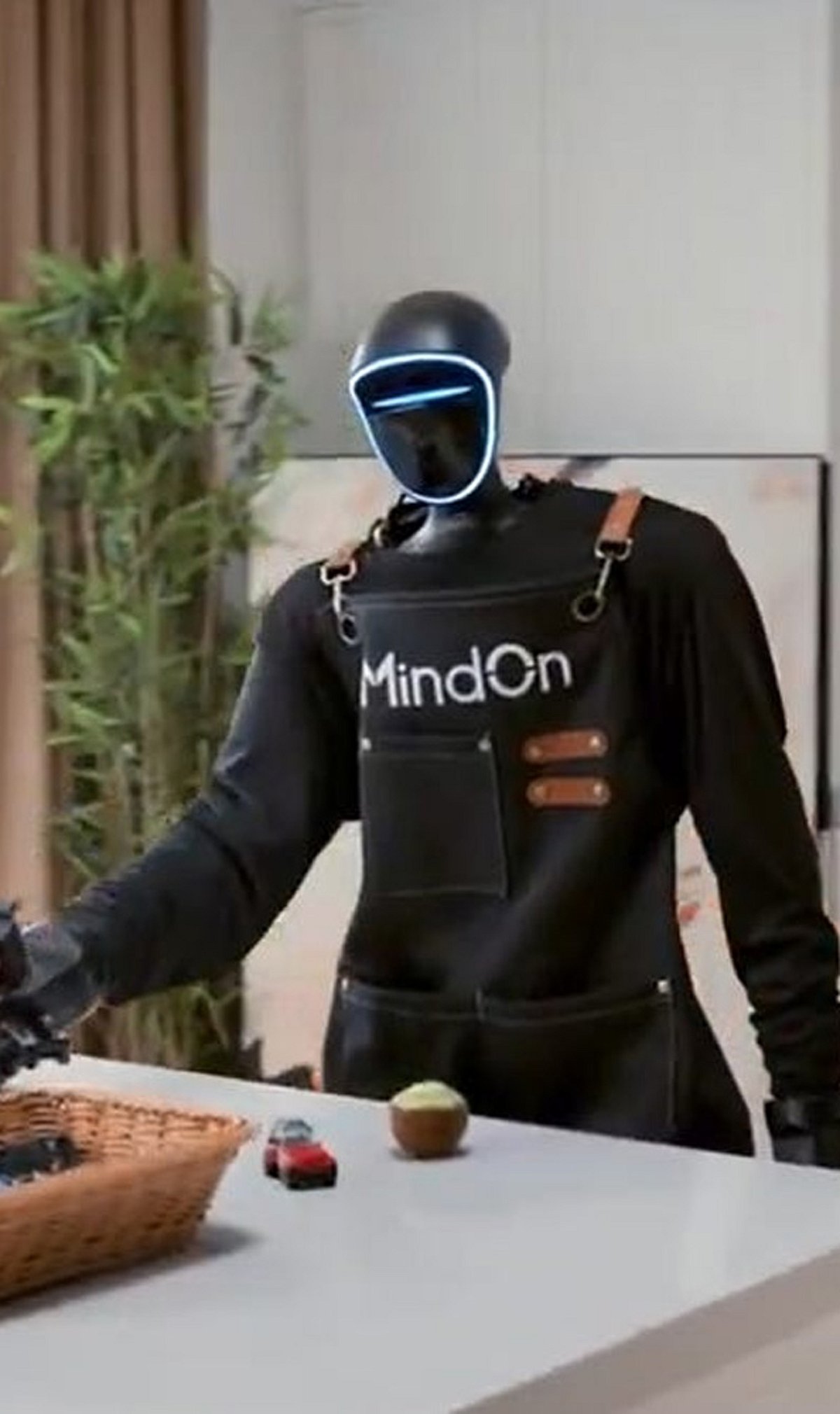
  • Tau Robotics Launches Humanoid Robot Cleaning Service in San Francisco – $30/Hour with Remote Human Control

    Tau Robotics Launches Humanoid Robot Cleaning Service in San Francisco – $30/Hour with Remote Human Control

    Tau Robotics has launched an invite-only home cleaning service in San Francisco using humanoid robots that cost $30 (approximately ₹3,000) per hour. These robots are not fully autonomous — a remote human operator controls every move while AI assists with balance, navigation, and simple actions.

    The robots can vacuum floors, wipe counters, wash dishes, tidy rooms, and take out the trash during routine home cleaning sessions. Tau offers different robot models for different jobs: Chelsea cleans kitchens and bathrooms, Elon handles weekly tidying, and Tony tackles deep cleaning.

    Every cleaning session helps Tau collect valuable real-world household data, allowing its AI to learn how homes differ from controlled lab environments. For safety, an adult resident must stay at home while the robot works, and human supervision remains essential during every visit.

    The service is currently a paid beta test available only through an invite-only waitlist as Tau improves reliability before expanding. The biggest concern is privacy — since humans remotely operate the robots using cameras, users may worry about data security inside their homes.

    Experts believe fully autonomous home robots are still years away. Today’s human-assisted cleaners are an important step toward smarter household AI.

  • China Debuts First Homegrown 3D AI Chip; CuspAI Raises $450M with Jeff Bezos Backing

    China Debuts First Homegrown 3D AI Chip; CuspAI Raises $450M with Jeff Bezos Backing

    Good morning, tech enthusiasts. Here are the top tech stories making headlines today, from groundbreaking semiconductor advancements to major funding rounds and regulatory actions.

    China Launches Its First Homegrown 3D AI Chip

    China has officially launched its first domestically developed 3D AI chip, the DF1000, in Shanghai. Built by startup Dongfang Suanxin, the chip is engineered to enhance AI computing capabilities and reduce China’s reliance on foreign semiconductor technology. This milestone marks a significant step forward for the country’s AI and semiconductor industries, signaling growing self-sufficiency in critical tech sectors.

    Jeff Bezos Backs CuspAI in $450 Million Funding Round

    CuspAI, a UK-based AI startup, has secured $450 million in fresh funding, with support from Jeff Bezos and Sovereign AI investors. The company leverages artificial intelligence to accelerate the discovery of new materials for clean energy, computer chips, and other industrial applications. The capital will be used to expand research, refine its technology, and scale its business operations globally.

    MIT Expert Warns Against Replacing Entry-Level Jobs with AI

    MIT researcher Andrew McAfee has cautioned companies against using AI to replace entry-level positions. He argues that these roles are essential for young workers to develop skills and prepare for advanced responsibilities. Removing them could lead to a shortage of skilled talent and hinder long-term organizational growth.

    San Francisco Demands Apple and Google Remove AI Nudify Apps

    San Francisco City Attorney David Chiu has formally requested that Apple and Google remove AI-powered “nudify” apps from their app stores. These apps generate fake nude images without consent, causing significant harm. Google has already removed many such apps, while Apple has yet to respond. Legal action may follow if the companies do not comply.

    Crypto Futures Market Sees $226 Million in Liquidations

    The cryptocurrency futures market experienced $226 million in liquidations over the past 24 hours due to sharp price fluctuations. The majority of losses came from traders betting on price increases. Bitcoin and Ethereum accounted for the largest liquidations, underscoring the ongoing volatility and risk in leveraged crypto trading.

  • San Francisco Demands Apple and Google Remove AI Deepfake Nudify Apps from Stores

    San Francisco Demands Apple and Google Remove AI Deepfake Nudify Apps from Stores

    San Francisco has taken legal action against Apple and Google, demanding the removal of AI-powered ‘nudify’ apps from their app stores. The city alleges these apps enable users to create non-consensual intimate deepfake images, violating California law.

    In cease-and-desist notices sent to both companies, San Francisco City Attorney David Chiu accused Apple and Google of continuing to host dozens of such apps and processing payments for them despite the risks. The city warned that further legal action could follow if the companies fail to comply.

    ‘Nudify’ apps use artificial intelligence to generate fake nude images by digitally removing clothing from photographs. Authorities say the technology is increasingly used to target women and girls without their consent. The notices argue that Apple and Google are facilitating the distribution and monetization of software that enables non-consensual intimate deepfakes.

    The city has asked both companies to remove the apps, cut ties with their developers, and strengthen measures to prevent similar apps from appearing on their platforms. David Chiu stated that companies should not profit from software that enables digital exploitation.

    While AI technology has made image editing easy, it has also made it simple to create highly realistic fake images that can harm victims. According to San Francisco officials, investigations revealed that some nudify apps were still in use despite app store policies against abusive, exploitative, and sexually explicit material.

    This case adds to mounting pressure on major technology companies to take greater responsibility for AI-powered apps distributed through their marketplaces. Google stated that it removed hundreds of nudify apps and restricted related search terms. Apple had not publicly responded to the legal notices at the time of reporting.

    The move marks one of the strongest attempts by a U.S. city to hold app store operators accountable for hosting AI tools capable of generating non-consensual intimate deepfakes. It also signals growing regulatory pressure on technology platforms as AI-powered applications become more widely available.