Tag: Scalability

  • How Integrated Attendance and Payroll Streamlines Workforce Management as Businesses Scale

    How Integrated Attendance and Payroll Streamlines Workforce Management as Businesses Scale

    Growth brings new opportunities, but it also makes everyday operations more complex. As headcount rises, businesses face a growing volume of attendance records, leave requests, employee information, and payroll tasks. What once worked with spreadsheets or manual processes can quickly become difficult to coordinate across an expanding organization.

    Attendance and payroll are naturally connected. Attendance records feed directly into payroll calculations, so accuracy and coordination between the two are essential. When these functions are handled separately, HR and administrative teams often spend time moving data between systems, verifying records, and completing repetitive checks before payroll can run. An integrated approach brings these processes closer together, helping teams treat attendance and payroll as connected stages in one workforce management workflow rather than as isolated administrative duties.

    Why Integration Matters for Growing Businesses

    The need for integration becomes clearer as businesses scale. A smaller organization may manage workforce administration with relatively simple tools. But when employee numbers increase, the volume of attendance data and payroll information grows too. Managing this information manually or across disconnected processes adds unnecessary strain to HR teams.

    Technology can bring structure to these activities. By connecting attendance and payroll, organizations can reduce repetitive administrative intervention and create a smoother flow of workforce data. The goal is not simply to automate one HR function; it is to make workforce management easier to operate as the business expands. With connected processes in place, HR teams can spend less time coordinating routine information and focus more on strategic workforce needs.

    From Petpooja Payroll to Attendo: A Broader Workforce Platform

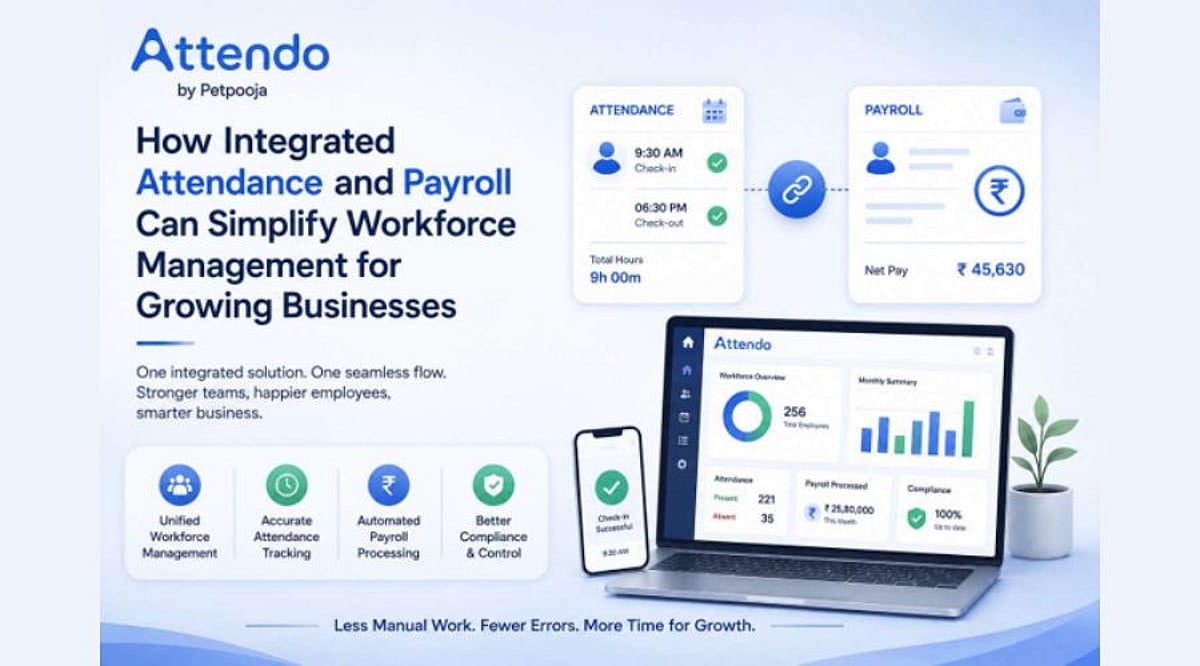
    This evolving approach is reflected in the transition from Petpooja Payroll to Attendo. What began as a solution designed for restaurant workforce needs has grown into a platform that addresses similar operational challenges across industries. The new identity signals a move beyond payroll and positions Attendo as a dedicated workforce management platform with attendance hardware and software capabilities combined.

    The rebrand also reflects a broader shift in how businesses approach HR technology. Instead of adopting tools for individual administrative tasks in isolation, growing organizations are looking for ways to make related functions work together. This matters especially for attendance and payroll, where information from one function directly affects the other.

    Supporting SMBs Without Large HR Teams

    Integrated systems are particularly relevant for small and medium-sized businesses that may not have large HR teams or extensive administrative resources. Managing attendance hardware through one provider, payroll through another platform, and leave or employee records through additional tools can create unnecessary complexity. Bringing these functions into a connected system makes workforce administration simpler to manage as the organization grows.

    For businesses looking to reduce administrative handoffs, platforms such as UKG offer another route. UKG brings HR, payroll, and workforce management together in a single view, with SMB-focused capabilities designed to simplify payroll, scheduling, compliance, and everyday HR tasks. This kind of coordination becomes increasingly valuable when attendance data and payroll processes become harder to manage across separate systems.

    The move toward integrated workforce management is about more than convenience. It is about building processes that are structured enough to support businesses through different stages of growth. When attendance and payroll are connected, employee administration becomes a coordinated workflow rather than a series of disconnected activities.

    With its new identity, Attendo is positioned within this changing landscape. The transition from Petpooja Payroll gives the platform a broader workforce management narrative, presenting attendance and payroll as interconnected elements of a larger HR technology offering. For growing businesses, the underlying requirement remains clear: workforce administration needs to become easier to manage as operations become more complex. Integrated attendance and payroll can help meet that objective by bringing related processes together and creating a more organized approach to workforce information.

    As Indian businesses continue to adopt digital solutions for internal operations, connected workforce management is becoming an increasingly important consideration. Integrating attendance and payroll is a practical step toward building HR processes that are structured, scalable, and aligned with the needs of growing organizations.


  • Blockchain Adoption Across Industries: 10 Sectors Revolutionized by Distributed Ledger Technology

    Blockchain Adoption Across Industries: 10 Sectors Revolutionized by Distributed Ledger Technology

    Blockchain technology has moved far beyond its cryptocurrency roots. Businesses worldwide are now embedding distributed ledgers into daily operations to gain stronger transparency, tighter security, and fewer costly intermediaries. MarketsandMarkets projects the global blockchain market will reach USD 248.9 billion by 2029, up from just USD 20.1 billion in 2024. The expansion spans banking, healthcare, agriculture, real estate, and more. Here are ten sectors where blockchain is reshaping business models and raising accountability standards.

    1. Banking and Financial Services

    Banks adopted blockchain early to accelerate cross-border payments. Ripple’s payment network settles transfers in seconds, not days. JPMorgan’s Onyx platform now processes billions daily through blockchain-based repo transactions. This shift has cut costs and lowered settlement risks.

    2. Supply Chain and Logistics

    Blockchain gives companies full visibility into product movement. Walmart uses IBM’s Food Trust system to trace food origins within seconds—a process that used to take days. Key benefits include real-time tracking across borders, reduced paperwork, and faster dispute resolution.

    3. Healthcare

    Patient records are often scattered across hospitals and insurers. Blockchain enables secure data sharing while protecting privacy. Estonia has used blockchain since 2016 to guard millions of health records from tampering and unauthorized access.

    4. Real Estate

    Property deals involve heavy paperwork and many middlemen. Blockchain allows tokenized ownership, letting buyers purchase fractions of properties. Propy has already facilitated blockchain-based real estate sales across several US states.

    5. Insurance

    Claims processing suffers from delays and fraud. Smart contracts automate verification and trigger instant payouts. Etherisc offers parametric crop insurance that uses real-time weather data for settlements, helping farmers in Africa and Asia.

    6. Voting and Governance

    Election security is a global concern. Blockchain-based voting creates immutable records. West Virginia tested the system for overseas military voters, proving remote voting can remain secure and verifiable.

    7. Energy Sector

    Blockchain enables peer-to-peer energy trading. Homeowners with solar panels can sell surplus power directly. Power Ledger, an Australian firm, runs such platforms in Japan and the US, reducing reliance on centralized utilities.

    8. Entertainment and Media

    Royalty distribution has long frustrated artists. Blockchain tracks content use and automates fair payments. Audius lets musicians earn directly without record labels. Non-fungible tokens also allow creators to hold verifiable proof of ownership for digital art.

    9. Agriculture

    Buyers question claims about organic or sustainable farming. Blockchain verifies the true origin of products. AgriDigital in Australia manages grain transactions via blockchain, giving farmers faster payments and greater transparency.

    10. Government and Public Records

    Land registries and identity systems benefit from blockchain permanence. Sweden has tested blockchain land registries since 2016, cutting transaction times from months to days. Georgia’s public registry agency also secures property titles this way.

    Challenges Remaining

    Scalability limits affect transaction speed. Unclear regulations across countries, high energy use in some consensus models, and difficulty integrating with legacy systems remain hurdles. Companies must weigh these before scaling blockchain projects further.

    Final Words

    Blockchain now secures medical records, simplifies supply chains, and automates financial transactions. Businesses once hesitant are investing in serious pilots. As regulations mature and scalability improves, adoption will accelerate. Companies acting now will likely lead their industries later.

  • Solana vs Traditional Blockchains: Key Differences and Unique Advantages

    Solana vs Traditional Blockchains: Key Differences and Unique Advantages

    Solana was designed to address some of the biggest challenges facing traditional blockchains, particularly slow transaction speeds and high costs. While older networks often process transactions sequentially, Solana uses a different architecture to handle large volumes efficiently. Its approach combines multiple technologies to deliver faster confirmations, lower fees, and greater scalability.

    The Speed Advantage

    Transaction speed is one of Solana’s biggest selling points. Its architecture allows the network to process transactions much faster than many traditional blockchain systems. This speed makes Solana attractive for applications requiring quick settlement, including decentralized exchanges, gaming platforms, payments, and other Web3 services where delays can affect user experience.

    Proof of History

    Solana’s distinctive feature is Proof of History, a cryptographic timekeeping system that helps establish the sequence of events before consensus is reached. Instead of requiring every validator to independently agree on timing, the network can reference a verifiable timeline. This reduces coordination overhead and helps transactions move through the network faster.

    Lower Transaction Costs

    Traditional blockchain networks can experience significant fee increases when demand rises and block space becomes limited. Solana generally aims to keep transaction costs low by processing substantially more activity through its architecture. Lower fees can make frequent transactions more practical, supporting applications such as trading, gaming, micropayments, and digital asset transfers.

    Scalability and Architecture

    Solana combines Proof of History with Proof of Stake and several performance-focused technologies. Its architecture is built to process transactions concurrently and efficiently across network resources. Traditional blockchains may rely more heavily on sequential processing. This design difference gives Solana greater theoretical throughput, although performance also depends on network conditions and implementation.

    The Trade-Offs

    Solana’s performance comes with trade-offs. Running validators can require substantial hardware resources, potentially creating barriers for some participants. The network has also experienced periods of congestion and outages. Traditional blockchains may offer slower performance, but their longer operating histories and broader decentralization can appeal to users prioritizing resilience and network maturity.

    What Makes Solana Different?

    Solana’s key difference is its focus on combining blockchain security with high-speed, low-cost transaction processing. Rather than simply increasing block capacity, it redesigns how time, transactions, and computation are coordinated. This makes Solana particularly suited to high-volume applications, while traditional blockchains can remain attractive where decentralization, maturity, or ecosystem depth matter most.

  • How Ethereum Layer-2 Networks Are Transforming Scalability and DeFi

    How Ethereum Layer-2 Networks Are Transforming Scalability and DeFi

    Ethereum’s Layer-2 networks are reshaping the blockchain landscape by addressing long-standing challenges related to transaction costs, speed, and scalability. These secondary protocols operate on top of Ethereum’s mainnet, processing transactions off-chain while leveraging the security of the underlying blockchain. Below are the key ways Layer-2 solutions are changing Ethereum and expanding its ecosystem.

    Lower Transaction Costs

    Layer-2 networks reduce congestion on Ethereum’s mainnet by handling transactions separately. By batching multiple transactions and settling the results on Ethereum, these solutions significantly lower fees. This makes everyday blockchain activities such as payments, trading, and gaming more accessible and cost-effective.

    Faster Transaction Processing

    When Ethereum’s mainnet faces high demand, transaction speeds can slow and costs spike. Layer-2 networks process transactions off-chain and submit compressed data or proofs to Ethereum. This approach boosts throughput, enabling applications to handle more activity while users experience faster confirmations and smoother interactions.

    Greater Scalability

    Scalability has been a major hurdle for Ethereum as adoption grows. Layer-2 networks provide additional execution capacity without requiring every transaction to be processed directly on the mainnet. This creates room for significantly more activity across decentralized applications, helping Ethereum support growing demand from users, developers, and financial platforms.

    Growth of DeFi

    Decentralized finance (DeFi) applications benefit greatly from cheaper and faster transactions. Layer-2 networks allow users to trade, lend, borrow, and provide liquidity while paying substantially lower fees. This improved economics encourages broader participation and enables developers to create financial products that would be impractical on Ethereum’s mainnet alone.

    Expansion of Web3 Gaming

    Blockchain gaming requires frequent transactions, making mainnet fees and throughput challenging. Layer-2 networks offer the speed and lower costs needed for in-game transactions, digital assets, and other activities. This infrastructure helps blockchain games become more practical by reducing costs and friction for players.

    More Developer Innovation

    Layer-2 networks provide developers with additional environments to build applications with different performance, cost, and execution characteristics. This flexibility encourages experimentation across finance, gaming, social platforms, and other Web3 applications. As infrastructure improves, developers can focus on creating useful products rather than working around Ethereum’s mainnet limitations.

    A Stronger Ethereum Ecosystem

    Rather than replacing Ethereum, Layer-2 networks function as complementary infrastructure. Transactions occur on specialized networks before ultimately settling on Ethereum. This creates a broader ecosystem where multiple Layer-2 platforms compete and innovate, while Ethereum remains the core settlement and security layer.

  • How CTOs Can Build Scalable Technology Roadmaps for Sustainable Growth

    How CTOs Can Build Scalable Technology Roadmaps for Sustainable Growth

    As businesses become increasingly dependent on technology for growth, Chief Technology Officers (CTOs) are being asked to create roadmaps that address today’s challenges while leaving room for future expansion. Gartner predicts global IT spending could climb to $6 trillion by 2026, and IDC forecasts that digital transformation spending will top $4.8 trillion by 2027. These trends highlight why scalable technology planning matters for organizations of all sizes.

    A technology roadmap is a blueprint that aligns technical investments with long-term business goals and ensures systems remain flexible as the business grows.

    Start with Business Goals

    Successful technology roadmaps start with business strategy, not technology. CTOs collaborate with executives to review revenue goals, customer expansion plans, geographic growth, regulatory requirements, and operational priorities. Rather than asking what technologies to pursue, they determine which business outcomes technology must support — and invest where it will yield clear value.

    Assess the Current Technology Stack

    Before pushing forward with future projects, CTOs conduct a thorough review of on-premises applications, infrastructure, cloud services, cybersecurity controls, and development workflows. This process identifies technical debt, aging systems, security weak points, and performance bottlenecks. Addressing these limitations early reduces future maintenance costs and improves scalability.

    Prioritize Scalable Architecture

    Modern roadmaps emphasize modular designs and cloud-native strategies. Technologies such as microservices, APIs, containers, and Kubernetes allow businesses to expand one service at a time without redoing the entire platform. Cloud vendors also provide elastic compute resources, so organizations can handle changing workloads while keeping infrastructure costs under control.

    Create Roadmaps in Phases

    Rather than making large-scale changes at once, CTOs break technology projects into short-, medium-, and long-term goals.

    • Short-term: Infrastructure stabilization and security improvements.
    • Medium-term: Automation, data platforms, and customer-facing applications.
    • Long-term: Artificial intelligence, advanced analytics, and emerging technologies that enable competitive advantage.

    Balance Innovation with Risk

    A scalable roadmap involves regular assessment of technology risks. CTOs budget for innovation while maintaining existing systems, and they factor in cyber threats, regulatory changes, vendor dependencies, and operational resilience. Roadmaps undergo frequent reviews to ensure they can adapt to shifting markets, customer needs, and new technologies.

    Measure Success with Data

    Performance indicators, not assumptions, drive effective technology roadmaps. CTOs track metrics such as system availability, deployment frequency, cloud costs, application performance, customer satisfaction, incident response times, and engineering productivity. These insights help determine whether technology investments are delivering the intended business outcomes.

    Conclusion

    Building a scalable technology roadmap is not a one-time task — it is a continuous strategic activity. By aligning technology with business objectives, adopting flexible architectures, minimizing technical debt, and monitoring performance metrics, CTOs can support sustainable growth and adapt quickly to market demands. Well-defined technology plans enable organizations to innovate, scale effectively, and maintain a long-term competitive edge in the digital economy.

    Frequently Asked Questions

    What is a technology roadmap?

    A technology roadmap is a strategic plan that outlines how technology initiatives support business objectives over time. It helps organizations prioritize investments, allocate resources, and prepare for future growth.

    Why do CTOs prioritize scalable architecture?

    Scalable architecture allows businesses to handle increasing workloads without rebuilding entire systems. Technologies such as microservices, APIs, containers, and cloud platforms make expansion more flexible and cost-effective.

    How often should a technology roadmap be updated?

    Most organizations review their technology roadmap quarterly or at least annually. Regular updates ensure it remains aligned with changing business priorities, emerging technologies, security requirements, and market conditions.

    What metrics do CTOs use to measure the success of a technology roadmap?

    Common KPIs include system uptime, deployment frequency, cloud infrastructure costs, application performance, customer satisfaction, incident resolution time, engineering productivity, and return on technology investments.

    How can organizations reduce technical debt while scaling?

    Organizations reduce technical debt by modernizing legacy systems, adopting modular architectures, automating repetitive processes, improving code quality, and continuously reviewing infrastructure as part of their long-term technology strategy.

  • How to Choose the Right Business Database in 2026: A Workload-First Guide

    How to Choose the Right Business Database in 2026: A Workload-First Guide

    Many companies choose a database the way they choose an electricity supplier — once, quickly, and then never again until something goes dark. The decision gets made by whoever was on the project that week, and everyone else lives with it for the next eight years.

    That’s backwards. Your database quietly sets the ceiling on four things at once: how fast your team ships, how honestly you can report, how well you survive an audit, and what it costs you to double in size. None of those are IT problems. They’re business problems that happen to be expressed in SQL.

    The good news is that the shortlist in 2026 is genuinely good. The bad news is that “good” isn’t the same as “right for you.” Below is a workload-first way to think about it, followed by eight systems worth knowing — and the honest tradeoff each one asks you to accept.

    Only question that matters first

    Before you compare vendors, answer this: what does this data actually do?

    • It records commitments — orders, payments, contracts, payroll. This data needs to be correct more than it needs to be fast. A transaction either fully happens or fully doesn’t.
    • It describes things loosely — product catalogs, customer profiles, logs, anything whose shape changes every quarter because a PM changed their mind.
    • It answers questions — dashboards, forecasts, cohort analysis, the report leadership stares at every Monday.
    • It needs to be instant — session tokens, live inventory, pricing lookups measured in single-digit milliseconds.

    Those four jobs want four different architectures. Most technical debt in data infrastructure comes from a single decision: using one system to do all four because it was already there.

    Workload 1: Recording commitments (relational)

    This is where ACID compliance stops being jargon and starts being the reason your balance sheet reconciles.

    PostgreSQL

    If a single database has won the last decade, it’s this one. Postgres delivers strict ACID guarantees, first-class JSONB for the semi-structured 20% of your data, serious indexing, and an extension ecosystem that lets it stretch into time-series, geospatial, or vector search without leaving the box. The cost story is hard to argue with: the engine is free, and every major cloud sells a managed version (RDS, Cloud SQL, Azure Database) so you’re not paying people to babysit failover. Instagram famously runs a sharded Postgres cluster at a scale that should have killed the “SQL doesn’t scale” line permanently. Wise and Revolut keep money in it. That’s a decent reference list. Choose it when: you want capability without lock-in, and you’d rather not re-platform in three years.

    MySQL

    Still one of the most deployed databases on earth, and the one most small businesses meet first. It’s cheap to host, quick to stand up, and compatible with essentially every framework and CMS ever written. Where it strains is complex analytical queries and heavy concurrent writes. For new enterprise builds, Postgres has largely taken the oxygen. For read-heavy, content-driven applications, MySQL is a perfectly rational choice and will be supported forever.

    Microsoft SQL Server

    If your company already lives inside Azure, Power BI, .NET, and Active Directory, SQL Server removes an enormous amount of integration friction. Always On Availability Groups give you genuine HA/DR, which matters if downtime is a regulatory event rather than an inconvenience. The catch is licensing, which is not cheap and not getting cheaper. Managed Azure SQL at least absorbs the patching and failover work you’d otherwise staff for.

    Oracle

    Still the system of record for a large share of the world’s banks, insurers, and government agencies — and not out of nostalgia. Real Application Clusters handle concurrency at a level few competitors reach, and the audit trail and row-level security tooling is mature in a way that only decades of regulated deployments produce. What’s changed is the shape of Oracle estates. The common 2026 pattern isn’t ripping Oracle out; it’s shrinking it. Core ledger stays. The forty surrounding systems that never needed Oracle-grade guarantees move to Postgres, and the licensing bill drops accordingly.

    Workload 2: Loose shapes and instant reads (NoSQL)

    SQL versus NoSQL was never a war. It’s a question about the shape of your data.

    MongoDB

    The document model stores records as JSON-like objects, which suits anything where records don’t share a fixed template: catalogs with wildly different attributes, customer profiles that grow fields monthly, nested logistics hierarchies. The practical payoff is migration scripts you don’t have to write. Your team changes the model and moves on. Barclays, Bosch, and Adobe run it at scale — it stopped being a startup toy a long time ago.

    Redis and Valkey

    This one needs a 2026 update, because the in-memory landscape genuinely changed. Redis moved from BSD to SSPL in March 2024, which ended its status as open source in the OSI sense. The community forked within days: Valkey, now under the Linux Foundation with backing from AWS, Google Cloud, Oracle, and Ericsson, carrying forward the last BSD-licensed codebase. Redis then shifted to AGPLv3 with Redis 8 in 2025, but the trust cost was already paid — surveys after the change found a large majority of Redis users actively evaluating alternatives, and the hyperscalers have kept investing in Valkey rather than walking back. Practically: the two are API-compatible for most workloads, and the functional gap is small (Redis 8 adds things like native vector sets). The real decision is governance, not features. If BSD licensing and open governance matter to your legal team, Valkey. If they don’t, either works. Whichever you pick, its job is the same — sit in front of your primary store and absorb the reads that would otherwise flatten it.

    Workload 3: Answering questions (cloud and analytics)

    Snowflake

    Separating storage from compute was the structural idea that made Snowflake work: you pay for what you query, not what you hoard. It reads structured tables, JSON, and Parquet in the same query without a pipeline in between. The underrated feature is the Data Marketplace — pulling third-party feeds and financial datasets in without an ETL job or a separate vendor contract. For finance teams, that’s the difference between monthly reporting and something closer to live. Choose it when: analysis across millions of rows is a daily activity, not a quarterly one.

    Firebase and Supabase

    For a two-person team that needs to be in production next month, a managed backend is the whole answer. Both bundle database, auth, real-time sync, and storage into one platform. Supabase’s advantage is structural: it’s Postgres underneath. Your queries stay portable, so outgrowing the free tier means moving data — not rewriting the application. Firebase is faster to start with and harder to leave.

    Three rules that separate mature architectures from the rest

    1. Match the engine to the job. Transactions want ACID. Analytics wants columnar storage. Real-time wants memory. Using one system for all three doesn’t fail loudly — it degrades quietly, which is worse.
    2. Plan for horizontal scale before you need it. Bigger machines have a ceiling; more machines don’t. Postgres, MongoDB, and CockroachDB shard and replicate natively. Retrofitting that into a live monolith is one of the genuinely miserable engineering projects.
    3. Separate PII from operational data by design. Sensitive customer data belongs in an access-restricted store, joined to transactions through anonymized IDs. Done right, a breach of your transaction database reveals that User_8492 moved $10,000 — and nothing about who that is. GDPR and PCI-DSS treat this as a requirement, not a suggestion.

    Do you need something custom?

    Almost certainly not. Before anyone writes a proposal for a bespoke engine, exhaust the extension ecosystem — Postgres alone covers time-series (TimescaleDB), AI embeddings (pgvector), and geospatial (PostGIS) without a line of engine code. Custom is expensive to build and roughly twice as expensive to keep alive.

    What nobody puts in the pitch deck

    Knowing which database you should be on is the easy half. Getting your data off a fifteen-year-old Sybase box, an aging on-prem SQL Server, or an inherited MySQL estate is where modernization actually stalls — usually on the embedded business logic nobody documented and everyone depends on. That work is more tractable than it used to be. Tooling now automates schema conversion, stored-procedure translation, and query rewriting across the common source-target pairs; migration specialists like Ispirer report automation rates in the high nineties on Oracle-to-PostgreSQL projects, which turns a multi-year rewrite into something a team can plan around. It’s worth scoping that before you assume a migration is off the table on cost grounds.

    In short

    • Transactions → PostgreSQL, or Oracle if regulation demands it
    • Microsoft shop → SQL Server
    • Read-heavy and simple → MySQL
    • Flexible documents → MongoDB
    • Sub-millisecond reads → Valkey (open governance) or Redis (features)
    • Analytics at scale → Snowflake
    • Small team, fast launch → Supabase (portable) or Firebase (fastest)

    Every one of these choices compounds. The database that fits your workload today is mostly valuable because of the migration it saves you from in 2029.

  • Leading Layer-2 Cryptocurrencies to Watch in July 2026

    Leading Layer-2 Cryptocurrencies to Watch in July 2026

    Key Takeaways

    • Layer-2 networks reduce Ethereum fees while significantly improving transaction speed and scalability.
    • DeFi, gaming, AI, and tokenized real-world assets are accelerating Layer-2 ecosystem growth.
    • Arbitrum, Optimism, Starknet, Polygon, and emerging projects continue driving Ethereum’s next evolution.

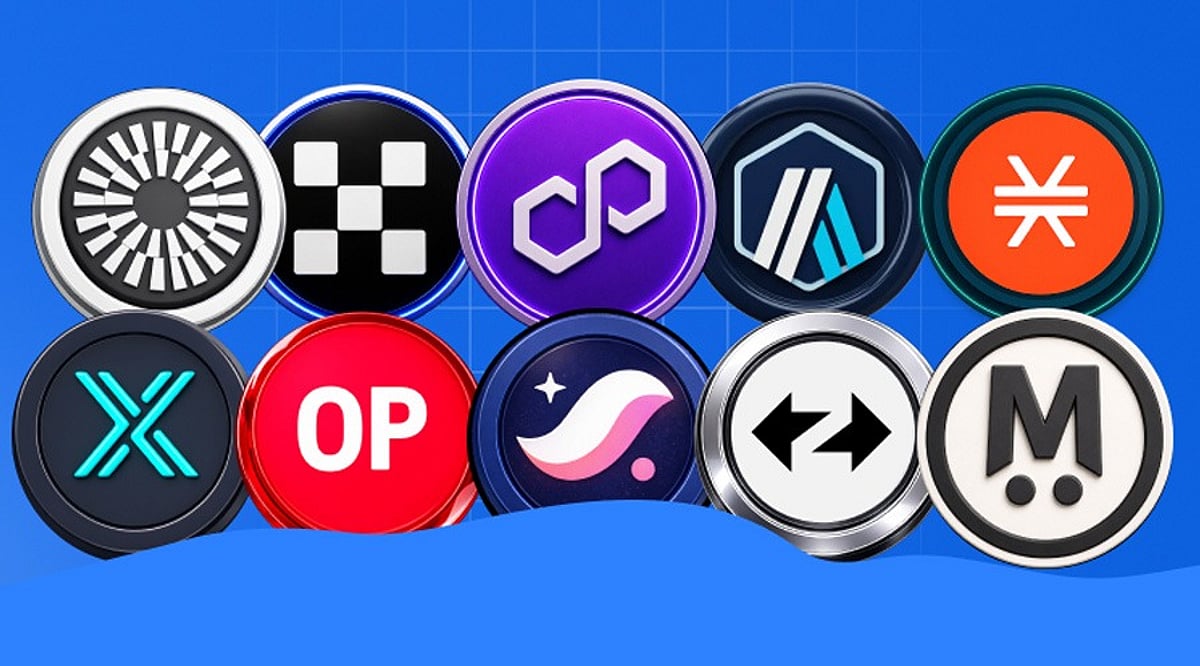
    Ethereum remains the dominant blockchain, but high fees and slower transaction speeds during peak usage remain challenges. Layer-2 networks address these issues by processing transactions off the main chain and posting final data back for security. This approach lowers costs, boosts speed, and supports mass adoption. In July 2026, Layer-2 projects continue to be one of the strongest segments in crypto, fueled by steady growth in decentralized finance, gaming, artificial intelligence, and tokenized real-world assets. Here are the top 10 Layer-2 cryptocurrencies to watch.

    Arbitrum (ARB)

    Arbitrum holds the top spot among Ethereum Layer-2 networks, thanks to its vast DeFi ecosystem and deep liquidity. Major decentralized exchanges, lending platforms, and perpetual trading protocols operate on Arbitrum. The network also supports Layer-3 development through Arbitrum Orbit, opening new opportunities for builders. Strong institutional interest and an active community add to its value. Despite growing competition, Arbitrum remains one of the most important Layer-2 projects in July 2026.

    Optimism (OP)

    Optimism has expanded well beyond a single Layer-2 chain. Its Superchain vision has attracted multiple networks using the OP Stack, including Coinbase’s Base. This shared technology improves cross-chain compatibility and speeds up development. Revenue sharing between connected chains adds another advantage. As more projects join the Superchain, Optimism continues to strengthen its position as a leading Ethereum scaling solution.

    Starknet (STRK)

    Starknet has built its reputation on advanced zero-knowledge technology. Using STARK proofs, it delivers strong security with excellent scalability. Developers benefit from the Cairo programming language, which supports sophisticated blockchain applications. The platform continues to attract DeFi projects, gaming apps, and AI initiatives, placing Starknet among the top Layer-2 networks for long-term growth.

    Polygon (POL)

    Polygon remains one of the most recognized names in blockchain. It has shifted focus toward an ecosystem of connected zero-knowledge chains via its AggLayer vision. Large companies and financial institutions continue to explore Polygon due to its reliable infrastructure and enterprise partnerships. Growth in tokenized real-world assets also supports the network. This combination of business adoption and technical development keeps Polygon near the top of the Layer-2 market.

    Mantle (MNT)

    Mantle has gained attention for its strong treasury and focus on institutional DeFi. The network supports liquid staking, yield products, and other financial services that appeal to developers and investors. A well-funded ecosystem enables Mantle to support new applications through grants and incentives. These factors help it stand out among newer Layer-2 platforms.

    Immutable (IMX)

    Immutable has become a leading blockchain platform for gaming and digital collectibles. The network removes gas fees for many player transactions, creating a smoother gaming experience. Major game developers continue to choose Immutable for its reliable infrastructure and NFT support. New game releases and wider blockchain gaming adoption could provide fresh momentum in the second half of 2026.

    zkSync (ZK)

    zkSync is gaining ground in the zero-knowledge Layer-2 space, focusing on consumer applications with fast, low-cost transactions. Native account abstraction improves wallet usability. The project is attracting DeFi projects, payment systems, and social applications to its ecosystem. These advancements make zkSync one of the emerging leaders among Layer-2 projects.

    Metis (METIS)

    Metis takes a different approach with decentralized sequencers, reducing reliance on a single operator. The project is also attracting interest in AI infrastructure. Enterprise tools and lower centralization risks provide additional appeal. These unique features help Metis carve out a distinct position in the competitive Layer-2 market.

    Loopring (LRC)

    Loopring remains one of the earliest zero-knowledge rollup projects. The network focuses on secure payments, decentralized exchanges, and digital wallets. Although newer projects receive more attention, Loopring continues to offer reliable, proven technology. Its long history and stable ecosystem make it an important Layer-2 network to follow.

    Fuel (FUEL)

    Fuel has emerged as one of the most promising modular execution layers in 2026. It supports parallel transaction execution, enabling better performance than many traditional blockchain designs. Developers are showing growing interest in its modern virtual machine and flexible architecture. As the ecosystem expands, Fuel could become a major name in Ethereum scaling.

    Final Thoughts

    Layer-2 technology continues to play a crucial role in the cryptocurrency market as of July 2026. The growing popularity of DeFi, blockchain gaming, enterprise applications, AI, and tokenized real-world assets is driving adoption of Layer-2 solutions. Projects like Arbitrum, Optimism, Starknet, Polygon, Mantle, Immutable, zkSync, Metis, Loopring, and Fuel each contribute uniquely to Ethereum’s future. All of them have strong ecosystems, experienced developer communities, and ongoing technological advances.

    Frequently Asked Questions

    What are Layer-2 cryptocurrencies?

    They are blockchain networks built on Ethereum that improve speed, lower transaction costs, and increase scalability while relying on Ethereum’s security.

    Why are Layer-2 projects important in 2026?

    They help Ethereum handle growing demand from DeFi, gaming, AI applications, and tokenized real-world assets without high fees or network congestion.

    Which Layer-2 projects are leading the market?

    Arbitrum, Optimism, Starknet, Polygon, Mantle, Immutable, zkSync, Metis, Loopring, and Fuel are among the top Layer-2 ecosystems to watch.

    What is the difference between optimistic and zero-knowledge rollups?

    Optimistic rollups assume transactions are valid unless challenged, while zero-knowledge rollups use cryptographic proofs to verify transactions before finalization.

    Are Layer-2 cryptocurrencies good long-term investments?

    They have strong growth potential by increasing Ethereum adoption, but like all cryptocurrencies, they carry market risks and require careful research before investing.

  • Why Major Companies Choose Python for Their Tech Stack

    Why Major Companies Choose Python for Their Tech Stack

    Python has become a core technology for many global companies. Its simple design, powerful frameworks, and rich ecosystem help businesses build scalable applications, AI systems, automation tools, and reliable backend services.

    Key Takeaways:

    • Python supports products that serve millions and even billions of users.
    • Companies use Python for AI, automation, backend development, and data engineering.
    • Frameworks like Django and FastAPI help developers build reliable applications faster.

    Python has become one of the most popular programming languages in the software industry. It has clean syntax, easy readability, and a huge collection of libraries that help developers build software faster. These qualities have made Python a trusted option for startups as well as global technology companies. Today, many famous businesses use Python as an important part of their technology stack, even though most large organizations combine several programming languages for different tasks.

    Google Uses Python Across Many Business Areas

    Google has relied on Python for many years. The company uses it for internal tools, automation, artificial intelligence, backend services, and cloud infrastructure. Python allows engineers to create software quickly while keeping projects easy to maintain. The language also works well with Google’s machine learning technologies, including TensorFlow, which has become one of the world’s most popular AI frameworks. Although Google also uses languages such as C++, Java, and Go, Python remains an important part of many engineering teams as it supports rapid development and reliable automation.

    Instagram Built a Massive Platform With Django

    Instagram stands as one of the biggest success stories for Python. The social media platform built its backend on Django, a web framework written in Python. Even after the platform reached billions of users, Django continued to support high traffic with excellent performance. Python gave Instagram developers a fast way to release new features without slowing product development. Strong database support through PostgreSQL also helped the platform manage huge amounts of user data. Instagram continues to prove that Python can support one of the world’s largest social networking services.

    Netflix Depends on Python for Automation and Machine Learning

    Netflix uses Python in several important business areas. The company relies on it for machine learning, recommendation systems, automation, backend tools, and cloud operations. Recommendation algorithms help viewers discover movies and television shows that match personal interests, and Python plays an important role in this process. Frameworks such as Flask and FastAPI support internal services, while Jupyter notebooks assist data scientists during research and model development. Python also works with PyTorch, one of the leading machine learning frameworks used by Netflix.

    Spotify, Uber, and Dropbox Continue to Trust Python

    Using Python, Spotify provides backend services, recommendation algorithms, and reporting as well as workflow management. In addition to Python, the company uses Luigi and Apache Airflow for data processing and workflow scheduling. Python allows Spotify to manage a huge amount of listener information while relying on the system for personalized music recommendations. Uber has deployed Python in its technical framework as well for the backend microservices, machine learning, data engineering, and automated processes. The application of Python frameworks such as Tornado and Flask makes it possible to operate numerous backend services. Dropbox started being based on Python at its inception when it developed its desktop application and backend system. The company later designed tools such as PyAnnotate as well as contributed to the development of MyPy, which improves static typing of Python-based software. Despite its significant size, Dropbox keeps using Python today.

    Reddit, Pinterest, Quora, and Lyft Show Python Can Scale

    Reddit became one of the earliest examples of a large website built with Python. The platform originally moved its backend to Python and still depends on the language for many services today. This long history proves that Python can support millions of active users and large online communities. Pinterest also relies on Python for recommendation systems, backend APIs, and machine learning. The company uses Django and Flask to support different services across its platform. Python helps Pinterest process huge collections of images and user activity. Quora selected Python for backend services, ranking systems, and APIs. Django and Tornado allow the platform to deliver fast responses while handling large volumes of questions and answers. Lyft uses Python for backend development, data pipelines, and machine learning. The language supports many internal systems that improve ride matching, operational efficiency, and data analysis.

    Amazon and Meta Also Depend on Python

    Amazon uses Python for automation, cloud services, machine learning, and internal development tools. Amazon Web Services offers Boto3, a Python software development kit that allows developers to work with cloud resources through code. Python also supports services connected with Amazon SageMaker, which helps businesses build and deploy machine learning models. Meta also uses Python across artificial intelligence research, automation, and software development. PyTorch, one of the world’s most popular machine learning frameworks, came from Meta and remains a major part of AI development across many industries.

    Python Fits Modern Technology Needs

    A Python technology stack refers to a combination of technologies and tools that are particularly effective in running web applications. The commonly used technologies in the Python technology stack include Django, FastAPI, or Flask, which manage backend development. In addition, the technology stack is supplemented with PostgreSQL or MySQL for data management, and Redis for better performance through caching. RabbitMQ and Kafka take care of processing messages between the different services of a web application. Elasticsearch enhances the search capabilities of the application, while Celery serves for background task management. The deployment of applications is simplified by Docker and Kubernetes, while the processes of software delivery and continuous integration are ensured by GitHub Actions and Jenkins. In addition, the technology stack encompasses Airflow, Pandas, TensorFlow, and PyTorch.

    Python Continues to Lead the Industry

    When it comes to artificial intelligence, machine learning, and similar tasks, Python is one of the leading programming languages. Corporations often use Python in combination with such languages as Go, Java, Rust, and C++ to accomplish their tasks more effectively and gain maximum performance. Even with those languages in use, Python stays in the circle of attention given the increased productivity of developers, faster development time, and having one of the most extensive software environments available today. The success of such companies as Google, Instagram, Netflix, Spotify, Uber, Dropbox, Reddit, Pinterest, Quora, Lyft, Amazon, and Meta demonstrates how useful the technology might be for products designed for millions and even billions of individuals all over the globe. It is thanks to flexibility, mature frameworks, and powerful libraries that Python is one of the best programming languages for software development today.

  • From Smart Glass to Finance: The Intelligent Systems Architecture of Surya Teja Meesala

    From Smart Glass to Finance: The Intelligent Systems Architecture of Surya Teja Meesala

    Across industries like manufacturing and financial services, software systems have become essential for managing complex operations and driving efficiency at scale. Yet research from McKinsey and Boston Consulting Group shows that nearly 70% of large-scale technology and digital transformation initiatives fail to achieve their intended outcomes. The limitation is rarely the idea itself—it often lies in the inability of execution systems to scale or perform reliably under real-world complexity.

    In this environment, engineers who build reliable execution systems are increasingly critical. Surya Teja Meesala, a senior member of IEEE with over a decade of experience spanning advanced manufacturing, medical devices, retail logistics, and financial systems, has focused on designing systems that keep operations consistent, traceable, and reliable at scale.

    Smart glass manufacturing, for example, operates in a high-mix environment where multiple product generations—each with distinct electrical and firmware requirements—move through the same factory equipment in constantly changing sequences. At View, Inc., a leading U.S. electrochromic smart window manufacturer with deployments in commercial buildings, airports, and adoption by companies like Uber and Netflix, this challenge was central to scaling operations. The company needed real-time visibility into material consumption, production workflows, and work order completion, integrated with enterprise systems like Oracle ERP, while accommodating rapid plan changes without breaking traceability or auditability.

    Meesala contributed significantly to creating a comprehensive system that replaced outdated, fragmented tools. Instead of passive tracking, the system actively guided operations by determining what could run, in what order, and under which constraints. One key challenge was managing production around highly energy-intensive equipment, where delays or miscalculations reduced efficiency. Previously reliant on manual calculations and operator expertise, Meesala built automated decision-making into the workflow, making it easier for factory teams to adjust production without guesswork. The result was smoother operations, improved product quality, and more efficient use of expensive equipment.

    He also developed an automated smart connector programming system that removed manual decision-making at a critical stage. Each unit was configured correctly based on production requirements, with a clear, versioned record of every setting applied. This reduced long-term failures and improved overall manufacturing reliability. These capabilities formed the backbone that helped View transition from a private company to a publicly listed manufacturer.

    In the financial sector, at Raymond James Financial, one of the largest U.S. financial advisory networks, Meesala has worked on core treasury and back-office systems that support critical operations. His focus has been on ensuring transactions are processed accurately, transparently, and in compliance with evolving regulatory standards. He also contributed to an AI-powered Incident Intelligence Platform designed to reduce response times during system outages and preserve institutional knowledge—an initiative recognized at a firm-wide engineering event.

    Across industries, Meesala’s efforts demonstrate a reality that industry leaders are increasingly acknowledging: in complex, high-stakes settings, a quiet, disciplined, and invisible execution architecture is what determines whether innovation can survive.

  • Selecting the Best Retail Business Intelligence Software in 2026: Key Considerations

    Selecting the Best Retail Business Intelligence Software in 2026: Key Considerations

    Choosing the right retail business intelligence (BI) software in 2026 requires a strategic approach that balances technical capabilities with business needs. The following factors are critical for making an informed decision.

    Data Integration

    Opt for software that seamlessly connects with point-of-sale (POS) systems, ecommerce platforms, CRM, ERP, and inventory databases. Unified data integration provides a single source of truth for comprehensive business insights.

    Real-Time Analytics

    Prioritize dashboards that deliver live updates on sales, customer behavior, inventory levels, and revenue. Real-time analytics enable faster, more informed decisions in daily retail operations.

    AI-Powered Forecasting

    Select platforms that leverage artificial intelligence to predict demand, optimize stock levels, and improve seasonal planning. AI-powered forecasting enhances operational accuracy and reduces waste.

    Custom Dashboards

    Ensure the software allows customization of dashboards so different teams can monitor the KPIs most relevant to their roles. This improves collaboration and speeds up decision-making across the retail organization.

    Scalability

    Choose a solution that can grow with your business—supporting multiple store locations, expanding product catalogs, and increasing customer data without performance degradation.

    Inventory Intelligence

    Advanced inventory analytics help identify slow-moving products, stock shortages, and replenishment opportunities, significantly reducing operational losses.

    User-Friendly Interface

    An intuitive interface minimizes the learning curve, enabling employees across departments to adopt analytics tools without extensive technical training or delays.

    Security and Compliance

    Verify strong encryption, access controls, and compliance with privacy regulations to protect sensitive business and customer information from threats.

    Pricing and Support

    Compare subscription costs, implementation expenses, and the quality of customer support. Consider future upgrade options before committing to a long-term investment.