Tag: SEBI

  • SEBI Clarifies No Proposal to Trade NSE Shares Post-IPO Amid Exchange’s Rs 22,569 Crore Listing

    SEBI Clarifies No Proposal to Trade NSE Shares Post-IPO Amid Exchange’s Rs 22,569 Crore Listing

    The Securities and Exchange Board of India (SEBI) has confirmed that it has not received any request from the National Stock Exchange (NSE) to permit trading of its own shares after listing. SEBI Chairman Tuhin Kanta Pandey made the clarification on Thursday, addressing market speculation surrounding the highly anticipated NSE IPO, which opened for subscription on September 17.

    No Proposal Received from NSE

    Speaking on the sidelines of the NaBFID Infrastructure Conclave 2026, Pandey stated that no such letter has been submitted by NSE. “No, there is no such letter, and there is no such requirement,” he said, adding that such trading is not currently allowed. The clarification comes as NSE begins its three-day IPO subscription period, which remains open until September 21.

    NSE IPO Opens for Subscription

    The NSE IPO is valued at Rs 22,569 crore and consists entirely of an offer-for-sale (OFS) of 12.64 crore equity shares held by existing shareholders. The price band is set at Rs 1,700–1,785 per share. Since the IPO is fully an OFS, NSE will not receive any proceeds from the sale; after deducting expenses, the funds will go to the selling shareholders. Shares are expected to list on the BSE on September 24.

    NSE’s public offering arrives after a prolonged wait for India’s largest stock exchange to enter the listed market. The exchange has led the country in cash-market and equity-derivatives turnover from FY01 to FY26. As of June 2026, NSE had 132.4 million unique registered investors, 1,328 trading members, and 3,005 listed entities, with a market capitalization of approximately Rs 474.1 trillion.

    SEBI to Examine UPI MDR Concerns

    During the interaction, Pandey also addressed concerns raised by brokers and asset management companies regarding the new UPI Merchant Discount Rate (MDR). “I think there are some important issues there. We will certainly look into it and see how we can ease them,” he said. The government recently introduced a 0.4% MDR on eligible UPI merchant transactions above Rs 2,000, capped at Rs 300 for transactions of Rs 75,000 and above, marking a shift from the zero-MDR framework in place since January 2020.

  • Agentic AI in Indian Banking: From Chatbots to Autonomous Decision-Making

    Agentic AI in Indian Banking: From Chatbots to Autonomous Decision-Making

    Artificial intelligence in Indian banking has largely meant chatbots that answer balance queries, recommendation engines that suggest the next product, and fraud models that flag suspicious transactions for a human to review. That era is ending quickly. What is emerging now is agentic AI: a class of systems that does not just respond to a prompt, but plans, decides and acts across multiple steps without waiting for a human to approve each move.

    The shift is not cosmetic. It changes how credit gets underwritten, how KYC gets verified, how fraud gets stopped, and how service teams spend their day. The numbers behind it are large enough to demand attention. The operational details are messy enough to demand caution.

    From Prompt-Response to Plan-and-Act

    Traditional automation in banking, including robotic process automation and early generative AI tools, worked on a simple pattern: a human triggers a task, the system executes a fixed script, and the output goes back to a human for the next step. Agentic AI breaks that pattern. An agent is given a goal—something like “resolve this customer dispute” or “underwrite this loan application”—and then independently queries APIs, pulls data from multiple systems, applies reasoning and takes the next action, often chaining several steps together before a human ever sees the result.

    This matters technically because RPA breaks the moment an interface or a data format changes. Agentic systems, built on reasoning loops that plan, act and adjust based on outcomes, can handle edge cases a rules-based script cannot. That flexibility is precisely why banks are willing to give these systems more autonomy, and precisely why the risk profile looks different from anything that came before.

    The global market for agentic AI in financial services is estimated at close to $7.8 billion in 2026, up from around $5.5 billion a year ago, on a path toward more than $43 billion by 2031. That implies a compound annual growth rate above 41 percent. Even accounting for the usual noise in market-sizing reports, growth at that scale signals genuine capital commitment rather than marketing enthusiasm.

    More telling than the headline number is the adoption curve inside institutions. Around 44 percent of financial services teams report actively using agentic AI in 2026, several hundred percentage points higher than early 2025. Among the largest global banks, more than seven in ten now have programs that have moved past proof-of-concept into production or advanced piloting. Fintechs and neobanks, unburdened by decades-old core banking systems, are moving faster still. A parallel market has emerged around governance: platforms that monitor, audit and constrain what autonomous agents are allowed to do are already valued near $9 billion in 2026 and expected to cross $14 billion within five years. That the oversight layer is growing almost as fast as the core technology tells you banks understand autonomy without control is not a viable strategy in a regulated industry.

    Where Agentic AI Is Actually Being Used

    Fraud detection and anti-money laundering account for the largest functional share of agentic deployments, roughly a third of all use cases by some estimates. Fraud patterns shift constantly, transaction volumes are enormous, and the cost of a missed signal is high. Agents that correlate cross-border transaction patterns, flag anomalies and take a first action such as placing a temporary hold offer a meaningful edge over static rule engines.

    Credit underwriting has moved from experimental to operational. Rather than a loan officer manually pulling GST filings, bank statements and alternate data sources, an agent queries multiple verification APIs in parallel and produces a draft underwriting memo within seconds. The human role shifts from gathering data to reviewing a structured recommendation.

    Onboarding and KYC verification follow a similar pattern. Multi-agent architectures orchestrate biometric de-duplication, registry lookups against systems like CKYC, and fraud checks simultaneously instead of sequentially, cutting what used to take hours down to near real time. For insurers, agentic workflows validate first-notice-of-loss claims, cross-check damage documentation and trigger payouts on small claims without human intervention.

    This is no longer confined to individual institutions. NPCI is developing a Unified Agent Protocol that would let verified AI agents execute UPI payments without the user approving every transaction, having already piloted agentic payments publicly at the last Global Fintech Fest. When the country’s payment rails are themselves being redesigned for agents, the question for banks is not whether to participate but how quickly they can be ready.

    Across these use cases, institutions report autonomous resolution rates exceeding 80 percent for structured tasks such as dispute triage and routine compliance checks. That is a real productivity gain, but it carries a specific risk. When 80 percent of the easy work disappears, what remains is disproportionately the hard, ambiguous and emotionally charged work that agents are not yet trusted to handle alone. Support staff are left with an inbox of complex disputes and fraud complaints from customers who have already been through an automated flow that failed them. Industry estimates put the AI and data skills gap inside BFSI global capability centres at around 42 percent, meaning a significant share of the workforce lacks the combination of financial domain knowledge and technical fluency these systems demand.

    The Design Problem Hiding Inside the Technology Problem

    Most of this conversation treats agentic AI as an engineering problem. It is at least as much a design problem. Autonomy only creates value if a customer can understand what an agent is about to do on their behalf, and a supervisor can see why it did what it did. That is interface work: consent screens that make agent permissions legible rather than buried inside a mandate flow, explanations that surface the two or three factors behind a credit decision instead of a confidence score, and override controls that are obvious under pressure rather than three taps deep.

    In Indian retail banking, where a large share of users transact in a second language on an entry-level device, this is not polish. It is the difference between an agent people trust with a payment and one they switch off. Banks that ship autonomy without designing the visible layer around it will find adoption stalling for reasons no amount of model retraining can fix.

    Security and Governance Cannot Be an Afterthought

    Giving an autonomous agent the ability to query core banking systems, move funds or freeze accounts introduces a new category of cybersecurity concern. Agent permissioning, meaning precisely defining what each agent may do and rate-limiting how often it can act, is now a primary vulnerability that did not exist in the same form when humans initiated every transaction. Meanwhile fraud itself is becoming more sophisticated, with a large share of advanced attempts involving generative AI or synthetic voice, pushing banks to deploy defensive agents that evaluate behavioural biometrics and liveness signals in real time.

    Regulators in India have been explicit that autonomy does not remove accountability. Under SEBI’s updated Cybersecurity and Cyber Resilience Framework, regulated entities such as brokers, asset managers and depositories remain directly liable for the actions of their AI systems, closing off any defence built around blaming the algorithm. The Reserve Bank of India has taken a similarly clear position that high-stakes decisions, including credit rejections, loan restructuring and account closures, must retain a human in the loop and remain explainable, even as agentic systems handle the surrounding workflow. India’s data protection framework adds another layer, requiring that every autonomous action, data query and API call an agent makes be logged into an auditable trail a human can review after the fact.

    Agentic AI in BFSI is not a distant trend. It is already running fraud checks, assembling credit memos and triaging disputes inside real institutions today, and it is moving into the payment rails themselves. The technology has proven it can compress work that used to take hours into seconds. What remains unresolved is whether BFSI organizations can build the governance, workforce readiness and design discipline to match the pace of deployment.

    The institutions that get this right will be the ones treating agentic AI as a governance, people and design problem as much as a technology problem, measuring success not by how much work an agent completes on its own, but by how well the humans on both sides of it—customers and supervisors alike—can understand, correct and take responsibility for what it does.


  • NSE IPO Finally Opens After a Decade of Regulatory Delays: Key Details and Investor Insights

    NSE IPO Finally Opens After a Decade of Regulatory Delays: Key Details and Investor Insights

    The National Stock Exchange of India (NSE) is set to go public after nearly a decade of regulatory and legal hurdles. The much-anticipated NSE IPO will open for subscription on September 17 and close on September 21, with anchor investor bidding on September 16. Shares are expected to list on or around September 24.

    IPO Details

    The price band has been set at Rs 1,700 to Rs 1,785 per share. The offer comprises 126.4 million existing shares through a complete offer for sale. NSE will not raise fresh capital; instead, existing shareholders will sell part of their holdings. At the upper end of the price band, the IPO values NSE at approximately USD 46 billion.

    Why the NSE IPO Was Delayed for Nearly a Decade

    NSE first pursued a public listing in 2016, but the process was halted by regulatory investigations. The core issue involved the exchange’s co-location system, which allowed trading firms to place servers near NSE’s trading systems. Regulators examined allegations that some brokers had unfair access to NSE’s trading infrastructure.

    In 2019, the Securities and Exchange Board of India (SEBI) passed orders against NSE regarding the co-location matter. NSE challenged parts of SEBI’s findings, and the case moved through the Securities Appellate Tribunal and eventually the Supreme Court. Additional questions over dark fibre connections also prolonged the regulatory scrutiny, keeping the NSE listing in limbo.

    Legal Settlement Clears Path for IPO

    In 2025, NSE renewed efforts to resolve the long-running disputes by filing settlement applications with SEBI covering both the co-location and dark fibre cases. The exchange proposed a settlement payment of Rs 1,491 crore to close the pending matters. In July 2026, SEBI granted in-principle approval for the settlement, contingent on payment. The Supreme Court dismissed the regulator’s case in early September after the settlement process advanced, ending a regulatory dispute that had lasted around a decade and removing a major legal barrier to the NSE IPO.

    Investor Considerations

    After several existing shareholders reduced their planned share sales, the final offer size of 126.4 million shares is more than 15% lower than the earlier proposal. At the upper price of Rs 1,785 per share, selling shareholders could receive approximately Rs 22,500 crore. NSE itself will not receive any proceeds from the offer.

    NSE remains India’s largest stock exchange by trading activity. It has more than 2,200 listed companies and controls about 95% of India’s cash equity market, according to its disclosures. NSE also holds roughly 75% of the equity derivatives market and ranks as the world’s largest derivatives exchange by the number of contracts traded.

    For the financial year ended March 2026, NSE reported a profit of Rs 103 billion, down 15% from the previous year. Revenue reached approximately Rs 187 billion, more than double its 2019 level. Transaction charges generate over 80% of NSE’s total income, with derivatives trading contributing a significant portion.

    The NSE IPO is now poised for its public debut after years of regulatory investigations, appeals, and settlement talks. The offer opens on September 17, bringing India’s largest stock exchange closer to a listing it first pursued in 2016.

  • Meesho Denies GST Allegations, States No SEBI Notice Received

    Meesho Denies GST Allegations, States No SEBI Notice Received

    Meesho has denied allegations concerning its Goods and Services Tax (GST) treatment, following reports that proxy advisory firm InGovern had asked the Securities and Exchange Board of India (SEBI) to review the company’s tax practices. The e-commerce platform clarified that it has not received any notice or communication from SEBI or any other regulatory body.

    The controversy emerged after ET Now reported that InGovern raised concerns about Meesho’s GST treatment. The representation to SEBI reportedly highlighted potential financial, disclosure, and regulatory risks linked to the company’s tax position. However, there is no confirmation that SEBI has initiated an investigation or requested clarification from Meesho.

    A Meesho spokesperson stated, “Meesho rejects the claims in this representation, which reflects no finding by SEBI or any tax authority. We have not received any communication from SEBI or any regulator on this matter.” The spokesperson added that the company remains confident in its tax position, asserting that its GST treatment complies with the existing legal framework and that it continues to meet all disclosure requirements.

    Meesho also questioned the authenticity of the documents attached to the representation. According to the company, the sample invoice included in the complaint appears to belong to an Amazon employee whose LinkedIn profile identifies the person as a finance manager. This raises questions about the credibility of the supporting material.

    The issue arises at a time when Meesho is already contesting a separate GST demand of Rs. 14.29 crore. Despite the latest allegations, the company reiterated that it has received no communication from any regulator. SEBI has not yet issued any public statement on the matter.

  • Why India Must Replace Crypto Prohibition with a Clear Regulatory Framework

    Why India Must Replace Crypto Prohibition with a Clear Regulatory Framework

    For nearly a decade, India has debated cryptocurrency as a binary choice: ban it or allow it. That framing has outlived its usefulness. With roughly 39 million Indians holding an estimated $2.1 billion in digital assets, according to Indian tax-department estimates cited by Reuters in July 2026, the country now ranks among the world’s largest crypto markets by user base.

    The debate flared again this month when the Reserve Bank of India told a parliamentary panel that it favors prohibition, warning that a formal framework might lend crypto legitimacy. It’s an understandable instinct from a central bank guarding monetary sovereignty. But it misreads the problem. Prohibition does not erase demand; it relocates it. Push activity underground and it flows to precisely the channels regulators fear most: offshore exchanges, private wallets, and peer-to-peer transfers that are far harder to trace than a registered domestic platform.

    Uncertainty Is the Real Cost

    The status quo—legal to trade, but unregulated as a product, taxed heavily, and periodically threatened with a ban—is the worst of all worlds. It punishes everyone who plays by the rules while rewarding those who route around them.

    Startups feel it first. A founder cannot raise capital, hire, or build a compliance function around a policy that has been drafted, shelved, and redrafted more times than anyone can count. India’s own crypto discussion paper has reportedly been postponed on multiple occasions. Talent and companies that could have built here have simply incorporated in Dubai, Singapore, or elsewhere. That is innovation leaving, not innovation being contained.

    Consumers feel it too. Without a licensing regime that sets standards for custody, disclosure, and how exchanges use client funds, users have little protection when a platform fails or a scam unfolds. “Buyer beware” is not a consumer-protection strategy; it is the absence of one.

    Indians Will Use Crypto Regardless

    Here is the fact that should anchor the entire policy conversation: Indian users will be pushed further into international platforms if there is a ban or if a regulatory grey area persists. The tax department has already flagged this. In the year ending March 2023, fewer than one in four Indians who transacted in crypto reported it on their returns—largely because overseas exchanges and non-custodial wallets make beneficial owners nearly impossible to identify.

    A ban does not fix that gap; it widens it. Every user driven off a compliant, FIU-registered Indian exchange and onto an anonymous foreign one is a user the taxman can no longer see. Prohibition would hand the government the compliance nightmare it claims to be solving.

    Regulation Is the Visibility the State Actually Wants

    The paradox is that a clear framework serves the government’s own goals better than a ban ever could. Regulation is what produces visibility, accountability, and tax compliance.

    India already has the scaffolding. Exchanges must register with the Financial Intelligence Unit and follow KYC and anti-money-laundering rules. A 30% tax on gains and a 1% TDS are in place. From April 2026, stricter transaction-reporting standards carry real penalties. What is missing is the connective tissue: a licensing regime, a token-classification system that separates payment tokens from securities and utility tokens, and clarity on who regulates what. SEBI has already floated a multi-regulator model—a far more workable path than an outright ban.

    Onshoring is the prize. If compliant domestic platforms operate under clear, enforceable rules, capital and trading volume return to where they can be taxed and traced. That is how India protects consumers and revenue at the same time.

    The world is not waiting. Institutional adoption abroad keeps accelerating, and the OECD’s cross-border reporting framework arrives in 2027. India can shape sensible rules now, or inherit someone else’s later. A ban is a decision to look away. A policy is a decision to govern. India should choose to govern.

  • Fake Trading Apps on WhatsApp and Telegram: How Scammers Trap Investors — and How to Stay Safe

    Fake Trading Apps on WhatsApp and Telegram: How Scammers Trap Investors — and How to Stay Safe

    Cybercrime investigators and consumer-rights groups are raising the alarm about a surge in investment fraud conducted through WhatsApp and Telegram groups that pose as exclusive trading clubs. According to a recent report, victims are typically added to groups that showcase fabricated screenshots of large profits and glowing testimonials. They are then persuaded to download a private-link trading app that mimics legitimate platforms. Early small returns shown on the app build trust before larger deposits are solicited.

    When victims attempt to withdraw their funds, scammers block access and demand additional payments for taxes, processing fees, or account verification — effectively stealing the entire portfolio. Authorities cite multiple high-value cases where individuals lost lakhs to crores after being convinced by staged dashboards and fake SEBI credentials.

    Officials urge the public to avoid investment advice from unknown messaging groups, verify broker registration on official portals, and never install trading apps from unverified links. The government’s cybercrime helpline and reporting portal remain the recommended channels for victims seeking redress. Experts say awareness and independent verification are the most effective defenses against these increasingly sophisticated messaging-platform schemes.

  • Cult.fit Files DRHP with SEBI for Rs 950 Crore Fresh Issue, Eyes IPO Launch

    Cult.fit Files DRHP with SEBI for Rs 950 Crore Fresh Issue, Eyes IPO Launch

    Fitness and wellness platform Cult.fit has taken a significant step toward going public by filing its draft red herring prospectus (DRHP) with the Securities and Exchange Board of India (SEBI). The company plans to raise Rs. 950 crore through a fresh issue of equity shares, marking one of the latest initial public offering (IPO) moves by a venture-backed consumer internet firm.

    The proposed public issue will also include an offer for sale (OFS) by several existing shareholders, allowing early investors to partially exit. According to market estimates, the total IPO size is expected to fall between Rs. 3,500 crore and Rs. 4,000 crore.

    Fresh Capital to Fuel Expansion

    According to the draft papers, the proceeds from the fresh issue will be used to strengthen the company’s growth plans, expand its business operations, and support general corporate purposes. The IPO comes as Cult.fit looks to deepen its presence in India’s rapidly expanding health, fitness, and wellness market.

    Founded as Cure.fit, the company has evolved into a multi-category fitness platform offering gym memberships, group classes, online workouts, sports facilities, and wellness services. Over the years, it has built a nationwide network of fitness centers while simultaneously pushing its digital side to reach a wider customer base.

    Part of Broader IPO Wave

    Cult.fit’s filing adds to the growing list of Indian startups moving toward public markets, especially as investor sentiment improves. Over the past year, several venture-backed tech-focused and consumer internet companies have either launched IPOs or filed draft papers, reflecting renewed confidence in India’s capital markets.

    For Cult.fit specifically, the entry into the public space is expected to attract investor attention as demand for organized fitness and preventive health services continues to climb in urban India. Analysts note that the fitness sector has shown steady momentum since the pandemic, driven by rising health awareness and accelerated digital adoption.

    The IPO’s final timeline will depend on regulatory clearances, market conditions, and the company’s decision on issue size and pricing. After SEBI clears the draft papers, Cult.fit is expected to announce the launch timeline and price band for the public offering.

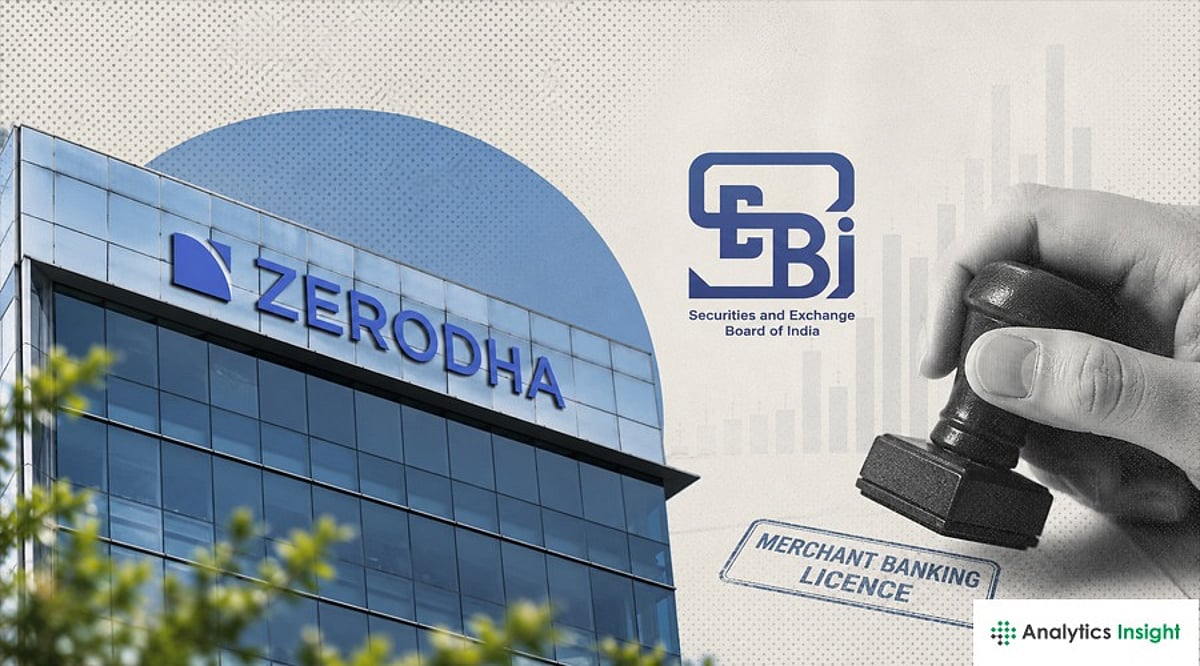
  • Zerodha Files for SEBI Merchant Banking License as Revenue Hits ₹8,847 Crore

    Zerodha Files for SEBI Merchant Banking License as Revenue Hits ₹8,847 Crore

    Zerodha, India’s largest stockbroker by active clients, is taking a significant step beyond its core business. The Bengaluru-based fintech company has applied for a Category I merchant banking license from the Securities and Exchange Board of India (SEBI), seeking to offer services such as initial public offering management, corporate advisory, and fund-raising. The application was submitted in April and awaits regulatory approval, a company spokesperson confirmed, adding that more details will be shared once the license is granted.

    Strategic Expansion into Investment Banking

    The move positions Zerodha to tap into India’s booming IPO pipeline, as dozens of startups and new-age companies prepare to go public over the coming years. A merchant banking license would allow Zerodha to help these firms navigate public offerings, raising capital through the stock market. This expansion comes as the company already offers a wide array of financial services—mutual funds, lending, asset management, startup investments via Rainmatter, international investing, and fixed deposits through its Coin platform.

    By adding investment banking to its portfolio, Zerodha aims to diversify revenue streams and reduce its reliance on brokerage income. In FY25, the company reported revenue of ₹8,847 crore and net profit of ₹4,237 crore, underscoring its financial strength as it ventures into new territory.

    Competition and Market Impact

    Zerodha’s entry into merchant banking could intensify competition in a sector traditionally dominated by established players such as JM Financial, Kotak Mahindra Capital, Axis Capital, and ICICI Securities. Industry experts believe that a digital-first approach from Zerodha may appeal especially to technology companies and startups, potentially improving service quality and offering more choices for businesses raising capital.

    The application aligns with a broader trend of fintech companies moving into conventional financial services. As India’s public markets continue to attract new issuers, more firms are seeking merchant banking licenses, which could foster a more dynamic capital market ecosystem.

    What This Means for Zerodha’s Future

    If SEBI approves the license, Zerodha will join a growing list of full-service financial companies. The company recently launched fixed deposit investments on its Coin platform, allowing customers to invest across partner banks from a single interface. Expanding into investment banking would further solidify its presence in the capital markets and create new income sources, supporting long-term growth.

    Zerodha’s latest move highlights how fintech innovators are reshaping traditional finance. With strong fundamentals and a loyal user base, the company is well-positioned to compete for IPO and fund-raising mandates in the years ahead—pending the regulator’s green light.