Tag: SEC

  • SEC Proposal Mandates Detailed Disclosures for Stock Tokens: Issuers, Custodians, and Blockchains

    SEC Proposal Mandates Detailed Disclosures for Stock Tokens: Issuers, Custodians, and Blockchains

    The U.S. Securities and Exchange Commission (SEC) is advancing a proposal that would require clearer disclosures for stock tokens, specifically detailing the roles of issuers, brokers, custodians, and the underlying blockchain. The formal comment period opened on September 4, 2026, with public submissions accepted until November 3, 2026. This initiative responds to the growing trading activity of tokenized equities, whose legal frameworks remain fragmented across various product documents.

    Understanding the Four Core Parties in Stock Tokens

    Most stock tokens involve four essential participants: the issuer, broker, custodian, and blockchain. These parties collectively define who creates the instrument, sells it, holds the underlying shares, and records investor positions. Notably, the issuer is often a separate entity from the public company whose stock price the token tracks. This issuer creates the token and provides economic exposure to the share price without transferring direct ownership, making the issuer the investor’s counterparty rather than the listed company. Should the issuer fail, the value of the underlying share does not mitigate the investor’s exposure to that issuer.

    Broker and Custodian Roles in Investor Protection

    Brokers provide the account through which investors buy and hold the product, and their regulatory authorization is critical—investors can verify this status via public registers of relevant supervisors. Custody arrangements add another layer of protection: in the event of broker insolvency, the treatment of the product depends on how underlying assets and customer positions are held within the custody structure. The blockchain also influences operational aspects, such as transfer availability and network uptime, which can affect the practicality of holding these tokens.

    Market Growth and Regulatory Scrutiny

    Weekly spot trading volume for tokenized stocks approached $3 billion in early August, driven largely by Robinhood Chain, BNB Chain, and Solana, according to Grayscale Investments. The tokenized-stock market capitalization now stands near $3 billion, compared to about $34.3 billion for tokenized funds. However, only around 5% of tokenized equities are used in on-chain financial applications like lending and collateral, with total value locked exceeding $110 million. Legal structures vary by provider; for instance, Robinhood’s Stock Tokens use debt securities to deliver economic exposure without legal ownership of the underlying shares.

    The SEC’s proposal aims to enhance transparency and investor protection by mandating that official filings disclose all relevant parties and the blockchain supporting each product. If enacted as written, investors would gain clearer insight into the operational and legal nuances of tokenized equities, a step toward integrating these innovative instruments into the broader regulatory framework.

  • Bitcoin ETF Inflows Surge as Ether Funds Experience Outflows

    Bitcoin ETF Inflows Surge as Ether Funds Experience Outflows

    US spot crypto exchange-traded funds posted mixed flows on August 3, as Bitcoin products gained $170.09 million while Ether funds recorded $11.42 million in withdrawals. XRP funds also attracted modest demand, while HYPE products posted losses.

    Bitcoin Funds Reverse the Previous Session

    SoSoValue recorded 2,657 Bitcoin entering listed US funds during the session. The holdings carried an estimated value of $170.09 million. The inflow reversed Bitcoin funds’ July 31 performance. Those products lost 4,217 Bitcoin, worth about $265.37 million, during that earlier session.

    Still, two daily readings do not establish a lasting trend. Crypto ETF flows can shift quickly as institutions adjust positions, manage liquidity, or complete fund creations and redemptions.

    Ether Outflows Break from Bitcoin Demand

    Ether products moved in the opposite direction on August 3. SoSoValue recorded 5,805 Ether leaving US funds, with an estimated value of $11.42 million. The result reversed the July 31 reading, when Ethereum funds gained 4,834 Ether worth about $9.03 million. Therefore, Bitcoin demand recovered as Ether demand weakened.

    Could this split show that investors now assess each crypto asset separately instead of treating the market as one trade? The August 3 data showed clear asset-level differences. XRP products gained 1.06 million tokens worth nearly $1.15 million. Meanwhile, HYPE funds lost 17,770 tokens, valued at about $964,320.

    Funds linked to Solana, Chainlink, BNB, Avalanche, Polkadot, Dogecoin, and Litecoin also reported positive daily flows. However, the available data did not include complete dollar totals.

    ETF Mechanics Shape Daily Flow Figures

    BlackRock describes its iShares Bitcoin Trust ETF as a vehicle offering Bitcoin exposure through exchange-traded shares. Investors can gain access without managing wallets or direct custody. The SEC approved spot Bitcoin exchange-traded products in January 2024. Former Chair Gary Gensler said the decision covered listed products and did not represent approval of Bitcoin itself.

    In July 2025, the SEC allowed in-kind creations and redemptions through authorized participants. Commissioner Mark Uyeda said cash-only processing could create transaction costs and price slippage. In-kind processing allows qualifying institutions to exchange underlying assets directly for fund shares. As a result, daily flows can reflect institutional arbitrage, portfolio adjustments, and redemption activity.

    The SEC’s Division of Corporation Finance requires issuers to explain custody, valuation, creation, redemption, and material risks. These disclosures help investors compare products beyond one session’s totals.

    BlackRock also operates separate Ether products, including a staked Ether fund. Fees, liquidity, staking exposure, and portfolio rules can affect demand across similar Ethereum investment products. CoinShares recorded similar asset-level divergence earlier in 2026. Its May 5 report showed Bitcoin inflows alongside Ethereum withdrawals during uneven market conditions.

    Bitcoin funds led US crypto ETF activity on August 3 with $170.09 million in inflows, while Ether products lost $11.42 million. XRP funds posted smaller gains, and HYPE funds recorded withdrawals. The split followed opposite July 31 readings and reflected separate demand across listed crypto assets.

  • Senate Majority Leader Thune Anticipates CLARITY Act Vote, but No Date Set

    Senate Majority Leader Thune Anticipates CLARITY Act Vote, but No Date Set

    Senate Majority Leader John Thune expects an initial CLARITY Act vote before the summer recess, but no vote appears on the Senate schedule. His August 3 remarks left unclear whether senators will begin full debate or take only an early procedural step.

    Thune Signals Intent Without a Firm Date

    Thune told reporters, “I think market structure we’ll get a vote on. Whether we can get on it or not, we’ll see.” He also cited other unfinished Senate business. The August 4 agenda did not name the CLARITY Act. Instead, the Senate planned to resume consideration of H.R. 6500, a vehicle for a continuing resolution. The floor log said, “There are no votes scheduled at this time.”

    Leaders can still add votes after filing a motion, reaching an agreement, or securing enough support. Still, Thune did not identify whether he expected cloture, a motion to proceed, or another procedural action.

    Procedural Vote Doesn’t Equal Passage

    Most legislation requires 60 senators to end extended debate under cloture rules. A successful vote would move the bill forward, but senators could still face amendments and further procedural votes before the final passage. The House passed the CLARITY Act by 294–134 in July 2025. The Senate Banking Committee later advanced its version by 15–9 on May 14, 2026.

    These bipartisan results offer a base for negotiations. However, Republicans cannot reach the usual cloture threshold independently, so Thune needs Democratic votes while retaining concerned Republicans. Can Senate leaders resolve the disputes quickly enough to secure 60 votes and preserve enough floor time for final passage? The current schedule provides no firm answer.

    Ethics Disputes Complicate the Recess Push

    Ethics rules remain a major obstacle. Eleanor Terrett reported on August 3 that the White House had not answered a counterproposal from Senators Thom Tillis and Ruben Gallego. Terrett cited an unnamed source, not a public White House statement. The proposal reportedly covers enforcement and may give state attorneys general a role.

    A Reuters review found that the Senate proposal would restrict certain senior figures, including the president and vice president, from sponsoring or issuing digital assets. Justice Department enforcement would apply until January 2029.

    Meanwhile, seven Democratic negotiators said the proposal was not ready for passage. Catherine Cortez Masto, Angela Alsobrooks, Cory Booker, Ruben Gallego, John Hickenlooper, Mark Warner and Raphael Warnock requested further changes.

    Their concerns cover ethics, consumer protection, illicit finance, conflicts of interest and market integrity. They also pledged to continue talks, leaving a bipartisan agreement possible but unresolved. Bernstein analysts said passage before recess looked less likely. That view can coexist with Thune’s comments because an opening vote may occur without enough time for debate and final passage.

    Government funding also competes for attention. On July 21, Thune called market-structure legislation only ‘a candidate for consideration’ and described funding as the Senate’s leading immediate priority.

    The CLARITY Act would divide digital-asset oversight between the SEC and CFTC. It also addresses fundraising, exchange registration, anti-money-laundering rules, decentralized finance, stablecoin rewards and tokenized securities. The next concrete signal would come from an updated Senate schedule or a formal motion. A cloture filing or motion to proceed would provide clearer evidence that floor action had begun.

    A Brief Roundup

    Thune expects an initial vote on the CLARITY Act, but the Senate has yet to schedule one. Ethics negotiations, the 60-vote cloture hurdle and competing funding work still threaten full passage before recess. Readers should watch for a cloture filing, motion to proceed, or updated floor schedule.

  • SEC Moves Toward Independent Crypto Rules as CLARITY Act Stalls in Senate

    SEC Moves Toward Independent Crypto Rules as CLARITY Act Stalls in Senate

    The U.S. Securities and Exchange Commission (SEC) is preparing to establish its own regulatory framework for cryptocurrencies as the CLARITY Act faces procedural delays in the Senate. SEC Chair Paul Atkins has indicated that the agency can leverage its existing authority to address regulatory gaps if Congress fails to pass the bill.

    Atkins previously noted that the SEC and the Commodity Futures Trading Commission (CFTC) could “fill in the gaps” without new legislation, adding that regulators can “make do with our authority” while lawmakers continue negotiations. This approach places agency rulemaking behind the SEC’s broader Regulation Crypto Assets plan.

    SEC Prepares Regulation Crypto Framework

    In March, Atkins introduced Regulation Crypto Assets as a comprehensive framework for token offerings and digital asset oversight. The plan includes a token taxonomy, guidance on when an investment contract ends, and exemptions that could provide crypto projects with a clear route for raising capital.

    The SEC’s 2026 agenda calls for clearer rules covering crypto fundraising, custody, and blockchain-based securities trading. Atkins emphasized the need for formal standards rather than relying primarily on enforcement actions. Any final rules would require a proposal, public comment period, and a Commission vote before taking effect.

    CLARITY Act Faces Narrow Senate Window

    Meanwhile, the CLARITY Act cleared the Senate Banking Committee by a 15-9 vote on May 14 and passed the House by 294-134 in July 2025. The legislation would divide digital asset oversight between the SEC and CFTC while establishing federal rules for trading platforms.

    Several disputes continue to slow Senate negotiations. Democratic senators are pushing for stronger provisions on government ethics, consumer protection, illicit finance, conflicts of interest, and market integrity. Lawmakers are also debating protections for decentralized finance (DeFi) developers and limits on rewards tied to stablecoins.

    Senators Thom Tillis and Ruben Gallego have taken leading roles in negotiations over the bill’s ethics provisions. Details of any final compromise have not been publicly released. The bill still needs enough support to clear the Senate’s 60-vote procedural threshold before a final vote.

    August Recess Raises Pressure on Lawmakers

    The Senate’s planned state work period begins August 10 and continues through September 11, giving lawmakers a limited window to start the voting process before the break. Senate leaders are also handling nominations and other legislation competing for floor time.

    Atkins has stated that only Congress can fully “future-proof” crypto rules through market structure legislation. A statute could define agency powers more clearly and reduce the risk of later policy reversals. SEC rules alone cannot settle every issue involving the CFTC’s authority over digital commodities.

    Even so, the SEC can move first in areas covered by federal securities law, including token fundraising exemptions, custody standards, and rules for securities trading on digital platforms. Proposed rules could advance even if the CLARITY Act moves into a later Senate window.

    The SEC’s plan would not create a complete market structure law but would address areas already tied to federal securities rules. Coordination with the CFTC would remain necessary for digital commodities and platforms offering multiple token types. Congress would still control any wider division of federal authority.

    This fallback plan marks a shift from an approach centered mainly on lawsuits and case-by-case decisions, placing more crypto policy decisions with regulators while Congress continues negotiations. The Senate schedule will determine whether legislation or agency action shapes the next stage of U.S. crypto regulation.

  • SEC Chairman Backs CLARITY Act as Fed Decision Caps Crypto Recovery

    SEC Chairman Backs CLARITY Act as Fed Decision Caps Crypto Recovery

    The cryptocurrency market edged higher on July 29 after SEC Chairman Paul Atkins voiced support for the CLARITY Act, but the rebound remained limited as traders awaited the Federal Reserve’s interest rate decision. Bitcoin rose 0.62% to $63,895.34, while Ethereum added 1.12% and traded at $1,906.56. The overall market gained 0.57% over 24 hours.

    SEC Support Halts the Immediate Crypto Sell-Off

    Atkins stated on X that he remains committed to helping Congress advance the CLARITY Act and offered technical assistance during the legislative process. He emphasized that U.S. leadership in digital finance requires a regulatory framework that supports domestic innovators. His comments helped Bitcoin recover the $63,000 level after a broad market decline on July 28, when reports that the Senate had suspended its review pushed Bitcoin down about $3,000. Ethereum also lost about $100 and fell below $1,900 before Atkins’ statement halted the immediate sell-off.

    Senate Delay and FOMC Decision Restrict Demand

    The Senate Majority Leader placed a Russia sanctions bill ahead of the CLARITY Act, leaving little time for a vote before Congress began its August recess. Attention also shifted to the Federal Reserve’s rate decision at 2 p.m. Eastern Time on July 29. High borrowing costs can support demand for Treasuries and dollar assets. CME data showed a 70.6% probability that the Fed would keep interest rates unchanged and a 29.4% probability of a 25-basis-point increase. The modest rebound demonstrated that the market still faced competing policy signals.

    Bitcoin ETF Outflows Meet New ETH and SOL Funds

    Spot Bitcoin ETFs recorded a fourth consecutive day of net outflows, with the latest session producing $49.75 million in withdrawals. Institutional observers viewed the four-day pattern as a possible sign of portfolio repositioning rather than simple profit-taking. Meanwhile, Morgan Stanley launched the Morgan Stanley Ethereum Trust and Morgan Stanley Solana Trust on NYSE Arca, using the tickers MSSE and MSOL. Both funds charge a 0.14% expense ratio, described as the market’s lowest. Morgan Stanley also plans to stake part of each trust’s ETH and SOL holdings, passing staking rewards directly to investors. Amy Oldenburg, head of digital asset strategy at Morgan Stanley, said digital assets were becoming more important within diversified portfolios.

    Conclusion

    Atkins’ support helped Bitcoin and Ethereum recover, but Senate delays, the FOMC decision, and four straight Bitcoin ETF outflow days limited momentum. Morgan Stanley’s low-cost Ethereum and Solana trusts added another institutional route into digital assets. Attention now turns to the Fed announcement and Congress’s next steps.

  • XRP Price Today: Breakout Setup Strengthens as SEC and CFTC Classify It as a Digital Commodity

    XRP Price Today: Breakout Setup Strengthens as SEC and CFTC Classify It as a Digital Commodity

    XRP traded near $1.08 after a difficult first half of 2026, while technical indicators pointed to a possible breakout and U.S. regulators formally classified the token as a digital commodity. The token lost 27.1% in the first quarter and another 22.4% in the second quarter, yet analysts now identify a rare alignment of chart signals and seasonal trends that could support a recovery. At the same time, a joint SEC-CFTC interpretive release removed long-running uncertainty over XRP’s status under U.S. law.

    Technical Setup Points to a Breakout Attempt

    On the daily TradingView chart, XRP remains inside a descending broadening wedge. Traders often view that pattern as a late-stage accumulation formation. The Relative Strength Index has also formed a bullish divergence. Meanwhile, buyers continue to defend the local bottom near $1.05.

    Historical data from CryptoRank shows that XRP has not posted a negative third-quarter close in the past seven years. July has gained 4.19% so far, and previous summer reversals produced sharp rebounds after weak June performance. In July 2023, XRP rallied 47.6% after an early-summer decline. Likewise, a similar reversal in July 2025 produced a 35% return.

    To confirm a breakout from the wedge, buyers must push the price above the $1.12-$1.18 resistance zone. A successful move could open a path toward medium-term targets between $1.45 and $1.60, representing a projected upside of about 50%.

    Nevertheless, broader market weakness and slower inflows into U.S. spot XRP ETFs could limit short-term gains. Even so, the current consolidation continues to build a base ahead of the next directional move.

    The SEC and CFTC Formally Classify XRP as a Commodity

    On March 17, 2026, the Securities and Exchange Commission and the Commodity Futures Trading Commission published a joint interpretive release that named XRP as a digital commodity. The agencies issued the document under Release Numbers 33-11412 and 34-105020.

    The 68-page release divides crypto assets into five categories: digital commodities, digital collectibles, digital tools, payment stablecoins, and digital securities. Only digital securities fall fully under SEC jurisdiction, while the CFTC oversees digital commodities.

    The release also listed Bitcoin, Ether, Solana, Dogecoin, Cardano, Avalanche, Chainlink, Polkadot, Hedera, Litecoin, Bitcoin Cash, Shiba Inu, Stellar, Tezos, and Aptos in the digital commodity category. Reports counted either 16 or 18 named assets, depending on how examples in the document were interpreted.

    According to the release, a digital commodity derives its value from the programmatic operation of a functional crypto system and from supply and demand dynamics rather than from expectations tied to managerial efforts. The agencies applied that standard to XRP since the XRP Ledger operates independently of Ripple’s managerial control.

    Read More: XRP Slips to $1.10 Despite XRPL Crossing 8 Million Accounts

    A Broader Policy Shift Takes Shape

    The release also addressed when a non-security crypto asset may become part of an investment contract and when that status may end. In addition, it discussed airdrops, protocol mining, protocol staking, and wrapped versions of non-security assets.

    The guidance followed the SEC’s creation of the Crypto Task Force in January 2025 and the launch of Project Crypto as a joint SEC-CFTC initiative in January 2026. The agencies also announced a memorandum of understanding shortly before issuing the release.

    SEC Chair Atkins stated at the DC Blockchain Summit that the agency is not the ‘securities and everything commission anymore.’ CFTC Chair Selig said the wait was over and pledged to establish rules that would allow the crypto industry to operate onshore.

    What’s Next?

    XRP continues to trade within a key technical pattern as buyers target a breakout above the $1.12–$1.18 resistance zone. At the same time, the SEC and CFTC have officially classified XRP as a digital commodity, removing a major regulatory uncertainty while market participants watch for the next price move.

    Join our WhatsApp Channel to get the latest news, exclusives and videos on WhatsApp

  • Federal Judge Approves Elon Musk’s $1.5M SEC Settlement Over Delayed Twitter Share Disclosure

    Federal Judge Approves Elon Musk’s $1.5M SEC Settlement Over Delayed Twitter Share Disclosure

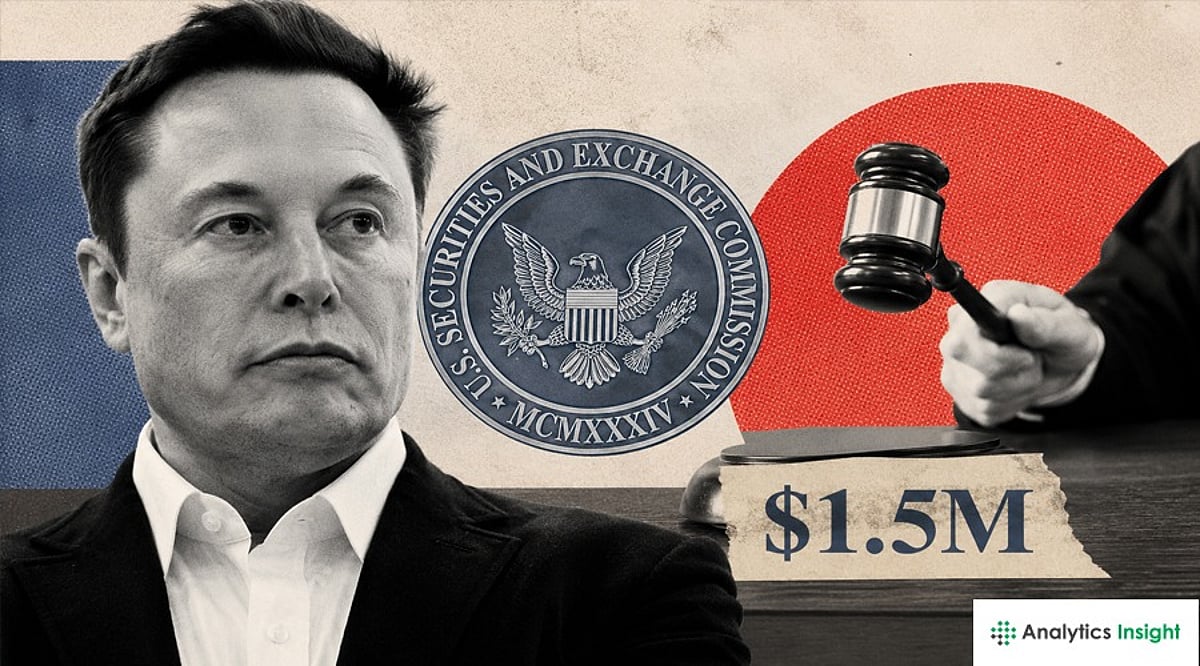
    A federal judge has approved Elon Musk’s $1.5 million settlement with the U.S. Securities and Exchange Commission (SEC) over his delayed disclosure of Twitter share purchases in 2022, despite expressing significant legal concerns about the agreement.

    U.S. District Judge Sparkle Sooknanan endorsed the settlement in Washington, D.C., ending the SEC lawsuit. However, the judge wrote that the court had “significant misgivings” about the terms but could not reject the deal under the applicable legal standard.

    Judge Questions Settlement Terms

    Judge Sooknanan reviewed whether the agreement met basic standards of fairness and reasonableness, noting that the court’s role was limited and did not permit a broader review of the SEC’s enforcement choices.

    In her opinion, Sooknanan stated that the court had to decide whether the settlement made “a mockery of judicial power.” She wrote, “Although the Court has significant misgivings about the settlement reached in this case, it cannot say that the settlement meets that high threshold.”

    The judge also pointed to “red flags” surrounding the agreement. She questioned why the SEC accepted payment from a trust in Musk’s name rather than requiring Musk to pay the penalty directly. Sooknanan noted that this arrangement left the court to wonder whether similar treatment would be extended to others accused of violating securities laws. She also expressed concern that the structure could allow Musk to publicly claim he had been cleared of wrongdoing.

    SEC Case Focused on Twitter Share Disclosure

    The SEC sued Musk in early 2025 over his purchase of Twitter shares before his full takeover of the company. The agency alleged that Musk waited 11 days too long in March and April 2022 to disclose his growing stake.

    Federal securities rules require investors to report when they cross certain ownership levels in public companies. The SEC argued that Musk’s late filing allowed him to continue buying Twitter shares at lower prices before the market reacted.

    According to the SEC, the delayed disclosure helped Musk avoid approximately $150 million in higher costs—described as gains tied to the delay. Musk has said the filing delay was accidental and did not admit wrongdoing under the settlement. The agreement states that a trust in his name will pay the $1.5 million civil penalty.

    Musk Settlement Ends SEC Lawsuit

    The approved deal resolves the SEC’s civil case related to Musk’s early Twitter stock purchases. Musk later completed his $44 billion purchase of Twitter in October 2022 and renamed the platform X.

    The case drew wider attention due to Musk’s public profile and his role in multiple major companies. He leads Tesla and is also tied to SpaceX, where X is now part of the broader business structure.

    Judge Sooknanan had previously questioned whether Musk was receiving “special treatment” under the Trump administration. Musk supported Donald Trump’s 2024 campaign, and the SEC filed the case shortly before Trump returned to office. Nevertheless, the judge said the court could not substitute its judgment for the SEC’s. She wrote that whether the government had done enough to hold Musk accountable was a matter for the public to judge “at the ballot box.”

  • Senate Committee Approves CLARITY Act: What the 15-9 Vote Means for Crypto Regulation

    Senate Committee Approves CLARITY Act: What the 15-9 Vote Means for Crypto Regulation

    The US Senate Banking Committee has taken a major step toward establishing a comprehensive regulatory landscape for cryptocurrencies with a 15-9 bipartisan vote to approve the Digital Asset Market Clarity Act of 2025 (CLARITY Act). The bill seeks to resolve the uncertainty around digital assets by establishing a clear regulatory framework that assigns the Securities and Exchange Commission (SEC) and the Commodity Futures Trading Commission (CFTC) to the different regulatory responsibilities.

    Introduced in May 2025 by House Financial Services Committee Chairman French Hill and House Agriculture Committee Chairman G.T. Thompson, the bill passed the US House of Representatives on July 17, 2025, with a bipartisan vote of 294 to 134. It would be the first full framework of US legislation for cryptocurrencies, exchanges, stablecoins, and decentralized finance (DeFi).

    SEC and CFTC to Share Crypto Oversight

    The CLARITY Act establishes a two-tier regulatory framework, with its classifications of digital assets depending on their attributes. The SEC would have authority over tokens that meet its definition of an “investment contract,” while the CFTC would have jurisdiction over sufficiently decentralized tokens, for example, Bitcoin and perhaps Ethereum.

    Among others, the “mature blockchain test” provides a mechanism by which projects can move from SEC to CFTC regulation once they meet criteria for decentralization. The criteria are based on caps on the concentration of token ownership, open-source development, decentralization of governance, and the utility of the token beyond speculation.

    The CFTC would also have direct authority over digital commodity spot markets for the first time, extending its regulatory jurisdiction.

    New Rules for Exchanges, Stablecoins, and DeFi

    It would mandate that registered and regulated crypto exchanges, brokers and dealers, in most cases, be centrally registered and abide by customer protection, disclosure, anti-money laundering restrictions (AML), Know Your Customer (KYC) and financial reporting requirements with the CFTC.

    The bill improves tax reporting by adding more platforms and expanding the definition of brokers to include additional coverage. The bill also mandates that additional platforms provide Form 1099-DA to users and the Internal Revenue Service (IRS).

    The use of ‘stablecoins,’ one of the most controversial parts of the bill, remains to be discussed. The Senate version allows returns to be based on the activities or transactions, but does not allow returns to be “economically or functionally equivalent” to bank deposit interest. The bill calls for the SEC, CFTC, and US Treasury, within one year, to establish in detail permissible reward structures.

    Meanwhile, the Blockchain Regulatory Certainty Act (BRCA), which was bundled into the CLARITY Act, gives a “carve out” exemption for non-custodial developers, exempting open-source wallet and protocol developers that don’t have access to customers’ assets from some fund transmitter regulations.

    What the Senate Vote Means for Crypto Markets

    In the majority press release, Chairman Tim Scott (R‑SC) framed the markup as a “historic” bipartisan step after nearly a year of negotiations, emphasizing that the legislation is intended to bring clearer rules, stronger safeguards, and a more transparent framework for everyday digital assets market participants.

    Two Democrats, Senators Angela Alsobrooks (D‑MD) and Ruben Gallego (D‑AZ), joined Committee Republicans to support the bill. Senator Alsobrooks also played a leading role in shaping the compromise language on stablecoin yield. However, not everyone in the legislature approves of the original bill. Committee minority staff released a national security advisory arguing that the current draft “fails to address key vulnerabilities” exploited by criminals, terrorists, and foreign adversaries.

    Why This Matters

    The CLARITY Act establishes the first unified US legal framework for crypto, ending years of regulatory confusion. By clearly dividing SEC and CFTC oversight, the bill provides a predictable path for developers while creating vital safeguards for institutional investors and consumers.

    What’s Next?

    After the committee vote of 15-9, Senate Banking and Agriculture Committee staff will combine their respective bills on the crypto market structure and present a single bill for the full Senate to vote on, which will need 60 votes to avoid a filibuster. Should it become law, the CLARITY Act could redefine the US crypto landscape by offering clarity for Bitcoin, Ethereum, exchanges, and institutional investors, while also putting in place better consumer protections and compliance requirements.

    Frequently Asked Questions

    1. What is the CLARITY Act?

    The CLARITY Act (H.R. 3633) is a proposed US law that establishes a comprehensive regulatory framework for cryptocurrencies. It defines how digital assets are classified and which federal regulator oversees them.

    2. Why is the Senate’s 15-9 vote important?

    The bipartisan committee vote advances the bill to the next legislative stage, bringing it closer to becoming law. It also signals growing political support for clear cryptocurrency regulations in the US.

    3. How does the CLARITY Act divide SEC and CFTC oversight?

    The SEC would regulate digital assets classified as investment contracts, while sufficiently decentralized cryptocurrencies, such as Bitcoin and potentially Ethereum, would fall under the CFTC through the “mature blockchain” framework.

    4. What changes would the CLARITY Act bring for crypto exchanges and stablecoins?

    Crypto exchanges, brokers, and dealers would be required to register with the CFTC and comply with AML, KYC, disclosure, and customer protection rules. The bill also introduces clearer regulations for stablecoin rewards and expands crypto tax reporting requirements.

    5. Is the CLARITY Act now a law?

    No. The bill has passed the US House of Representatives and the Senate Banking Committee, but still requires approval by the full Senate before it can be signed into law and implemented by the SEC and CFTC.