
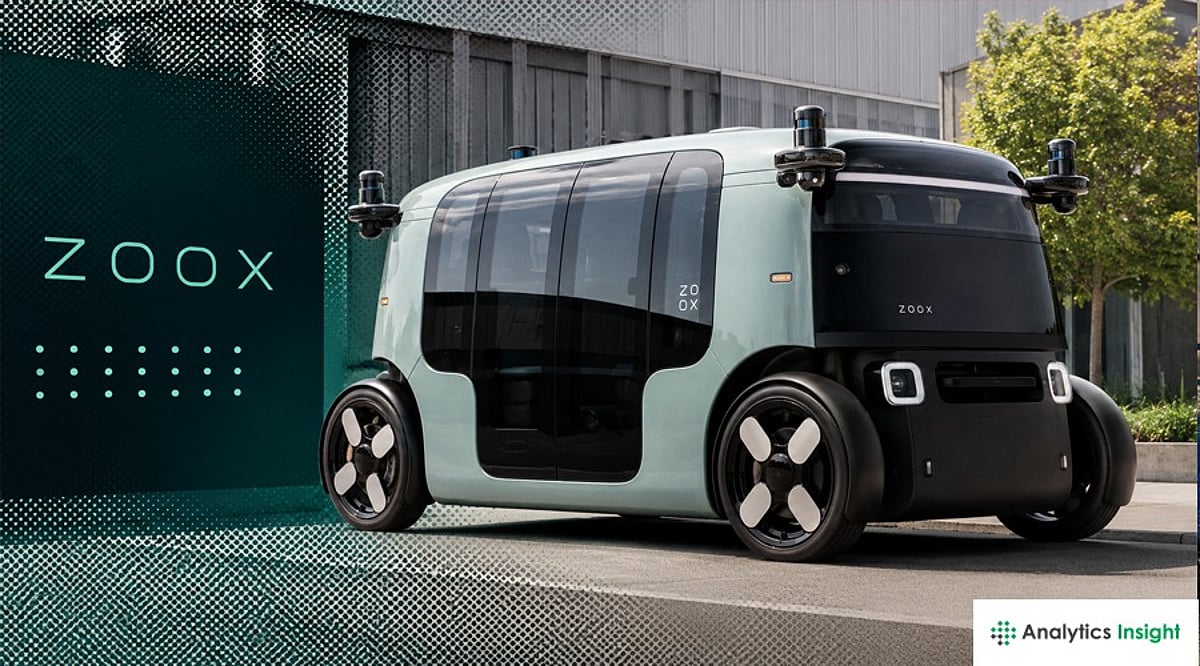
Amazon-owned Zoox has introduced an updated version of its purpose-built robotaxi as it prepares to ramp up production at its Hayward, California facility. The company says the new model incorporates feedback from approximately 500,000 riders and will join its autonomous ride-hailing fleet directly from the production line.
Cabin Gets Rider-Focused Upgrades
The updated Zoox robotaxi retains its signature face-to-face, carriage-style seating layout. Zoox has replaced the previous interior color scheme with aloe green seats, stone-grey flooring, and matching trim. The company also added more seat padding, refined the curves of the seats and headrests, and installed a brighter touchscreen. Additional daily-use improvements include larger cupholders and raised lines on the wireless charging surface to help keep phones in place. Lighter cabin materials make personal items easier to spot before riders exit, according to the company.
Chris Stoffel, Zoox’s director of robot industrial design and studio engineering, said the new cabin aims to reduce visual distractions. “The simplicity of the elevated interior design does not demand a rider’s attention,” he noted. The updates stem from passenger feedback gathered during testing and early services.
Exterior Enhancements for Communication and Visibility
Zoox also refined the robotaxi’s exterior, moving and improving bidirectional reflectors to make them more visible to other road users. Since the vehicle has no fixed front or rear, these signals help indicate its direction of travel. The door interface now includes a new speaker and microphone, and the two-way audio system has been expanded for clearer communication among riders, support staff, and first responders both inside and outside the vehicle.
The design continues to exclude a steering wheel, brake pedal, or other conventional controls, allowing for the face-to-face seating arrangement and complying with federal rules for automated vehicles without manual driving controls.
Production Target Tied to Regulatory Approval
Zoox plans to build the refreshed robotaxi at its 220,000-square-foot Hayward facility, which opened in 2025. The company states the site can assemble more than 10,000 robotaxis per year at full capacity and that production could reach 100 vehicles per week—though that target is subject to regulatory clearance. Zoox expects riders in Las Vegas to access the updated vehicle later in 2026, with expansion to other U.S. markets depending on vehicle supply, local plans, and approvals.
On June 25, 2026, the National Highway Traffic Safety Administration began rulemaking that could eliminate the requirement for manual brake pedals in vehicles built exclusively for automated driving, potentially easing Zoox’s deployment path. Until the process concludes, the company’s production and deployment schedule remains conditional.