
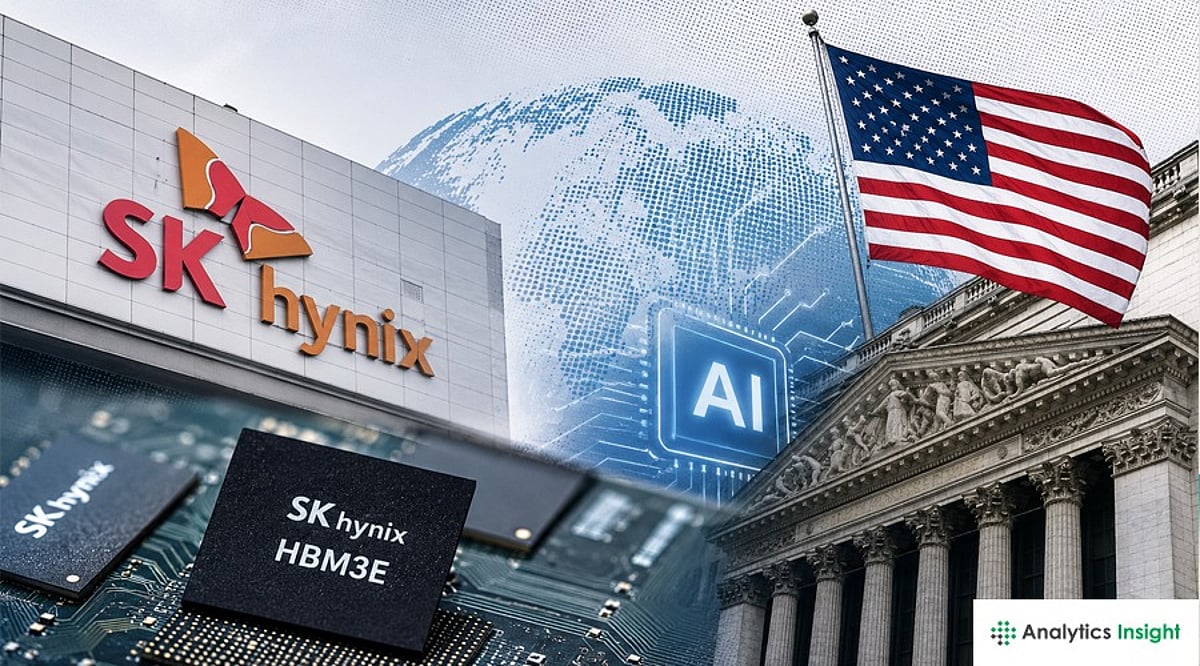
South Korean chipmaker SK Hynix is scaling back its US listing ambitions, trimming its target to roughly $28 billion amid growing concerns about the memory chip cycle. The company plans to offer American Depositary Receipts on the NASDAQ, aiming to raise funds for factory expansion and equipment purchases while the AI-driven demand for high-bandwidth memory continues to evolve.
According to regulatory filings, SK Hynix will issue 17.79 million new shares via depositary receipts, with ten ADRs representing one common share. The final pricing is expected on Thursday, with trading set to begin Friday. The revised target of about 43.141 trillion won ($28.21 billion) is lower than the earlier estimate of 45.453 trillion won, reflecting recent declines in the company’s Seoul-listed shares, which fell about 4% on Monday to 2,327,000 won. Broader pressure on memory chip stocks and a dip in the KOSPI index have contributed to the cautious outlook.
If completed, the deal would rank among the largest share sales in history, trailing only SpaceX’s record US listing last month and surpassing major offerings like Saudi Aramco and Alibaba. The proceeds will be used to expand chip facilities in South Korea and acquire advanced equipment, including ASML’s extreme ultraviolet scanners, essential for cutting-edge semiconductor production.
SK Hynix is a key supplier of high-bandwidth memory to AI infrastructure giants such as NVIDIA and Google. The company’s stock has surged this year, buoyed by AI demand, but investors remain wary of the memory cycle’s mid-stage timing. “We expect better access, but timing of the memory cycle is equally important,” said Sundeep Gantori, chief investment officer of equities at Standard Chartered. Steve Sosnick of Interactive Brokers noted that the US listing would primarily benefit individual and smaller institutional investors seeking momentum in AI-linked stocks.
The NASDAQ listing is expected to improve access for US investors and potentially narrow the valuation gap with rival Micron Technology. It could also pave the way for inclusion in the Philadelphia Semiconductor Index, tracked by global passive funds. Dave Mazza, CEO of Roundhill Investments, described the move as “more than a liquidity event,” emphasizing that SK Hynix has been a crucial company that most US institutions could not easily own.
South Korea’s broader semiconductor push, including a $576 billion chip and AI investment program led by President Lee Jae Myung, underscores the strategic importance of such expansions. Lee has urged officials to expedite permits and infrastructure to support the country’s advanced industry ambitions.