Tag: semiconductor

  • Top 10 Semiconductor Companies Driving the AI Revolution

    Top 10 Semiconductor Companies Driving the AI Revolution

    The rapid advancement of artificial intelligence is heavily reliant on cutting-edge semiconductor technology. From high-performance GPUs to specialized memory and fabrication, these ten companies are at the forefront of powering AI workloads across data centers, edge devices, and consumer electronics.

    • Nvidia: Leads AI computing with powerful GPUs that accelerate machine learning, generative AI, scientific research, and enterprise data center workloads globally.
    • AMD: Develops high-performance CPUs and GPUs supporting AI workloads, cloud computing, gaming, and enterprise applications with competitive processing capabilities.
    • Intel: Expands AI hardware through advanced processors, AI accelerators, and data center solutions supporting enterprise computing and intelligent automation.
    • TSMC: Manufactures cutting-edge semiconductor chips for leading technology companies, enabling advanced AI processors through world-class fabrication technologies.
    • Samsung Electronics: Produces advanced memory chips and semiconductor technologies powering AI devices, smartphones, servers, and high-performance computing systems worldwide.
    • Qualcomm: Designs AI-enabled mobile processors delivering intelligent photography, voice assistants, efficient performance, and edge AI capabilities across connected devices.
    • Broadcom: Develops networking chips, AI infrastructure components, and connectivity solutions supporting large-scale cloud computing and enterprise artificial intelligence deployments.
    • MediaTek: Builds AI-capable smartphone processors with efficient performance, intelligent imaging, and advanced connectivity for affordable consumer electronics worldwide.
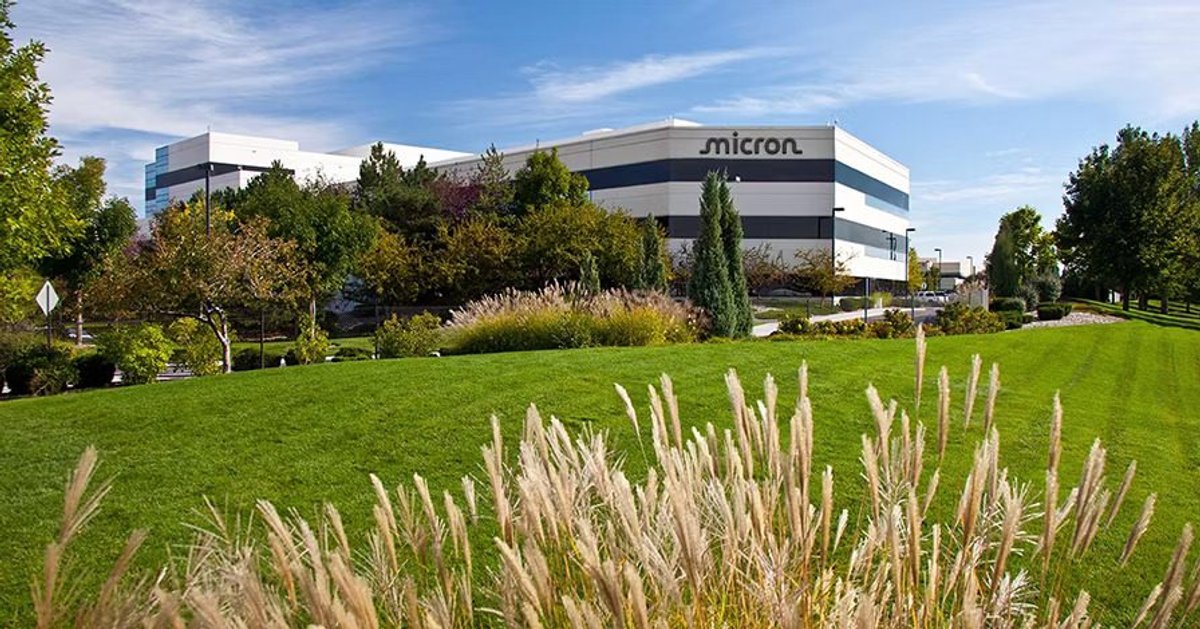
    • Micron Technology: Supplies high-performance memory and storage solutions essential for AI training, inference workloads, and modern data center infrastructure.
  • Samsung Refutes US Share Listing Rumors After SK Hynix’s Record NASDAQ Debut

    Samsung Refutes US Share Listing Rumors After SK Hynix’s Record NASDAQ Debut

    Samsung Electronics has officially denied recent reports that it is considering a United States share listing via American depositary receipts (ADRs). The denial follows a media report suggesting the company had held preliminary discussions with banks about a potential offering. In a statement, a Samsung spokesperson said, “Samsung Electronics is not reviewing the possibility of issuing American Depositary Receipts,” directly challenging the earlier account. The company did not elaborate on any past discussions or its reasoning.

    The earlier report indicated that any talks were at a very early stage and that Samsung had not decided whether to proceed. It also noted that the review “may not result in a listing.” Samsung had previously explored a similar plan but ultimately chose not to move forward. ADRs allow foreign companies to list shares on U.S. exchanges, making them more accessible to American retail investors. Currently, Samsung Electronics trades primarily on the Korea Exchange, limiting direct access for U.S. investors.

    The speculation gained momentum after SK Hynix, Samsung’s main competitor in memory chips, completed a massive U.S. share offering. SK Hynix priced its ADRs at $149 each, raising approximately $26.5 billion — the largest U.S. listing by a foreign company, according to Reuters. The shares began trading on NASDAQ on July 10 and surged more than 12% on their first day, reflecting strong investor demand for exposure to memory chips used in AI data centers.

    Both Samsung and SK Hynix compete in the DRAM, NAND, and high-bandwidth memory markets, and both have benefited from surging demand for chips powering artificial intelligence servers. However, memory stocks remain volatile. SK Hynix shares later fell as some investors took profits, and market participants are closely watching production growth, chip supply, and the pace of AI infrastructure spending.

    Samsung recently released preliminary second-quarter results, estimating sales of about 171 trillion won and operating profit of approximately 89.4 trillion won — a dramatic increase from 4.68 trillion won a year earlier. Despite the strong profit growth, Samsung shares declined after the update, as investors weighed high expectations against concerns about future AI spending and potential oversupply. The company plans to publish detailed quarterly results on July 30.

    In June, Samsung and the SK Group announced major manufacturing expansions, each planning to build two new chip plants in South Korea. The combined investment totals 800 trillion won (about $536 billion). Additionally, South Korean companies including Naver have committed 550 trillion won to build 8.4 gigawatts of data-center capacity by 2029. For now, Samsung’s public denial leaves no active ADR plan confirmed. Any future U.S. listing would require a new official announcement or regulatory filing.

  • Samsung Accelerates Yongin AI Chip Fab Opening to 2029 as SK Hynix Shares Drop After NASDAQ Debut

    Samsung Accelerates Yongin AI Chip Fab Opening to 2029 as SK Hynix Shares Drop After NASDAQ Debut

    Samsung Electronics has announced plans to begin operations at its first Yongin semiconductor factory in 2029, advancing the original target by one to two years. The accelerated timeline reflects surging demand for memory chips used in artificial intelligence data centers and aligns with South Korea’s broader strategy to expand domestic chip production.

    Samsung’s Revised Timeline for Yongin Fab

    Previously, Samsung expected the first fabrication plant at the Yongin cluster to start operations in 2030 or 2031. A company spokesperson confirmed that the facility is now scheduled to open by 2029, placing the project on a tighter schedule. The Yongin site is part of a larger semiconductor cluster south of Seoul, where Samsung plans to build six chip factories. The first plant will serve as the foundation for subsequent construction phases.

    To meet the revised date, Samsung must prepare the land and begin major construction work early. The company aims to add production capacity as technology companies increase spending on AI infrastructure and advanced memory products.

    South Korea’s Push for Chip Production Expansion

    South Korean authorities are supporting faster construction by shortening approval periods and providing earlier access to essential infrastructure like electricity and water. The national strategy targets doubling the country’s memory-chip production capacity within five years, including expedited development of Samsung and SK Hynix factories in Yongin and a new semiconductor cluster in Gwangju.

    Samsung has also outlined plans to invest 400 trillion won in semiconductor factories in Gwangju and 56 trillion won in high-bandwidth memory facilities in Cheonan and Onyang. Its domestic semiconductor program covers existing operations in Pyeongtaek and the new Yongin cluster.

    SK Hynix is similarly expanding its production network. The company plans to complete the fourth factory at its Yongin cluster by 2033, moving the target forward from 2045.

    SK Hynix Shares Retreat After NASDAQ Debut

    SK Hynix’s American depositary receipts (ADRs) debuted on NASDAQ on July 10, opening 14% above the $149 offering price at $170 and closing the session 12.8% higher. The company raised $26.5 billion from the US offering, with demand exceeding available shares by more than seven times. SK Hynix plans to use the funds for factories and equipment related to rising AI chip demand.

    However, on Monday, SK Hynix shares dropped more than 15% in Seoul as investors took profits after the NASDAQ surge. The decline marked the stock’s largest single-day drop in nearly two decades and weighed on the broader Kospi index. CEO Kwak Noh-jung noted that memory demand could outpace production capacity beyond 2030 and warned that 2027 might become the industry’s worst year for memory supply as AI customers require more advanced chips.

  • Why Nvidia’s Forward P/E Is Falling Despite Its Rising Stock Price

    Why Nvidia’s Forward P/E Is Falling Despite Its Rising Stock Price

    Nvidia shares have climbed in 2026, yet the company’s forward price-to-earnings (P/E) ratio has dropped. This seemingly contradictory trend signals that analysts expect earnings to grow faster than the stock price, potentially leaving room for further gains.

    The stock closed the latest session at $210.96, with a forward P/E hovering near 22 to 23—well below its previous reading near 40. The decline in the valuation multiple reflects surging profit forecasts driven by robust AI demand and strategic investments.

    Earnings Growth Drives Down Forward P/E

    A forward P/E ratio divides a company’s share price by its expected earnings per share over the next year. The ratio can fall even as the stock rises when earnings estimates increase at a faster rate. Nvidia’s fiscal 2027 first-quarter revenue reached $81.6 billion, up 85% year-over-year, while GAAP net income soared 211% to $58.32 billion. Diluted earnings per share jumped 214% to $2.39, pushing future earnings estimates higher and compressing the valuation multiple.

    For the fiscal second quarter, Nvidia expects revenue of $91 billion (plus or minus 2%), indicating over 11% sequential growth. The company also projects gross margins near 75%, demonstrating that higher sales have not required a sharp decline in profitability.

    AI Demand Broadens Nvidia’s Growth Base

    Morgan Stanley maintains an Overweight rating on Nvidia with a $288 price target, calling the stock its “top semiconductor pick.” Analysts note that future growth may come from a wider customer base beyond the largest cloud companies, including AI laboratories, enterprise buyers, specialist cloud providers, industrial users, and national AI projects. Nvidia has also expanded beyond graphics processors into networking equipment and central processing units, adding more revenue opportunities inside large data centers.

    However, risks remain. Export restrictions could limit sales in China, and custom chips from major technology companies intensify competition. Nvidia has excluded China data-center computing revenue from its latest quarterly forecast, indicating that trade controls remain a factor in its planning.

    Supplier Investment Bolsters U.S. Expansion

    King Yuan Electronics, a Taiwan-based Nvidia supplier, plans to invest up to $1.4 billion in a U.S. chip-testing facility. The company said the project would expand its operations and strengthen its position in the semiconductor supply chain. Although specific location, construction schedule, and customers were not disclosed, the move follows broader investment by Taiwanese chip and electronics companies in the United States as demand for AI servers and advanced processors grows.

    Nvidia’s next quarterly report will provide a key measure of whether profit growth can continue outpacing the stock price. Revenue guidance, margins, and demand outside traditional cloud customers will shape the company’s forward P/E and its trajectory in the months ahead.

  • Samsung Reports 1,800% Profit Surge Driven by AI Memory Chip Boom

    Samsung Reports 1,800% Profit Surge Driven by AI Memory Chip Boom

    Samsung Electronics has announced a staggering 1,800% jump in operating profit for the first half of 2026, fueled by explosive demand for its advanced memory chips used in artificial intelligence systems. The South Korean tech giant estimates an operating profit of 89.4 trillion won (approximately $58.4 billion) for the period, compared to the same timeframe last year.

    Revenue also soared, with the company projecting sales of 171 trillion won in the quarter—a 129% increase year-over-year. Samsung plans to publish its full results later this month.

    The earnings highlight a dramatic shift in the semiconductor landscape driven by the global AI boom. Data centers and AI systems require high-performance memory chips, and supply remains tight, enabling Samsung and rival SK Hynix to raise prices and boost margins.

    Marc Einstein of Counterpoint Research called the estimate “among the best quarterly performances ever,” attributing the surge entirely to AI demand. Samsung is one of the world’s largest memory chip makers and supplies key players like NVIDIA and Google.

    According to IDC, the memory industry is experiencing a unique demand cycle concentrated in data center and AI infrastructure, which is expected to keep chip supplies tight for the next year. IDC analyst Bryan Ma noted that strong AI-related demand will continue to pressure supply.

    Despite the robust earnings forecast, Samsung’s shares fell 7% to 8% in Seoul trading, as some investors had anticipated even higher profits. However, the company’s market value has doubled since the start of the year, and SK Hynix has surged over 200%.

    South Korea’s Kospi index has risen more than 80% in 2026, driven by chip makers. The government recently announced plans to invest at least $880 billion in Samsung and SK Hynix-related projects to expand chip production. Analysts caution that the key risk is whether AI memory demand will sustain beyond next year.

    For now, Samsung remains a top beneficiary of the global AI infrastructure race.

  • India’s Semiconductor Ambitions Get a Boost as PM Modi Launches New Chip Plant and Electronics Roadmap

    India’s Semiconductor Ambitions Get a Boost as PM Modi Launches New Chip Plant and Electronics Roadmap

    India’s Electronics Sector Reaches New Heights

    India has solidified its position as the world’s second-largest mobile phone manufacturer, and Prime Minister Narendra Modi is now charting a bold course for the country’s electronics future. On July 4, 2026, Modi inaugurated the CG Semi Outsourced Semiconductor Assembly and Test (OSAT) facility in Sanand, Gujarat, marking a key milestone in India’s journey from assembling phones to producing semiconductors domestically.

    Speaking at the event, Modi emphasized that the plant represents the next logical step in a decade-long electronics revolution, moving the nation up the value chain and reinforcing its role in the global technology supply chain.

    The Shift from Phones to Chips: Key Numbers

    Modi highlighted India’s mobile manufacturing growth as the foundation for this shift. Since 2014, mobile phone production has surged approximately 33 times, making India the world’s second-largest mobile phone manufacturer and exporter. Overall electronics production has increased nearly sevenfold, while electronics exports have grown almost elevenfold over the same period.

    “The expansion of the semiconductor industry in India did not happen overnight. It is the next step in the electronics revolution that has taken place in India over the past decade,” Modi said. “First products, then components and now semiconductors… India is building the entire electronics value chain. This is the roadmap to Viksit Bharat. This is the next phase of Make in India.”

    Inside the Sanand Plant and Production Targets

    The Rs. 7,500 crore CG Semi facility has already begun commercial production of semiconductor packaging, with an initial annual target of 200 million chips. Modi expressed confidence that the plant will quickly scale toward a national goal of 500 million chips annually. Once the Sanand cluster is fully developed, he projected a daily output of 1.5 crore (15 million) chips.

    The Prime Minister credited the project as a collaboration between Indian, Japanese, and Thai industry partners. He also praised the facility’s diverse workforce, which includes women trained in states like Jharkhand, Madhya Pradesh, and Chhattisgarh, with some employees receiving advanced training in Malaysia. Modi called them representatives of a ‘Mini India’ operating within a single plant.

    Broader Make in India Push

    Modi tied the Sanand launch to a broader national roadmap, noting that four operational semiconductor facilities are expected in 2026 alone. The government’s goal is to cover design, manufacturing, packaging, and testing capabilities entirely within India. He framed this as the next phase of Make in India and a building block toward a ‘Viksit Bharat’ (Developed India) vision.

    He also pointed to parallel efforts to secure domestic access to critical and high-tech minerals needed to support long-term chip manufacturing, ensuring a resilient supply chain for the future.

    Political Framing and Reactions

    Modi used part of his address to contrast the current pace of semiconductor investment with what he described as a lack of follow-through on similar plans under previous governments, referencing past proposals that earmarked land near Gandhinagar and Sanand for chip projects but never materialized.

    Union Railway Minister Ashwini Vaishnaw and Gujarat Chief Minister Bhupendra Patel also spoke at the event, reinforcing the state’s positioning as an emerging hub within India’s broader semiconductor mission.

  • Anthropic Reportedly Discusses Custom AI Chip Development with Samsung

    Anthropic Reportedly Discusses Custom AI Chip Development with Samsung

    Anthropic is reportedly exploring the development of a custom AI chip and has held discussions with Samsung over a potential collaboration, according to The Information. The move places the AI startup among a growing number of technology firms seeking greater control over hardware as demand for AI computing surges.

    Earlier reports from Reuters indicated that Anthropic was considering in-house chip design to address concerns about AI hardware availability and supply constraints. However, key details of the proposed processor—including its intended use, integration into server systems, and performance targets—remain unconfirmed.

    According to the report, Anthropic has not finalized the chip’s specifications and declined to comment on the discussions with Samsung. The company reiterated that its current infrastructure strategy continues to rely on chips from Google, Amazon, and NVIDIA, and that there are no further updates on potential collaboration talks with Samsung at this time.

    The reported move reflects a wider trend among AI companies investing in custom silicon to improve efficiency and reduce dependence on dominant chip suppliers—particularly NVIDIA, which leads the market for AI accelerators used in large-scale model training and inference. As demand for AI computing expands across industries, firms are looking for greater control over cost, performance, and supply chains.

    Anthropic’s discussions come shortly after other major technology firms advanced their custom chip efforts. OpenAI recently introduced its first custom inference chip, Jalapeno, developed with Broadcom. Amazon continues to scale its Trainium chips for AI training workloads, and Google is expanding access to its Tensor Processing Units (TPUs) via its cloud infrastructure.

    Samsung already plays a pivotal role in the global semiconductor supply chain, manufacturing advanced chips for companies like NVIDIA and exploring partnerships with others such as Google. The talks between Anthropic and Samsung underscore the increasing convergence of AI software development and semiconductor manufacturing, as firms pursue tighter integration between hardware and AI systems.

  • AMD: Driving Innovation in Semiconductor and High-Performance Computing Solutions

    AMD: Driving Innovation in Semiconductor and High-Performance Computing Solutions

    AMD (Advanced Micro Devices) is a multinational semiconductor corporation headquartered globally, recognized as a premier supplier of high-performance computing and graphics technology. The company’s solutions, including the Ryzen and Radeon product lines, deliver commercial advantages through superior performance for PCs, gaming, data centers, and embedded systems. AMD’s mission is to enable technological innovation worldwide.

    About the Company

    As a global leader in semiconductor technologies, AMD transforms the computing and graphics experience for users across every sector. The company supplies next-generation solutions for high-performance computing and advanced processing in PC, gaming, data center, and embedded markets. AMD is renowned for its processors built from cutting-edge graphics technologies and adaptive solutions that stimulate innovation and deliver engaging digital experiences globally.

    AMD focuses on high-performance computing, continuously innovating for future generations of technology, including artificial intelligence functionality, advanced graphics, and enterprise solutions. As digital transformation evolves across industries, AMD stands as a key innovator shaping the future of technology.

    Core Leadership Team

    Note: Source material does not provide specific names or roles for the leadership team. Prominent executives include Dr. Lisa Su (CEO) and other industry leaders guiding corporate strategy.

    Revenue Streams

    AMD generates revenue through the sale of CPUs (Ryzen, EPYC), GPUs (Radeon), semi-custom chips for video game consoles, data center solutions, adaptive computing products, AI-based technologies, and licensing. These offerings address consumer, commercial, and enterprise markets worldwide.

    Client Segments

    B2B: Enterprises, governments, educational institutions, retailers, app developers, advertising agencies, content creators. Target companies include large corporations, SMBs, public sector organizations, tech startups, and e-commerce platforms.

    B2C: Age range 13–65+, covering low to high income levels, with a global presence spanning North America, Europe, Asia-Pacific, Latin America, Middle East, and Africa.

    Social Media

    Follow AMD on Facebook, Twitter, LinkedIn, YouTube, and the official website for the latest updates.

  • IBM’s Sub-1nm Chip Breakthrough: Nanostack Architecture Ushers in New Era for AI Computing

    IBM’s Sub-1nm Chip Breakthrough: Nanostack Architecture Ushers in New Era for AI Computing

    IBM has unveiled the world’s first sub-1nm chip technology, introducing a new three-dimensional Nanostack architecture designed for next-generation AI computing. The breakthrough promises higher performance, lower power consumption, and could reshape the future of semiconductor innovation across cloud computing, electronics, and advanced AI applications.

    Built on a 0.7nm (7 angstroms) process, the prototype vertically stacks transistors rather than relying solely on shrinking them. IBM said the technology is designed to support increasingly demanding workloads in artificial intelligence, cloud computing, and high-performance computing. As transistors approach atomic dimensions, continuing that trend through conventional scaling has become increasingly difficult because of power, heat, and manufacturing constraints.

    “The next frontier of semiconductor innovation isn’t just about making things smaller, it’s about rethinking how chips are built from the ground up,” IBM said in the announcement. The company noted that the technology marks the beginning of semiconductor development where transistor dimensions are measured in angstroms rather than nanometres. One angstrom is one-tenth of a nanometre, making the new technology a 7-angstrom node. To illustrate the scale, IBM noted that a human red blood cell is about 7,000 nanometres wide, roughly 10,000 times larger than the chip’s 0.7nm transistor node.

    IBM said the new chip packs nearly 100 billion transistors into an area roughly the size of a fingernail, almost twice the transistor density of its 2nm technology introduced in 2021. According to the company, the sub-1nm design can deliver up to 50% higher performance at the same power level, or up to 70% lower power consumption while maintaining the same performance, compared with its 2nm technology.

    “The era of simple scaling is over,” IBM said, adding that “future breakthroughs will come from integrating materials, devices, and architectures in entirely new ways.” IBM claimed that the technology can find applications in artificial intelligence, cloud computing, edge computing, cell phones, and other future electronics, where better performance with lower power consumption becomes increasingly crucial.

    IBM has led the world in developing the chips that power computing systems for decades, from early semiconductors in the 1960s to the world’s first 2nm node chip. The company also recently announced a plan to form Anderon, the world’s first pure-play quantum foundry.

    “IBM’s latest chip breakthrough marks a landmark moment in computing, pushing technology beyond the nanometer era to the scale of atoms. With our new nanostack architecture, we’re not just making smaller transistors; we’re reinventing how chips are built to deliver dramatically more power and energy efficiency,” said Jay Gambetta, Director of IBM Research and IBM Fellow. “This industry-first innovation continues IBM’s legacy of leading in next-generation technologies and sets the foundation for the next era of computing,” he added.

    IBM’s sub-1nm achievement underscores how semiconductor innovations continue to set new benchmarks for technology. With increasing demand for AI applications, semiconductor innovations can drive advancements in computing speed, energy efficiency, and other areas across the medical field, robotics, and beyond.

  • Micron Locks in $22 Billion AI Chip Deals with NVIDIA to Break Memory Market Cycles

    Micron Locks in $22 Billion AI Chip Deals with NVIDIA to Break Memory Market Cycles

    Memory chipmakers are rewriting their playbook. Long treated as interchangeable commodities, memory chips forced suppliers into brutal boom-bust cycles. Now, with AI demand surging, Micron Technology has secured $22 billion in multi-year commitments from customers like NVIDIA — a move designed to stabilize cash flow and shield production from market volatility.

    The agreements follow similar long-term deals by rivals SK Hynix and Samsung. Under these “take-or-pay” contracts, clients must either purchase chips or pay up anyway. Micron’s Chief Business Officer Sumit Sadana told Reuters that billions of dollars have been placed on Micron’s balance sheet as a show of confidence in the new business model.

    While the deals provide visibility and validate the AI demand narrative, analysts warn that the strategy remains a gamble. Memory stocks stay vulnerable to sudden downturns, and any cooling of AI demand could send buyers back to the negotiating table. Micron itself posted a $5.3 billion loss in 2023 when consumer electronics spending collapsed.

    Investors are watching whether Micron’s pricing power can last. The company argues that these long-term contracts push financial risk further into the future and turn chipmakers into strategic partners rather than commodity suppliers. New factory expansions will now require collaborative customer funding, keeping supplies tight until at least 2027.