Tag: SEO

  • Why CMOs Must Rethink Marketing for Generative and Agentic AI Search

    Why CMOs Must Rethink Marketing for Generative and Agentic AI Search

    AI-powered search is fundamentally transforming how consumers discover, compare, and evaluate brands online. Chief marketing officers (CMOs) are now moving beyond traditional SEO to embrace generative and agentic search strategies that prioritize brand authority, accuracy, and visibility across AI-driven customer journeys.

    According to Boston Consulting Group’s 2026 global survey of 300 CMOs, 96% reported that AI is driving an end-to-end transformation of their marketing function. However, only 8% said they are running campaigns where multiple AI agents operate autonomously. The vast majority—42%—still use generative AI primarily to assist humans with individual tasks in limited workflows.

    How AI Is Reshaping Brand Discovery

    BCG found that 90% of surveyed CMOs agree that generative AI is already changing how consumers discover and evaluate brands. AI assistants and recommendation engines now interpret queries, summarize information, and present options before a user ever visits a brand’s website. This shift means brands no longer have full control over their presentation during the discovery phase. If an AI system fails to surface a product or service, the brand can lose visibility despite strong conventional search rankings or significant media spend.

    The impact extends to the traditional customer funnel. BCG reports that 91% of B2C CMOs and 76% of B2B CMOs say AI-moderated, no-click discovery is reshaping their already nonlinear funnels.

    From SEO to AI Search Optimization

    While traditional search engine optimization remains relevant, marketers are increasingly investing in Answer Engine Optimization (AEO) and Generative Engine Optimization (GEO). The goal is no longer just to rank webpages but to ensure AI systems can accurately understand and surface information about a company, product, or service.

    This requires clear, authoritative, context-rich content, reliable product data, and a consistent presence across digital platforms. BCG describes agentic engine optimization as an emerging discipline alongside search and paid-media optimization.

    CMOs now need broader visibility metrics. Website traffic and keyword rankings remain important, but they must also track how often their brands are mentioned, recommended, or represented in AI-generated answers. Platforms like Writer.com that handle AEO and GEO optimization are beginning to address this need by monitoring brand mentions across AI search engines such as ChatGPT, Claude, and Perplexity, identifying content gaps, and generating on-brand content that AI systems can understand.

    Agentic Search Takes the Shift Further

    Generative search changes how consumers receive information; agentic AI goes further by helping consumers evaluate options, make decisions, and complete actions. BCG describes this as the emergence of agentic commerce, where AI agents become active participants in the customer journey from intent to purchase. Consumers give AI systems goals, preferences, and requirements rather than typing short keyword searches.

    BCG also notes that Google’s AI Mode data shows queries are now three times longer than traditional searches, with decision-oriented phrases like “which one” and “which of” among the fastest-growing types. This means AI systems can become a powerful intermediary between brands and customers, influencing which products are considered before any direct brand interaction.

    CMOs Face a New Operating Model

    The transformation is also changing marketing leaders’ responsibilities. Roughly half of surveyed CMOs reported that marketing now leads AI investment decisions within their functions, while 94% said CEO expectations of marketing have increased significantly over the past two years. Investment is rising accordingly: 43% of CMOs said their companies’ AI investments in marketing exceeded USD 15 million this year, up from 28% last year.

    Technology alone isn’t enough. About 80% of CMOs reported significant investments in AI-specific upskilling, and a similar proportion added responsible AI and ethics training.

    Brand Reputation Becomes More Visible

    AI-mediated discovery places greater importance on the consistency between what brands promise and what customers experience. AI systems aggregate reviews, complaints, service interactions, and other information when evaluating brands. Marketers must therefore consider not just campaigns and messaging but also customer experience, product performance, and public information that can influence AI representation.

    The emerging AI-search environment does not replace traditional SEO; it expands the scope of digital visibility. The bigger challenge for CMOs is ensuring brands can be discovered, accurately represented, and meaningfully evaluated across both conventional search and AI-mediated customer journeys.

  • 2026 Guide to Measuring Crypto AI Visibility: Essential Metrics and Tracking Tools

    2026 Guide to Measuring Crypto AI Visibility: Essential Metrics and Tracking Tools

    A crypto AI visibility tracker measures how often an answer engine names an exchange, wallet, or protocol when someone asks a buying question, and which sources it cites when it does. Collecting that number is the easy part. Knowing whether it means anything is harder, because the same prompt run twice can return a different answer.

    This is what to measure, where crypto answers actually come from, and how to tell a tracking figure that survives scrutiny from one that does not.

    What Does Crypto AI Visibility Tracking Actually Measure?

    Three different things, and they get reported interchangeably, which is where most of the confusion in this category starts.

    • Mention rate is how often a brand is named in the answer text.
    • Citation share is how often a page the brand controls, or a page that talks about it, appears in the engine’s source list.
    • Position is where the brand sits against competitors when the engine returns a ranked set.

    These move independently. A large exchange can be named in most answers and cited almost never, which happens when engines know the brand from training but reach for third-party pages when they need a source. The reverse happens to smaller protocols carrying one strong write-up.

    When a tool reports a single visibility score, the question to ask is which of the three it is built from and how they are weighted. The weights behind the citeOS score are published at citeos.io/methodology. Most vendors do not publish theirs, which is not disqualifying, but it does mean two scores are not comparable.

    Where Do AI Engines Actually Get Their Crypto Answers?

    Almost entirely from pages the brand does not own, and the mix is specific to this category.

    Across a corpus of 39,948 citation events covering 72 crypto brands between April and August 2026, spanning 17,276 pages and 4,395 source domains, 92.22% of citations pointed at pages the brand does not control. Its own domain accounted for 7.78%.

    The rest of the map, as a share of all citations recorded:

    • Long tail of independent sites: 79.09%
    • The brand’s own domain: 7.78%
    • YouTube: 4.49% (appears for all 72 brands)
    • Mid-tier crypto press: 2.27%
    • Aggregators such as CoinGecko and CoinMarketCap: 2.26%
    • Reddit: 2.19%
    • Other community sources: 1.34%
    • Top-tier crypto press: 0.36%
    • X: 0.29%

    This is what a horizontal tool built for B2B software cannot supply. It can report that a brand is invisible. It cannot say where to go, because it holds no map of which sources answer crypto buying questions.

    What Is Crypto Press Actually Worth for AI Visibility?

    Far less at the top than the rate cards imply, and this is the most checkable claim in the dataset.

    The four outlets crypto teams pay most for — CoinDesk, Cointelegraph, The Block and Decrypt — returned 143 citations between them across the entire corpus, which is 0.36%. A basket of 21 mid-tier outlets returned 907, or 2.27%, cited 6.34 times more often at a fraction of the placement cost. CryptoSlate on its own returned 312, more than double all four top-tier outlets combined.

    That basket is a judgement call and it is published on request.

    The mechanism looks like format rather than prestige. Mid-tier outlets publish more roundups, comparisons and “best X for Y” pages, and those are the pages engines quote. A single announcement piece, however good the masthead, is rarely the page that answers a buying question.

    None of this makes top-tier placement worthless. It buys trust transfer and human readers, and both are real. It is simply not what moves citations.

    Why Do Two Trackers Report Different Numbers for the Same Exchange?

    Because answer engines are non-deterministic. The same prompt, same engine, same day, can return a different answer and a different source list.

    On top of that sits personalisation. Account history, geography and logged-in state all shape what an individual sees. There is no single correct number for how visible a brand is in ChatGPT, only a distribution.

    Two tools can both be honest and still disagree, because they sampled different draws from the same distribution.

    What this rules out is spot-checking. Asking ChatGPT about an exchange, seeing a competitor named instead, and concluding there is a visibility problem is not measurement. It is one draw.

    How Many Samples Does a Crypto Tracking Number Need?

    Enough that the noise averages out, and the tool should say what it used.

    For reference, a single citeOS audit is 20 buyer-style prompts across 5 engines, which is 100 observation points per brand. The corpus behind the figures above is 39,948 events across 72 crypto brands.

    Evidence that sampling noise averaged out sits inside the data rather than in a claim about it. Citations scale with the number of pages that mention a brand at a rate of 1.48 per page, with a correlation of 0.80 and a coefficient of variation of 9.5% across brands of very different sizes. A constant that stable does not appear if per-answer randomness is driving the result.

    The practical test for any tracker is to ask how many times it probes each prompt per engine per cycle. If the answer is once, the output is a trend line drawn through noise. If the vendor cannot answer, that is also an answer.

    Appearance Rate Is Not Share of Citations

    This is the most common error in published AI visibility research, and it inflates numbers by an order of magnitude.

    Appearance rate asks: in what percentage of prompts did this source show up at all? Share of citations asks: of all citations recorded, what percentage went to this source?

    Reddit is the standard example. In this corpus Reddit appears for 71 of the 72 brands, which is close to universal, while accounting for 2.19% of citation volume. Both numbers are real and they describe different things. Published figures putting Reddit at 40% or more of AI citations are almost always appearance rates reported as volume shares.

    When a tracker reports a percentage, the only question that matters is which denominator it used. If the documentation does not say, treat the number as directional.

    What Should a Crypto Project Track That a General Tool Will Not?

    Three things, and they are why crypto teams usually outgrow a horizontal tool.

    • The category source map. Covered above. Without it, a low score is a diagnosis with no treatment.
    • Vertical-correct prompts. “Best crypto exchange” and “safest crypto wallet” are different buyer questions drawing on different source pools. A tracker that accepts typed prompts but holds no view on which prompts matter in a given vertical is a spreadsheet with an API attached.
    • Page treatment, not just page count. Being the subject of a page earned 6.22 citations in the data. Being one name inside someone else’s ranked list earned 3.78. Being mentioned nearby without making the list earned 3.39. Dedicated coverage converts better per page, while lists still carry more total volume because there are far more of them and one list serves many brands at once. A tracker that counts mentions without distinguishing these is measuring the wrong unit.

    Which AI Visibility Trackers Are Worth Looking At for Crypto?

    The category has a long tail of thin products. These are the ones with either real adoption or a published method behind them. citeOS publishes this page and appears in the list, placed where the same criteria put it rather than at the top.

    • Profound is the enterprise default and the most widely adopted tool in the category. Deep prompt coverage and reporting built for a team where this is somebody’s actual job. Overkill, and overpriced, for a five-person crypto marketing team.
    • Otterly.AI is the practical choice for small teams that want tracking running the same day. Less depth than Profound, materially cheaper, and enough to answer the basic question of whether a brand is being named.
    • Peec AI is built around competitive benchmarking, so it suits a team whose real question is not “are we visible” but “why is that exchange being recommended instead of us”.
    • Crawlux is the strongest crypto-native option. It covers ChatGPT with browsing, Perplexity and Claude, maps categories across DeFi, exchange, NFT, wallet and L1, and ships a token schema validator for FinancialProduct and CryptoExchange markup that no general platform offers. Free first audit, Pro at $25, Team at $49 for five seats.
    • citeOS runs 20 buyer prompts across 5 engines for 100 observation points per audit, scored against a database of 500+ ranked crypto outlets across 10 verticals, with the weights published. It has no schema validator, and it covers fewer engines than several tools in this list. What it holds that the others do not is the ranked crypto source database, which is what turns “you are invisible” into a named list of places to go.

    The wider general-purpose comparison is at best AI visibility tools, and the crypto-specific one at crypto AI visibility.

    What No Crypto Visibility Tracker Can Tell You Yet

    Citation counts are not traffic and they are not revenue. No tool in this category can currently connect a cited page to a deposit or a swap.

    Personalisation is unmeasured. Every figure above describes a clean baseline. A logged-in user with history in a different jurisdiction sees something else, and no published study yet quantifies how far that moves it.

    Five months is a short window in a retrieval landscape that keeps changing, and this source map is crypto only. It does not transfer to other categories.

    Frequently Asked Questions

    What is a crypto AI visibility tracker?

    A tool that runs buyer-style crypto prompts against answer engines on a schedule and records whether a brand is named, which sources are cited, and where it sits against competitors.

    How often should a crypto project track AI visibility?

    Weekly is enough for most teams. Daily tracking mostly buys noise unless the tool takes many samples per prompt.

    Can I check crypto AI visibility for free?

    Yes. Crawlux and citeOS both offer a free first scan, and DABLOCK publishes a free public index.

    Why does my exchange appear when I ask ChatGPT but not in the tracker?

    Non-determinism and personalisation. A logged-in session with history is not the same draw as a clean probe, which is why a single self-check is not measurement.

    Is AI visibility tracking different for crypto?

    The mechanics are the same. The source pool is not. Crypto answers lean on aggregators, mid-tier crypto press and YouTube in proportions that do not match other categories, and top-tier crypto press returns far less than its price implies.

    Does crypto PR improve AI visibility?

    Mid-tier placement does, measurably more than top-tier. In this corpus the four most expensive outlets returned 0.36% of citations against 2.27% for a basket of 21 mid-tier outlets.


  • AI Citation Tracking in 2026: Comparing the Best Tools for Source Visibility

    AI Citation Tracking in 2026: Comparing the Best Tools for Source Visibility

    Why AI Citation Tracking Matters

    In 2026, AI answer engines like ChatGPT, Perplexity, and Google AI Overviews are reshaping how readers discover content. Being mentioned in an AI answer is no longer enough—brands need to know which pages actually get cited as sources. Citation tracking tools reveal which content wins trusted source positions, how competitors compare, and where your site falls short. This article compares six leading AI citation tracking tools to help you choose the right one for your team.

    Top AI Citation Tracking Tools of 2026

    1. Ahrefs Brand Radar

    Best for deep data and enterprise-scale tracking. Ahrefs Brand Radar stands out with its AI Visibility Index, which covers over 460 million real prompts across six AI indexes: Google AI Overviews, Gemini, Perplexity, ChatGPT, Copilot, and Google AI Mode. The data comes from real searches in Ahrefs’ keyword database, not synthetic prompts, and updates monthly. The tool provides a clear citation view, separating pages found from pages cited, and tracks mentions, citations, impressions, and AI Share of Voice. A May 2026 update added bot visits and AI traffic data for cited pages. Pricing starts at $199/month for one AI index, with all platforms at $699/month including 2,500 custom prompt checks. Additional prompt packs start at $50.

    2. Profound

    Best for enterprise AI search teams. Profound targets larger brands needing a wider answer-engine view. Its Starter plan costs $99/month and covers ChatGPT with 50 prompts; Growth is $399/month for three answer engines and 100 prompts. Enterprise plans can cover up to nine answer engines and multiple companies. Profound checks citations, sentiment, rank, and competitive presence, linking source data to overall brand visibility.

    3. Peec AI

    Best balance of detail and cost. Peec AI provides strong source-level insights at a reasonable price. Starter is $95/month for 50 prompts, three models, and one project; Pro is $245/month for 150 prompts and two projects; Advanced is $495/month for 350 prompts and five projects. It measures visibility, position, sentiment, and shows which sources AI assistants cite. Supported models include ChatGPT, Gemini, Google AI Mode, and Perplexity, with more models on higher plans or enterprise.

    4. OtterlyAI

    Budget-friendly for smaller teams. OtterlyAI offers one of the lowest entry prices—$29/month for 15 search prompts across ChatGPT, Google AI Overviews, Perplexity, and Microsoft Copilot. Additional models like Claude, Google AI Mode, and Gemini cost extra. A July 2026 update enhanced its Citations Report with a Winners & Losers view, saved citation URLs, a detail view, and a timeline chart for citation changes.

    5. Semrush AI Visibility

    Best for SEO teams already using Semrush. Semrush AI Visibility costs $99/month per domain on annual plans, covering 25 custom prompts, 300 daily AI analysis queries, 1,000 daily Prompt Research queries, and one domain. It supports ChatGPT, Google AI, Gemini, and Perplexity. A site audit feature flags technical issues that might block AI bots, making it a single hub for search and AI data.

    6. Rankscale

    Broad model coverage at low cost. Rankscale starts at $20/month and covers AI Overview, AI Mode, Gemini, ChatGPT, Perplexity, Grok, and Copilot, plus several other model engines. Pro is $99/month for 1,200 credits (up to 4,800 AI answers). Its credit system provides flexible scaling without fixed prompt limits, ideal for brands that need wide coverage on a modest budget.

    Choosing the Right Tool

    The best tool depends on your goals. For deep, large-scale data, Ahrefs Brand Radar is unmatched. If you need enterprise-level multi-engine tracking, Profound fits. For small teams or tight budgets, OtterlyAI and Rankscale offer solid entry points. SEO teams might prefer Semrush for its integrated audit tools, while Peec AI balances detail and affordability. Evaluate your prompt needs, model coverage, and budget to pick the tool that turns AI citation data into actionable SEO insights.

    Frequently Asked Questions

    What is AI citation tracking?

    AI citation tracking monitors the websites and pages that AI answer engines cite when generating responses.

    Which AI citation tracking tool is best in 2026?

    Ahrefs Brand Radar is the strongest choice for deep, large-scale citation and AI visibility data.

    What is the most affordable AI citation tracking tool?

    Rankscale starts at $20/month, while OtterlyAI starts at $29/month.

    Why are AI citations important for SEO?

    Citations show which pages AI systems trust as sources, helping brands identify content gaps and improve visibility in AI-generated answers.

    Can AI citation tools track competitors?

    Yes. Several tools compare competing brands and sources to show who earns citations and where your brand is losing visibility.

  • Reddit’s AI Ad Revenue Soars as Search Traffic Volatility Spurs Growth Worries

    Reddit’s AI Ad Revenue Soars as Search Traffic Volatility Spurs Growth Worries

    Reddit posted stronger-than-expected quarterly revenue, fueled by AI-powered advertising tools, but warned that erratic search referrals are slowing U.S. user growth. The company remains optimistic about future revenue while working to reduce its dependence on external search traffic.

    The social media platform reported second-quarter revenue of $805 million, a 61% year-over-year increase that beat Wall Street estimates. Despite the strong financial performance and an upbeat outlook for the next quarter, Reddit shares fell about 12% in after-hours trading as investors focused on slowing domestic user growth.

    Search Traffic Remains a Key Challenge

    Reddit said changes in search engine algorithms have made referral traffic increasingly unpredictable, particularly in the United States. Chief Operating Officer Jen Wong described search referrals as “volatile,” noting that updates to search ranking systems continue to affect how new users discover Reddit through external search engines.

    Wong told Reuters that “SEO headwinds” caused by changes in search algorithms “more than offset” the company’s efforts in terms of user acquisition in the quarter. Still, product improvements are helping convert lower-engagement visitors from search engines into loyal app users, she said.

    Reddit also forecast slower revenue growth in the third quarter. However, the forecast range of $860 million to $870 million was above LSEG-compiled analysts’ average estimate of $829.1 million.

    “The company’s advertiser growth in the second quarter was 70% year-over-year. So, we continue to onboard a lot more new advertisers onto Reddit,” Wong said. She added that growth was particularly strong among mid-market and small- and medium-sized businesses and international advertisers.

    Executives said Reddit is working to convert more casual search visitors into logged-in app users through product improvements and better user experiences, reducing its dependence on external search traffic over time.

    AI Advertising Tools Continue to Deliver Results

    While search referrals remain inconsistent, Reddit’s investment in artificial intelligence is paying off in its advertising business. The company has expanded AI-powered tools that help brands create campaigns, generate ad copy, and target audiences based on conversations within subreddit communities.

    “Search referrals were choppy in the quarter, and traffic was more volatile later in the quarter, but the bigger picture is unchanged: the commercial business is strong,” Co-founder and CEO Steve Huffman said in a letter to shareholders. Huffman noted that AI overviews have yet to make a similar level of positive impact as traditional “10 blue links” on the company’s post-earnings call.

    These features have attracted a growing number of advertisers, particularly small and medium-sized businesses as well as international brands. The platform’s advertising business remained the primary growth engine during the quarter, helping Reddit outperform revenue expectations.

    For the third quarter, Reddit expects revenue between $860 million and $870 million, well above market forecasts, while adjusted EBITDA is projected to reach $385 million to $395 million. The strong guidance suggests the company remains confident about advertising demand despite broader macroeconomic uncertainty.

    Balancing Growth in the AI Search Era

    With the increase in adoption of AI-assisted search tools like Google’s AI summary service, the issue of whether users will keep clicking through to source websites is becoming a challenge that publishers like Reddit are dealing with.

    Despite the advantages of licensing information to AI firms and expanding globally, experts have reservations about Reddit’s ability to maintain user acquisition with an unpredictable pattern of search referrals. Reddit is convinced that it is hard to completely replace its community discussions and genuine user-generated content with AI summaries.

    In the future, Reddit’s plan is to concentrate on user engagement, expand its advertiser base, and improve products while dealing with the challenges posed by an AI-assisted internet environment.

  • How AI Search Is Reshaping Website Authority Measurement for Businesses

    How AI Search Is Reshaping Website Authority Measurement for Businesses

    For years, businesses have measured online success through familiar ranking signals: keyword rankings, page speed, and organic traffic. While those metrics remain relevant, the rapid rise of artificial intelligence is fundamentally changing how companies evaluate their website visibility. Today, website authority has become a critical indicator that determines whether a brand is found, mentioned, and trusted by AI-driven search experiences.

    Search engines have always used multiple ranking factors to judge content quality. Now, AI-powered search places even greater emphasis on trustworthiness, credibility, authoritative content, and digital footprint. Companies that focus solely on traditional SEO may overlook these evolving authority signals.

    Website Authority Has Become More Than SEO

    Traditional SEO audits typically assess technical issues such as crawlability, metadata, page performance, keyword optimization, and internal linking. These insights remain valuable, but they capture only part of the picture.

    Modern digital authority extends beyond technical optimization. Search engines and AI systems now evaluate a business’s overall credibility through a combination of signals that include:

    • Website authority
    • Backlink quality and diversity
    • Editorial mentions across trusted publications
    • Brand recognition
    • PR visibility
    • Content quality and expertise
    • Search visibility across multiple platforms

    Rather than viewing these elements in isolation, organizations are beginning to understand that collectively they shape how visible and trustworthy a brand appears online.

    Editorial Coverage Continues to Build Authority

    One of the most significant shifts in digital marketing is the growing importance of third-party validation. When reputable publications mention a company, publish thought leadership, or cover industry developments, those references strengthen a brand’s digital footprint. These editorial placements contribute to broader online credibility while expanding the number of trusted sources discussing a business.

    Editorial coverage also creates opportunities for high-quality backlinks, increased brand awareness, referral traffic, and greater visibility across search engines. As AI continues to synthesize information from trusted online sources, maintaining a strong editorial presence becomes increasingly valuable for long-term discoverability. This is why many organizations are investing more heavily in digital PR alongside traditional SEO.

    Measuring Digital Authority Requires a Broader Perspective

    Businesses often ask, “How authoritative is our website?” The answer is rarely found in a single metric. Understanding digital authority requires evaluating multiple factors simultaneously, including website performance, backlink profiles, search visibility, editorial presence, media coverage, and brand recognition. Looking at these signals together provides a more complete picture of how an organization is positioned within its industry.

    Recognizing this shift, Visionary Financial recently introduced AI Authority Builder, a platform designed to help businesses better understand their overall online authority through a complimentary AI website authority audit. Rather than stopping at technical analysis, the platform evaluates broader authority indicators while providing personalized recommendations for strengthening long-term visibility.

    Moving From Analysis to Action

    Finding authority gaps is only the beginning. Many companies struggle to determine next steps after performing a website audit. Recommended actions often remain abstract, leaving marketing departments to figure out how to connect with vendors and publications.

    Visionary Financial addresses this by combining authority reporting capabilities with an integrated marketplace for digital marketing services. Available services include:

    • Digital PR campaigns
    • Editorial placements
    • Authority-focused backlink opportunities
    • Media distribution
    • Industry-specific promotional campaigns
    • Crypto PR distribution for blockchain, Web3, fintech, cryptocurrency, and digital asset companies

    This integrated approach helps businesses translate authority insights into measurable marketing initiatives rather than treating website audits as standalone reports.

    Authority Will Continue to Shape AI Search

    Artificial intelligence is changing how data is organized, analyzed, and displayed on the web. Although search algorithms will continue to evolve, one thing is becoming clear: websites with reputable brands will have better chances of achieving sustainable visibility.

    Firms that invest in creating trustworthy content, earning media coverage, building high-quality backlinks, and developing strong branding will establish their position in an environment that demands not only technical optimization but also expertise and credibility.

    As businesses adapt to AI-driven changes, evaluating authority is becoming a necessary component of any marketing strategy—not just an add-on to SEO. The AI Authority Builder from Visionary Financial exemplifies this evolution, giving organizations the ability to assess their current standing and identify pathways to build the authority needed in the AI era.

  • Google Search Console Now Tracks Social Media Profiles: Insights for Instagram, YouTube, TikTok, and X

    Google Search Console Now Tracks Social Media Profiles: Insights for Instagram, YouTube, TikTok, and X

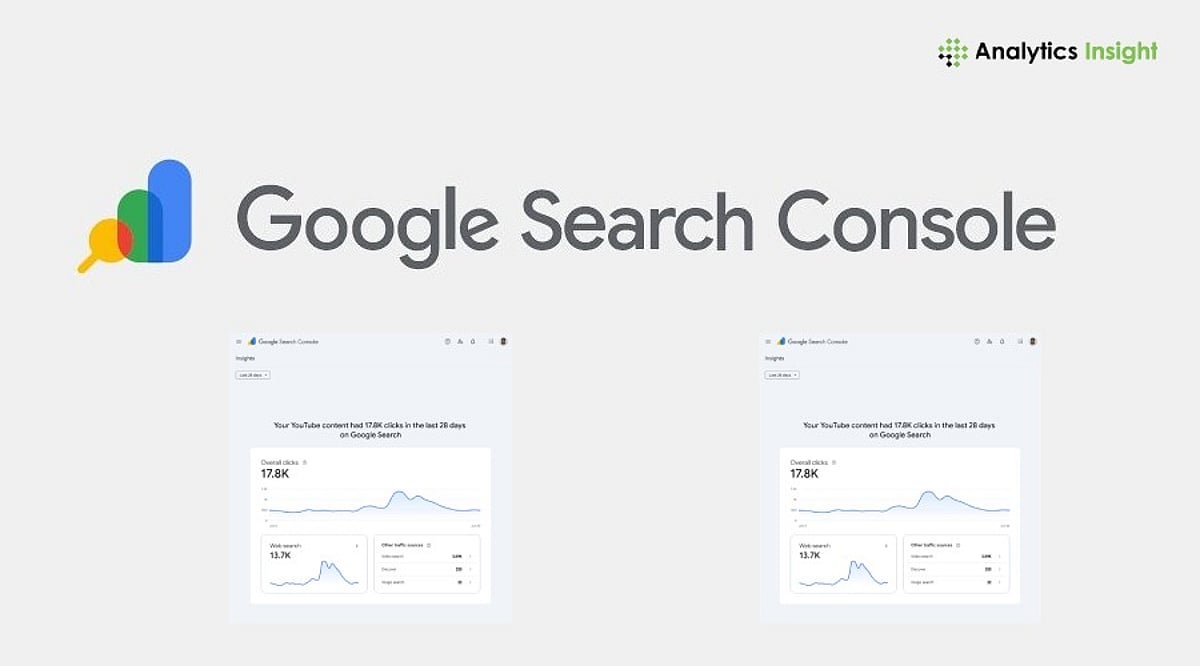
    Google has rolled out a significant update to Search Console, enabling businesses to monitor search performance for their social media profiles directly within the platform. The new feature supports Instagram, TikTok, X, and YouTube, allowing marketers and content creators to see how these accounts appear in Google Search and how users discover them.

    Search Console Adds Social Platform Reports

    With this update, Google Search Console introduces three dedicated reporting tools for social media profiles. The Performance Report delivers clicks, impressions, and other metrics, filterable by search queries or individual posts, with export capabilities. The Insights Report offers a high-level view of recent traffic trends, top-performing posts, and user discovery paths via Google Search. The Achievements Section lets creators track growth milestones, such as reaching new click thresholds in the last 28 days.

    To use the feature, users add a platform property in Search Console, select a supported platform, authorize the connection, and complete verification. This move signals that Google now considers social profiles a vital component of a brand’s online presence.

    Bridging Search and Social Data

    While many marketing teams rely on tools like Sprout Social, Hootsuite, or Buffer for cross-platform planning and tracking, Google’s new feature offers something distinct: it reveals how Google Search drives traffic to social accounts. This data was previously scattered and hard to consolidate. When combined with existing social media analytics, businesses gain a clearer picture of their overall online discoverability.

    This update brings search and social data closer together, helping marketers understand what truly brings audiences to their brand.

    Social Profiles as Digital Storefronts

    Google’s message is clear: social media pages are no longer just for posting content—they are essential digital storefronts. Many users search for a company’s Instagram page or YouTube channel before visiting its website. Businesses that keep these profiles active and optimized may improve their search visibility. The lesson for brands is straightforward: a strong social profile is not only about engagement but also about being easily found on Google.

  • Why Posting on Social Media Alone Isn’t Enough: Debunking the Biggest Digital Marketing Myth

    Why Posting on Social Media Alone Isn’t Enough: Debunking the Biggest Digital Marketing Myth

    Many businesses fall into the trap of believing that simply posting on social media will drive growth. While platforms like Instagram, Facebook, LinkedIn, and TikTok are essential for visibility, they are just one piece of a much larger puzzle. True digital success requires a holistic strategy that integrates SEO, paid advertising, email marketing, a well-optimized website, data analysis, and customer retention efforts.

    The Illusion of Social Media Reach

    With over 5.7 billion social media users worldwide and an average daily usage of 2 hours and 20 minutes, the numbers are staggering. However, the competition is equally fierce. Millions of brands post content every day, making it increasingly difficult for organic posts to gain traction. Algorithms now prioritize paid ads, entertainment, and creator-driven content, leaving organic business posts with limited visibility.

    You Don’t Own Your Audience

    A critical flaw in relying solely on social media is that you never truly own your audience. Followers belong to the platform, not your business. Algorithm changes can slash your reach overnight—a risk that has become all too common. Building on rented land is a fragile strategy.

    Engagement Doesn’t Equal Revenue

    High likes and comments can be misleading. A 2026 Kantar report highlights consumer fatigue with influencer-heavy and overly promotional content. Only about 6% of creator-based content drives both strong engagement and measurable business results. Attention does not automatically translate into customers.

    The Power of Search and Email

    Search engines bring users with high purchase intent. Unlike fleeting social posts, strong SEO rankings deliver traffic for months or years. Email marketing, often overlooked, boasts one of the highest ROIs in digital marketing. Subscribers are yours to communicate with directly—no algorithm interference.

    Paid Ads, AI, and Websites

    Modern marketing relies on AI-powered ad targeting, data-driven decisions, and personalized customer experiences. Social media creates awareness, but conversion happens on your website. Fast load times, clear messaging, and smooth user journeys turn visitors into paying customers.

    The Verdict

    Posting on social media is important, but it is not a complete marketing strategy. To achieve sustainable growth, businesses must combine multiple channels: SEO, paid ads, email, website optimization, analytics, and AI-enhanced personalization. Believing otherwise is one of the costliest mistakes in digital marketing today.

  • Top SEO Conferences and Events to Attend in 2026

    Top SEO Conferences and Events to Attend in 2026

    Stay ahead in the ever-evolving world of search engine optimization by attending the most impactful SEO events and conferences in 2026. These gatherings offer unparalleled opportunities to learn from industry leaders, network with peers, and discover cutting-edge strategies. Below is a curated list of must-attend conferences for marketing professionals.

    BrightonSEO

    One of the world’s leading SEO conferences, BrightonSEO features expert speakers, practical workshops, networking opportunities, and cutting-edge search marketing insights annually. It’s a prime event for anyone serious about SEO.

    SMX Advanced

    Designed for experienced marketers, SMX Advanced delivers advanced SEO, PPC, AI search, and analytics strategies from leading global industry professionals. Attendees gain deep dives into complex topics.

    MozCon

    MozCon offers actionable SEO sessions, community networking, expert-led presentations, and practical marketing insights for agencies, brands, and content creators alike. It’s known for high-quality, data-driven talks.

    INBOUND

    INBOUND combines SEO, content marketing, AI, sales, and customer experience discussions through inspiring keynotes, workshops, and extensive networking opportunities. It’s a holistic marketing event.

    DigiMarCon

    DigiMarCon covers SEO, social media, paid advertising, content strategy, automation, and digital innovation across multiple international conference locations every year. It provides a broad digital marketing perspective.

    Chiang Mai SEO Conference

    Popular among affiliate marketers and SEO professionals, this conference offers practical case studies, networking sessions, and profitable growth strategies discussions in a unique setting.

    Search Central Live

    Google’s official event helps marketers understand Search updates, indexing, technical SEO, structured data, and website optimization best practices effectively. Essential for staying aligned with Google’s guidelines.

    Content Marketing World

    Focuses on SEO-driven content creation, storytelling, audience engagement, AI tools, and measurable digital marketing success for businesses globally. A key event for content strategists.

    Affiliate World Conferences

    Brings together affiliate marketers, SEO specialists, advertisers, and technology providers to discuss performance marketing, AI, and business growth strategies. Ideal for those focused on affiliate and performance channels.

    Plan your 2026 calendar around these events to boost your skills, expand your network, and drive measurable results for your organization.

  • Proven Ways to Make Your LinkedIn Content Stand Out and Get Cited by ChatGPT

    Proven Ways to Make Your LinkedIn Content Stand Out and Get Cited by ChatGPT

    Want your LinkedIn posts to be discovered and referenced by AI-powered tools like ChatGPT? Follow these actionable tips to create content that both people and AI search engines find valuable and trustworthy.

    • Publish Original Insights: Share first-hand experiences, research, or unique analysis instead of repeating trending topics.
    • Write Clear Headlines: Use descriptive titles with relevant keywords so your content is easier to discover.
    • Support Claims With Sources: Reference reliable reports, studies, or official announcements to build credibility.
    • Keep Posts Well Structured: Use short paragraphs, bullet points, and clear formatting for better readability.
    • Focus on Expertise: Publish consistently within your niche to strengthen your authority over time.
    • Add Useful Visuals: Charts, infographics, and screenshots make your content more engaging and informative.
    • Encourage Meaningful Engagement: Ask thoughtful questions and respond to comments to keep discussions active.
    • Update Evergreen Content: Refresh older posts with new data and insights to keep them relevant and valuable.
  • Top SEO Agencies in India 2026: Best Companies for Digital Growth

    Top SEO Agencies in India 2026: Best Companies for Digital Growth

    India’s SEO landscape continues to evolve, with agencies delivering cutting-edge strategies to help businesses dominate search rankings. Here are the top 10 SEO companies in India for 2026, recognized for their expertise, results, and innovation.

    1. PageTraffic

    PageTraffic delivers enterprise SEO, local optimization, technical audits, and content strategies that help businesses improve search rankings and long-term online visibility.

    2. Techmagnate

    Techmagnate specializes in SEO, performance marketing, and content optimization for businesses seeking sustainable organic traffic growth across competitive digital industries.

    3. EZ Rankings

    EZ Rankings provides affordable SEO services, link building, website optimization, and local search strategies for startups, SMEs, and enterprise clients nationwide.

    4. IndeedSEO

    IndeedSEO offers customized SEO campaigns with keyword research, technical optimization, and digital marketing solutions tailored for businesses across multiple sectors.

    5. Incrementors

    Incrementors focuses on ROI-driven SEO strategies, conversion optimization, content marketing, and website improvements that strengthen organic search performance consistently.

    6. SEO Discovery

    SEO Discovery combines technical expertise, on-page optimization, and strategic content marketing to improve search visibility for businesses across domestic and international markets.

    7. Rankon Technologies

    Rankon Technologies delivers comprehensive SEO, local search optimization, reputation management, and digital marketing solutions designed to increase online customer acquisition.

    8. eSearch Logix

    eSearch Logix helps brands improve website rankings through technical SEO, quality content creation, link building, and data-driven optimization strategies for sustainable growth.

    9. ThatWare

    ThatWare integrates artificial intelligence with advanced SEO techniques, technical optimization, and semantic search strategies to maximize organic visibility and digital performance.

    These agencies are at the forefront of India’s SEO industry, offering tailored solutions for businesses of all sizes. Whether you need local SEO, enterprise-level strategies, or AI-driven optimization, these companies provide the expertise to boost your online presence.