
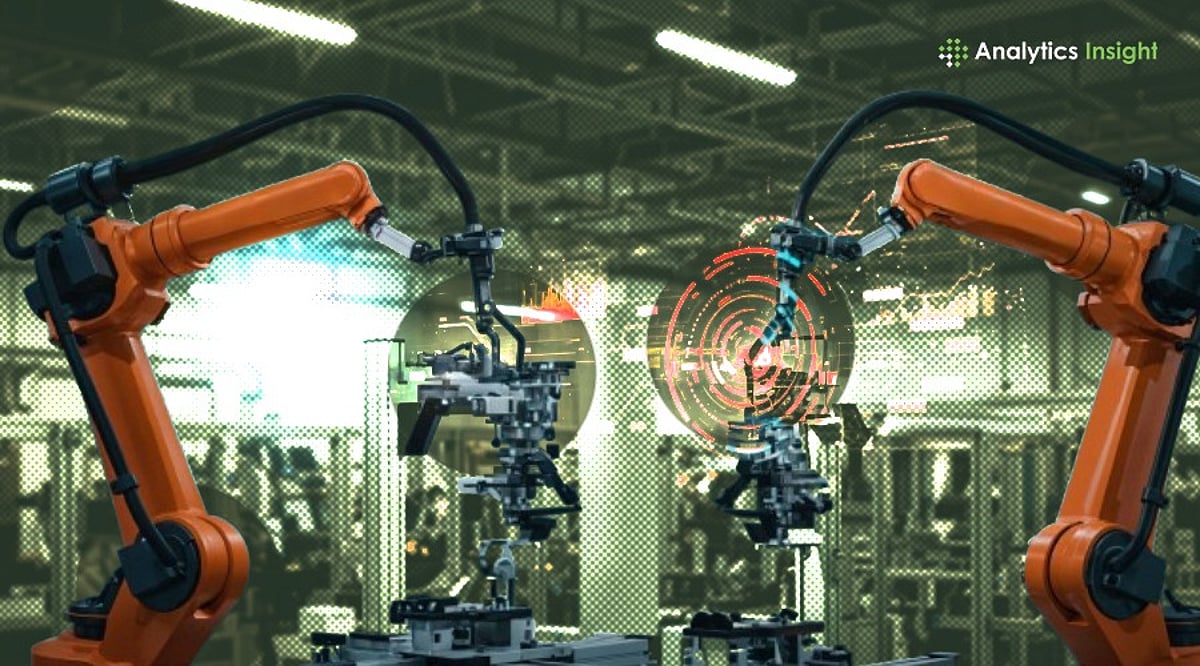
Manufacturers need smarter ways to increase productivity while reducing downtime and operational complexity. Siemens is building next-generation factories by combining IoT connectivity, AI-driven insights, and digital twin technology into a unified digital ecosystem. This approach enables continuous monitoring, virtual testing, and data-driven optimization across production.
The Three-Part System Behind the Strategy
Siemens leans on three technologies: Industrial IoT, AI, and digital twins. IoT sensors and connected machines log real-time data from the factory floor. This raw data feeds into the AI layer, which identifies bottlenecks, flags equipment likely to fail, and runs production scenarios before commitments are made. The digital twin—a working copy of the factory—lets engineers experiment without touching physical assets. Siemens has bundled all three into a single platform called Digital Twin Composer.
Digital Twin Composer: A Unified Platform
Unveiled at CES 2026, Digital Twin Composer merges 2D and 3D digital twin data with live operational information from manufacturing execution systems, plus physics-based simulation built on NVIDIA Omniverse libraries. The output is a photorealistic virtual environment mapping an entire plant, not just a single machine. This marks the point where an industrial digital twin stops being a design tool and begins functioning as a live operational model.
Where the Tool Lives Inside Siemens’ Stack
Digital Twin Composer sits within Siemens Xcelerator, the company’s broader software portfolio, and will be available on the Xcelerator Marketplace in mid-2026. One Xcelerator tool, Tecnomatix, handles manufacturing directly—optimizing material flow, equipment use, and supporting virtual commissioning to validate automation logic and production workflows before physical deployment. This cuts commissioning time and engineering risk.
What Early Numbers Show
PepsiCo offers the clearest evidence. Using Digital Twin Composer to transform select U.S. manufacturing and warehouse facilities, the company recreated machines, conveyors, pallet routes, and operator paths with physics-level accuracy. The pilot identified up to 90 percent of design issues in advance and lifted throughput by 20 percent before construction began. PepsiCo plans to scale globally.
The Bigger Platform Siemens is Building
Siemens ties all of this to what it calls the industrial metaverse—a unified environment where engineering, operations, and AI teams share the same live, contextualized model of the factory. Together with NVIDIA, Siemens is working toward an Industrial AI Operating System, a shared foundation linking design, engineering, and daily operations across a plant’s full lifecycle.
Analysts at Verdantix note that large-scale digital twin adoption has moved slowly, with barriers outside the technology itself. Manufacturers need IT and OT data convergence, stronger cybersecurity, proper data governance, and core systems like MES and MOM in place before a digital twin can generate real value.
Final Thoughts
The competitive edge in manufacturing is shifting from who collects the most data toward who can act on it fastest and with the least risk. Siemens has built a platform designed for that shift, and PepsiCo’s early numbers give other manufacturers a concrete benchmark. The next test will be whether that performance holds once Digital Twin Composer moves from early access into wide industrial use.