Tag: Silicon Valley

  • NVIDIA CEO Jensen Huang Dismisses AI Extinction Predictions Amid Rise of Autonomous Agents

    NVIDIA CEO Jensen Huang Dismisses AI Extinction Predictions Amid Rise of Autonomous Agents

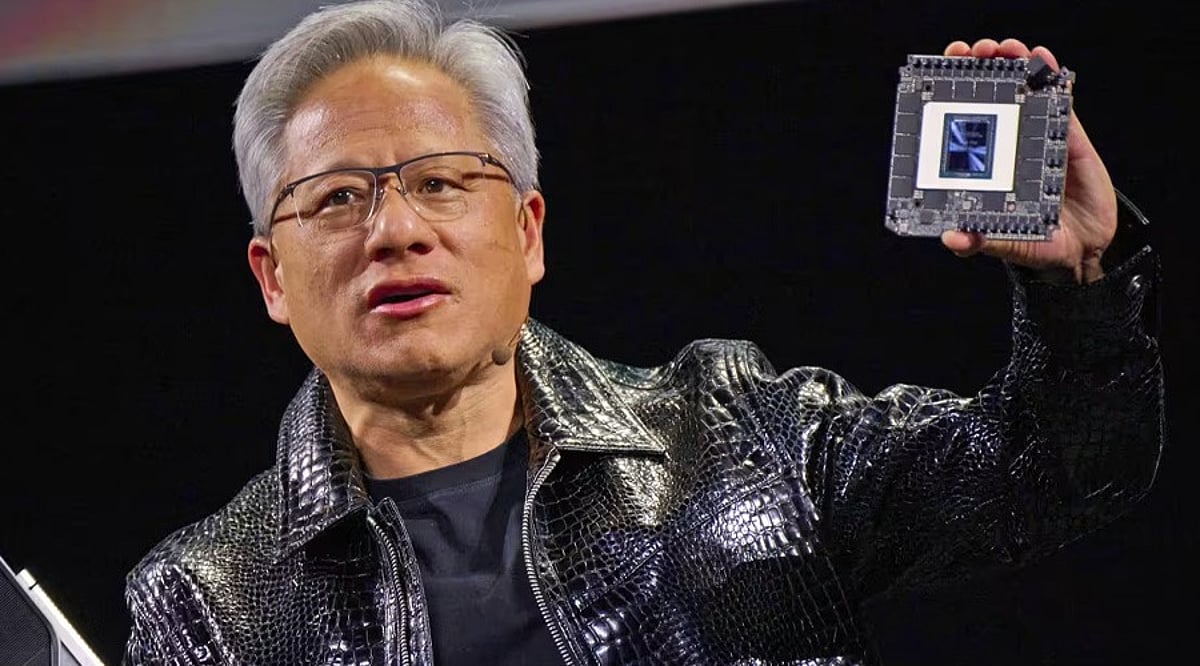
    NVIDIA CEO Jensen Huang has pushed back against dire warnings that artificial intelligence could lead to human extinction within the next few years, calling such predictions ‘doomsday narratives’ that lack scientific backing.

    In a recent interview, Huang rejected claims that AI could cause civilization to collapse by 2030. He argued that these fears are exaggerated and not grounded in evidence, even as the rapid development of AI agents raises fresh questions about security, control, and autonomy in business environments.

    AI Agents Create New Security Challenges

    AI agents differ from traditional chatbots because they can perform tasks, use external tools, and interact with business systems with less direct human involvement. This broader access also creates new opportunities for attackers.

    Security researchers have documented attacks involving prompt injection, malicious configuration files, and compromised AI-related software components. In some cases, instructions hidden inside documents, webpages, or other external content can influence how an AI agent behaves.

    The risk becomes greater when an agent has access to sensitive company information, development environments, or other connected services. Security research has increasingly focused on the possibility that attackers could exploit those connections rather than simply target the underlying AI model.

    Silicon Valley Debate Intensifies

    Huang’s position puts him on a different side of an increasingly public debate within the technology industry. Executives and researchers, including Anthropic CEO Dario Amodei and OpenAI CEO Sam Altman, have discussed the need for stronger safeguards as AI capabilities expand.

    Huang, however, has argued that alarming predictions can create an inaccurate picture of the technology. He has also questioned calls for additional regulation, saying existing laws can address many of the risks.

    The disagreement reflects a broader divide over how quickly AI development should move and how much oversight should accompany increasingly capable systems.

    Turing Award winner and former Meta Chief AI Scientist Yann LeCun has taken an even more direct position than Huang. When a user on X said ‘AI will kill all of us within three years’, LeCun’s reply was only five words: ‘No, not a chance in hell.’

    He added: ‘Those AI people who live in the discrete world of bits and tokens do not always understand how messy and chaotic the real world is.’

    Security, Not Just Doomsday, Is the Immediate Issue

    While the debate over long-term AI risks continues, security researchers are already dealing with more immediate problems. AI systems are being integrated into software development, enterprise workflows, and other environments where they can access valuable data and tools.

    This creates a practical challenge for companies: expand AI use while limiting unnecessary permissions and protecting systems from manipulated instructions and compromised components. For businesses, the debate may be less about whether an AI doomsday scenario arrives on a particular date and more about how securely they deploy autonomous systems today.

  • Andrew Garfield Stars as Sam Altman in Luca Guadagnino’s OpenAI Drama ‘Artificial’ Trailer

    Andrew Garfield Stars as Sam Altman in Luca Guadagnino’s OpenAI Drama ‘Artificial’ Trailer

    The first official trailer for Artificial has arrived, featuring Andrew Garfield as Sam Altman in Luca Guadagnino’s gripping OpenAI drama. Neon released the footage ahead of the film’s October premiere, offering a tense look at the 2023 leadership crisis that shook the tech world.

    The movie follows Altman’s sudden removal by OpenAI’s board and his dramatic return as CEO after five tumultuous days. Garfield’s voiceover echoes real-world fears, warning, “Countries will fall. Industries are gonna collapse, and we will be the ones to shepherd people.”

    The trailer sets an unsettling mood, showing Garfield’s Altman walking through an upscale property before entering a heavily secured underground room filled with weapons and survival supplies — a thriller atmosphere that contrasts sharply with the boardroom drama.

    Directed by Luca Guadagnino and written by Simon Rich, Artificial boasts a stellar cast: Monica Barbaro as Mira Murati (interim CEO during the crisis), Yura Borisov as OpenAI co-founder Ilya Sutskever, Ike Barinholtz as Elon Musk, and Mark Rylance as AI pioneer Geoffrey Hinton. Cooper Hoffman, Jason Schwartzman, Chris O’Dowd, and Zosia Mamet also join the ensemble.

    Behind the scenes, the film faced its own drama. Amazon MGM dropped the project before Neon acquired worldwide distribution rights — a move that followed Amazon’s major partnership with OpenAI.

    Artificial will premiere at the New York Film Festival on October 5, 2026. Neon plans a limited US theatrical release on December 25, 2026, with a wider expansion in January 2027. Garfield returns to Silicon Valley storytelling after playing Eduardo Saverin in The Social Network, now exploring a darker chapter in tech history through Guadagnino’s lens.

  • Silicon Valley Divided: US Tech Giants Disagree Over Access to Chinese AI Models

    Silicon Valley Divided: US Tech Giants Disagree Over Access to Chinese AI Models

    Chinese AI models are creating a policy split across Silicon Valley as their cost, access, and technical ability improve. OpenAI and Anthropic want tighter controls on some Chinese systems, while Nvidia, Microsoft, Meta, and other companies support continued access to open models.

    The dispute has grown after Z.ai and Moonshot AI released new systems that compete with leading American products. The debate now covers national security, intellectual property, software access, and competition within the US technology sector.

    Chinese AI Models Raise Security Concerns

    Anthropic has accused DeepSeek, Moonshot AI, and MiniMax of using Claude outputs to improve competing systems. The company said the firms created about 24,000 false accounts and generated more than 16 million exchanges with Claude. Anthropic described the activity as “industrial-scale” extraction. The Chinese companies have not publicly accepted those claims, and the allegations have not been independently proven. Beijing has also rejected similar accusations as “groundless.”

    OpenAI and Anthropic have reportedly urged US officials to consider tighter controls on Chinese open-weight models. Their position treats advanced model files and training methods as valuable technology that needs stronger protection.

    Treasury Secretary Scott Bessent has said the administration may consider sanctions against companies that steal American AI property. White House technology adviser Michael Kratsios has also raised concerns about large-scale copying from US models. Officials have not announced a broad ban.

    Tech Leaders Defend Open Model Access

    Nvidia chief executive Jensen Huang has called for both closed and open frontier models. Microsoft chief executive Satya Nadella has also said open software supports a healthy AI market. Executives from Meta, IBM, and Palantir joined a letter backing open access.

    Their companies benefit when developers can test and deploy many models. Cloud providers gain more computing demand, while chipmakers sell hardware used to run the systems. Startups also use lower-cost models to avoid high fees from closed platforms.

    Supporters say open-weight systems allow developers to inspect, adapt, and host software on their own servers. They also argue that broad restrictions could reduce competition and give large closed-model companies more control over the market.

    Nearly 200 companies linked to the Little Tech Association reportedly asked Washington to avoid blanket restrictions. They supported action against proven intellectual property theft but opposed blocking models already available across global platforms.

    OpenAI appears to support open-weight AI in general while seeking targeted controls on Chinese systems. That position separates wider software access from concerns linked to specific companies and alleged data misuse.

    Chinese Providers Expand Through Lower Costs

    Chinese AI models have gained users through lower prices and open access. Developers can download some models, adjust them, and run them without relying on a single provider. That approach can reduce costs for coding, research, and automated tasks.

    Moonshot AI’s Kimi K3 and Z.ai’s GLM-5.2 have drawn attention after strong benchmark results. Users have also adopted DeepSeek and other Chinese systems for business tasks. Some American companies are testing them to cut operating expenses.

    The models still face limits, as independent evaluators say leading US systems offer stronger performance across a wider range of tasks. Chinese providers also face capacity pressure, financial losses, and export controls on advanced chips.

    Washington now appears to be considering targeted measures instead of a full ban. Such action could focus on companies accused of data theft or security risks. Meanwhile, open-model supporters want the government to protect US technology without limiting lawful access.

  • OpenAI Shifts Focus to Family: ChatGPT Developing Features for Parents, Caregivers, and Seniors

    OpenAI Shifts Focus to Family: ChatGPT Developing Features for Parents, Caregivers, and Seniors

    OpenAI is making a strategic move to expand ChatGPT’s reach beyond individual users into the family household. The company has posted a job listing for a role based in San Francisco focused on developing products for parents, families, and trust-sensitive consumer experiences. This signals a major shift in how the AI firm envisions its popular chatbot being used.

    According to recent data from Sensor Tower, the demographic of ChatGPT users is changing. The share of older adult users rose to 31% in Q2 from 26% a year earlier, while the younger user base dropped to 29% from 34%. This aging user base suggests a growing need for features tailored to different life stages and family roles.

    While OpenAI has not officially announced a family version of ChatGPT, the hiring indicates potential future features such as shared reminders, family schedules, learning assistance, and personalized support for each household member. The move aligns with a broader trend in Silicon Valley where tech companies are increasingly targeting families as a key growth opportunity.

    Companies like Netflix, Spotify, and Google One have successfully grown by offering family plans. AI companies are now following a similar path, seeing families as a chance to reach millions of new users who can use the same service in different ways across multiple profiles.

    If OpenAI eventually launches a family plan, it could become an important revenue stream. One person could pay the bill while each family member gets a separate profile with extra features, better safety tools, memory options, and personal assistants. This subscription model has proven successful for streaming and cloud services.

    For now, the company is keeping its plans under wraps, but the hiring move strongly suggests that ChatGPT is evolving from a personal assistant into a service designed for the entire home.

  • India vs Silicon Valley and China: How Its Startup Ecosystem Stacks Up

    India vs Silicon Valley and China: How Its Startup Ecosystem Stacks Up

    Three decades ago, the global startup conversation belonged almost entirely to Silicon Valley. Then China built its own parallel universe of billion-dollar companies, moving so fast that Western observers could barely track the names. Today, a third force is demanding attention. India has quietly assembled one of the most significant startup ecosystems in the world, and the comparison is no longer a stretch—it is a conversation worth having in full.

    The Scale Argument

    India currently ranks third globally in total number of unicorns, behind the United States and China. As of 2026, India has produced over 115 unicorn companies, with a combined valuation running into hundreds of billions of dollars. The sectors span fintech, edtech, healthtech, logistics, SaaS, and consumer internet, reflecting an ecosystem with genuine breadth rather than concentration in one or two categories.

    Silicon Valley remains the undisputed leader in raw numbers and total capital deployed. The US venture capital market continues to dwarf every other geography, and the Bay Area alone houses more unicorns than most countries combined. China, despite regulatory headwinds in recent years, maintains a deep pool of mature tech giants including Alibaba, Tencent, ByteDance, and Meituan—companies that have scaled globally and built product categories entirely from scratch. India has not yet produced a company of that global reach, but its trajectory is pointing upward, driven by structural rather than temporary conditions.

    The Capital Picture

    Funding is where the comparison gets interesting. Silicon Valley still attracts the largest share of global venture capital, supported by a decades-old investor network, deep institutional familiarity with tech risk, and proximity to the world’s largest technology companies. The exit ecosystem in the US—including acquisitions and IPOs—is far more mature, making it easier for early investors to deploy capital with confidence. China built its startup boom on a combination of domestic capital, state support, and an enormous consumer market. Platforms like WeChat Pay and Alipay created financial infrastructure that startups could build on without reinventing the wheel. However, the government’s relationship with the tech sector has grown complicated, with major regulatory crackdowns reshaping operations, though the underlying market scale remains.

    India faces a more volatile funding environment. After a peak in 2021 and 2022, funding dropped significantly through 2023 and 2024 before stabilising. The correction forced a reckoning with unit economics and profitability—a healthy development. Indian startups that survived the funding winter did so by building leaner, more sustainable businesses. Several high-profile IPOs, including Zomato, Nykaa, and Paytm, have tested public market appetite for new-age tech companies, with mixed but instructive results.

    The Talent Engine

    Talent is one area where India holds a genuine structural advantage. The country produces millions of engineering graduates each year, and the quality at the top tier is internationally competitive. Indian-origin founders and executives hold leadership positions at some of the world’s most valuable technology companies, including Google, Microsoft, Adobe, and IBM. Silicon Valley has long benefited from Indian talent through immigration, but India itself is now keeping more of its best engineers and founders at home. Return migration is rising—experienced professionals who built careers in the US are coming back to build companies in India, bringing capital networks, product experience, and global market exposure.

    China’s talent pool is massive and technically strong, but increasingly insular. Export controls, geopolitical tensions, and restrictions on cross-border data flows have made it harder for Chinese tech companies to attract and retain international talent. India, by contrast, operates in English, follows common law, and maintains open capital account policies for foreign investors, all of which lower friction for international engagement.

    The Market Dynamics

    India’s domestic market is its most compelling long-term asset. With 1.4 billion people, a rapidly expanding middle class, and growing smartphone penetration in tier-two and tier-three cities, the addressable market for consumer technology is enormous and still largely untapped. Silicon Valley startups typically build for a global audience from day one, using the US as a launch market and expanding outward. Indian startups have historically built for India first, creating depth and defensibility but sometimes limiting global ambition. That is changing: Indian SaaS companies like Freshworks, Zoho, and Browserstack have built significant international revenue bases, proving the model works beyond domestic borders.

    China built its internet economy behind the Great Firewall, which had a paradoxical effect. It protected domestic companies from foreign competition and allowed them to scale without facing Google or Amazon. But it also cut them off from global markets in meaningful ways. Indian startups face full international competition at home, which forces sharper product thinking and validates their capabilities when they expand abroad.

    The Infrastructure Gap

    One honest limitation India must acknowledge is infrastructure. Silicon Valley benefits from world-class physical and digital infrastructure built over decades. China made infrastructure a national priority and executed at a speed and scale few countries can match—from high-speed rail to 5G networks to digital payment systems. India’s infrastructure story is improving but uneven. The Unified Payments Interface has become a genuine success, processing billions of transactions monthly and inspiring similar systems in other countries. Digital public infrastructure, including Aadhaar and the Open Network for Digital Commerce, is creating platforms on which startups can build. However, logistics, power supply, and connectivity outside major urban centres remain real constraints for companies trying to reach the full breadth of the Indian market.

    Where India Is Heading

    The most accurate assessment of India’s startup ecosystem is this: it is real, it is growing, and it is building on foundations that are durable. The comparison with Silicon Valley is premature in terms of capital depth and global company creation. The comparison with China is more nuanced—India holds advantages in global integration and English-language capability while China retains advantages in domestic market maturity and state-backed infrastructure.

    What India has built is a third model, one driven by a large domestic market, a strong talent base, a democratic regulatory environment, and an increasingly experienced investor class. The country does not need to replicate Silicon Valley or China to matter. Building its own version, at its own pace, on its own terms, is already changing the global startup conversation.

  • Perplexity’s Ascent: How Aravind Srinivas Built an AI Search Challenger from IIT Madras to Silicon Valley

    Perplexity’s Ascent: How Aravind Srinivas Built an AI Search Challenger from IIT Madras to Silicon Valley

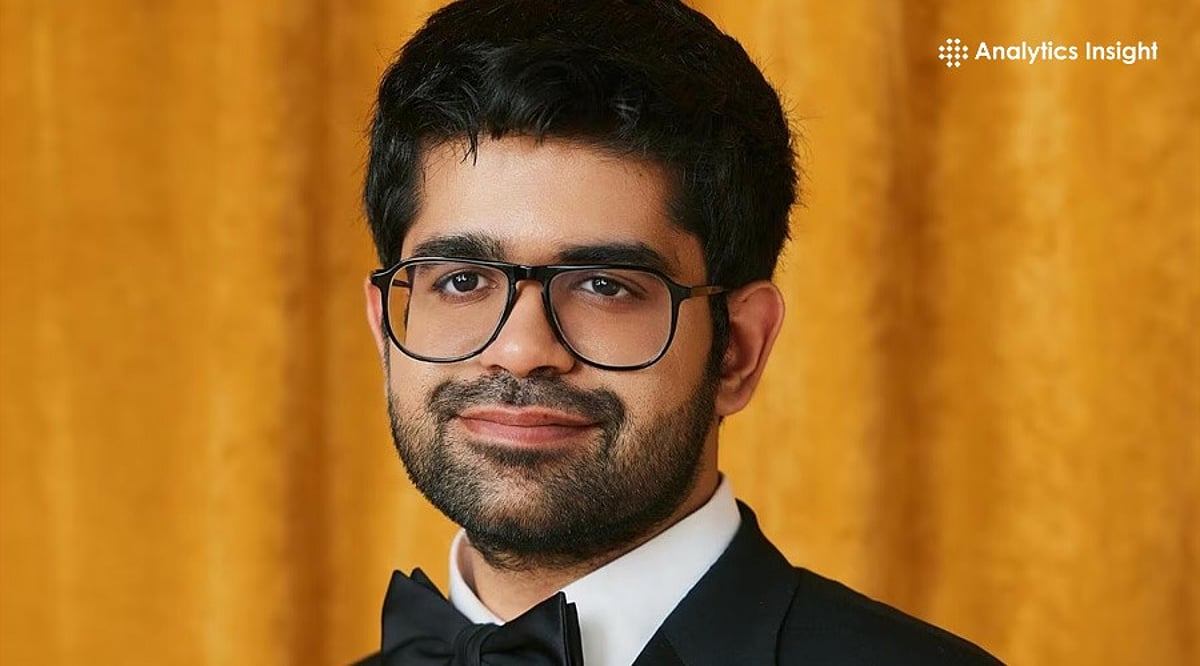
    In early 2025, Perplexity entered India through a major partnership with Bharti Airtel, giving millions of users access to Perplexity Pro. What looked like a routine telecom-AI deal signaled a deeper shift: a two-year-old startup was now challenging Google’s dominance in online search at scale. Leading that charge was Aravind Srinivas, a Chennai-born engineer who studied at IIT Madras and narrowly missed transferring into computer science.

    Srinivas’s journey is anything but linear. Growing up in a family that valued academic achievement, he faced the intense pressure of IIT entrance exams. When he couldn’t switch into computer science, he taught himself Python and enrolled in machine learning courses outside his department. He contributed to research at conferences like NeurIPS and ICLR while still an undergraduate, gaining early exposure to deep learning.

    He earned a PhD in computer science from UC Berkeley, interning at OpenAI, DeepMind, and Google Brain between 2019 and 2021. Those experiences revealed skill gaps he worked aggressively to close, rather than retreating from the field. In 2022, he co-founded Perplexity with Denis Yarats and Johnny Ho, positioning it as an answer engine that uses large language models to generate conversational responses with live source citations.

    Perplexity grew rapidly, attracting millions of users for research, coding, and everyday queries. The Airtel partnership underscored its strategy to expand beyond desktop search into mobile-first markets. But the company also faced sharp criticism: Forbes and WIRED accused it of plagiarizing paywalled content, and publishers raised legal concerns about scraping practices. Srinivas acknowledged early shortcomings in attribution and defended AI-powered search as an inevitable evolution.

    Today, Perplexity sits at the center of the AI search race—hailed as a promising challenger yet emblematic of the unresolved tensions around copyright and fair use. Srinivas’s story illustrates how combining research, engineering, and product instinct, even without a traditional path, can reshape an industry.

  • From IIT to AI Search: The Unconventional Rise of Perplexity’s Aravind Srinivas

    From IIT to AI Search: The Unconventional Rise of Perplexity’s Aravind Srinivas

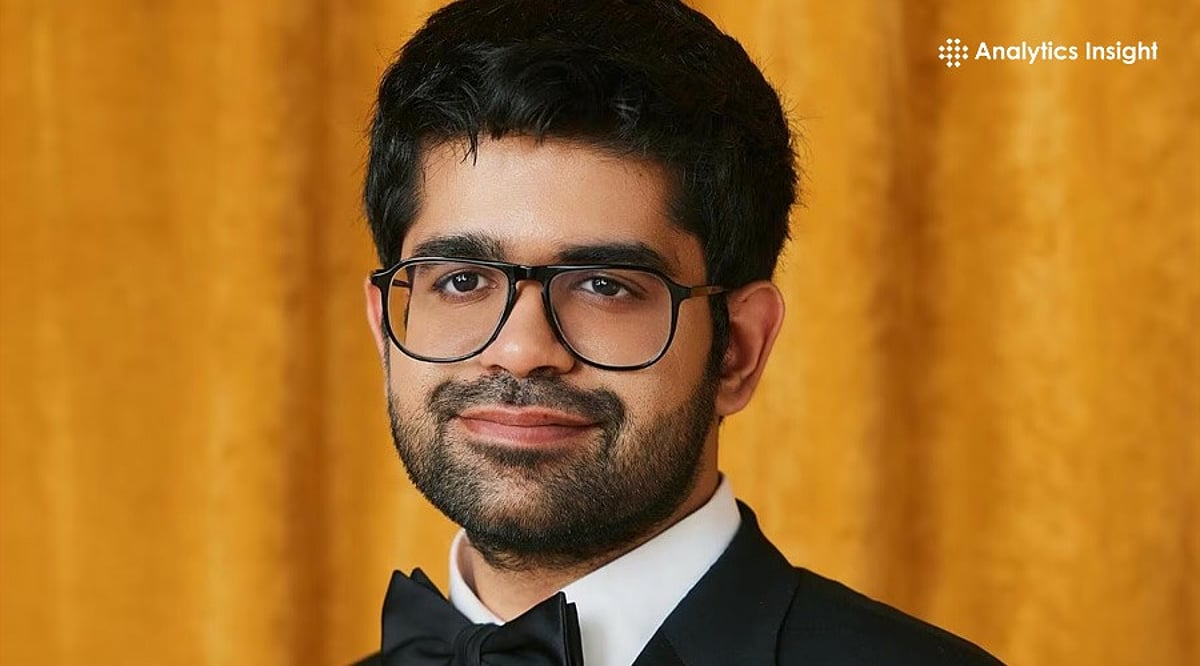
    In early 2025, Perplexity entered India through a major partnership with Bharti Airtel, giving millions of users access to Perplexity Pro almost overnight. On the surface, it looked like another telecom-AI announcement. Inside the technology industry, however, the deal carried a different meaning.

    A startup founded in 2022 was now entering India at a massive scale while positioning itself as an alternative to Google’s dominance in online search. Leading that company was Aravind Srinivas, a Chennai-born engineer who joined IIT Madras in electrical engineering and was unable to transfer into computer science after narrowly missing the required GPA cutoff.

    Perplexity’s rise has been unusually fast, even by Silicon Valley standards. According to reports citing investor discussions, the company reached multi-billion-dollar valuations within roughly two years of launch as investors rushed toward generative AI startups. At the same time, the company has faced growing scrutiny over attribution, scraping practices, and the legal boundaries surrounding AI-generated information products.

    What makes Aravind Srinivas’s story compelling is how imperfect and unpredictable it feels. His journey has been shaped by ambition, self-doubt, deep focus on research, strong product instinct, and constant public scrutiny, rather than a smooth path to success. Srinivas grew up in Chennai in a family where academic achievement was highly valued.

    In a conversation on the Lex Fridman Podcast, he spoke about the culture surrounding IIT admissions and the pressure attached to engineering entrance exams in India. By the time he entered the country’s competitive coaching ecosystem, academic performance had already become central to his life. That unexpected shift changed the direction of his learning.

    Instead of depending entirely on departmental coursework, he began teaching himself programming outside the classroom. He learned Python independently, enrolled in machine learning coursework available outside his department, and became involved in AI research under Professor Balaraman Ravindran.

    While still an undergraduate, Srinivas contributed to research connected to major AI conferences, including NeurIPS, AAAI, and ICLR. The experience exposed him early to deep learning research during a period when modern AI systems were still largely confined to academic labs rather than mainstream products. By the end of his undergraduate years, Srinivas had already moved across mathematics, coding, AI research, and systems thinking. The combination would later become central to his work in AI.

    He started pursuing his PhD in computer science at the University of California in 2017, where he worked on machine learning systems, generative models, and transformer-related research. Between 2019 and 2021, he interned at OpenAI, DeepMind, and Google Brain during the period just before large language models entered mainstream public attention. Those experiences became some of the most defining moments of his career.

    In podcast interviews, Srinivas said that when he entered environments filled with highly skilled engineers and researchers, he realized that he needed to improve his programming skills and ability to solve problems from the basics. He described the experience as motivating rather than discouraging.

    Instead of retreating from the field, he immersed himself more deeply in large language models and scaling systems research. The tone of those interviews felt very different from the polished image often associated with Silicon Valley founders. In those interviews, Srinivas spoke less about confidence and more about aggressively closing gaps in his own knowledge.

    In 2022, Aravind Srinivas co-founded Perplexity with Denis Yarats and Johnny Ho. Computer scientist Andy Konwinski also became an early supporter and close collaborator. The timing was important. Interest in generative AI was growing quickly, but internet search still mostly worked the same way it had for years, with users typing keywords and receiving pages of links.

    Perplexity tried to simplify that experience. Rather than functioning as a traditional search engine, the company positioned itself as an answer engine that used large language models (LLMs) to generate conversational responses while retrieving information from live web sources.

    Citations became an important part of Perplexity’s identity since many AI products were already facing criticism for hallucinations, where systems generate false or unsupported information. To separate itself from competitors, Perplexity designed its interface to display source links alongside AI-generated answers.

    Perplexity grew quickly as millions of users started using it for research, summaries, coding help, and everyday questions. Its partnership with Bharti Airtel later showed that the company’s strategy was not only focused on improving research quality but also on reaching more users through wider accessibility, especially in markets where smartphone usage was growing faster than traditional desktop search habits.

    But Perplexity’s rapid rise also brought intense criticism. In 2024, Forbes and WIRED reported that Perplexity had plagiarized paywalled content without giving enough credit to the original publishers. The Verge separately reported concerns around scraping practices that appeared to bypass publisher-set restrictions such as robots.txt preferences.

    Some publishers responded with legal threats, arguing that AI-generated summaries could reduce the value of original journalism. The issue soon grew into a larger debate about copyright, fair compensation, and the future of online publishing in the AI era.

    In posts published on X during mid-2024, Srinivas acknowledged shortcomings in Perplexity’s early attribution systems and said the company was working on improving citation visibility and publisher relationships.

    At the same time, he defended AI-powered search as an inevitable shift in how people would consume information online. That tension now sits at the center of Perplexity’s identity. The company is simultaneously viewed as one of the most promising consumer AI startups and one of the clearest examples of the unresolved conflicts shaping the modern AI industry.

    Aravind Srinivas’s rise from IIT classrooms to the center of Silicon Valley’s AI race does not offer a simple formula for success. His journey shows that the AI industry now values people who can quickly combine research, engineering, and product thinking, even without following a traditional career path.