Tag: Singapore

  • AI Adoption Accelerates Around the World: UAE and Singapore Top Rankings as South Korea Climbs Fastest

    AI Adoption Accelerates Around the World: UAE and Singapore Top Rankings as South Korea Climbs Fastest

    AI Adoption Is Accelerating Worldwide

    Generative AI continues to expand its reach across the globe. According to Microsoft’s latest estimates, 18.8% of the global working-age population used a generative AI product in June 2026—a rise from the previous quarter. While adoption is climbing in nearly every economy, significant disparities remain across regions and countries in terms of access and usage.

    UAE Leads Global Adoption

    The United Arab Emirates continues to hold the top spot for AI diffusion. Microsoft’s June 2026 data shows that 73.3% of the country’s working-age population used AI tools. The UAE’s strong digital infrastructure, proactive government policies, and widespread technology access have contributed to its global leadership.

    Singapore Remains a Major Hub

    Singapore ranks second globally, with a 64.3% AI diffusion rate as of June 2026. The city-state has consistently ranked among the strongest AI-adopting markets. Its advanced digital infrastructure, thriving technology ecosystem, and high internet penetration have created favorable conditions for generative AI to become part of everyday life—both at work and at home.

    South Korea Shows Fastest Growth

    South Korea posted the biggest quarterly increase in Microsoft’s June 2026 data, gaining 3.5 percentage points. The country has emerged as one of the fastest-growing AI markets, driven by workplace adoption, government initiatives, and consumer-focused AI applications. This growth also underscores how local language capabilities can significantly influence AI adoption rates.

    Japan and Türkiye See Rapid Growth Too

    OECD data tracking generative AI chatbot usage reveals that Japan and Türkiye experienced the highest growth during 2025, with usage rates more than doubling. Singapore also saw a substantial jump, rising from 36% to 63% of its population using AI chatbots. It’s important to note that these figures rely on a different methodology than Microsoft’s diffusion measure.

    The Global AI Adoption Gap

    The gap between developed and developing economies remains wide. Microsoft estimates that 28.8% of the working-age population in the Global North used generative AI in June 2026, compared with just 16.2% in the Global South. Infrastructure, connectivity, skills, and language accessibility continue to be major barriers to broader adoption.

    What the Numbers Show

    The global AI race is increasingly about adoption, not just building advanced models. Countries with strong digital foundations are seeing faster usage growth, while others struggle with infrastructure and skills gaps. Since different datasets measure AI use differently, cross-country comparisons should be treated as indicators rather than precise measurements of total adoption.

  • How Singapore Businesses Receive SGD Transfers via MEPS: A Complete Guide

    How Singapore Businesses Receive SGD Transfers via MEPS: A Complete Guide

    Singapore businesses often need to receive sizable or time-sensitive SGD payments from customers, suppliers, and other counterparties that bank elsewhere. The MAS Electronic Payment System (MEPS) service is one route for these local interbank transfers, while current regulatory documentation describes MEPS+ as a real-time gross settlement system used for SGD interbank funds transfers.

    For SMEs, the practical concern is understanding how SGD transfers reach a business account, what beneficiary details the payer needs, and when the funds are likely to be credited. DBS supports incoming MEPS payments for business customers and provides the required bank details, account information, and receipt notifications, helping finance teams manage incoming business payments with greater clarity.

    Quick Summary

    • A business does not connect to the settlement infrastructure directly. Its bank receives the payment instruction and credits the beneficiary account after the interbank transaction is processed.
    • For DBS customers receiving MEPS payments, the payer needs the registered company name, DBS BIC DBSSSGSG, and the beneficiary account number.
    • DBS states that incoming instructions received after 5:30 p.m. are credited on the following working day, so cut-off timing can affect when funds become available.
    • MEPS and FAST serve different payment needs, so businesses should not assume that all local SGD transfers follow the same limits, timing, or processing method.

    Understanding the Interbank Settlement System

    In business banking, MEPS is commonly used for local SGD payments that move between accounts held at different banks. The underlying infrastructure is MEPS+, which is operated by the Monetary Authority of Singapore and settles transactions between participating institutions on a real-time gross settlement basis.

    Definition: A MEPS payment is an SGD interbank transfer settled through MEPS+, with each qualifying transaction processed individually rather than combined into a later net settlement cycle.

    MEPS+ also supports settlement for Singapore Government Securities and MAS-issued securities. It is classified as a systemically important payment system, and its participants include MAS, commercial banks, finance companies, and certain financial market infrastructures.

    For businesses, the practical point is that MEPS+ works behind the bank service used to send or receive SGD funds, rather than as a platform accessed directly by companies.

    Why MEPS Matters for Businesses Receiving SGD Payments

    Suited to Larger Domestic Transactions

    For businesses handling larger domestic transactions, the payment method can affect processing and cash flow visibility. The Association of Banks in Singapore identifies MEPS+ as an option for “high value & time-sensitive payments,” which helps explain its role alongside faster retail-oriented payment methods. DBS’s FAST service, for comparison, supports near-real-time SGD transfers of up to S$200,000.

    This distinction helps finance teams understand why a payer may use one route rather than another. Businesses expecting sizeable business payments should also check the receiving bank’s cut-off arrangements when funds are needed within a specific working day.

    Why Settlement and Account Crediting Differ

    Real-time gross settlement describes how participating institutions settle obligations, not a guarantee that a beneficiary account will be credited at the same moment. For DBS customers, incoming payment instructions received after the 5:30 p.m. cut-off are credited on the following working day.

    Separating settlement from account crediting provides a clearer basis for forecasting fund availability.

    How Businesses Receive SGD Transfers Through MEPS

    Receiving an interbank payment involves several bank-to-bank checks before the beneficiary sees the funds in its account.

    1. Share the Required Beneficiary Details: Before a payer initiates the transfer, the beneficiary should provide accurate banking information. For a DBS business account, the required MEPS payment details include: beneficiary name (company name registered with DBS), bank name (DBS Bank Ltd Singapore), BIC (DBSSSGSG), and beneficiary account number. Using details that match bank records helps the remitting party direct the business payment to the intended account.
    2. The Payer’s Bank Sends the Instruction: Once the information is confirmed, the payer instructs its bank to send the SGD transfer. The remitting bank processes the instruction through the appropriate interbank channel rather than the payer accessing the settlement infrastructure directly.
    3. The Banks Settle the Transaction: Participating institutions then settle the transaction individually through MEPS+. This completes the bank-to-bank settlement needed for funds to move between the remitting and receiving institutions.
    4. The Receiving Bank Credits the Account: After the receiving bank processes the instruction, it credits the beneficiary account according to its procedures. DBS customers can confirm receipt through IDEAL transaction history, while businesses subscribed to IDEAL eReports can receive email or SMS alerts when funds reach the account.

    When Businesses May Use High-Value Interbank Payments

    Settling a Large Supplier Invoice

    A corporate customer may use MEPS when paying a substantial SGD invoice to a supplier that banks with another institution. This can be relevant when the value of the transaction makes a high-value interbank route more appropriate than a retail transfer channel.

    Meeting a Time-Sensitive Obligation

    A payer may also choose this route for a significant business payment that needs to be settled during the banking day. The receiving company should still account for its bank’s processing cut-offs when planning around payroll, supplier deadlines, or other cash commitments.

    Moving Funds Between Corporate Accounts

    Treasury teams may use an SGD transfer between accounts held at different banks to rebalance liquidity or centralise funds. In each scenario, the appropriate payment method depends on transaction value, urgency, bank procedures, and the options available to the remitting party.

    How Singapore’s Main Business Payment Routes Compare

    Businesses can receive domestic funds through several channels, but each serves a different payment need. MEPS is generally associated with higher-value interbank transactions, while FAST is designed for near-real-time transfers and is available around the clock.

    PayNow allows companies to receive funds using identifiers such as a Unique Entity Number rather than relying only on account details. Businesses managing scheduled or recurring collections may also consider regular domestic payment arrangements.

    The appropriate route depends on transaction value, timing, payment frequency, and the information available to the payer.

    Common Misconceptions About MEPS Payments

    • Myth 1: MEPS and FAST Work the Same Way. Reality: MEPS and FAST are separate payment channels with different transaction profiles. FAST is intended for near-real-time retail and business transfers, while MEPS payments are generally associated with higher-value interbank transactions.
    • Myth 2: Businesses Access MEPS+ Directly. Reality: Businesses send or receive funds through their banks. The underlying settlement infrastructure is accessed by participating financial institutions rather than ordinary corporate customers.
    • Myth 3: Real-Time Settlement Guarantees Immediate Credit. Reality: Real-time settlement describes the movement of funds between participating institutions. The beneficiary may receive the SGD transfer later depending on the receiving bank’s processing procedures and applicable cut-off times.
    • Myth 4: MEPS Is Mainly for International Payments. Reality: The system handles domestic SGD interbank transactions. Businesses receiving foreign currencies or cross-border funds generally need a different payment method.

    Frequently Asked Questions

    What does MEPS stand for?

    In business banking, MEPS refers to the MAS Electronic Payment System, while current regulatory materials use MEPS+ for the underlying settlement infrastructure. MEPS+ processes SGD interbank transactions on a real-time gross settlement basis.

    How long does a MEPS payment take?

    Processing depends on when the receiving bank receives and handles the instruction. DBS states that MEPS payments received after 5:30 p.m. are credited on the following working day.

    What details are needed to receive a MEPS payment?

    A DBS beneficiary should provide its registered company name, bank details, BIC, and account number. Businesses can verify the required MEPS payment details before sharing instructions with a payer.

    Is MEPS the same as FAST?

    No. FAST and MEPS are separate domestic payment channels with different transaction profiles and limits.

    Can MEPS be used for foreign-currency payments?

    MEPS+ settles SGD interbank funds transfers. Businesses expecting foreign-currency or cross-border receipts can instead review options for incoming international transfers.

    Plan Incoming Funds with Greater Confidence

    Understanding how MEPS works helps finance teams choose appropriate payment routes, share accurate beneficiary details, and plan around bank processing times. Clear visibility over how SGD transfers are received can also support more reliable cash flow management and payment reconciliation. Businesses expecting high-value domestic receipts can review DBS’s MEPS payment details to prepare the correct information for incoming funds.

  • Global Leaders in Waste-to-Energy: Pioneering Nations Turning Trash into Power

    Global Leaders in Waste-to-Energy: Pioneering Nations Turning Trash into Power

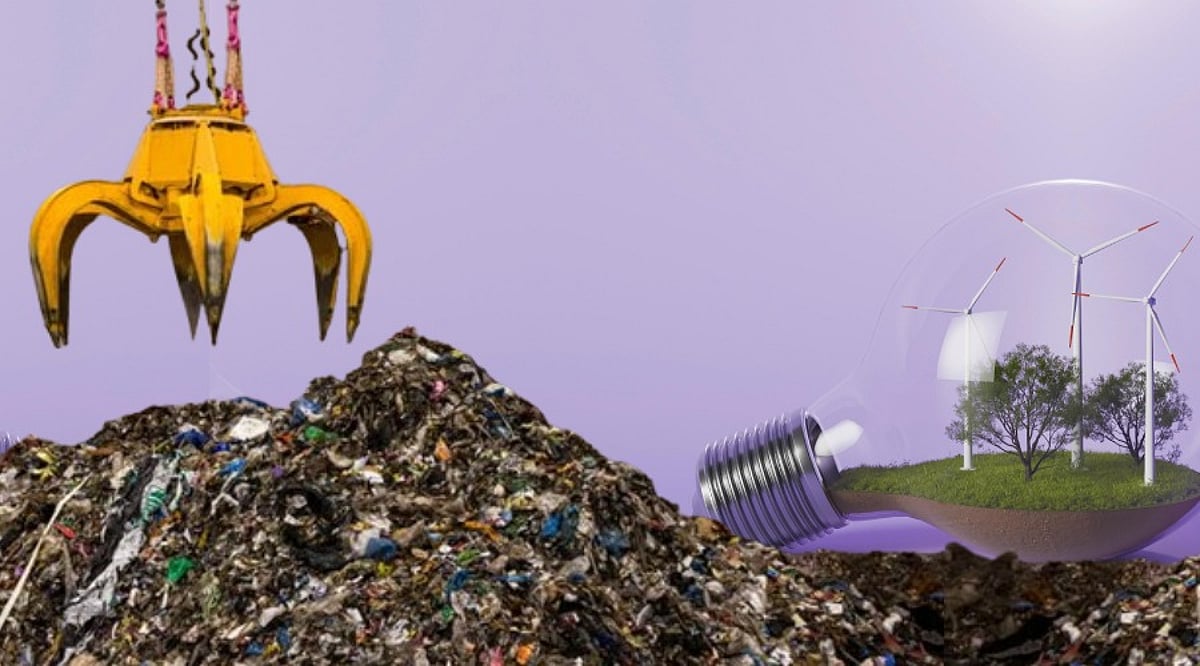
    Waste-to-energy (WtE) technology is rapidly transforming the way nations handle non-recyclable waste, converting it into electricity, heat, or fuel while drastically reducing reliance on landfills. Countries such as China, Sweden, Denmark, Japan, Singapore, Germany, and the Netherlands are at the forefront, leveraging advanced technologies, efficient systems, and sustainable policies to lead the global shift.

    Key Takeaways

    • China operates the world’s largest waste-to-energy network, generating immense electricity capacity.
    • Sweden and Denmark integrate waste-to-energy with district heating, optimizing clean energy production.
    • Innovations in incineration, gasification, and carbon capture are making WtE cleaner and more efficient.

    China: The Undisputed Market Leader

    China has built the world’s biggest waste-to-energy industry in just over a decade, driven by rapid urbanization and strict government policies. Electricity production from WtE surged from 5 TWh in 2010 to approximately 120 TWh in 2023, while annual waste treatment capacity expanded from 14 million to 327 million tonnes. Today, China operates more than 1,000 waste-to-energy plants—over half of the global total.

    Sweden: From Waste to Resource

    Sweden’s waste management system is among the most efficient globally. Approximately 50% of household waste is converted into electricity and district heating. Swedish plants are so efficient that the country imports about 800,000 tonnes of waste annually from neighboring nations to keep facilities operating at full capacity, all while maintaining low emissions through advanced pollution control.

    Denmark: Urban Integration and Clean Energy

    Denmark has embedded waste-to-energy into urban life, with modern facilities supplying both electricity and district heating to surrounding areas. The iconic Amager Bakke facility in Copenhagen not only generates energy but also features a public park on its roof, exemplifying how industrial structures can blend with cityscapes. Denmark continues to invest in carbon capture and more efficient waste treatment technologies.

    Japan: High Tech, High Standards

    With limited landfill space, Japan relies heavily on WtE. The country uses highly efficient combustion technology to maximize electricity output while minimizing harmful emissions. Strict environmental laws ensure every plant meets rigorous air quality standards.

    Singapore: Smart Waste Management in a Tiny Island

    Singapore faces severe land shortages, making efficient waste management a national priority. Most non-recyclable municipal waste passes through modern incineration plants, reducing volume by nearly 90% and significantly extending the life of the offshore Semakau Landfill.

    Germany and the Netherlands: Circular Economy Champions

    Both countries combine high recycling rates with effective waste-to-energy solutions. They prioritize recycling and composting, then send only non-recyclable waste to energy recovery. Europe’s approximately 500 WtE facilities process nearly 100 million tonnes of waste annually, generating heat and electricity while diverting waste from landfills. Germany and the Netherlands are advancing sorting technologies, carbon capture, and energy efficiency.

    Why This Matters

    Mounting waste volumes make traditional landfills unsustainable. Waste-to-energy technology cuts garbage volume by 90% while producing clean electricity and heat. According to the World Bank, about 20% of global waste is incinerated, while recycling, composting, and anaerobic digestion account for another 21%.

    Future Outlook

    Urban growth will continue to increase waste generation, requiring WtE capacity to expand. Emerging technologies such as AI-driven operations, carbon capture, and advanced pollution controls will make new plants cleaner and more productive. Countries like China, Sweden, Denmark, Japan, Singapore, Germany, and the Netherlands have demonstrated that it is possible to slash landfill use and generate usable energy simultaneously.

    Frequently Asked Questions

    What is waste-to-energy?

    Waste-to-energy is the process of converting non-recyclable waste into electricity, heat, or fuel using technologies like incineration, gasification, pyrolysis, and anaerobic digestion.

    Why is waste-to-energy important?

    It reduces landfill dependence, lowers pollution from open dumping, recovers energy from waste, and supports more sustainable waste management.

    Which country leads globally?

    China is the global leader, operating over 1,000 waste-to-energy plants and accounting for more than half of the world’s waste incineration capacity.

    Does waste-to-energy replace recycling?

    No. The best practice is to recycle and compost first; only non-recyclable waste should be sent to WtE facilities.

    What is the future of waste-to-energy?

    The future includes AI-driven operations, carbon capture technologies, advanced emission controls, and more efficient energy recovery to make plants cleaner and more productive.

  • Which Countries Are Setting the Standard for AI Education in 2026?

    Which Countries Are Setting the Standard for AI Education in 2026?

    Preparing students for an AI-powered future has become a national priority worldwide. Leading countries are introducing AI into schools, expanding university programs, and supporting digital skills. These efforts define the global leaders in AI education in 2026. Here is how the top contenders stack up—and where ambition meets reality.

    Key Takeaways

    • China and the UAE are the only nations running compulsory, national AI curricula since the 2025-26 school year.
    • India, Estonia, and South Korea reveal three different speeds of rollout—from a ten-million-teacher training push to a public reversal.
    • The nations pulling ahead are matching curriculum ambition to teacher readiness, not chasing the boldest headline.

    Every government wants to claim it leads in AI education. Few can prove it with a classroom that actually works. The gap between what gets announced and what reaches a teacher standing in front of thirty students will become the real story worth telling.

    Two Speeds of Compulsory Rollout

    China moved early, and it moved fast. By September 2025, AI had become a compulsory subject for every student from age six, sitting alongside mathematics on the timetable, not tucked away as an elective. Beijing schools now owe every student at least eight hours of AI instruction a year, and in a growing number of classrooms, platforms like Squirrel AI are already doing the adaptive teaching. What has not kept pace is everything around the technology: ethics, data privacy, and equal access. The rollout outran the guardrails.

    The UAE got there first in a different sense. A Cabinet decision in May 2025 made it the first country on record to mandate a nationwide AI curriculum for K-12 students, full stop. Close to a million children in government schools are now working through seven curriculum strands, taught by more than a thousand teachers trained specifically for this. Private schools are not required to follow suit, not yet at least, though a fair number have adopted the material on their own, without waiting to be told to.

    When Ambition Outpaces Readiness

    South Korea shows what happens when a rollout runs ahead of its teachers. Seoul planned mandatory AI textbooks from 2025, but adoption sat below 30% by March, and that August, the National Assembly stripped the textbooks of official status after unions said the pace had outrun preparation. Korea responded with a $960 million plan to build AI talent centers and vocational high schools through 2030. The setback was not proof that AI education fails. It showed that mandates without matching teacher training buckle under their own weight, even in a well-funded system.

    India is betting bigger than anyone. From 2026 to ’27, AI and computational thinking will become mandatory from Class 3 across government and private schools, backed by a Rs. 500 crore center of excellence and the Rs. 10,372 crore India AI mission. The open question is delivery: roughly 10 million teachers need training, and only 15% were AI-fluent as of a 2025 survey. Whether India becomes the largest AI-literate student population in the world depends entirely on whether that math closes in time.

    Coherence Over Scale

    Singapore’s edge is not size but order of operations. Its Smart Nation strategy targets AI leadership by 2030, with teacher training promised at every level by 2026. A government-funded research center pilots tools with the Ministry of Education before they reach classrooms, rather than after.

    Finland and Estonia are playing a different game entirely, treating AI fluency as a civic skill rather than a career pipeline. Finland’s Elements of AI course has reached hundreds of thousands of citizens; Estonia’s AI Leap gave 20,000 students and 3,000 teachers early access, with plans to scale nationwide by 2027.

    Also Read: The World Is Your Campus: Where to Study AI and Programming at the Planet’s Greatest Universities

    Research Depth, Classroom Gap

    The United States still leads in university-level AI research, and Washington has tried to close the K-12 gap too, through an executive order that created a federal task force and a student AI challenge. However, the same period saw the Department of Education shutter its Office of Educational Technology. Only four states include AI in computer science standards, and enrollment in the subject fell 11% between 2024 and 2025, even as graduate AI programs kept growing. A country can lead the world in research capacity while still trailing far smaller nations in the classroom.

    There is no single best country here, only different goals pursued at different speeds. What separates the nations worth watching is not the size of the announcement, but the honesty of the follow-through—and Korea’s public reversal is proof that admitting a gap is not the same as failing to close it.

    Also Read: Case Studies: Universities That Rebuilt Curricula for AI vs Those That Just Added It

    Final Thoughts

    The competition to be the first to educate about AI isn’t about being the loudest or the first to shout. It will be given to the people who make the often-ugly but ultimately beautiful things happen: training teachers, updating classrooms, keeping students safe, and working at it year after year, well past the news cycle. The countries leading the way in 2027 will not be those with the most impressive plan on paper. This will be where that plan has become a normal part of a school day without being noticed.

    You May Also Like:

    FAQs

    1. Which country leads AI education in 2026?

    There is no single leader. China leads in scale, the UAE in national curriculum rollout, Singapore in implementation, and the United States in AI research.

    2. Which country made AI education compulsory first?

    The UAE became the first country to introduce a nationwide mandatory AI curriculum for K-12 students in May 2025. China also made AI compulsory for school students from age six.

    3. Why is teacher training important for AI education?

    Teachers need the skills to use AI effectively in the classroom. Without proper training, even well-funded AI education policies can struggle to deliver results.

    4. Is AI now a compulsory subject in India?

    India plans to introduce AI and computational thinking as compulsory subjects from Class 3 beginning in the 2026–27 academic year, supported by the IndiaAI Mission and teacher training initiatives.

    5. What makes an AI education system successful?

    A successful AI education system combines a strong curriculum, trained teachers, ethical guidelines, digital infrastructure, and regular updates to keep pace with advances in AI technology.

  • Temasek Maintains Freeze on Crypto Investments, Accelerates AI and Blockchain Push

    Temasek Maintains Freeze on Crypto Investments, Accelerates AI and Blockchain Push

    Temasek, Singapore’s state-owned investment firm managing approximately $400 billion in assets, has confirmed it will not resume direct cryptocurrency investments in the near term. Instead, the fund is doubling down on artificial intelligence (AI) and blockchain infrastructure, while maintaining a cautious stance on digital assets due to persistent regulatory uncertainty.

    Nagi Hamiyeh, Temasek’s President of Global Investments, told CNBC that the firm still lacks confidence in crypto’s long-term role within the broader financial system. This cautious approach follows the complete write-down of Temasek’s $275 million investment in FTX in 2022, which represented about 0.09% of its total portfolio.

    FTX Loss Continues to Shape Investment Strategy

    The collapse of FTX remains a defining event for Temasek’s digital asset strategy. The fund’s exposure included $210 million in FTX International and $65 million in FTX US. Although Temasek had clarified that the investment did not represent a direct bet on cryptocurrencies, the loss prompted a thorough review of its approach.

    Hamiyeh explained that Temasek currently holds no direct crypto assets and cannot yet determine how cryptocurrencies will integrate into the wider economy. Regulatory uncertainty, liquidity concerns, and reputational risks continue to guide investment decisions. The fund has indicated that direct crypto exposure could return only after clearer regulatory frameworks emerge across major markets. Until then, digital tokens remain outside its investment mandate.

    Blockchain Remains Part of the Long-term Strategy

    While Temasek avoids direct cryptocurrency holdings, it continues to monitor blockchain technology closely. The firm sees greater value in infrastructure that supports practical business applications rather than speculative digital assets. Areas of interest include blockchain solutions for settlement systems, supply chain management, digital identity, and enterprise data operations.

    This approach allows Temasek to track technological progress without exposing itself to daily market volatility. Broader institutional interest has also shifted toward tokenization and blockchain-based payment systems. Banks and asset managers are testing blockchain platforms to improve settlement speed and reduce operational costs. Temasek views digital finance infrastructure, compliance technology, and related systems as broader investment opportunities than direct token holdings.

    AI Receives Greater Capital Allocation

    Artificial intelligence has become a top priority for Temasek. The firm plans to increase its AI exposure from 6% to 15% of its portfolio by 2031. Hamiyeh noted that the greater opportunity may come from companies that successfully apply AI across their businesses rather than those developing the most advanced models. However, the fund remains selective as some AI valuations have risen faster than underlying fundamentals.

    Temasek keeps about 25% of its portfolio in liquid assets, providing flexibility to respond to market changes and pursue new opportunities. Beyond AI, Europe has attracted increasing investment. The firm invested approximately €12 billion across the region over the past two years, targeting luxury goods, consumer brands, energy transition projects, and family-owned industrial companies.

    On defense investments, Temasek takes a selective approach, focusing on dual-use technologies and reviewing governance links case by case. Its direct exposure remains limited, primarily through ST Engineering.

    As of the latest data from CoinGecko, Bitcoin traded near $62,824 and Ethereum around $1,750, keeping institutional activity in focus.

    What’s Next?

    Temasek continues to avoid direct crypto investments as regulatory uncertainty persists following its FTX loss. Instead, the fund is increasing investment in artificial intelligence and blockchain infrastructure while maintaining liquidity and selectively pursuing opportunities across Europe and other long-term growth sectors.

  • Highest-Paying AI Jobs in Singapore: 2026 Career Guide & Salary Trends

    Highest-Paying AI Jobs in Singapore: 2026 Career Guide & Salary Trends

    Singapore has rapidly emerged as one of Asia’s leading hubs for artificial intelligence, driven by strong government backing, rising digital investment, and the presence of multinational corporations. As AI adoption accelerates across finance, healthcare, manufacturing, and logistics, the demand for skilled professionals has surged—making AI roles among the most lucrative in the country’s tech sector.

    Why AI Careers Are Booming in Singapore

    The National AI Strategy 2.0 has spurred organizations to weave AI into their daily operations. Banks use AI for fraud detection and personalized services; hospitals apply machine learning for diagnostics; factories adopt automation; and logistics, retail, cybersecurity, and government agencies all invest heavily in AI technologies. This broad adoption creates strong demand for experts who can design, implement, and maintain AI systems, driving up salaries across the board.

    Highest-Paying AI Jobs in Singapore

    Below are some of the top AI roles, with salary ranges based on experience and industry:

    • AI Research Scientist – SGD 170,000–250,000
    • AI Solutions Architect – SGD 150,000–220,000
    • Machine Learning Engineer – SGD 120,000–180,000
    • Data Scientist (AI focus) – SGD 110,000–170,000
    • NLP Engineer – SGD 120,000–175,000
    • Computer Vision Engineer – SGD 130,000–190,000
    • MLOps Engineer – SGD 130,000–185,000
    • AI Product Manager – SGD 140,000–200,000

    Actual compensation varies by employer, experience level, and technical expertise.

    Skills Employers Look For

    Technical skills remain essential, but companies increasingly value professionals who can apply AI to real business problems. Key skills include:

    • Python programming
    • TensorFlow and PyTorch
    • SQL and database management
    • Large Language Models (LLMs) and Prompt Engineering
    • Machine Learning and Deep Learning
    • MLOps
    • Cloud platforms – AWS, Azure, GCP
    • Data visualization
    • Communication and problem-solving

    Candidates with hands-on project experience often stand out more than those with certifications alone.

    Industries Paying the Highest AI Salaries

    Several sectors are competing aggressively for AI talent:

    • Banking and Financial Services – fraud detection, risk analysis, customer experience
    • Technology – AI research, product development
    • Healthcare – medical imaging, predictive diagnostics, personalized treatment
    • Manufacturing – automation, quality control
    • Cybersecurity – real-time threat detection
    • Government and Consulting – digital transformation projects

    How to Start an AI Career in Singapore

    Becoming an AI professional demands both expertise and hands-on experience:

    1. Start with Python programming and machine learning basics.
    2. Build projects showcasing your abilities and share them on GitHub.
    3. Compete on Kaggle to gain practical experience.
    4. Consider cloud computing or AI certifications, but note that employers value completed projects more.
    5. Network actively on LinkedIn, attend AI events, and apply for internships.

    Frequently Asked Questions

    Which AI job pays the highest salary in Singapore?

    AI Research Scientist and AI Solutions Architect are among the highest-paying roles, with experienced professionals earning between SGD 170,000 and SGD 250,000 annually.

    What qualifications are needed to start an AI career in Singapore?

    Most employers look for degrees in computer science, data science, AI, mathematics, or engineering. Practical experience, programming skills, AI projects, certifications, and a strong portfolio are often as important as formal degrees.

    Which industries hire the most AI professionals?

    Technology, banking, healthcare, manufacturing, cybersecurity, logistics, consulting, and government agencies are the largest employers.

    Do AI jobs require a master’s or PhD?

    Not always. Research-focused roles often need postgraduate qualifications, but many engineering and machine learning roles prioritize practical experience, coding ability, completed projects, and industry certifications.

    How can fresh graduates prepare for AI jobs in Singapore?

    Build hands-on AI projects, contribute to open-source, participate in Kaggle competitions, create a GitHub portfolio, complete internships, earn certifications, and stay updated with the latest AI frameworks.

    Why This Matters

    Singapore has positioned itself as one of Asia’s leading AI innovation hubs, creating strong demand for skilled professionals across finance, healthcare, manufacturing, logistics, and technology. Understanding salary trends, in-demand roles, and employer expectations helps professionals make informed career decisions and capitalize on one of the fastest-growing job markets in the region.