Tag: site reliability engineering

  • How AI and Self-Healing Systems Are Revolutionizing Retail Technology

    How AI and Self-Healing Systems Are Revolutionizing Retail Technology

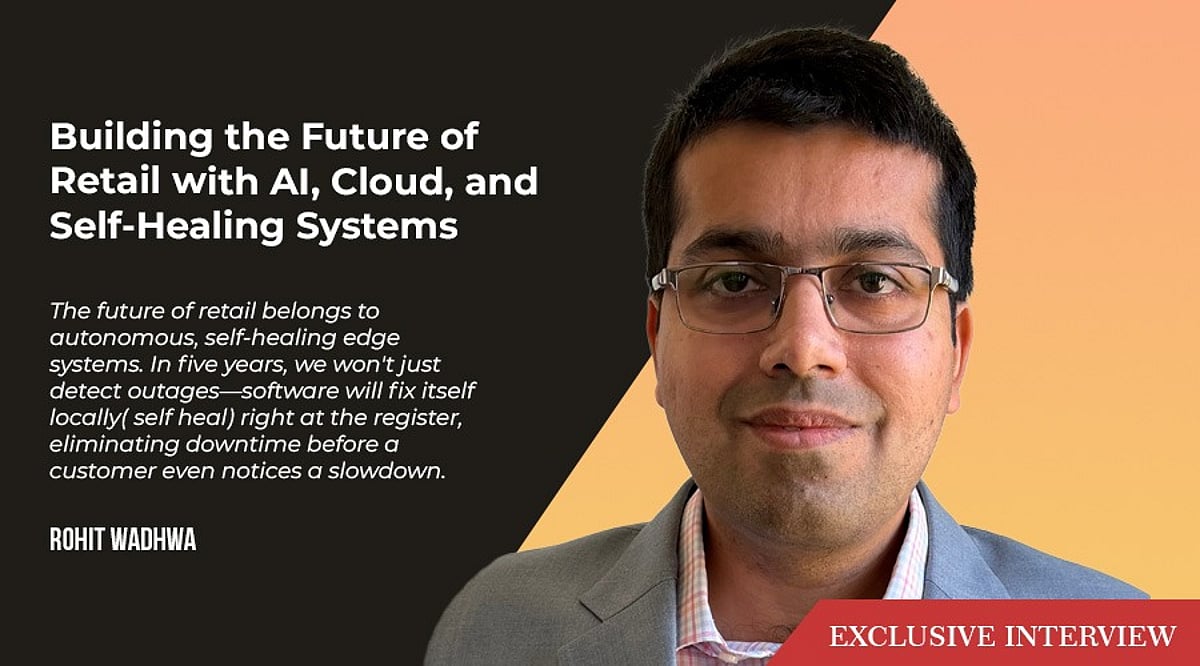
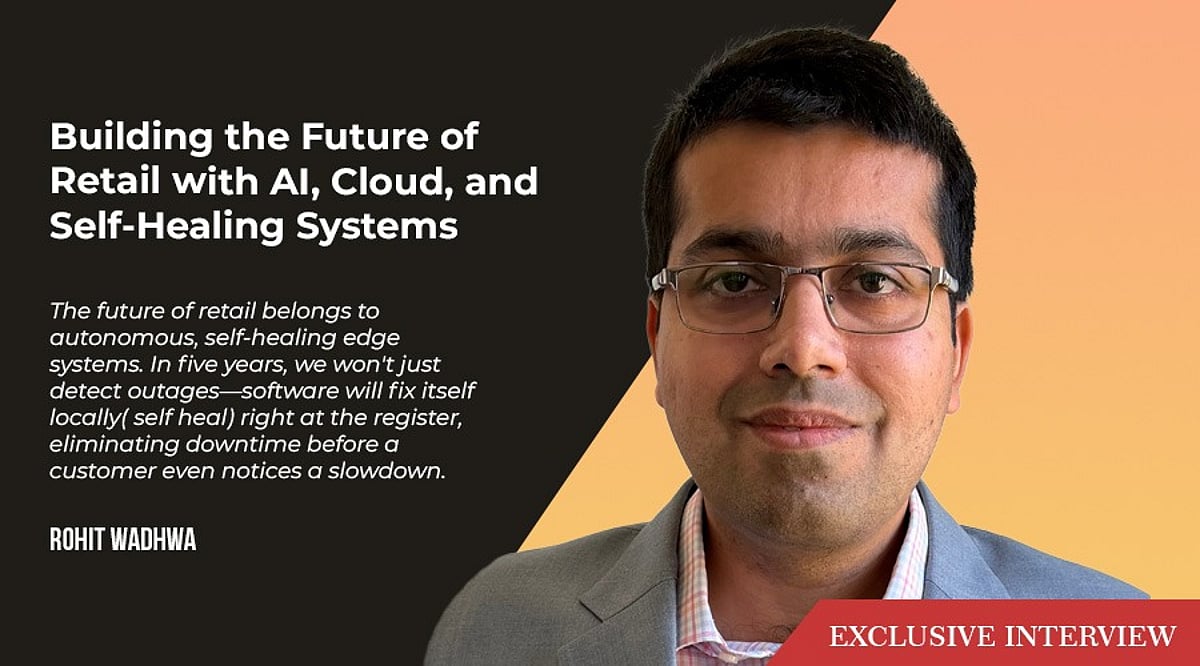
    In an era where retail transactions exceed $1 billion in volume, senior software engineer and architect Arundhati Kumar shares insights from over 15 years of building high-performance distributed systems. Her journey, from modernizing Fannie Mae’s mortgage platforms to leading global retail technology, reveals how AI, cloud, and self-healing infrastructure are redefining the shopping experience.

    From Finance to Retail: A Leap in Scale

    Kumar’s transition from banking to retail meant moving from secure, precise transactions to a flood of real-time data from thousands of physical stores. Today, she leads cross-functional teams designing omnichannel point-of-sale applications for one of the world’s largest retailers. The key challenge: ensuring software runs fast and reliably across legacy registers and modern mobile apps, even with unpredictable network connections.

    Checkout Doctor: Bridging the Visibility Gap

    Inspired by register glitches that stalled checkout lines, Kumar created Checkout Doctor—an automated diagnostic assistant that analyzes local device logs in real time. When a scale or peripheral fails, it instantly alerts associates via mobile devices, shifting support from reactive to proactive. This self-healing approach keeps lines moving and reduces downtime.

    AI in Site Reliability Engineering

    Large language models (LLMs) are transforming incident management by providing plain-English summaries from error logs, cutting down time to diagnose outages. Kumar emphasizes that AI delivers the most measurable value in noise reduction and early triage—correlating telemetry spikes to pinpoint root causes before thresholds are breached.

    Cloud Migration Lessons

    Leading a migration from legacy SQL to Azure Cosmos DB, Kumar learned that you can’t copy-paste old database mindsets. Rethinking data organization around partition keys like store numbers and lanes, and accepting eventual consistency, reduced costs and improved availability during peak shopping seasons.

    Event-Driven Architecture and Loss Prevention

    Event-driven architecture replaces batch processing with instant event streams via websocket servers. This enables real-time visibility and automated decisions—such as pausing a checkout when a barcode mismatch is detected, and prompting associates to intervene. Such techniques help combat the multi-billion-dollar challenge of retail shrink.

    The Future: Autonomous Infrastructure

    Kumar is most excited about predictive workflow integrity, where machine learning models on edge devices autonomously fix anomalies—like routing around a slowing database—before humans even see an alert. Her advice to leaders: build systems that survive locally without cloud dependency, and treat AI as a co-pilot, not a replacement for human intuition.

  • Revolutionizing Retail: How AI, Cloud, and Self-Healing Systems Are Reshaping the Industry

    Revolutionizing Retail: How AI, Cloud, and Self-Healing Systems Are Reshaping the Industry

    In an era where retail technology is evolving at breakneck speed, senior software engineer and architect Arundhati Kumar offers a deep dive into the innovations driving the future of omnichannel commerce. With over 15 years of experience building high-performance distributed systems across healthcare, banking, and now global retail, Kumar shares insights on how AI, cloud computing, and self-healing infrastructure are transforming the way retailers operate at scale.

    The Challenges of Engineering at Massive Scale

    When you’re supporting thousands of physical stores with diverse hardware—from legacy cash registers to modern mobile checkout apps—the biggest challenge is ensuring speed and reliability across unpredictable network conditions. Kumar explains that her team had to build custom adapter layers to standardize conflicting data payloads, and engineer systems that can instantly drop into offline mode, saving transactions locally and syncing back to the cloud once connectivity is restored—without losing a single cent of revenue.

    Checkout Doctor: A Self-Healing Solution

    Inspired by store associates struggling with checkout glitches, Kumar designed Checkout Doctor, an automated real-time diagnostic assistant. Instead of waiting for centralized IT support, the system analyzes local device logs, isolates issues like a scale malfunction or peripheral disconnect, and triggers alerts directly on the associate’s mobile device. This shifts the support model from reactive to proactive, keeping lines moving and reducing customer frustration.

    How AI Is Changing Site Reliability Engineering

    Large language models (LLMs) are revolutionizing incident detection by reducing the time engineers spend digging through disparate dashboards and logs. Kumar notes that feeding real-time error logs and alerts into an LLM provides on-call engineers with a plain-English summary of the problem, along with context from past incidents. This acts as an intelligent co-pilot, dramatically cutting the time to understand and resolve critical outages.

    The Measurable Value of AI in Operations

    Rather than fully automated fixes, Kumar believes the greatest value of AI today lies in extreme noise reduction and early triage. In massive enterprise setups, a single microservice failure can trigger cascading alerts. AI correlates telemetry spikes, filters out background noise, and points engineers directly to the root cause. Additionally, machine learning models can flag anomalies—like a spike in database latency—long before a threshold is breached, enabling preemptive patching.

    Lessons from Migrating to Cloud-Native Architecture

    Leading a migration from legacy relational systems to Azure Cosmos DB, Kumar learned that you can’t simply replicate old database patterns. Her team had to completely rethink data organization, grouping by store numbers and register lanes as partition keys, and accepting some data duplication. This trade-off slashed expensive cross-partition queries, kept cloud costs low, and ensured maximum availability during peak shopping seasons.

    Event-Driven Architecture for Real-Time Decisions

    Event-driven architecture replaces batch processing by treating every register action—a barcode scan, a voided item, a payment—as an instant event broadcast via websocket servers. This gives business leaders a live view of store performance and enables automated decisions, such as sending an alert to a nearby associate when an unusual pattern is detected during a live checkout session. It catches faults and errors before the customer leaves the lane.

    Combating Retail Shrink with Intelligent Automation

    Retail shrink is a multi-billion-dollar problem, but Kumar’s approach prevents losses at the checkout lane by linking real-time register logs with overhead camera feeds. If a missed scan or barcode mismatch is detected, the system pauses the session mid-transaction with a friendly nudge to rescan. If the issue persists, a silent notification goes to an associate’s mobile device, protecting the bottom line while keeping the experience seamless.

    Emerging Trends: Autonomous Infrastructure

    Looking ahead, Kumar is most excited about autonomous, self-healing infrastructure and edge-computed intelligence. Instead of using AI reactively to summarize logs after an outage, future systems will run predictive models directly on local edge hardware—like thousands of retail registers. These models will monitor health and transaction patterns, fixing anomalies autonomously (e.g., routing around a slowing database) long before a human engineer is alerted. This marks the end of the traditional on-call nightmare, turning software into something that actively looks after itself.

    Advice for Enterprise AI Implementation

    Kumar offers two key pieces of advice for leaders: First, build systems that survive locally without relying on the cloud. Local hardware must be smart enough to run in offline mode, catch errors, and make decisions on the spot. Second, treat AI as an intelligent co-pilot, not a replacement. Use a tiered intervention model: let the system handle noise reduction and simple self-healing, but when complex failures occur, use AI to arm engineers with a plain-English context summary rather than letting the machine guess blindly. Build guardrails that empower teams, not black boxes.

    As retail continues to evolve, the integration of AI, cloud, and self-healing systems is not just a trend—it’s a necessity. Kumar’s insights provide a roadmap for building resilient, customer-friendly technology that can handle the demands of modern commerce.

  • Why Observability and Reliability Are Critical for Enterprise Generative AI Systems

    Why Observability and Reliability Are Critical for Enterprise Generative AI Systems

    Traditional monitoring can confirm that servers are healthy yet still leave engineers blind to why an AI agent made a wrong decision. Ayush Jain, a software engineer who has built large-scale search, machine learning, and distributed systems, explains why observability and evaluation are becoming the foundation of trustworthy AI at enterprise scale.

    An AI agent finishes its task. Every API call returns cleanly, logs are green, dashboards show no errors—yet the answer is wrong. Nobody can explain why. This gap between a system that looks healthy and one that actually performs correctly is the problem Jain has spent his career addressing. He belongs to a group of engineers building the unglamorous layer beneath enterprise AI: the pipelines, traces, and telemetry that let teams see what autonomous systems are really doing.

    “Traditional monitoring can confirm that infrastructure is healthy,” Jain says, “but it often fails to explain why an AI system made a particular decision or produced an unexpected outcome.”

    For two decades, deterministic software left clear fingerprints when it broke: error logs, exceptions, failed health checks. Agentic systems do not work that way. They reason in probabilities, select their own tools, pull in outside context, and plan across multiple steps. These agents introduce entirely new failure modes. “An agent may successfully execute API calls while still producing incorrect outcomes due to flawed reasoning, poor tool selection, or incomplete context,” Jain adds. The pipes all work, but the judgment does not. Standard monitoring stacks, built to watch the pipes, never notice the failure.

    Jain learned this lesson at scales where small problems become expensive. At Bloomberg, he contributed to search and ranking systems supporting hundreds of thousands of user interactions across more than one hundred million documents. A search result that drifts a few points in relevance does not throw an exception, but at that volume it quietly degrades the experience for thousands. To catch such drift, he helped build observability pipelines that processed millions of telemetry events per day—turning raw system exhaust into real-time signals about search quality, user behavior, performance, and anomalies. The goal was not just to confirm machines were up, but to close the distance between an idea that worked in an experiment and a system that held up in production.

    At Microsoft, Jain has focused on AI agent platform infrastructure. The central challenge: failures are now behavioral rather than infrastructural. An agent that calls every API correctly can still choose the wrong tool, reason poorly, or act on incomplete context. So the platform must watch behavior, not just uptime. The systems he worked on capture execution traces, monitor how workflows resolve, collect telemetry about agent conduct, and let teams run the same task across different configurations to see which performs best. This is the difference between knowing a process finished and knowing it finished for the right reasons.

    Jain sees the industry shifting from optimizing model performance to optimizing whole AI systems. “I believe the industry is shifting from optimizing model performance to optimizing AI systems,” he says. For years the scoreboard was the model—a higher benchmark, a better accuracy number. But a benchmark is a single moment, while an agent makes sequences of decisions across tools and steps. Accuracy and precision stop describing what matters. “Agent behavior must be evaluated continuously rather than treated as a one-time model validation exercise,” Jain emphasizes. The metrics that count look less like test scores and more like operations reports: task completion, reasoning quality, tool effectiveness, cost, safety, and alignment with business intent.

    He draws an analogy with cloud computing and Site Reliability Engineering (SRE). “Enterprise AI is entering a phase similar to what cloud computing experienced during the rise of Site Reliability Engineering,” Jain explains. Cloud services eventually stopped being judged solely on speed and started being judged on uptime and latency that everyone could see. AI will follow the same arc, with a new vocabulary of behavioral measures: hallucination rates, reasoning consistency, retrieval effectiveness, policy adherence, and workflow completion. “I believe AI Reliability Engineering will become a foundational discipline,” he says. Companies that build it into their platforms early will hold a real advantage over those that bolt it on after something breaks.

    The attention has long gone to models and clever outputs. But Jain argues the durable problem sits one layer down: in whether anyone can explain, measure, and trust what the system did. “The challenge is no longer simply generating intelligent outputs—it is creating systems that make those outputs explainable, measurable, and trustworthy at scale.” He expects the next generation of enterprise platforms to make observability and evaluation first-class architectural components rather than afterthoughts, with online evaluation, execution traces, and feedback loops catching trouble before users do.

    His conclusion is plain: “Making AI systems measurable, explainable, and reliable is essential for successful enterprise adoption at scale.” The companies treating that as the real engineering challenge are the ones whose AI will still be trusted a year after the demo. The rest are flying on green dashboards, learning the hard way that healthy is not the same as right.