Tag: SK Hynix

  • SK Hynix Stock Jumps 13% on Nasdaq Debut After Record $26.5 Billion IPO

    SK Hynix Stock Jumps 13% on Nasdaq Debut After Record $26.5 Billion IPO

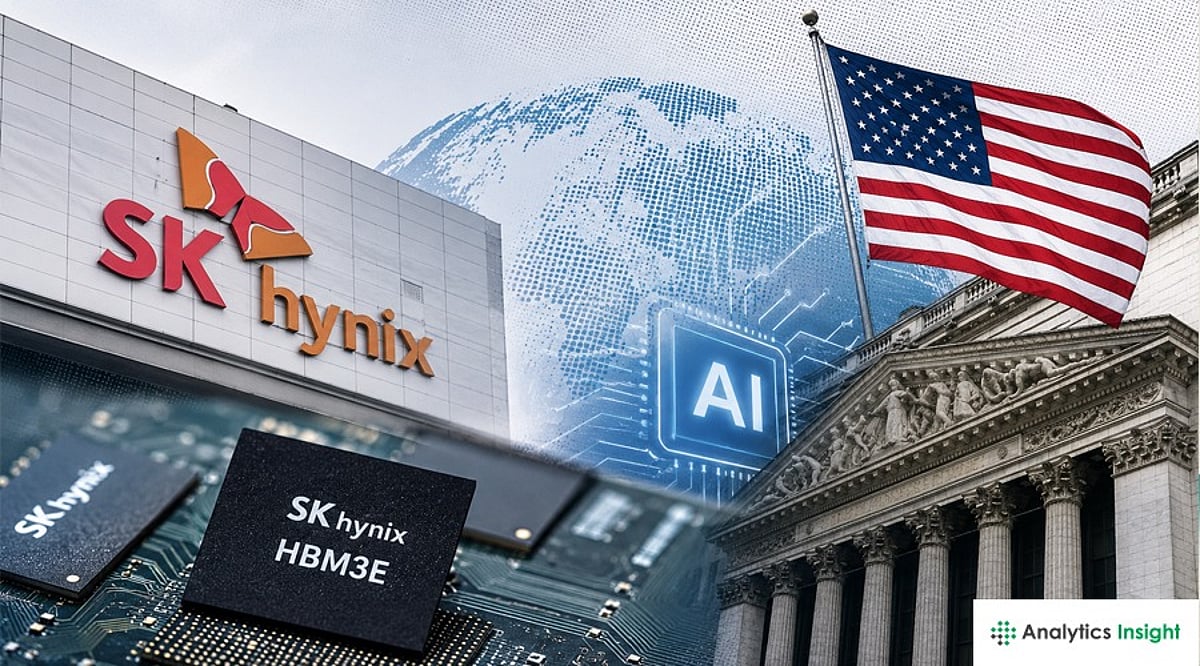
    SK Hynix shares surged nearly 13% in their Nasdaq debut on Friday, marking a strong entry into the U.S. market for the South Korean chipmaker. The company’s American depositary receipts opened at $170 and closed at $168.01, well above the $149 offer price.

    The $26.5 billion raised through the sale sets a record for the largest U.S. initial share offering by a foreign company. The listing gives American investors direct access to one of the leading suppliers of memory chips for artificial intelligence systems, amid a busy IPO market.

    Record-Breaking $26.5 Billion Sale

    SK Hynix sold 177.9 million American depositary receipts, with each ADR representing one-tenth of a common share. Demand exceeded available shares by more than seven times, according to reports, allowing the company to price the offer at $149 per ADR.

    The shares traded under the temporary ticker SKHYV during Friday’s when-issued session. Nasdaq said the ticker will change to SKHY on Monday, July 13, when regular trading begins. The company’s main stock market listing will remain on the Korea Exchange.

    AI Memory Demand Fuels Investor Interest

    SK Hynix leads the market for high-bandwidth memory (HBM), a type of chip placed close to advanced processors. HBM provides AI systems with quick access to data for complex computing tasks. Nvidia uses the technology in graphics processors built for data centers.

    Chairman Chey Tae-won said customer demand has remained high as companies expand AI infrastructure. “The demand is enormous, exponentially,” he said. He added that customers asked for more supply after SK Hynix announced plans to double production capacity within five years.

    The company supplies major technology firms, including Nvidia and Apple. Its regulatory filing indicates it holds 56.4% of the HBM market. Samsung Electronics and Micron Technology also produce HBM and storage chips for servers, phones, computers, and other electronic devices.

    New Funding Targets Factories and Equipment

    SK Hynix plans to use the proceeds from the U.S. offering to finance factories and production equipment. The company is expanding capacity as memory shortages raise prices and limit supply across the technology sector. New chip plants take several years to build and prepare for production.

    Part of the expansion includes a $4 billion advanced packaging facility in Indiana. The company also plans large manufacturing projects in South Korea, including a chip cluster in Yongin. These sites will support production of HBM and other memory products for AI servers.

    Memory manufacturing has a long history of sharp supply cycles. High demand can lead chipmakers to add capacity, while later oversupply can push prices lower. SK Hynix said newer uses, including AI agents and robots, require more memory than earlier computing systems.

    The U.S. listing follows a steep rise in SK Hynix’s Korea-listed shares. The stock gained 634% over the past year, supported by higher memory prices and AI spending. Friday’s Nasdaq debut broadens the company’s investor base while its Seoul listing remains active.

  • S&P 500 Heads for Weekly Gain as Meta Rallies on AI Cost Savings and Circle Soars on OCC Nod

    S&P 500 Heads for Weekly Gain as Meta Rallies on AI Cost Savings and Circle Soars on OCC Nod

    The U.S. stock market moved in a narrow range on Friday, with the S&P 500 holding near the flatline as Wall Street wrapped up a largely positive week. The benchmark index is on track for a weekly gain of nearly 1%, while the Nasdaq Composite is set to rise more than 1%. The Dow Jones Industrial Average lagged slightly, heading for a weekly loss of less than 1%.

    Investors weighed a sharp rally from the previous session, driven by cooling oil prices and a temporary easing of Middle East tensions. President Donald Trump said Iran had called to make a deal, and officials from Qatar and Pakistan are working to restart talks between Washington and Tehran. “The muted stock market reaction to the re-escalation of Iran tensions this week is prime evidence that the market is looking past geopolitical tensions,” said Clark Bellin, president and chief investment officer at Bellwether Wealth.

    Chip Stocks Weaken Ahead of SK Hynix NASDAQ Debut

    Chip stocks traded lower ahead of SK Hynix’s U.S. market debut on the Nasdaq. The South Korean memory-chip maker priced its American depositary receipts at $149 each, raising $26.5 billion. The listing underscores strong investor demand for a major supplier in the AI chip supply chain. Micron Technology fell around 3%, while Marvell Technology and Lam Research lost more than 1%. Intel dropped nearly 3%, and Broadcom also traded lower. The iShares Semiconductor ETF declined 1.2%, and the VanEck Semiconductor ETF lost 0.8%.

    Meta Rallies on AI Cost Report

    Meta Platforms stood out among large technology stocks, rising nearly 6% on Friday and extending its five-session advance to more than 14%. The move placed Meta on track for its strongest weekly gain since February 2024. Bank of America maintained its buy rating after reviewing details tied to Meta’s AI infrastructure plans. According to Reuters, Meta plans to begin production of an in-house AI chip in September as part of a broader plan to double computing capacity. “Meta may have engineered significant cost savings to get capacity cost per MW well below our and Street expectations,” Bank of America analyst Justin Post wrote.

    Circle Shares Jump After OCC Approval

    Circle Internet Group shares surged more than 12% after the stablecoin issuer received final approval from the U.S. Office of the Comptroller of the Currency to establish a national trust bank. The approval moves Circle further into the regulated U.S. banking system, supporting its USDC infrastructure and adding federally regulated custody. Reserve management is planned as a future capability.

    Economy and Stocks Move at Different Speeds

    The stock market’s performance continues to diverge from the broader economy. The S&P 500 rose nearly 10% in the first half of 2026, while the Dow gained almost 9% over the same period. Meanwhile, economists say U.S. growth has slowed. “I think there’s this widespread perception the two should be in sync,” said Joe Seydl, senior markets economist at J.P. Morgan Private Bank. “But, from a purely analytical perspective, they’re two very different phenomena.” Mark Zandi, chief economist at Moody’s, added, “We’re growing. We’re not in recession. But we’re not going anywhere quickly.”

    For Friday’s session, investors focused on weekly gains, chip stock weakness, Meta’s rally, Circle’s bank approval, and the first trading day for SK Hynix in the United States.

  • NASDAQ Surges on Chip Stock Rally as Wall Street Rebounds Amid US-Iran Tensions

    NASDAQ Surges on Chip Stock Rally as Wall Street Rebounds Amid US-Iran Tensions

    US stocks moved higher on Thursday as investors assessed the latest turn in US-Iran tensions and renewed buying in chip stocks. The NASDAQ Composite led the market, while the S&P 500 also gained. The Dow Jones Industrial Average traded near the flatline as investors balanced geopolitical risk, oil prices, labor data, and fresh interest in the AI trade.

    NASDAQ Gains as Chip Stocks Lead the Market

    The NASDAQ Composite rose 0.6% on Thursday, supported by strong gains in semiconductor shares. The S&P 500 advanced 0.3%, while the Dow Jones Industrial Average traded little changed after a weaker session on Wednesday.

    Chipmakers led the early rebound. The VanEck Semiconductor ETF climbed 4%, with Micron Technology rising 7%. Sandisk also gained 6%. The move showed that investors returned to selected technology names, even as broader market caution stayed in place.

    The chip sector drew fresh attention ahead of SK Hynix’s expected US-listed share debut. The South Korean memory chipmaker is set to list on NASDAQ, and demand for its offering has become a focus for investors tracking AI-related stocks.

    Meanwhile, traders also watched whether the latest gains could hold through the session. Semiconductor stocks had faced recent pressure, but Thursday’s move helped lift the NASDAQ above the other major US indexes.

    US-Iran Tensions Keep Markets Cautious

    Markets also tracked renewed conflict between the US and Iran. US Central Command said the United States launched fresh strikes on Iran after attacks on commercial shipping near the Strait of Hormuz. It later said another round of strikes had been completed.

    Iran also carried out attacks on targets linked to US allies in the Middle East. The exchange of fire raised concern over energy supplies and shipping routes, especially around the Strait of Hormuz, a key passage for global oil flows.

    President Donald Trump had said the ceasefire with Iran was ‘over’ after new attacks in the region. Later, he said he called Iran to make a deal, which helped ease some pressure on crude futures.

    Mason Mendez, global real assets analyst at Wells Fargo Investment Institute, said, “Any assumption of a swift return to normalized Persian Gulf exports is certainly being challenged.” He added that low global reserves and inventories could keep a geopolitical risk premium in oil prices if tensions rise further.

    Oil Prices Stabilize After Sharp Swings

    Oil prices held steadier on Thursday after sharp moves in the previous session. Brent crude slipped 0.3% in early trading after rising on Wednesday as traders reacted to the renewed fighting.

    The oil market stayed focused on possible supply disruption. Any fall in shipping activity through the Strait of Hormuz can raise concern over global supply, as the route handles a large share of seaborne crude shipments.

    Even so, investors did not move fully into risk-off trading. US stock indexes opened higher, and markets across Europe and Asia also showed mixed but generally stable trading.

    European stocks edged higher, with the Stoxx 600 up 0.1%. In Asia, Japan’s Nikkei 225 rose 1.4%, South Korea’s Kospi gained 0.62%, and mainland China’s CSI 300 closed 2.5% higher. Hong Kong’s Hang Seng index traded lower late in the session.

    Jobless Claims Add to Rate Outlook Watch

    US labor data also stayed in focus. Initial jobless claims fell to 215,000 for the week ended July 4, down 4,000 from the prior week. Economists surveyed by Dow Jones had expected 218,000 claims.

    The data showed a mild drop in new unemployment filings after an early June spike. Continuing claims, which ran one week behind, increased by 8,000 to 1.814 million.

    Investors used the report as another signal for the Federal Reserve’s policy path. A steady labor market can affect expectations for interest rates, especially as traders watch inflation, oil prices, and global tensions.

    On Thursday, the data did not stop stocks from opening higher. The S&P 500 rose 0.2% shortly after the opening bell, the NASDAQ climbed 0.2%, and the Dow added 63 points, or 0.1%, before later trading near the flatline.

    Wall Street Turns Back to AI Trade

    As Middle East tensions stayed in focus, investors also returned to the AI trade. Chip stocks gained as traders prepared for SK Hynix’s US debut and assessed demand for memory chips used in AI systems.

    Pepsi’s results added another market signal, as the company showed that some US consumers are spending carefully due to economic concerns. Its revenue still topped expectations, giving investors another view of consumer demand.

    Mendez said, “These renewed geopolitical risks could fuel near-term risk-off sentiment, however, trends of strong equity earnings momentum and ongoing AI strengths will likely continue to drive the S&P 500 Index towards our year-end target range of 7,800 to 8,000.”

    For now, the US stock market trading today shows a split picture. Chip stocks and AI names are helping the NASDAQ rise, while oil prices and US-Iran tensions keep traders alert.

  • Samsung Reports 1,800% Profit Surge Driven by AI Memory Chip Boom

    Samsung Reports 1,800% Profit Surge Driven by AI Memory Chip Boom

    Samsung Electronics has announced a staggering 1,800% jump in operating profit for the first half of 2026, fueled by explosive demand for its advanced memory chips used in artificial intelligence systems. The South Korean tech giant estimates an operating profit of 89.4 trillion won (approximately $58.4 billion) for the period, compared to the same timeframe last year.

    Revenue also soared, with the company projecting sales of 171 trillion won in the quarter—a 129% increase year-over-year. Samsung plans to publish its full results later this month.

    The earnings highlight a dramatic shift in the semiconductor landscape driven by the global AI boom. Data centers and AI systems require high-performance memory chips, and supply remains tight, enabling Samsung and rival SK Hynix to raise prices and boost margins.

    Marc Einstein of Counterpoint Research called the estimate “among the best quarterly performances ever,” attributing the surge entirely to AI demand. Samsung is one of the world’s largest memory chip makers and supplies key players like NVIDIA and Google.

    According to IDC, the memory industry is experiencing a unique demand cycle concentrated in data center and AI infrastructure, which is expected to keep chip supplies tight for the next year. IDC analyst Bryan Ma noted that strong AI-related demand will continue to pressure supply.

    Despite the robust earnings forecast, Samsung’s shares fell 7% to 8% in Seoul trading, as some investors had anticipated even higher profits. However, the company’s market value has doubled since the start of the year, and SK Hynix has surged over 200%.

    South Korea’s Kospi index has risen more than 80% in 2026, driven by chip makers. The government recently announced plans to invest at least $880 billion in Samsung and SK Hynix-related projects to expand chip production. Analysts caution that the key risk is whether AI memory demand will sustain beyond next year.

    For now, Samsung remains a top beneficiary of the global AI infrastructure race.

  • SK Hynix Reduces US IPO Ambition to $28 Billion as Memory Volatility Rises

    SK Hynix Reduces US IPO Ambition to $28 Billion as Memory Volatility Rises

    South Korean chipmaker SK Hynix is scaling back its US listing ambitions, trimming its target to roughly $28 billion amid growing concerns about the memory chip cycle. The company plans to offer American Depositary Receipts on the NASDAQ, aiming to raise funds for factory expansion and equipment purchases while the AI-driven demand for high-bandwidth memory continues to evolve.

    According to regulatory filings, SK Hynix will issue 17.79 million new shares via depositary receipts, with ten ADRs representing one common share. The final pricing is expected on Thursday, with trading set to begin Friday. The revised target of about 43.141 trillion won ($28.21 billion) is lower than the earlier estimate of 45.453 trillion won, reflecting recent declines in the company’s Seoul-listed shares, which fell about 4% on Monday to 2,327,000 won. Broader pressure on memory chip stocks and a dip in the KOSPI index have contributed to the cautious outlook.

    If completed, the deal would rank among the largest share sales in history, trailing only SpaceX’s record US listing last month and surpassing major offerings like Saudi Aramco and Alibaba. The proceeds will be used to expand chip facilities in South Korea and acquire advanced equipment, including ASML’s extreme ultraviolet scanners, essential for cutting-edge semiconductor production.

    SK Hynix is a key supplier of high-bandwidth memory to AI infrastructure giants such as NVIDIA and Google. The company’s stock has surged this year, buoyed by AI demand, but investors remain wary of the memory cycle’s mid-stage timing. “We expect better access, but timing of the memory cycle is equally important,” said Sundeep Gantori, chief investment officer of equities at Standard Chartered. Steve Sosnick of Interactive Brokers noted that the US listing would primarily benefit individual and smaller institutional investors seeking momentum in AI-linked stocks.

    The NASDAQ listing is expected to improve access for US investors and potentially narrow the valuation gap with rival Micron Technology. It could also pave the way for inclusion in the Philadelphia Semiconductor Index, tracked by global passive funds. Dave Mazza, CEO of Roundhill Investments, described the move as “more than a liquidity event,” emphasizing that SK Hynix has been a crucial company that most US institutions could not easily own.

    South Korea’s broader semiconductor push, including a $576 billion chip and AI investment program led by President Lee Jae Myung, underscores the strategic importance of such expansions. Lee has urged officials to expedite permits and infrastructure to support the country’s advanced industry ambitions.

  • SK Hynix Plans $28B US Listing, Rivage Secures €1.5M, and More Top Tech News

    SK Hynix Plans $28B US Listing, Rivage Secures €1.5M, and More Top Tech News

    Good morning, tech fam; here are some quick tech updates for you to catch up on!

    What’s New Today

    SK Hynix is planning a $28 billion US listing to expand AI chip production and strengthen its global semiconductor business.

    Fast-Track Insights

    French proptech startup Rivage has raised €1.5 million to scale its AI-powered rental management platform across France and Germany.

    Here’s a quick rundown of the biggest tech headlines making waves today. Let’s dive into the day’s top tech stories, from SK Hynix’s massive US listing plans to South Africa’s proposed crypto tax guidance.


    SK Hynix Launches $28 Billion Nasdaq Listing to Capitalize on AI Boom

    South Korea’s SK Hynix is launching a $28 billion Nasdaq listing through depositary receipts, aiming to benefit from booming global AI demand. The AI memory chip leader plans to use the proceeds for expanding semiconductor production, strengthening its global presence, and supporting South Korea’s broader AI and chip investment strategy.


    Rivage Raises €1.5M to Scale AI Rental Management Platform Across Europe

    Paris-based proptech startup Rivage has secured €1.5 million in funding led by Kima Ventures to expand its AI-powered rental management software. The platform automates accounting, billing, and property workflows for real estate agencies. Rivage aims to accelerate growth in France, expand into Germany, and reach €5 million in annual recurring revenue by 2027.


    Malaysia Focuses on Better Jobs and AI Hiring

    Malaysia is changing its job strategy by focusing on better jobs instead of just creating more jobs. The government is using AI to help people find the right jobs through the MYFutureJobs platform. It also aims to improve workers’ skills, increase salaries, and prepare the workforce for future industries.


    Best AI Agent Frameworks for Building High-Performance Agents

    This article explains some of the best AI agent frameworks that help developers create smart AI agents more easily. It compares their features, ease of use, and performance. The guide also shows how the right framework can save time, improve efficiency, and support simple as well as large AI projects.


    South Africa Proposes Draft Crypto Tax Guidance Under Existing Laws

    South Africa’s Revenue Service (SARS) has released draft guidance explaining how existing income tax and capital gains tax rules apply to crypto assets. The proposal treats most crypto transactions as taxable events, depending on individual circumstances, and invites public feedback until August 31 before finalizing the guidance.

  • Tech Roundup: Samsung Stocks Dip, Indian Startups Thrive Under Digital Rules, Robinhood Unveils Blockchain, and Anthropic Releases Claude Sonnet 5

    Tech Roundup: Samsung Stocks Dip, Indian Startups Thrive Under Digital Rules, Robinhood Unveils Blockchain, and Anthropic Releases Claude Sonnet 5

    Good morning! Here’s your quick roundup of today’s biggest developments across semiconductors, digital policy, enterprise AI, cryptocurrency, and generative AI.

    What’s New Today

    • South Korean technology stocks took a hit after a Nasdaq-led selloff.
    • India’s digital regulatory measures are helping startups scale rapidly.
    • Ford is hiring hundreds of engineers despite the rise of AI automation.
    • Robinhood launched its own public blockchain for tokenized assets.
    • Anthropic released Claude Sonnet 5 with improved agentic AI capabilities.

    Fast-Track Insights

    • Samsung and SK Hynix shares decline amid global tech weakness.
    • India’s digital ecosystem strengthens startup growth.
    • Ford adds 350 engineers to support product development.
    • Robinhood launches a public blockchain for tokenized assets.
    • Claude Sonnet 5 expands AI capabilities with API access.

    Samsung and SK Hynix Shares Fall After Global Tech Selloff

    Samsung Electronics and SK Hynix stocks fell amid an acute selloff in U.S. tech shares on the Nasdaq. The downturn followed rising concerns about valuations tied to artificial intelligence and semiconductor demand. Analysts, however, maintain a long-term growth outlook, citing sustained investments in AI infrastructure and memory chips.

    India’s Digital Rules Strengthen Startup Ecosystem

    An Oxford Economics report indicates that India’s evolving digital regulations are helping startups expand by boosting consumer trust, encouraging innovation, and creating a more predictable business environment. The study highlights that balanced policies are supporting investment, digital adoption, and economic growth, enabling emerging companies to compete more effectively in the technology sector.

    Ford Hires Engineers Despite AI-Driven Automation

    Ford is looking to hire approximately 350 engineers, recognizing that AI cannot fully replace human skills in automobile production. Experts note that while AI can increase productivity, it is not a substitute for human engineering creativity, product design, and safety expertise. The hiring drive reflects the lasting importance of human talent in modern vehicle development.

    Robinhood Launches Public Blockchain for Tokenized Assets

    Robinhood has introduced its own public blockchain, deepening its engagement with digital assets. The blockchain will support tokenized financial products and fast transactions. This development marks a significant step for Robinhood in the blockchain space.

    Claude Sonnet 5 Brings More Agentic AI Capabilities

    Anthropic has launched Claude Sonnet 5, its latest AI model featuring enhanced reasoning, coding, planning, and tool-use capabilities. The model is available through the Claude API, Claude Code, Amazon Bedrock, Google Cloud, and other platforms. Sonnet 5 now serves as the default model for Free and Pro users, while offering developers improved performance at lower API pricing.