
Tag: smart telescopes

  • First Telescope Guide: Smart Automation vs. Traditional Hands-On Stargazing

    First Telescope Guide: Smart Automation vs. Traditional Hands-On Stargazing

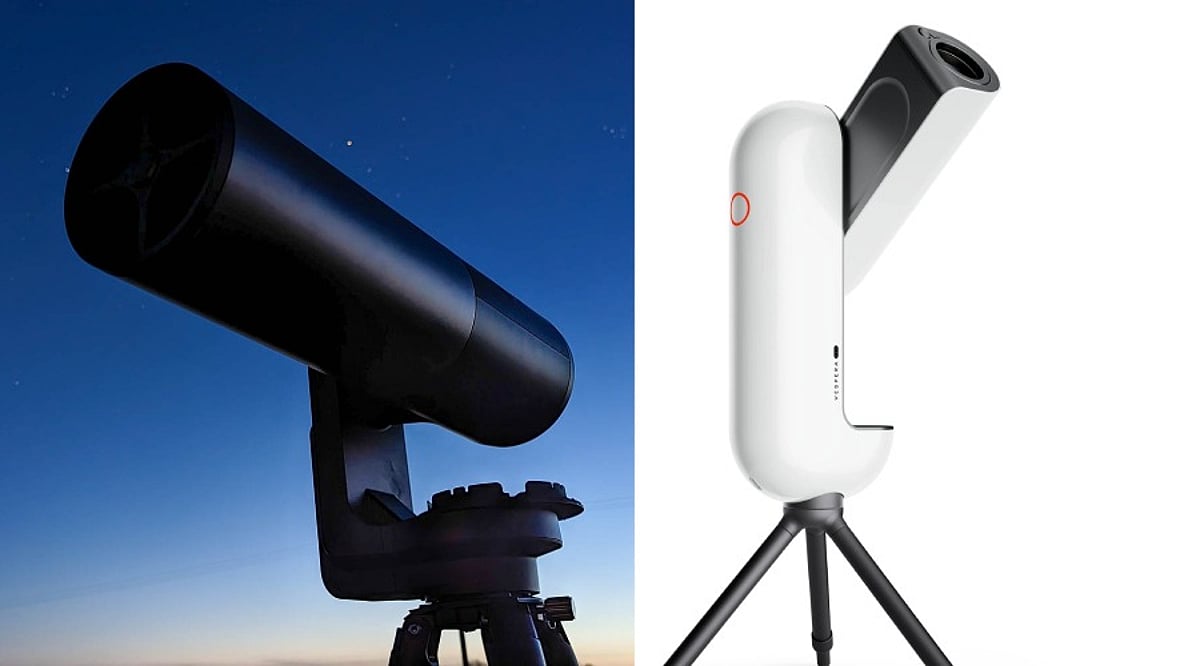
    A first telescope is less about raw specs and more about the kind of astronomy a beginner wants to practice. Smart telescopes automate target finding, tracking, and imaging through cameras, motorized mounts, and apps. Traditional telescopes keep the observer in control, teaching manual aiming, focusing, and sky navigation. Both can reveal the night sky, but they ask for different levels of effort and build different skills.

    How smart telescopes change the beginner experience

    Finding a target is often the hardest part of stargazing. Smart telescopes combine optics, a camera, a motorized mount, and companion software to locate and follow objects automatically. Many models show the view on a screen instead of an eyepiece, and some stack multiple exposures to bring out detail in faint objects. The result is a shorter path from setup to a first image, especially for beginners who want astrophotography without a steep manual learning curve.

    What traditional telescopes teach

    A manual refractor or reflector puts the beginner at the controls. The observer aims the tube, adjusts focus, and uses a finder or star chart to locate targets. The payoff is a direct eyepiece view rather than a processed screen image. Basic operation is easy to learn, but tracking down faint galaxies, nebulae, and star clusters takes practice. That practice builds real skill in sky navigation, optics, and visual observation.

    Skills develop differently

    Traditional telescopes train users to focus, track by hand, choose eyepieces, and read the night sky. Smart telescopes shift the learning toward framing shots, managing captures, using software, and understanding basic astrophotography. Neither path is skill-free; they simply develop different abilities.

    Compare the full cost, not just the price tag

    Entry-level models exist in both categories, but the sticker price is only part of the story. A traditional telescope can start simply and become more expensive as the observer adds eyepieces, filters, a sturdier mount, or a camera. A smart telescope often bundles more hardware and software at purchase, though upgrades may be tied to one manufacturer’s accessories and software ecosystem. Because prices change often, checking current listings before buying is worthwhile.

    Light pollution affects each setup differently

    Smart telescopes can stack exposures to reveal more detail in faint objects under bright city skies, but they do not erase light pollution. With a traditional telescope, the eye receives the view directly, so light pollution has a stronger impact on how much of a dim target is visible.

    Match the telescope to the target

    Target Smart telescope Traditional telescope
    Moon Captures surface detail on a screen Offers a direct eyepiece view
    Planets Can image planets, though methods differ from deep-sky work Delivers a strong visual reward through the eyepiece
    Nebulae and galaxies Strong fit because cameras gather faint light over time Visible, but faint targets demand dark skies and practice
    Star clusters Works well with automated capture Works well depending on aperture and sky conditions

    How a beginner should decide

    Choose a smart telescope if the goal is capturing deep-sky images with minimal setup and automated help. Choose a traditional telescope if the goal is learning manual observing, optics, and sky navigation. Trying both through a local astronomy club, observatory, or dealer can clarify which experience fits before spending money.

    Final takeaway

    Automation and manual observing are converging as telescope technology improves, and future models will likely borrow features from both sides. A beginner who understands what each system demands today can choose with confidence and adapt later as their interest in astronomy grows.

    Frequently asked questions

    Are smart telescopes good for beginners?

    Yes. They simplify target finding, tracking, and image capture, making them a good fit for beginners who want automated observation and astrophotography.

    Are traditional telescopes harder to use?

    They usually require more manual work. Beginners may need to learn target finding, focusing, and tracking, but those steps build practical observing skills.

    Are smart telescopes better for galaxies and nebulae?

    They are designed around imaging, so they can stack exposures to reveal more detail from faint deep-sky objects. Traditional scopes can show these objects too, but faint targets are more demanding visually.

    Can traditional telescopes be used for astrophotography?

    Yes. They can be paired with cameras and suitable mounts, though additional equipment may be needed depending on the type of imaging.

    Should a beginner choose smart or traditional?

    It depends on the desired experience. Smart telescopes suit automated imaging and easier setup; traditional telescopes suit hands-on control and visual astronomy.
  • Best Smart Telescopes of 2026: Top 7 Robotic Models for Astrophotography and Space Observation

    Best Smart Telescopes of 2026: Top 7 Robotic Models for Astrophotography and Space Observation

    Overview

    Smart telescopes now handle alignment, tracking, and image stacking automatically, allowing anyone to capture deep-sky photos within minutes of setup. Prices range from around $349 for compact beginner models to nearly $4,000 for observatory-grade astrophotography rigs. The right choice depends on your budget, travel habits, and whether you prioritize wide-aperture power or maximum portability.

    These telescopes have made astronomy more accessible than ever. Open an app, select a galaxy, nebula, or planet, and the telescope does the rest—lining up, tracking, focusing, and constructing a detailed image in just a few minutes. With improved sensors, object recognition, and automatic image stacking, today’s smart telescopes are more capable than ever before.

    To compile this list of the seven best smart telescopes for 2026, we evaluated optical performance, automation, portability, ease of use, price, and overall value.

    Comparison Table

    Prices shift often across retailers and sale events. Check the retailer link for current pricing before buying.

    1. ZWO Seestar S30 — Best for First-Time Buyers

    The Seestar S30 is one of the best entry-level smart telescopes. It fits in a small bag, sets up in minutes, and its wide-angle lens works for both daytime and night sky shots. Image quality trails larger models, but for beginners testing the hobby, it removes nearly every barrier to entry.

    2. ZWO Seestar S30 Pro — Best Budget Upgrade

    The S30 Pro adds a second wide-angle camera and an upgraded IMX585 sensor, delivering noticeably cleaner deep-sky images than the standard S30. It keeps the same compact body and simple app control, making it a strong pick for buyers who want better photos without jumping to premium pricing.

    3. Dwarflab Dwarf 3 — Best for Travel

    Dwarf 3 packs a 35mm aperture and a wide field of view into a body that fits in a jacket pocket. It handles both landscape and deep-sky imaging, and its EQ mode improves tracking accuracy for longer exposures. Frequent travelers get the most value here.

    4. Vaonis Vespera II — Best Mid-Range Value

    The Vespera II brings a sharper 8.3-megapixel sensor and a signature Mosaic mode that stitches multiple frames into wide, detailed images of large targets like the Andromeda Galaxy. It costs more than budget models, but the jump in image quality and field of view justifies the price for serious hobbyists.

    5. Unistellar eQuinox 2 — Best Aperture for the Price

    At 114mm, the eQuinox 2 gathers far more light than any model below it, pulling in fainter, more detailed deep-sky targets. It skips the eyepiece found on other Unistellar models, keeping the price down while delivering strong optical performance. It also connects owners to a citizen science network for real research contributions.

    6. Vaonis Vespera Pro — Best Resolution

    The Vespera Pro carries a 12.5-megapixel sensor—the highest resolution on this list—paired with an 11-hour battery that covers a full night of imaging without a recharge. Buyers who want the sharpest possible images from a portable smart telescope will find the price justified.

    7. Celestron Origin Mark II — Best for Astrophotography Quality

    The Celestron Origin pairs a 152mm RASA astrograph with a fast f/2.2 focal ratio and an 8.4-megapixel Sony Starvis 2 sensor, capturing detailed shots of galaxies and nebulae without long exposure times. It is the most expensive telescope in this lineup, making it ideal for enthusiasts serious about advanced astrophotography rather than casual stargazers.

    What to Look for Before Buying a Smart Telescope

    Picking the right smart telescope comes down to a handful of practical considerations. Aperture matters most, as it determines how much light reaches the sensor—turning a dim galaxy from an invisible smudge into a recognizable photo. Many modern models also include AI-powered features such as automatic object recognition, making galaxies, nebulae, and star clusters easier to locate and photograph.

    Portability and battery life matter equally in practice, since they affect where you can set up and how long a session can last. Beyond hardware, reliable tracking, quick image stacking, and an intuitive app all contribute to a smoother night outside and sharper photos at the end.

    Final Thoughts

    There is no single best smart telescope. The right choice depends on budget, experience, and what you actually want to observe. Beginners or budget-conscious buyers will likely be happiest with the ZWO Seestar S30 or S30 Pro. Those wanting a light, grab-and-go option should check out the Dwarflab Dwarf 3. The Unistellar eQuinox 2 offers a larger aperture and the bonus of contributing to real citizen science projects. For serious astrophotographers, the Vaonis Vespera Pro or Celestron Origin will handle heavier lifting. Ultimately, the best telescope matches how you plan to use it.

    Frequently Asked Questions

    What is a smart telescope?

    A smart telescope is an automated telescope that uses motors, sensors, and software to align, track, focus, and capture images of celestial objects through a smartphone app.

    Which is the best smart telescope for beginners in 2026?

    The ZWO Seestar S30 is one of the best smart telescopes for beginners in 2026 due to its affordability, portability, easy setup, and minimal manual adjustment requirement.

    Can smart telescopes capture galaxies and nebulae?

    Yes. Most smart telescopes use automatic tracking and image stacking to photograph galaxies, nebulae, and star clusters. Higher-end models generally produce better detail and low-light performance.

    Are smart telescopes good for astrophotography?

    Yes. Smart telescopes are designed for astrophotography by combining automated tracking, image processing, and smartphone control. Premium models offer larger apertures and higher-resolution sensors for more detailed deep-sky images.

    What should be considered before buying a smart telescope?

    Key factors include aperture, sensor quality, tracking accuracy, portability, battery life, software experience, and overall value. Choosing the right model depends on your budget, observing goals, and intended use.