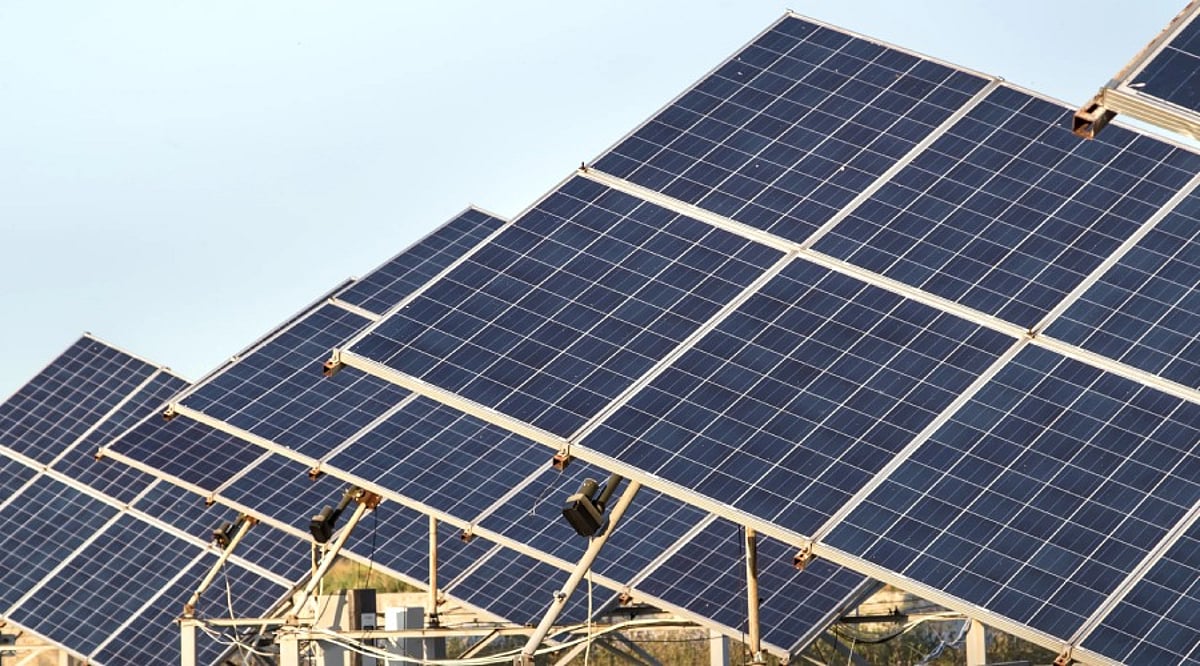
Tag: solar energy

  • Google Launches Five Sustainability Projects to Accelerate India’s Climate Ambitions

    Google Launches Five Sustainability Projects to Accelerate India’s Climate Ambitions

    On September 10, 2026, Google announced five sustainability initiatives across India, focusing on solar energy, agriculture, research, and climate technology. The company aims to accelerate India’s clean energy transition by leveraging artificial intelligence, satellite data, and local partnerships.

    The initiatives target more than 300 million Indian rooftops, farmers in Telangana, and new solar capacity in Rajasthan. Google will combine geospatial AI, clean energy investments, and research support to address climate challenges.

    Expanding Solar Potential with AI

    Google is expanding its Solar API to cover over 300 million rooftops in India. The tool uses AI and imagery to assess solar potential without requiring an initial site visit. Companies like Solar Ladder and OpenSolar have already integrated the technology into their solar workflows.

    New Solar Project in Rajasthan

    The company signed a long-term agreement with ReNew Power for a 150 MW solar project in Rajasthan. This marks Google’s second Scope 3-focused solar project in India. Together, both projects will bring 300 MW of contracted solar capacity with ReNew.

    Supporting Sustainable Agriculture

    Agriculture forms another major part of the sustainability push through a partnership with Mitti Labs. The initiative will help tens of thousands of smallholder rice farmers in Telangana adopt Alternate Wetting and Drying (AWD) practices. AWD periodically drains and refills rice fields, reducing methane formation while lowering irrigation demand. Google expects the programme to mitigate nearly three million tonnes of CO₂e under the GWP20 measure. NASA-enabled satellite monitoring will help verify results alongside field networks.

    Expanding Climate Research

    Google is also expanding the Google Center for Climate Technology with new research areas. Water stewardship and waste and circularity will join green workforce training and low-carbon construction materials. The center selected three inaugural projects from 77 applications and will invite proposals through the government’s Manthan Platform. The programme aims to turn climate research into scalable, data-driven environmental solutions.

    AI for the Planet Accelerator

    Google DeepMind’s AI for the Planet accelerator includes four Indian climate-tech startups: Terrastack, Varaha Climate, Farmers for Forests, and Climitra Carbon. These startups will apply AI, Geo-AI, drones, and satellite models to environmental challenges.

    “Digital innovation and environmental stewardship can go hand in hand to create practical, lasting impact for India,” said Vrushali Gaud, Google’s Director of Climate Operations.

    The initiatives show Google broadening climate action beyond corporate energy use into India’s homes, farms, research ecosystem, and startup economy.
  • Oneindig Technologies IPO Allotment: Check Status, GMP, and Key Facts

    Oneindig Technologies IPO Allotment: Check Status, GMP, and Key Facts

    Investors who applied for the Oneindig Technologies IPO are expected to receive allotment status on August 4, as the basis of share allotment is finalized. The SME public issue ran for subscription from July 30 to August 3, and overall it saw a moderate response across different investor categories.

    After the allotment gets completed, successful applicants will get the shares credited to their demat accounts, while unsuccessful bidders will have their application money refunded, or their UPI mandates may be revoked, according to the timelines in the issue schedule. The company’s shares are scheduled to make their first appearance on the BSE on August 6.

    Applicants can look up the allotment position via the BSE website, the registrar Maashitla Securities Pvt. Ltd., or the NSE IPO bid verification portal, by typing in their PAN, application number, or DP ID/Client ID.

    Subscription and GMP

    The public issue wrapped up with a total demand of 1.73 times for the Rs. 27.65 crore offering. The Non-Institutional Investor (NII) category led demand with a subscription of 2.40 times, while the Retail portion was subscribed 1.84 times. The Qualified Institutional Buyers (QIB) segment received bids for 1.05 times the shares reserved.

    Overall, the company received bids for approximately 33.28 lakh shares against 19.20 lakh shares offered. Despite healthy participation, grey market sentiment remains subdued. According to market trackers, the Grey Market Premium (GMP) currently stands at Rs. 0, suggesting an expected listing price close to the IPO issue price of Rs. 96 per share.

    IPO Details and Use of Funds

    Oneindig Technologies raised Rs. 27.65 crore through a book-built issue consisting entirely of a fresh issue of 28.80 lakh equity shares, with no offer-for-sale component. The IPO was priced between Rs. 91 and Rs. 96 per share.

    The company plans to utilize around Rs. 20 crore from the net proceeds to meet its working capital requirements, while the remaining funds will be used for general corporate purposes.

    Retail investors were required to apply for a minimum of 2,400 shares, translating into a minimum investment of Rs. 2,30,400 at the upper price band.

    IPO Allotment Status on Registrar Website

    Registrar: Maashitla Securities Pvt. Ltd.
    Website: https://maashitla.com/allotment-status/

    Follow these steps:

    • Visit the registrar’s IPO allotment page.
    • Select Oneindig Technologies IPO from the list.
    • Enter your PAN, application number, or DP ID/Client ID.
    • Complete the verification and submit the details.
    • The screen will display whether shares have been allotted or not.

    IPO Allotment Status on BSE

    Website: https://www.bseindia.com/investors/appli_check.aspx

    • Open the BSE IPO allotment page.
    • Choose Equity as the issue type.
    • Select Oneindig Technologies IPO.
    • Enter your application number and PAN.
    • Complete the verification process and submit.

    Company Financials and Business

    Oneindig Technologies operates in the solar energy sector, offering engineering, procurement and construction (EPC) services for solar power projects, along with operations and maintenance (O&M) services. The company also trades in solar photovoltaic modules, inverters, solar pump controllers, wires and cables.

    The company generated revenue of Rs. 57.46 crore and reported a net profit of Rs. 6.16 crore for the 10 months ended January 2026. In comparison, it posted a net profit of Rs. 4.16 crore on revenue of Rs. 46.01 crore during FY2025, reflecting continued growth in both revenue and profitability ahead of its stock market debut.

    FAQs

    1. When will the Oneindig Technologies IPO allotment be announced?

    The IPO allotment is expected to be finalized today. Once completed, successful applicants will receive shares in their demat accounts, while refunds or UPI mandate releases will be processed for unsuccessful applicants.

    2. How can I check my Oneindig Technologies IPO allotment status?

    You can check the allotment status through the BSE website, Maashitla Securities’ registrar portal, or the NSE IPO bid verification portal using your PAN, application number, or DP ID/Client ID.

    3. What is the latest GMP of Oneindig Technologies IPO?

    According to market trackers, the Grey Market Premium (GMP) is currently ₹0, indicating that the shares are expected to list around the IPO issue price of Rs. 96 per share.

    4. How was the Oneindig Technologies IPO subscribed?

    The IPO received an overall subscription of 1.73 times. The NII category was subscribed 2.40 times, the retail portion 1.84 times, and the QIB segment 1.05 times, reflecting moderate investor interest.

    5. What does Oneindig Technologies do?

    Oneindig Technologies operates in the solar EPC sector, providing engineering, procurement, construction, and maintenance services for solar power projects. It also trades in solar PV modules, inverters, solar pump controllers, wires, and cables.

  • India’s Fastest-Growing Green Careers in 2026: Opportunities and Insights

    India’s Fastest-Growing Green Careers in 2026: Opportunities and Insights

    India’s push toward renewable energy and sustainability is creating a surge in green jobs. By 2026, several specialized roles are expected to see rapid growth, driven by government initiatives, private investment, and global climate commitments. Here are the top green careers shaping the country’s workforce.

    Solar Energy Engineers

    As India expands its solar parks and rooftop installations, demand for engineers who design, install, and maintain solar power systems is rising sharply. These professionals are essential for harnessing the country’s abundant sunlight.

    Electric Vehicle (EV) Specialists

    The growing EV production and charging infrastructure are creating opportunities for battery engineers, EV technicians, and vehicle software professionals. Expertise in electric drivetrains and energy management is highly valued.

    Wind Energy Technicians

    New wind power projects across multiple states are increasing the need for skilled technicians to install, monitor, and service wind turbines. This role is critical for sustaining India’s wind energy capacity.

    Energy Storage Experts

    Battery storage systems are becoming essential for integrating renewable energy into the grid. Professionals in battery design, management, and grid storage technologies are in high demand.

    Green Hydrogen Professionals

    India’s clean hydrogen initiatives are generating demand for engineers, researchers, and project managers focused on production, storage, and transportation of green hydrogen.

    Sustainability Consultants

    Businesses are hiring experts to improve ESG performance, reduce emissions, manage environmental compliance, and achieve sustainability goals. This role spans multiple industries.

    Climate Data Analysts

    Organizations increasingly use data to measure carbon emissions, climate risks, and environmental performance. Data professionals with climate expertise are finding new opportunities.

    Circular Economy Specialists

    Recycling, waste management, and resource efficiency projects are expanding career options for professionals focused on sustainable production and waste reduction.

    Carbon Management Experts

    As more companies adopt net-zero targets, demand is rising for professionals who develop carbon reduction strategies, emissions reporting, and climate action plans.

  • Next-Generation Solar Panels: Perovskite, Multi-Junction, and Flexible Technologies Set to Boost Efficiency

    Next-Generation Solar Panels: Perovskite, Multi-Junction, and Flexible Technologies Set to Boost Efficiency

    Solar power has become one of the most important clean energy sources worldwide. Millions of homes, offices, and factories already use solar panels to generate electricity from sunlight. Most conventional panels rely on silicon, a material that has served the industry well for many years. However, scientists now believe that silicon has nearly reached its maximum performance. This has spurred research into new solar technologies that can generate significantly more electricity from the same amount of sunlight. These future solar panels could help homeowners save money, reduce carbon emissions, and make better use of limited roof space.

    Perovskite-Silicon Tandem Panels Show the Greatest Promise

    Among emerging solar technologies, perovskite-silicon tandem panels are attracting the most attention. These panels combine a silicon cell with a very thin layer of perovskite. Because each material absorbs different parts of the sunlight spectrum, they work together to capture more solar energy than ordinary silicon panels alone.

    Lab tests have achieved efficiencies exceeding 34.5%, far above the typical performance of current commercial silicon panels. Experts believe commercial models will soon reach over 30% efficiency. This could allow homeowners and businesses to generate 20–30% more energy from the same rooftop without adding extra panels. Moreover, manufacturers can adapt existing silicon production lines rather than build entirely new infrastructure.

    All-Perovskite Panels Could Transform the Industry

    Researchers are also developing solar panels made entirely from perovskite materials, known as all-perovskite panels. Unlike tandem panels, these do not use silicon at all. This technology promises to be lighter, cheaper, and easier to produce at scale. These panels can bend without damage, making them suitable for curved roofs, portable devices, and surfaces where heavy glass panels are impractical. Some experts believe all-perovskite panels could even surpass the efficiency limits of silicon. However, a major challenge remains: improving durability against heat, moisture, and sunlight so the panels can last for decades outdoors.

    Multi-Junction Solar Cells Deliver Record Efficiency

    Another breakthrough is the multi-junction solar cell, which uses multiple layers to absorb different colors of sunlight. This design can utilize nearly the entire solar spectrum to generate electricity. Such cells have already achieved efficiencies above 40%, with some advanced designs reaching almost 47%—the highest ever recorded. These cells are already used in satellites due to their exceptional performance. The main drawback is high manufacturing cost, which currently prevents widespread residential use.

    Quantum Dot Solar Cells Open New Possibilities

    Quantum dot solar cells represent another exciting area of research. Quantum dots are extremely small semiconductor particles whose light absorption properties change with their size. This allows scientists to design cells that collect a broader range of sunlight. Researchers believe this technology could boost electricity production, especially in cloudy or low-light conditions. Some studies explore using quantum dots alongside silicon panels rather than replacing them entirely. Although more research is needed before mass production, many experts see strong long-term potential for capturing more solar energy.

    Flexible Printed Solar Cells Expand Where Solar Can Work

    Future solar panels may not look like the heavy glass panels we know today. Flexible printed solar cells could revolutionize how solar power is integrated into everyday life. These ultra-thin films can be applied to walls, windows, curved structures, cars, buses, trains, and even portable electronics. Japan has invested heavily in printed perovskite technology, aiming to turn ordinary surfaces into clean electricity generators. This approach could dramatically increase the total solar power capacity in cities.

    Challenges Before Widespread Adoption

    Despite impressive progress, several challenges remain. Future panels must reliably generate electricity for 25–30 years without major performance loss. They need better protection against rain, humidity, high temperatures, and constant sunlight. Large-scale manufacturing must also reduce production costs to keep prices affordable for homeowners and businesses. Researchers are also focusing on recycling methods to minimize waste at the end of a panel’s life. Steady progress is being made on all these fronts.

    The Future Looks Bright

    The next generation of solar panels will transform clean energy. Perovskite-silicon tandem panels currently offer the best balance of efficiency, manufacturability, and commercial readiness. All-perovskite panels, multi-junction cells, quantum dot technology, and printed flexible films are set to expand the frontiers of solar energy. As research progresses, future solar panels will generate more power from the same sunlight while unlocking new ways to harvest energy from buildings and vehicles.

    Frequently Asked Questions

    1. What is the most promising future solar panel technology? Perovskite-silicon tandem panels are considered the most promising because they combine high efficiency with compatibility with existing silicon manufacturing.
    2. Why are perovskite solar panels important? They can achieve higher efficiencies than traditional silicon panels while potentially reducing manufacturing costs and enabling flexible designs.
    3. Why aren’t multi-junction solar cells used on homes today? Although they offer record-breaking efficiency, they remain too expensive for residential use due to complex materials and manufacturing.
    4. What makes quantum dot solar cells different? Quantum dots absorb different wavelengths of light depending on their size, allowing solar cells to capture more sunlight, especially in low-light conditions.
    5. What challenges must future solar panels overcome? They need improved durability, lower production costs, better resistance to heat and moisture, and effective recycling solutions for long-term commercial success.
  • Key Factors for Selecting a Top Solar Panel Manufacturer

    Key Factors for Selecting a Top Solar Panel Manufacturer

    Choosing the right solar panel manufacturer is critical for long-term energy savings and system reliability. Below are the essential criteria to guide your decision.

    Manufacturer Reputation

    Research brand credibility, industry experience, customer reviews, and successful installations before selecting a manufacturer. A trusted provider ensures reliable long-term solar performance.

    Product Certifications

    Verify international quality certifications that confirm panels meet recognized safety, efficiency, durability, and environmental standards. This step is non-negotiable before making a purchase.

    Panel Efficiency

    Compare efficiency ratings to maximize electricity generation, especially when rooftop space is limited for residential or commercial installations. Higher efficiency often translates to better return on investment.

    Warranty Coverage

    Choose manufacturers offering comprehensive product and performance warranties. These protect against manufacturing defects and guarantee long-term output degradation.

    Technology Used

    Evaluate advanced technologies like TOPCon, HJT, or bifacial panels. These deliver higher efficiency, improved durability, and superior energy production capabilities.

    After-Sales Support

    Reliable technical assistance, maintenance services, and prompt warranty claims ensure hassle-free ownership throughout the solar system’s operational lifespan.

    Pricing Transparency

    Compare complete installation costs without hidden charges. Balance affordability with quality, efficiency, and long-term value for money.

    Installation Network

    Prefer manufacturers with certified installation partners. This ensures professional setup, compliance with standards, and optimal system performance after commissioning.

    Customer Reviews

    Read verified customer feedback to understand real-world performance, service quality, installation experience, and long-term satisfaction before finalizing your purchase.

  • MIT in the News: Financial Aid, 3D Printing, Cancer Research, and I.M. Pei Archive

    MIT continues to make headlines with groundbreaking research, innovative startups, and transformative educational initiatives. Here is a roundup of recent media coverage highlighting MIT’s impact across diverse fields.

    Free Tuition Program Gains Attention

    Fortune reporter Emma Burleigh spotlights MIT’s financial aid programs that provide free tuition to students whose parents earn less than $200,000 a year. Additionally, tuition, housing, dining, fees, books, and personal expenses for students with parental incomes of less than $100,000 are covered by MIT. “Famed research university MIT is not only footing the tuition bill of its lower-income students—it’s making ‘free college’ a reality,” writes Burleigh.

    VulcanForms to Create Over 1,000 Jobs

    For The Boston Globe, reporter Aaron Pressman features MIT startup VulcanForms, a 3D printing manufacturer expected to create over 1,000 jobs with a new 1-million-square-foot plant in Devens, MA. The facility will bring capacity for more customers in medical devices, aerospace and defense, and consumer goods industries. “MIT professor John Hart started the company with grad student Martin Feldmann [’14] as a way to bring 3D printing techniques using lasers and powdered metals to larger-scale manufacturing jobs,” writes Pressman.

    Colon Cancer Cells Can Change Identity

    MIT researchers have found that colon cancer cells can “change their identity, allowing them to travel through the body and form new tumors,” reports Daniella Gray for Newsweek. The findings could point to future treatments that can prevent metastasis—the leading cause of death for colorectal cancer patients, Gray explains.

    I.M. Pei Archive Donated to MIT Museum

    For Archinect, reporter Niall Patrick Walsh spotlights how the full archive of architect and alumnus I.M. Pei ’40 has been donated to the MIT Museum. “Among the materials are drawings and documents from some of Pei’s best-known works, including the Louvre Museum modernization project in Paris, the John F. Kennedy Presidential Library and Museum in Boston, and the Rock and Roll Hall of Fame in Cleveland,” writes Walsh. “The archive also contains records relating to four buildings designed by Pei on the MIT campus: the Green Building, Dreyfus Building, Landau Building, and Wiesner Building.”

    Schwarzman College of Computing Prepares Students for AI Era

    Chronicle of Philanthropy reporter Maria Di Mento spotlights how the creation of the MIT Schwarzman College of Computing allowed MIT to develop new “interdisciplinary programs to prepare students for an AI-saturated world and help them understand the social and ethical implications of digital technologies.” Prof. Daniel Huttenlocher, dean of the Schwarzman College of Computing, explains that: “MIT realized that effective education in the age of AI has to look different than it has in the past. Traditional siloing of expertise won’t work when AI is expected to touch nearly every part of people’s lives and is changing the way people in disciplines outside of computing are advancing their work.”

    New Robot System Describes Objects in Plain English

    Writing for Forbes, contributor Ron Schmelzer highlights Describe Anything, Anywhere, at Any Moment (DAAAM), a new system developed by MIT researchers that could enable robots to capture details of objects they see while exploring an environment. In the future, the system could allow factory workers to send robotic assistants to find items. DAAAM “lets a robot build a detailed map of a space, attach descriptions to objects in that map, and answer plain English questions later,” Schmelzer explains.

    Air-Guardian System Enhances Flight Safety

    Writing for Forbes about efforts to improve air travel safety, Tanya Eves highlights the Air-Guardian system, an eye-tracking monitor for pilots developed by CSAIL researchers that assists when attention wavers. “In tests, it reduced flight risk and improved navigation success rates,” writes Eves. “It’s a model for how the virtual co-pilot relationship should work: not replacement, but a seamless, intelligent partnership that understands when to act and when to stay silent.”

    AI’s Impact on Jobs and Economy

    Prof. Simon Johnson discusses the impact of AI on jobs in an interview with Financial Times reporters Delphine Strauss and Sam Fleming. “We are trying very hard at MIT to find ways to incorporate AI into the curriculum but to push harder on the entrepreneurship angle, the creation of new products and services, the development of critical thinking,” says Johnson.

    In a separate piece for Bloomberg, Prof. Simon Johnson and Prof. Elisabeth Reynolds describe how the U.S. can maintain its technological leadership by investing in research focused on critical minerals, semiconductors, biotechnology, quantum computing, drones and advanced manufacturing.

    In an interview with Fortune, Prof. Daron Acemoglu discusses AI’s economic impact and estimates AI will deliver roughly 0.55% in total factor productivity gains.

    Solar-Electric Boat Launches on Charles River

    For Axios Boston, reporter Steph Solis highlights “Anita,” a solar-electric boat created by alumnus James Worden ’89 that is due to launch this year. The boat was previewed at the 80th anniversary Charles River sail-a-thon. “The prototype, named ‘Anita’ after Worden’s late wife, moves silently with no fumes or exhaust and uses LiFePO4 battery cells with a battery management system (it lets you charge the batteries while they’re in use),” writes Solis.