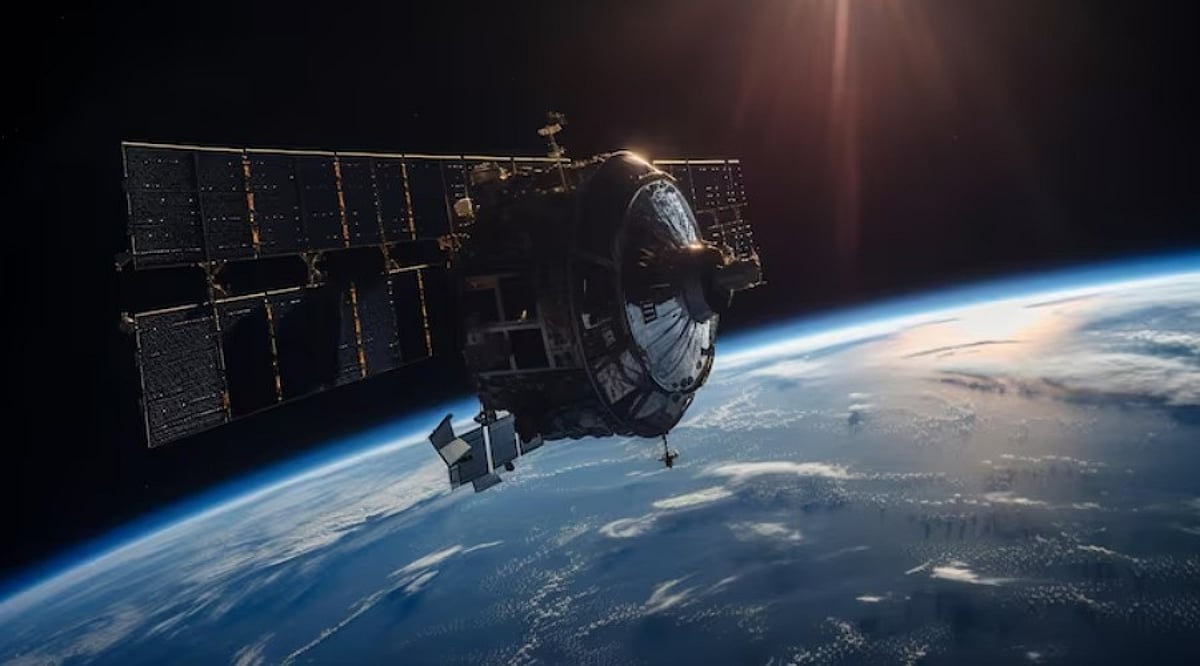
Space technology has entered a new era. What once looked like science fiction now shapes real missions, new businesses, and plans for life beyond Earth. Governments and private companies now invest billions of dollars every year to build better rockets, smarter satellites, and advanced space systems.
The global space economy already stands at more than $415 billion, and experts expect it to grow beyond $1 trillion by the 2040s. Private companies now generate nearly 71% of the industry’s total revenue, which shows how quickly commercial space activity has expanded.
These advances do much more than support space exploration. They improve communication, weather forecasting, navigation, disaster response, scientific research, and national security. Some technologies may even help humans build permanent homes beyond Earth. Here are ten space technologies that could change the future in remarkable ways.
1. Fully Reusable Rockets
For decades, rockets flew into space only once. Engineers threw away most of the rocket after every mission, which made each launch extremely expensive. Today, that approach has changed.
Modern reusable rockets return safely to Earth after launch. Engineers inspect them, replace worn parts, and prepare them for another mission. This simple change has reduced launch costs by almost 90% for some commercial flights.
Lower costs allow companies to launch more satellites, send more scientific equipment into orbit, and plan larger missions. Future heavy-lift reusable rockets could carry hundreds of tons of cargo, which would make Moon bases and Mars missions much more practical.
2. Nuclear Space Propulsion
Chemical rockets are effective for travel in Earth’s vicinity, but have evident limitations in long-distance travel. Nuclear propulsion is a comparatively faster system for deep space travel.
Scientists have now been researching two major propulsion systems: nuclear thermal and nuclear electric propulsion. Both systems are expected to deliver greater efficiency, carry bigger loads and require less fuel than conventional rockets.
The average journey to Mars takes about 6 to 9 months with present-day technology. With the help of nuclear propulsion, this time can be shortened.
3. Satellite Mega-Constellations
Currently, thousands of satellites orbit the Earth daily. Today’s companies launch many smaller satellites that form a network instead of only a few large satellites.
In the year 2025 alone, about 4,500 satellites were launched into orbit, which is one of the main reasons for significant progress in the space industry.
In addition, satellite networks are important for delivering fast internet service in hard-to-reach locations as well as providing emergency communication during disasters, navigation support for ships and airplanes, and enhancement of online education.
4. Satellite Repair in Space
Replacing an old satellite costs millions of dollars. Instead of building a new one every time, engineers now develop spacecraft that can repair satellites while they remain in orbit.
Some robotic servicing missions have already extended satellite life by up to eight years. That saves money and reduces the amount of space debris around Earth.
Future repair vehicles could replace broken parts, refill fuel tanks, adjust satellite positions, and remove damaged equipment from orbit. This approach could make satellites last much longer than before.
5. Artificial Intelligence for Space Missions
Modern spacecraft need quick decisions, especially during missions far from Earth. Communication delays make constant human control impossible.
Artificial intelligence helps spacecraft navigate, monitor equipment, detect technical problems, and manage fuel more efficiently. AI also studies huge amounts of scientific data much faster than human teams.
As missions travel farther into space, smart computer systems will play an even bigger role. They will help spacecraft solve problems on their own and complete complex tasks with greater accuracy.
6. Permanent Bases on the Moon
Human exploration of the Moon has begun. Today, space agencies wish to carry out long-term missions on the Moon instead of visiting it briefly.
The Artemis program is ready to create a permanent lunar base, which will be equipped with living quarters, research laboratories, power systems, modern space suits, as well as robotic construction technology.
A permanent base on the Moon will allow conducting several scientific experiments, receiving rocket fuel from local materials, and training astronauts for future missions on Mars.
7. Space-Based Solar Power
Solar panels installed on Earth are unable to generate electricity when it is night or when the weather is cloudy and overcast. Solar panels, however, are not faced with similar challenges in space.
Solar power stations launched into orbit would be able to capture sunlight almost all the time and beam energy to our planet via microwave or laser transmissions. Nevertheless, experts still have to counter several technical problems before this dream could be accomplished. If this modality turns out to be successful, solar energy collected in outer space could help people access clean electricity, aid some remote area populations, and give energy for the emergency needs following disasters.
8. Factories in Space
Space creates conditions that cannot exist on Earth. The absence of gravity allows manufacturers to produce certain materials with much higher quality.
Future factories in orbit could make advanced medicines, ultra-pure fiber optics, high-performance computer materials, artificial organs, and special metal alloys.
As launch costs continue to fall, companies may find it profitable to manufacture expensive products in space and return them to Earth.
9. Mining Resources Beyond Earth
The Moon and many asteroids contain valuable resources. These include water ice, nickel, platinum-group metals, and several rare materials that support modern industries.
Water from the Moon has special value because engineers can separate it into hydrogen and oxygen to create rocket fuel. This would reduce the need to launch large amounts of fuel from Earth.
Space mining could lower mission costs and support future settlements across the Solar System. It could also reduce pressure on some mining operations on Earth.
10. Advanced Space Habitats
Long missions require much more than rockets. Astronauts also need safe places to live for months or even years.
Future space habitats will recycle more than 90% of their water, grow fresh food through hydroponic systems, protect crews from radiation, and use artificial intelligence to monitor daily operations.
Expandable living modules will provide more space without adding excessive launch weight. These habitats will support missions to the Moon, Mars, and possibly even farther destinations.
Why This Matters
Nowadays, space technology is not limited to its effects on astronauts and scientists. It influences many aspects of life such as communications, health care, climatic studies, transport, energy, and global security issues. The quicker new technologies are developed, the more chances these new technologies have to give rise to new industries, facilitate economic development, help solve pressing global problems, and prepare humans for life outside of Earth.
Final Thoughts
Space technology is playing an even larger role than ever before, acting as a major economic force in the world. Through the use of reusable rockets, automated technology, and satellite networks, this industry has brought about dramatic changes to the way business, communication, and research are done. The industry is thriving and projects continue to show that this growth will continue in the foreseeable future.
FAQs
1. What is the most important space technology today?
Reusable rocket technology stands out because it has significantly lowered the cost of launching spacecraft and satellites.
2. Why is the Moon important for future space missions?
The Moon can serve as a base for research, fuel production, and future missions to Mars and deeper space.
3. How does artificial intelligence help in space?
AI helps spacecraft navigate, detect technical issues, manage resources, and analyze large amounts of scientific data.
4. Can space-based solar power provide electricity on Earth?
Scientists believe it could deliver clean, continuous energy, although the technology still requires further development.
5. Will humans live in space permanently?
Many experts believe permanent settlements on the Moon and eventually Mars could become possible as space habitat technology continues to advance.