Tag: Sovereign AI

  • MeetKai Deploys NVIDIA-Based Sovereign AI Across Six Nations, Reaching Over 700 Million People

    MeetKai Deploys NVIDIA-Based Sovereign AI Across Six Nations, Reaching Over 700 Million People

    MeetKai has officially launched its sovereign AI platform, powered entirely by NVIDIA accelerated computing, across six countries. The rollout targets Brazil, Ukraine, Pakistan, Kazakhstan, Uzbekistan, and Bangladesh, collectively covering more than 700 million individuals. The platform allows governments and enterprises to run AI models locally on their own infrastructure, reducing reliance on foreign cloud services.

    MeetKai Expands Sovereign AI Infrastructure

    The initiative centers on data sovereignty, enabling nations to deploy AI systems within their own borders. By minimizing dependence on overseas cloud providers, MeetKai gives countries greater control over AI model training, deployment, and data management. The company also plans to support local AI skill development and offer secure, air-gapped deployments for sensitive government and enterprise use cases.

    Ukraine and Brazil Projects Lead the Rollout

    In Ukraine, MeetKai is partnering with Kyivstar to build a national-scale AI factory. This project is designed to establish self-contained AI infrastructure that meets national security and operational requirements. In Brazil, MeetKai secured a public tender with SERPRO, the federal data processing service, marking a critical milestone in its sovereign AI expansion across these six markets.

    NVIDIA Technology at the Core

    Every component of MeetKai’s sovereign AI platform is built on NVIDIA accelerated computing. The infrastructure supports local AI model deployment while enabling governments and businesses to maintain full control over their data and workloads. MeetKai also hinted at future expansion into African markets, where it intends to leverage NVIDIA technology for additional sovereign AI deployments.

    The six-country launch underscores a growing global focus on sovereign AI infrastructure, as governments and enterprises seek to develop local capabilities and reduce dependence on overseas cloud systems.

  • Edge AI Is the Missing Link in India’s Sovereign AI Strategy, Says embedUR CEO

    Edge AI Is the Missing Link in India’s Sovereign AI Strategy, Says embedUR CEO

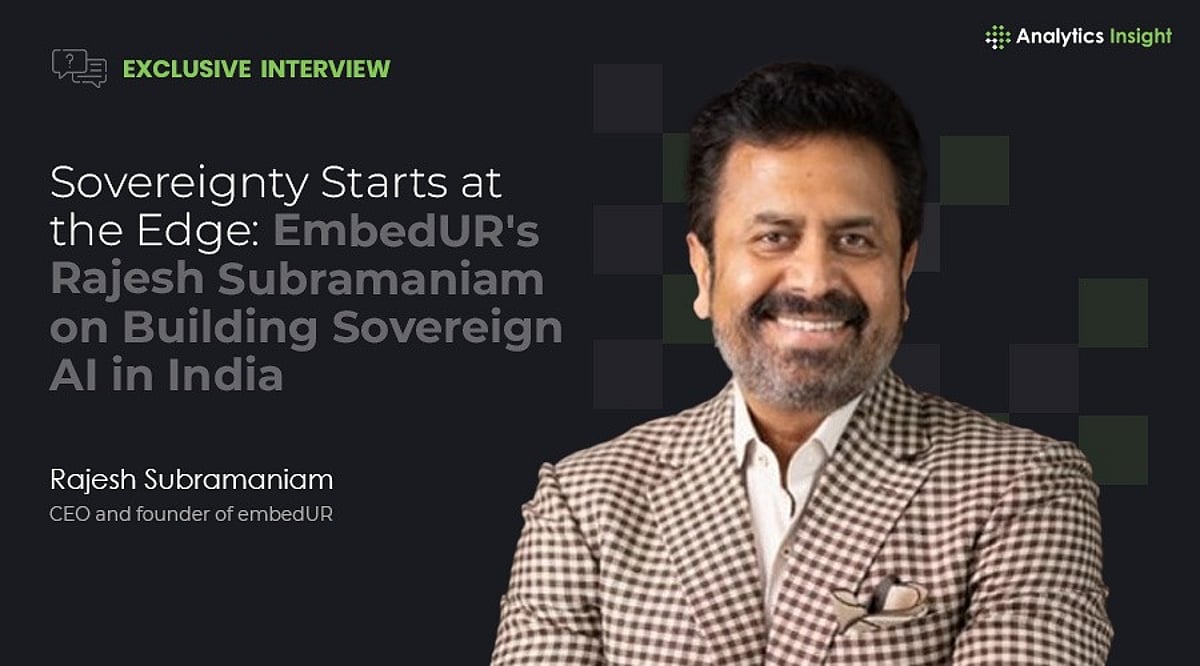
    India’s AI conversation has centered on compute clusters and cloud infrastructure. Rajesh Subramaniam, CEO and founder of embedUR, argues this misses the bigger opportunity. In this exclusive interview with Analytics Insight, he makes the case for edge AI as the missing layer of India’s sovereignty strategy—one that keeps intelligence on factory floors, in clinics, and on farms rather than routed through servers abroad. He also explains how initiatives like IndiaAI Mission, Digital India, and Make in India could converge at the device level, and what enterprises need to do to turn AI pilots into measurable business results.

    Q: Can India truly achieve sovereign AI if intelligence remains concentrated in the cloud while edge deployment is overlooked?

    A: Sovereignty involves more than the location of model training or data centers. If every inference in an Indian factory, hospital, or utility relies on a cloud, often managed abroad, the intelligence layer of the economy remains dependent on external infrastructure, pricing, and policies. True sovereignty requires intelligence to operate where India’s data is generated: on devices, factory floors, clinics, vehicles, and other endpoints. Edge AI keeps data local by default, operates reliably with limited connectivity, and reduces foreign exchange costs associated with large-scale cloud inference. Cloud AI and edge AI are complementary. However, a sovereignty strategy limited to data centers perpetuates structural dependency. India should control both layers.

    Q: Why will sovereign edge infrastructure be critical to India’s long-term AI ambitions?

    A: When we look at India’s AI journey, three factors stand out: scale, resilience, and economics. Let’s start with scale. Our opportunity is massive—AI in India is not just about a few thousand enterprise deployments, but about reaching over a billion endpoints across agriculture, manufacturing, healthcare, energy, and mobility. Relying solely on the cloud for real-time inference at this scale is simply not practical or sustainable. The way forward is clear: embed intelligence directly into our devices, and use the cloud for training, coordination, and data aggregation. This is how we unlock true impact. Resilience comes next. Edge intelligence keeps working even when connectivity drops. For critical infrastructure like our power grids, water supply, and transportation, this is not just a feature—it is essential for national strength and reliability. The third factor is economics. Every time we use the cloud for inference, we pay ongoing costs—often to companies outside India. On-device intelligence, on the other hand, means we invest upfront and update as needed, but the value stays with us. By aligning our semiconductor ambitions with edge AI, we create a powerful ecosystem: chips made in India, models improved locally, and devices built by our own teams. This is how we achieve real independence and drive long-term growth.

    Q: How can Edge AI democratize AI adoption by bringing intelligence closer to where data is generated?

    A: Cloud-based AI demands high-speed internet, ongoing subscriptions, and complex data management. This leaves out a huge part of India’s economy: small manufacturers, rural healthcare providers, farmers, and businesses in Tier-2 and Tier-3 cities. Edge AI changes the game. Affordable, microcontroller-based solutions work offline, cut out per-inference fees, and keep sensitive data local. This is how we bring AI to everyone. Small foundries can now run visual inspections without cloud contracts. Primary health centers can deliver diagnostics on-site. Farmers can control pumps without relying on connectivity. Over the last two decades in embedded software, I have seen firsthand that technology becomes truly accessible when it is built into affordable hardware. As AI models get smaller and fit into MCUs and NPUs, embedding AI in the devices people already use is the most practical and inclusive way forward for India.

    Q: What is the role of embedded systems, edge computing, and intelligent devices in enabling scalable, real-world AI deployment?

    A: Real value comes when intelligence is built into products that ship, survive in the field, and run for years on limited power and memory. Models that stay in demos or data centers never make an impact. The real work is delivering solutions that last. This is the heart of embedded systems. Moving from research to real products means optimizing for the actual chip, integrating with sensors and connectivity, and making sure it works in the real world, not just the lab. Many AI projects get stuck here. The challenge is not building the model, but getting it deployed and keeping it running. This is exactly why we launched ModelNova as an independent company from embedUR. The industry is moving toward production-ready models that are proven on real silicon, so device makers are not left to bridge the gap alone. India has the talent and the drive in embedded engineering and electronics manufacturing. We have a real opportunity to lead the world in this deployment layer.

    Q: How can national initiatives such as the IndiaAI Mission, Digital India, and Make in India converge to strengthen India’s AI ecosystem?

    A: Each of these initiatives tackles a critical layer. IndiaAI Mission is driving our compute capacity, datasets, and model development. Digital India has laid the foundation with robust connectivity and digital public infrastructure. Make in India, alongside the India Semiconductor Mission, is powering up our hardware manufacturing. Where these efforts come together is at the intelligent device—the next frontier for India’s leadership in technology. Building an AI-enabled device entirely in India is within our reach: silicon designed and produced here, models trained on Indian data using our own compute, and seamless deployment and updates over our digital infrastructure. We have already proven our ability to deliver this kind of end-to-end innovation—UPI is a world-class example of how public infrastructure and private ingenuity can leapfrog outdated systems. Now, we have the opportunity to do the same for edge AI. The key is focused policy that brings it all together: incentives for manufacturing AI-capable devices, standards and certification tailored for Indian conditions and languages, and procurement that demands on-device intelligence for public projects in health, agriculture, and infrastructure. When these missions align at the device level, India moves from being a consumer of AI to becoming a global exporter of AI innovation.

    Q: What do Indian enterprises across manufacturing, healthcare, and energy need to do to translate AI innovation into measurable business impact?

    A: Start with the business outcome that truly matters. In my experience, technology earns its place only when it solves a real problem and drives results for the business. Too often, I have seen AI projects lose focus chasing the latest trends. The projects that succeed are the ones that zero in on the numbers that matter: reducing defects, cutting downtime, increasing patient throughput, or minimizing transmission losses. Identify the key metric, then work backward to the simplest AI solution that delivers measurable results. In manufacturing, I always advise starting with a single line. Focus on visual inspection or predictive maintenance for your most critical asset, and track progress against a clear baseline. Once you prove value, scale it across the plant. In healthcare, true impact comes from point-of-care intelligence that integrates directly into clinical workflows, operates on-device, protects patient privacy, and keeps running even when connectivity drops. In energy, drive intelligence to the grid edge, where losses occur and where waiting for the cloud is simply not an option. There are three disciplines that turn pilots into real business impact. First, deploy intelligence where the data is generated. Latency, connectivity, and data privacy challenges often derail cloud-only projects, especially in the realities of the Indian market. Second, treat AI as a product-engineering initiative, not just a data science experiment. Invest in integration, validation, and lifecycle maintenance, because that is where the real value is created. Third, measure relentlessly against your original baseline. If AI cannot deliver results you can show in a quarterly review, it is just a science project. If it does, it becomes a line item your CFO will champion.

  • HCLTech Invests Rs. 14,257 Crore in AI Data Centre and Tech Hub in Odisha’s Sovereign AI Park

    HCLTech Invests Rs. 14,257 Crore in AI Data Centre and Tech Hub in Odisha’s Sovereign AI Park

    India’s push for sovereign AI infrastructure has received a major boost as HCLTech announces a massive Rs. 14,257 crore investment in a new AI data centre in Odisha. The facility will be part of the state’s upcoming Sovereign AI Park in Bhubaneswar, marking one of the largest commitments to domestic AI computing power to date.

    HCLTech is collaborating with Sarvam AI and the Odisha government on the project. Together, they aim to build robust AI compute capacity for government agencies, businesses, and research institutions, reducing India’s reliance on overseas AI infrastructure.

    What the Data Centre Will Deliver

    The new data centre will combine HCLTech’s full suite of AI capabilities with Sarvam AI’s foundational models. This integration will power AI applications and infrastructure for a wide range of users, from public sector entities to private enterprises and academic researchers.

    India’s demand for secure, homegrown computing resources has been accelerating rapidly. This data centre directly addresses that need, signaling a strategic shift away from depending on foreign AI infrastructure.

    A Bigger Push for Odisha

    Beyond the data centre, HCLTech plans to establish a technology delivery hub in Bhubaneswar with a capacity of 5,000 employees. The hub is expected to begin operations by 2028.

    Together, these two projects are anticipated to create thousands of direct and indirect jobs, significantly strengthening Odisha’s technology ecosystem. This investment follows HCLTech’s earlier funding round in Sarvam AI, reflecting the company’s broader strategy to expand into AI infrastructure, models, and enterprise tools.

    Also read: Airtel partners with Google to establish India’s first mega AI hub and data center in Visakhapatnam

  • Utho Cloud Commits to 10,000 GPU Deployment to Power India’s Sovereign AI Compute Backbone

    Utho Cloud Commits to 10,000 GPU Deployment to Power India’s Sovereign AI Compute Backbone

    Utho Cloud, India’s sovereign cloud and AI infrastructure platform, has announced a landmark commitment to deploy 10,000 GPUs over the next 7–8 quarters. The investment is part of a long-term vision to build India’s sovereign AI compute backbone, enabling businesses, startups, researchers, and public sector organizations to access high-performance AI infrastructure hosted entirely within the country.

    The GPU portfolio will span NVIDIA’s enterprise-grade offerings, including the H200, H100, A100, RTX PRO 6000 Blackwell, and L4 models. This expansion guarantees GPU availability without long waitlists or auction-based pricing, a significant advantage in a market often plagued by shortages and unpredictable costs.

    Key features of the infrastructure include:

    • Sovereign AI compute: Customer data and model training remain within their chosen jurisdiction, with full ownership of intellectual property.
    • Transparent and predictable pricing: Up to 60% lower than traditional hyperscaler GPU rates, with billing in Indian Rupees.
    • Flexibility: Supports workloads from single-model inference to large-scale distributed AI training.
    • 24/7 human support: Dedicated assistance for mission-critical production AI workloads.

    With over 51,000 users, Utho Cloud already offers cloud infrastructure with data residency in India and compliance with the Digital Personal Data Protection (DPDP) Act.

    “We have spent years building a cloud platform designed around India’s data sovereignty and regulatory requirements. With this expansion, we will offer guaranteed GPU availability without extended wait times, sovereign AI compute with data and model training hosted within customer jurisdictions, transparent and predictable pricing, and the flexibility to support workloads ranging from AI inference to large-scale model training. By combining 100% data residency, compliance with the DPDP Act, and cost-efficient AI infrastructure, we aim to remove the barriers that have long limited access to high-performance AI computing and accelerate India’s journey towards becoming a global AI powerhouse.”

    — Manoj Dhanda, Founder and CEO of Utho Cloud

    The announcement comes amid growing concerns over AI compute availability, with GPU shortages, rising costs, and extended procurement timelines emerging as key challenges for enterprises worldwide. Unlike conventional cloud models that often expose businesses to foreign currency billing, unpredictable GPU costs, and infrastructure dependencies outside India, Utho’s sovereign AI platform is designed to provide organizations with predictable pricing in Indian Rupees, complete data residency, and enterprise-grade AI infrastructure deployed within Indian jurisdiction.

    Utho Cloud positions itself as “Bharat ka Cloud” — proudly Indian and sharply attuned to the needs of domestic enterprises. Today, 70% of India’s cloud telephony runs on Utho. Enterprises like FIITJEE, Jindal Steel & Power, and APL Apollo trust the platform, and over 51,000 businesses — from solo developers to unicorn startups — deploy production workloads on infrastructure that Utho owns, operates, and supports 24/7.

  • India’s Sovereign AI Strategy: Key Pillars and National Impact

    India’s Sovereign AI Strategy: Key Pillars and National Impact

    India is forging a path toward technological independence with its Sovereign AI Strategy, a comprehensive framework that enables the nation to develop, deploy, and govern artificial intelligence using domestic infrastructure, policies, talent, and strategic priorities. This initiative is not just about building AI — it’s about building AI that serves India’s unique needs, from regional languages to governance challenges.

    The IndiaAI Mission: Building the Foundation

    At the heart of this strategy lies the IndiaAI Mission, which strengthens computing infrastructure, datasets, startups, research, and AI innovation. This mission creates a robust foundation for India’s sovereign artificial intelligence ecosystem, ensuring that the country can lead rather than follow in the global AI race.

    National Compute Infrastructure: Reducing Foreign Dependence

    Government-backed GPU clusters and computing resources are a cornerstone of the strategy. By reducing dependence on foreign providers, India ensures that its researchers, startups, enterprises, and public sector innovators have access to the computational power they need, all within national borders.

    Indigenous AI Models: Speaking India’s Languages

    India encourages the development of multilingual foundation models trained on local datasets. These models are designed to understand regional languages, cultural nuances, and governance needs, making AI more relevant and effective for India’s diverse population.

    Secure Data Governance: Privacy and Compliance

    Sovereign AI emphasizes responsible data storage, privacy, compliance, and secure processing within India’s regulatory framework. This approach improves national digital resilience while ensuring that citizen data remains protected under Indian law.

    Economic Growth and National Security

    Domestic AI capabilities are expected to create employment, accelerate innovation, strengthen technology exports, attract investments, and improve productivity across industries and government services. Simultaneously, strategic AI infrastructure reduces geopolitical risks, safeguards critical technologies, strengthens cybersecurity, and ensures greater control over essential digital capabilities during disruptions.

    Public Sector Transformation and Global Competitiveness

    AI-powered governance is transforming healthcare, education, agriculture, judicial services, and citizen delivery through scalable, secure, and locally relevant digital solutions. By combining innovation, regulatory leadership, trusted infrastructure, and inclusive development, India’s sovereign AI strategy positions the nation as a leading AI power on the global stage.

  • Gujarat Government, IAIRO, and IBM Launch Industrial AI Centre of Excellence

    Gujarat Government, IAIRO, and IBM Launch Industrial AI Centre of Excellence

    IBM, the Department of Science and Technology of the Government of Gujarat, and the Indian AI Research Organisation (IAIRO) have announced plans to establish an Industrial Artificial Intelligence Centre of Excellence (Industrial AI CoE) in Vadodara, Gujarat. The initiative aims to drive innovation, skill development, and ecosystem growth around Industrial AI, leveraging sovereign AI technologies.

    The Industrial AI CoE will function as a living lab, focusing on technology demonstrations, pilot programs, and applied research to accelerate the adoption of AI in asset-intensive sectors such as manufacturing, energy, utilities, and supply chains. By combining domain knowledge with advanced AI models, the centre seeks to enhance efficiency, safety, resilience, and quality across industries.

    Key objectives include fostering collaboration between industry, academia, and government through workshops, conferences, and technical sessions. The centre will also promote capacity building via academic partnerships, hackathons, training programs, and the development of AI frameworks, reference architectures, standards, and best practices for responsible and scalable AI deployment.

    Dr. Amit Sheth, Founding Director of IAIRO, stated: “The next generation of industrial systems will require AI that combines learning with domain knowledge, human expertise, and trust. Translating these capabilities into real-world impact requires an ecosystem where research, policy, and enterprise innovation evolve together. Gujarat’s industrial leadership provides a strong foundation for that transformation.”

    Sriram Raghavan, General Manager of IBM Software, India and Software Innovation Lab, added: “Scaling the application of AI is a strategic imperative for manufacturing and industrial organizations. Realizing this opportunity requires advanced AI models, real-time and historical data, enterprise-ready platforms, governance, and ecosystem partnerships. We look forward to collaborating with the Government of Gujarat and IAIRO to create a platform that fosters innovation, develops skills, and accelerates the adoption of sovereign AI technologies.”

    Under the collaboration, IBM and IAIRO will serve as technical and strategic advisors to the Gujarat Department of Science and Technology, providing expertise in Industrial AI, sovereign AI, and asset management platform best practices to scale AI adoption across the industrial sector.

    The initiative aligns with Gujarat’s vision to become a leading destination for Industrial AI, leveraging sovereign AI technologies and strengthening India’s position in trustworthy AI innovation.