
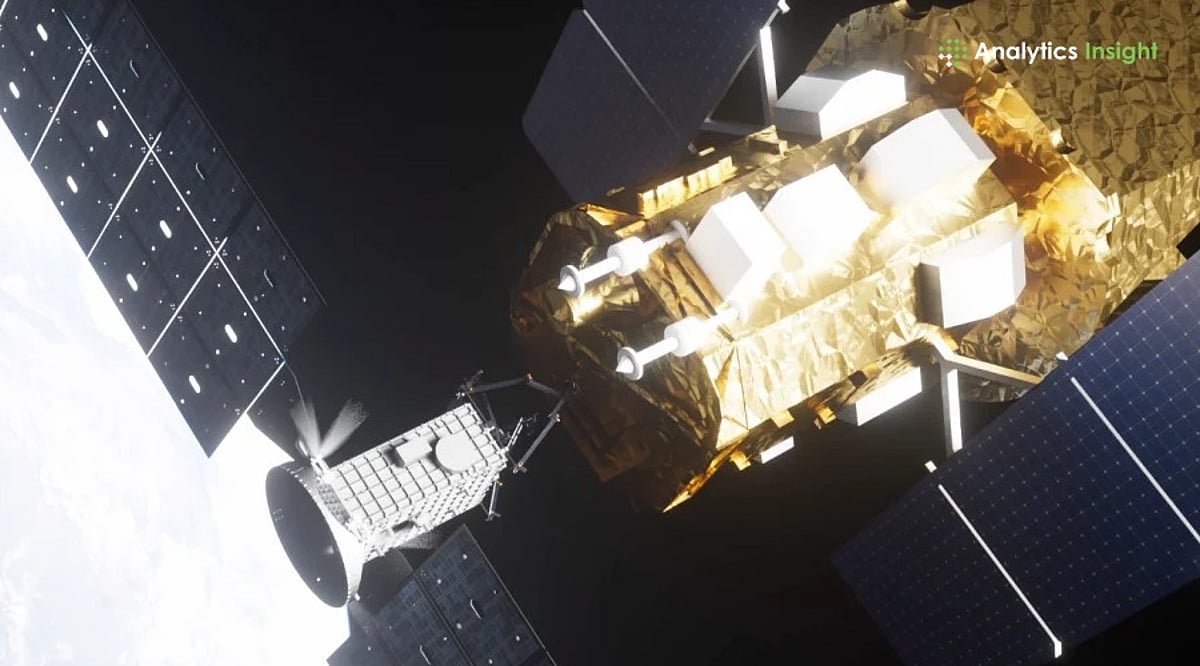
On Saturday, July 4, 2026, a specially built spacecraft soared into orbit on a high-stakes mission to intercept and save NASA’s aging Swift Observatory before it burns up in Earth’s atmosphere. The Swift telescope, launched in 2004, has been losing altitude far faster than expected due to a series of recent solar storms. Without intervention, it was projected to disintegrate by October.
The rescue spacecraft, named LINK and built by Katalyst Space Technologies, lifted off from the Marshall Islands aboard a Pegasus rocket dropped from the belly of a modified aircraft. Northrop Grumman handled the launch. LINK is now on a month-long journey to reach Swift, where it will use three robotic arms to physically capture the 1.4-metric-ton telescope and begin boosting it back to a stable orbit.
NASA is paying Katalyst roughly $30 million (NZ$52.5 million) for the operation. The telescope currently orbits about 360 kilometers above Earth, well below its original altitude. Increased solar activity has heated and expanded the upper atmosphere, creating extra drag that pulls low-orbiting satellites downward. Katalyst plans to raise Swift’s altitude by 240 kilometers, restoring it close to its original orbit. To avoid damaging the telescope, LINK’s thrusters will fire gradually rather than delivering a single jolt. NASA has already paused Swift’s scientific observations to conserve what altitude remains during the rescue.
Katalyst had just nine months to design, build, and launch the mission — an unusually tight timeline driven by Swift’s rapidly decaying orbit. Bad weather and technical glitches delayed the launch several times before it finally got off the ground. Katalyst CEO Ghonhee Lee acknowledged the immense pressure, noting that the greater risk would have been doing nothing and watching Swift disintegrate in the atmosphere.
If the mission succeeds, Swift could resume scanning the sky by September, continuing its vital work tracking gamma-ray bursts and exploding stars — some of the most energetic events in the universe. The mission is also being watched closely as a potential blueprint for similar rescues. NASA’s Hubble Space Telescope is experiencing a similar altitude drop due to the same rise in solar activity and could become a candidate for a comparable rescue within the next few years.