Tag: Space Technology

  • Google’s Project Suncatcher: AI Chips Bound for Low Earth Orbit on October 1

    Google’s Project Suncatcher: AI Chips Bound for Low Earth Orbit on October 1

    Google is preparing to launch its Tensor Processing Units (TPUs) into low Earth orbit on October 1, 2026, as part of Project Suncatcher. The prototype satellite will be carried by SpaceX’s Transporter-18 rideshare mission, launching from California. Planet Labs is collaborating with Google on the spacecraft effort.

    The primary goal of Project Suncatcher is to test how AI hardware performs in the harsh environment of space. The TPUs will be subjected to radiation, extreme temperatures, and the intense vibrations of a rocket launch. Cosmic rays and solar activity can disrupt electronics and create errors known as bit flips. Google has already conducted ground tests, including proton beam radiation testing at UC Davis, where AI workloads were run while researchers monitored radiation-related errors. Vibration tests across all three satellite axes were also performed, and the hardware reportedly held up during these stress tests.

    One of the biggest challenges for space-based AI computing is cooling. In the vacuum of space, conventional fans cannot dissipate heat. Google plans to use heat pipes and radiators to transfer heat away from the TPUs, a method already tested in thermal vacuum chambers.

    Another advantage of orbital computing is access to near-constant solar power. Satellites in low Earth orbit can receive up to eight times more solar energy than ground-based installations, making space an attractive location for energy-intensive AI workloads.

    Looking ahead, Google envisions multiple satellites working together as orbital computing clusters, connected by high-bandwidth laser links. The company plans to launch two satellites in 2027 to test these laser communication systems.

    The upcoming launch is not a full-scale AI data center in space but a testbed to gather real-world data on hardware reliability and operational limits. The findings will inform the design of future space-based AI systems, with commercial deployment still a long-term possibility.

  • India’s Deep-Tech Boom: 9 Defining Technologies for 2026

    India’s Deep-Tech Boom: 9 Defining Technologies for 2026

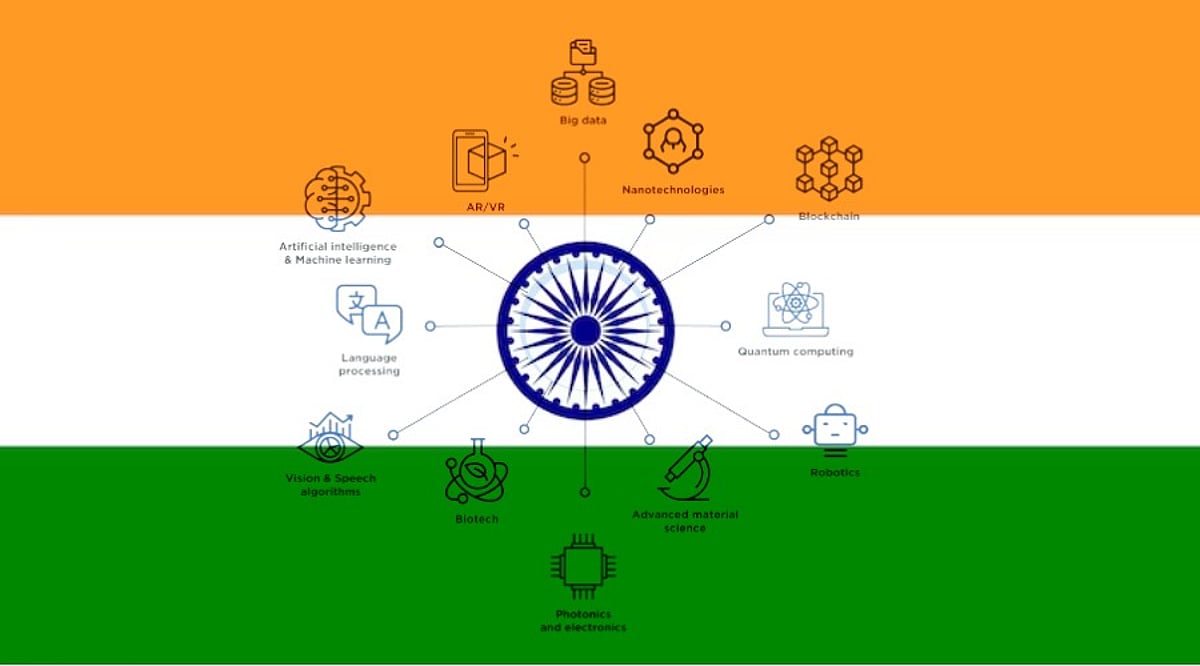
    India is entering a new era of technological innovation. By 2026, a wave of deep-tech advancements is expected to reshape industries, businesses, and public services across the country. From artificial intelligence and semiconductors to space exploration and biotech, these are the key technologies driving India’s deep-tech boom.

    AI and Generative AI

    India’s AI ecosystem continues to expand rapidly, with applications spreading across business, research, and government services. Generative AI tools and platforms are becoming central to productivity and innovation, making advanced AI one of the most significant technology drivers of 2026.

    Semiconductor Technology

    India is investing heavily in semiconductor manufacturing, chip design, and related infrastructure. New fabrication plants and design centers are being developed to reduce reliance on global supply chains and strengthen the country’s electronics ecosystem.

    Quantum Computing

    Quantum technology is gaining momentum in India, with research focused on quantum computing, secure communications, advanced sensing, and future industrial applications. These developments could unlock entirely new capabilities across healthcare, finance, and logistics.

    Space Technology

    India’s space sector is opening up to private participation, fostering innovation in launch systems, satellites, Earth observation, and commercial space services. Startups and established companies alike are exploring new ways to make space more accessible.

    Robotics and Automation

    Robotics is moving beyond factory floors. Indian startups are developing intelligent machines for healthcare, logistics, agriculture, defense, and other real-world applications, bringing automation to everyday life.

    Advanced Drones

    Drone technology is expanding into agriculture, mapping, delivery, surveillance, and infrastructure inspection. These applications are creating new opportunities for deep-tech startups and transforming traditional industries.

    Biotechnology

    India’s biotechnology sector is advancing drug discovery, genomics, medical research, and agricultural innovation. These efforts are strengthening the country’s future pipeline of high-impact technologies.

    Electric Mobility Technology

    Battery innovation, electric vehicles, and charging infrastructure are transforming mobility in India. Deep-tech companies are developing more efficient energy solutions to support the shift to electric transportation.

    Defense Technology

    India’s defense sector is embracing drones, sensors, artificial intelligence, robotics, and space systems. A renewed focus on indigenous development is helping the country build self-reliant defense capabilities.

    Together, these technologies signal a transformative period for India, positioning the country as a major player in the global deep-tech landscape.

  • India’s Deep Tech Rise: Lino Gandola on Investment, Talent, and the Future of Frontier Technology

    India’s Deep Tech Rise: Lino Gandola on Investment, Talent, and the Future of Frontier Technology

    India’s Deep Tech Momentum

    India is entering a transformative phase in deep technology, with artificial intelligence, space tech, robotics, quantum computing, and advanced manufacturing driving change. Strong government backing, a skilled workforce, and global investment are fueling opportunities for Indian tech companies.

    In a recent episode of Analytics Insight Conversations, host Priya Dayalani sat down with Lino Gandola, co-founder of Riceberg Ventures, to explore India’s deep tech ascent, investment trends, and the future of frontier technology.

    Building a Global Deep Tech Fund

    Gandola explained that Riceberg Ventures is an early-stage deep tech fund investing across India, Europe, and the US, primarily at pre-seed and seed stages — sometimes before a company is even incorporated. The firm’s global approach recognizes that breakthrough tech can emerge from any hub, not just Silicon Valley.

    Why Deep Tech Now?

    Gandola noted that ChatGPT fundamentally altered the software landscape, making traditional software investing less attractive and pushing investors toward deep tech. For him, deep tech isn’t just better hardware; it’s about breakthrough technologies that can transform industries — citing fusion energy as an example of a technology with the potential to reshape energy and global supply chains.

    India’s Deep Tech Potential

    Talent is India’s greatest strength, according to Gandola. The country has a highly educated, ambitious workforce, and many Indians already lead global tech companies. He sees a growing trend of talent returning to India to build companies. Progress in the space sector — recent orbital launches and Chandrayaan-3 — is also shifting mindsets, showing that ambitious tech can be developed in India.

    Policy and Global Trends

    Government support has become crucial. The space sector, once closed to private players, now allows 100% foreign direct investment. Meanwhile, the China-plus-one strategy is bringing manufacturing and supply-chain opportunities to India, boosting its broader tech ecosystem.

    The Next Inflection Point

    Gandola pointed to industrial robotics as a technology nearing an inflection point. While humanoid household robots may still be distant, robots handling routine factory tasks could become common as companies invest heavily in the space.

  • 9 Essential Facts About ISRO’s EOS-05: India’s First Geo-Imaging Satellite

    9 Essential Facts About ISRO’s EOS-05: India’s First Geo-Imaging Satellite

    1. India’s First Geo-Imaging Satellite in Geosynchronous Orbit

    EOS-05 is India’s first dedicated Earth-observation imaging satellite placed in geosynchronous orbit, enabling persistent monitoring of large regions.

    2. Launched Aboard the Powerful GSLV-F17

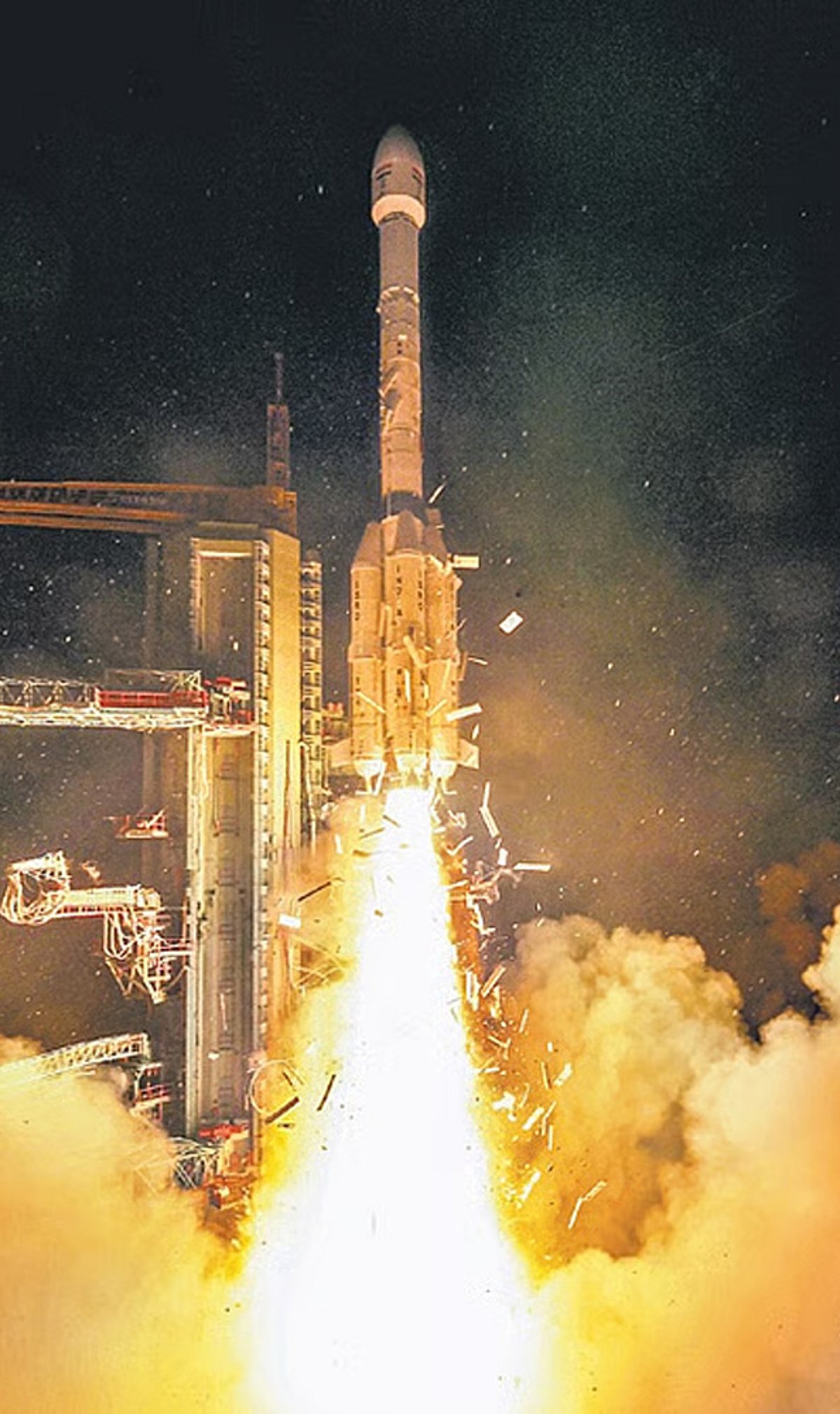
    ISRO launched EOS-05 aboard the GSLV-F17 rocket on September 4, marking the rocket’s heaviest mission and 19th flight.

    3. Operating at Nearly 36,000 Kilometers

    EOS-05 operates in an elliptical geosynchronous orbit, ranging approximately between 34,903 and 35,884 kilometers above Earth.

    4. Continuous Regional Observation

    Its geosynchronous position allows EOS-05 to repeatedly monitor the Indian subcontinent, offering sustained coverage unavailable from conventional low-Earth orbits.

    5. Strengthening Disaster Management

    The satellite is designed to provide frequent imagery that can improve monitoring of natural disasters and enhance response planning.

    6. Supporting Agriculture and Forestry

    EOS-05 can capture imagery of large areas frequently, supporting agricultural assessment, forestry monitoring, and broader environmental management.

    7. Strategic Defense Applications

    Beyond civilian uses, EOS-05 is expected to provide strategic imagery, including supporting the Indian Navy’s information requirements.

    8. Designed for a Ten-Year Mission Life

    With a planned operational lifespan of approximately ten years, EOS-05 provides India with a long-term Earth-observation capability from geosynchronous orbit.

    9. A Milestone for GSLV Reliability

    The successful mission strengthens confidence in the GSLV after several recent launch setbacks and demonstrates India’s high-orbit launch capabilities.

  • Huawei Tests New Chip Tech in Mate XT 2, Pixxel Secures $100M for Space Expansion: Today’s Top Tech News

    Huawei Tests New Chip Tech in Mate XT 2, Pixxel Secures $100M for Space Expansion: Today’s Top Tech News

    Good morning, tech enthusiasts! Here are the key technology updates you need to know today.

    Huawei Tests New Chip Design Technology

    Huawei has put its new chip design technology into commercial use for the first time with the Mate XT 2, powered by the Kirin 9050 Pro processor. The tri-fold smartphone uses Huawei’s LogicFolding architecture, which the company says improves performance and energy efficiency.

    Pixxel Raises USD 100 Million to Expand Space Technology

    Indian space-tech startup Pixxel raised USD 100 million in Series C funding to expand its satellite operations, develop new sensing technologies, and strengthen its US presence. The funding lifts Pixxel’s total capital raised to USD 195 million and supports its broader planetary intelligence strategy.

    Cognizant Plans 1,500 US Graduate Hires

    Cognizant plans to hire 1,500 US college graduates in 2026 as it expands AI-focused roles to 15,000 employees. The company is developing Frontier Certified Engineer and Frontier Business Operator positions, supported by university hiring and AI training. Its global Synapse programme also targets two million people trained by 2030.

    AI Boom Puts US Universities Under Pressure

    The rapid expansion of AI data centers is increasing pressure on US universities, raising concerns over electricity demand, infrastructure capacity, and competition for resources as AI investment accelerates.

    Mexico Probes Electricity Theft Linked to Crypto Mining

    Mexican authorities are investigating suspected electricity theft after dismantling a crypto mining facility equipped with 300 computers. Officials are also searching for similar operations across the country. The investigation highlights concerns over unauthorized power use linked to cryptocurrency mining and its impact on Mexico’s electricity infrastructure.

  • 10 Revolutionary Space Technologies Set to Transform Humanity’s Future

    10 Revolutionary Space Technologies Set to Transform Humanity’s Future

    Space technology has entered a new era. What once looked like science fiction now shapes real missions, new businesses, and plans for life beyond Earth. Governments and private companies now invest billions of dollars every year to build better rockets, smarter satellites, and advanced space systems.

    The global space economy already stands at more than $415 billion, and experts expect it to grow beyond $1 trillion by the 2040s. Private companies now generate nearly 71% of the industry’s total revenue, which shows how quickly commercial space activity has expanded.

    These advances do much more than support space exploration. They improve communication, weather forecasting, navigation, disaster response, scientific research, and national security. Some technologies may even help humans build permanent homes beyond Earth. Here are ten space technologies that could change the future in remarkable ways.

    1. Fully Reusable Rockets

    For decades, rockets flew into space only once. Engineers threw away most of the rocket after every mission, which made each launch extremely expensive. Today, that approach has changed.

    Modern reusable rockets return safely to Earth after launch. Engineers inspect them, replace worn parts, and prepare them for another mission. This simple change has reduced launch costs by almost 90% for some commercial flights.

    Lower costs allow companies to launch more satellites, send more scientific equipment into orbit, and plan larger missions. Future heavy-lift reusable rockets could carry hundreds of tons of cargo, which would make Moon bases and Mars missions much more practical.

    2. Nuclear Space Propulsion

    Chemical rockets are effective for travel in Earth’s vicinity, but have evident limitations in long-distance travel. Nuclear propulsion is a comparatively faster system for deep space travel.

    Scientists have now been researching two major propulsion systems: nuclear thermal and nuclear electric propulsion. Both systems are expected to deliver greater efficiency, carry bigger loads and require less fuel than conventional rockets.

    The average journey to Mars takes about 6 to 9 months with present-day technology. With the help of nuclear propulsion, this time can be shortened.

    3. Satellite Mega-Constellations

    Currently, thousands of satellites orbit the Earth daily. Today’s companies launch many smaller satellites that form a network instead of only a few large satellites.

    In the year 2025 alone, about 4,500 satellites were launched into orbit, which is one of the main reasons for significant progress in the space industry.

    In addition, satellite networks are important for delivering fast internet service in hard-to-reach locations as well as providing emergency communication during disasters, navigation support for ships and airplanes, and enhancement of online education.

    4. Satellite Repair in Space

    Replacing an old satellite costs millions of dollars. Instead of building a new one every time, engineers now develop spacecraft that can repair satellites while they remain in orbit.

    Some robotic servicing missions have already extended satellite life by up to eight years. That saves money and reduces the amount of space debris around Earth.

    Future repair vehicles could replace broken parts, refill fuel tanks, adjust satellite positions, and remove damaged equipment from orbit. This approach could make satellites last much longer than before.

    5. Artificial Intelligence for Space Missions

    Modern spacecraft need quick decisions, especially during missions far from Earth. Communication delays make constant human control impossible.

    Artificial intelligence helps spacecraft navigate, monitor equipment, detect technical problems, and manage fuel more efficiently. AI also studies huge amounts of scientific data much faster than human teams.

    As missions travel farther into space, smart computer systems will play an even bigger role. They will help spacecraft solve problems on their own and complete complex tasks with greater accuracy.

    6. Permanent Bases on the Moon

    Human exploration of the Moon has begun. Today, space agencies wish to carry out long-term missions on the Moon instead of visiting it briefly.

    The Artemis program is ready to create a permanent lunar base, which will be equipped with living quarters, research laboratories, power systems, modern space suits, as well as robotic construction technology.

    A permanent base on the Moon will allow conducting several scientific experiments, receiving rocket fuel from local materials, and training astronauts for future missions on Mars.

    7. Space-Based Solar Power

    Solar panels installed on Earth are unable to generate electricity when it is night or when the weather is cloudy and overcast. Solar panels, however, are not faced with similar challenges in space.

    Solar power stations launched into orbit would be able to capture sunlight almost all the time and beam energy to our planet via microwave or laser transmissions. Nevertheless, experts still have to counter several technical problems before this dream could be accomplished. If this modality turns out to be successful, solar energy collected in outer space could help people access clean electricity, aid some remote area populations, and give energy for the emergency needs following disasters.

    8. Factories in Space

    Space creates conditions that cannot exist on Earth. The absence of gravity allows manufacturers to produce certain materials with much higher quality.

    Future factories in orbit could make advanced medicines, ultra-pure fiber optics, high-performance computer materials, artificial organs, and special metal alloys.

    As launch costs continue to fall, companies may find it profitable to manufacture expensive products in space and return them to Earth.

    9. Mining Resources Beyond Earth

    The Moon and many asteroids contain valuable resources. These include water ice, nickel, platinum-group metals, and several rare materials that support modern industries.

    Water from the Moon has special value because engineers can separate it into hydrogen and oxygen to create rocket fuel. This would reduce the need to launch large amounts of fuel from Earth.

    Space mining could lower mission costs and support future settlements across the Solar System. It could also reduce pressure on some mining operations on Earth.

    10. Advanced Space Habitats

    Long missions require much more than rockets. Astronauts also need safe places to live for months or even years.

    Future space habitats will recycle more than 90% of their water, grow fresh food through hydroponic systems, protect crews from radiation, and use artificial intelligence to monitor daily operations.

    Expandable living modules will provide more space without adding excessive launch weight. These habitats will support missions to the Moon, Mars, and possibly even farther destinations.

    Why This Matters

    Nowadays, space technology is not limited to its effects on astronauts and scientists. It influences many aspects of life such as communications, health care, climatic studies, transport, energy, and global security issues. The quicker new technologies are developed, the more chances these new technologies have to give rise to new industries, facilitate economic development, help solve pressing global problems, and prepare humans for life outside of Earth.

    Final Thoughts

    Space technology is playing an even larger role than ever before, acting as a major economic force in the world. Through the use of reusable rockets, automated technology, and satellite networks, this industry has brought about dramatic changes to the way business, communication, and research are done. The industry is thriving and projects continue to show that this growth will continue in the foreseeable future.

    FAQs

    1. What is the most important space technology today?
    Reusable rocket technology stands out because it has significantly lowered the cost of launching spacecraft and satellites.

    2. Why is the Moon important for future space missions?
    The Moon can serve as a base for research, fuel production, and future missions to Mars and deeper space.

    3. How does artificial intelligence help in space?
    AI helps spacecraft navigate, detect technical issues, manage resources, and analyze large amounts of scientific data.

    4. Can space-based solar power provide electricity on Earth?
    Scientists believe it could deliver clean, continuous energy, although the technology still requires further development.

    5. Will humans live in space permanently?
    Many experts believe permanent settlements on the Moon and eventually Mars could become possible as space habitat technology continues to advance.


  • 7 Deep Tech Startups in India Poised for Global Impact in 2026

    7 Deep Tech Startups in India Poised for Global Impact in 2026

    India’s deep-tech ecosystem is entering a transformative phase as artificial intelligence, space technology, quantum computing, robotics, and advanced manufacturing move from research labs to commercial markets. Backed by rising venture capital investments, government initiatives such as the National Deep Tech Startup Policy discussions and IndiaAI Mission, and growing global demand for frontier technologies, 2026 is shaping up to be a defining year for Indian startups building intellectual property with worldwide impact.

    Leading Deep Tech Companies in India

    Deep-tech ventures are driving innovation through supportive government policies, research institutions, and increased funding. Unlike typical software startups, these companies develop intellectual property in fields like AI, space technology, quantum computing, robotics, and mobility. Here are seven startups to watch in 2026:

    1. Pixxel (Space Technology)

    Founded in 2019 by Awais Ahmed and Kshitij Khandelwal, Bengaluru-based Pixxel is building the world’s largest hyperspectral satellite constellation. Its Earth Observation Platform delivers high-quality imagery for agriculture, climate monitoring, mining, and defense. With global investments and commercial satellite launches, Pixxel has strengthened its international position and advanced analytical capabilities. As demand for geospatial intelligence soars, Pixxel stands out as one of India’s most promising space tech companies in 2026.

    2. Agnikul Cosmos (Space Launch)

    Set up in 2017 by Srinath Ravichandran and Moin SPM, Chennai-based Agnikul Cosmos offers custom-built launch vehicles for small satellites. The company gained worldwide attention by demonstrating a rocket launch using a 3D-printed engine made from a single piece. Supported by institutional and individual investors, Agnikul serves the commercial space sector, research institutions, and defense.

    3. QpiAI (Quantum Computing & AI)

    Founded in 2019 by Dr. Nagendra Nagaraja, QpiAI specializes in using AI and quantum computing to solve complex optimization problems. The company develops quantum computers, software, and AI for enterprise applications in manufacturing, pharma, logistics, and finance. With significant investments and government partnerships, QpiAI is accelerating India’s quantum sector.

    4. Sarvam AI (Generative AI)

    Founded in 2023 by Vivek Raghavan, Pratyush Kumar, and Ankit Jain, Bengaluru-based Sarvam AI focuses on developing sovereign generative AI models tailored for India’s multilingual environment. Its large language models, enterprise AI, and conversational systems support business and government initiatives. Having attracted funding from prominent investors and being selected for the IndiaAI Mission to build sovereign AI, Sarvam AI is poised to become a key player in India’s AI landscape in 2026.

    5. Qure.ai (Healthcare AI)

    Formed in Mumbai in 2016 by Prashant Warier and Pooja Rao, Qure.ai enhances medical imaging using AI. Its diagnostic tools help doctors identify diseases such as tuberculosis, lung conditions, and strokes from radiology images. The company operates in multiple countries, expanding through partnerships, and is one of the most commercially successful Indian healthcare AI firms.

    6. Ati Motors (Autonomous Industrial Robotics)

    Established in 2017 by Saurabh Chandra, Saurabh Agarwal, and Sikander Khan, Bengaluru-based Ati Motors specializes in Autonomous Mobile Robots (AMRs) for material movement in factory floors and warehouses. With enterprise adoption worldwide and additional funding, the company has gained a strong market position. As smart factories become more common, Ati Motors is well-positioned for growth in industrial automation.

    7. Vecmocon Technologies (EV Deep Tech)

    Headquartered in New Delhi and founded in 2016 by Peeyush Asati, Pallav Gupta, and Aman Raj, Vecmocon Technologies provides intelligent electronics, battery management systems, IoT platforms, and vehicle control units for electric vehicles. Serving two-wheelers, three-wheelers, and commercial EVs, the company continues to attract investment amid India’s growing electric mobility push, making it a leading innovator in clean mobility.

    Deep Tech Market Overview

    Rising enterprise adoption, defense requirements, and global demand for frontier technologies are accelerating commercialization. As startups increasingly collaborate with academia, industry, and public institutions, India’s deep-tech ecosystem is expected to expand further. For enterprise AI, Sarvam AI leads the way, while Pixxel and Agnikul Cosmos are reshaping space and defense technologies. Qure.ai continues transforming healthcare diagnostics, Ati Motors strengthens industrial automation, Vecmocon advances clean mobility, and QpiAI represents India’s growing ambitions in quantum computing. Together, these companies showcase the breadth and maturity of India’s rapidly evolving deep-tech ecosystem heading into 2026.

    Frequently Asked Questions

    What are deep tech companies?

    Deep tech companies create breakthrough technologies rooted in scientific research and engineering, including artificial intelligence, robotics, quantum computing, biotechnology, semiconductors, and space systems with strong intellectual property.

    Why is India’s deep tech sector growing rapidly?

    India’s deep tech sector is expanding due to increasing venture capital, government initiatives, research collaboration, skilled talent, and rising enterprise demand for frontier technologies across multiple industries.

    Which Indian company is leading in space technology?

    Pixxel specializes in hyperspectral Earth observation satellites, while Agnikul Cosmos develops customizable launch vehicles, making both companies pioneers in India’s rapidly growing private space industry.

    Which startups are driving AI innovation in India?

    Sarvam AI develops multilingual foundation models for enterprises, while Qure.ai uses artificial intelligence to improve medical imaging, disease detection, and clinical decision-making across healthcare systems worldwide.

    Which deep tech sectors offer the biggest opportunities in 2026?

    Artificial intelligence, quantum computing, space technology, robotics, healthcare AI, clean mobility, and semiconductor innovation are expected to drive investment, commercialization, and global competitiveness throughout India’s deep tech ecosystem in 2026.

  • Skyroot Aerospace’s Vikram-1 Rocket Poised to Reshape India’s Private Space Sector

    Skyroot Aerospace’s Vikram-1 Rocket Poised to Reshape India’s Private Space Sector

    India’s private space industry is undergoing a transformation, and Hyderabad-based startup Skyroot Aerospace is at the forefront. With its upcoming Vikram-1 orbital rocket, the company aims to make satellite launches faster, more affordable, and accessible to customers worldwide.

    Founded in 2018, Skyroot has rapidly evolved from a small team with a bold vision into one of India’s most prominent private space companies. Unlike traditional missions focused solely on research, Skyroot’s commercial approach targets the growing demand for reliable small satellite launch services.

    From Vikram-S to Vikram-1: A Milestone Journey

    In 2022, Skyroot made history with Vikram-S, India’s first privately built rocket to reach space. Though a suborbital test flight, it validated the company’s technology and provided critical data for the development of Vikram-1.

    Vikram-1 is Skyroot’s first orbital launch vehicle, designed to carry small satellites into Low Earth Orbit (LEO) and Sun-synchronous Orbit (SSO). The rocket incorporates modern manufacturing techniques, including 3D printing and lightweight materials, to reduce costs and speed up production.

    The inaugural mission, named Mission Aagaman, will carry payloads from Indian and international customers, demonstrating confidence in Skyroot’s capabilities even before its first orbital flight.

    Why Vikram-1 Matters for India’s Space Economy

    With the global demand for satellite-based services—internet, weather monitoring, agriculture, navigation, and research—rising every year, affordable and dedicated launch options are needed. Skyroot aims to fill this gap by offering flexible launch schedules for small satellite operators who often wait months for rides on larger rockets.

    Beyond launches, Skyroot is developing debris-removal technology, including a robotic system to capture defunct satellites and orbital debris—a growing concern as Earth’s orbit becomes increasingly crowded.

    A successful Vikram-1 mission would not only be a win for Skyroot but also signal that Indian startups can compete globally. It could attract investment, create skilled jobs, and position India as a trusted hub for affordable commercial satellite launches.

    India’s Space Future: A Collaborative Ecosystem

    Skyroot’s journey highlights the maturation of India’s private space sector. While ISRO will continue to lead major national missions, companies like Skyroot complement its efforts by building a robust commercial space industry. Together, they can elevate India’s standing in the global space economy.

  • India’s 10 Most Promising Tech Startups Shaping 2026

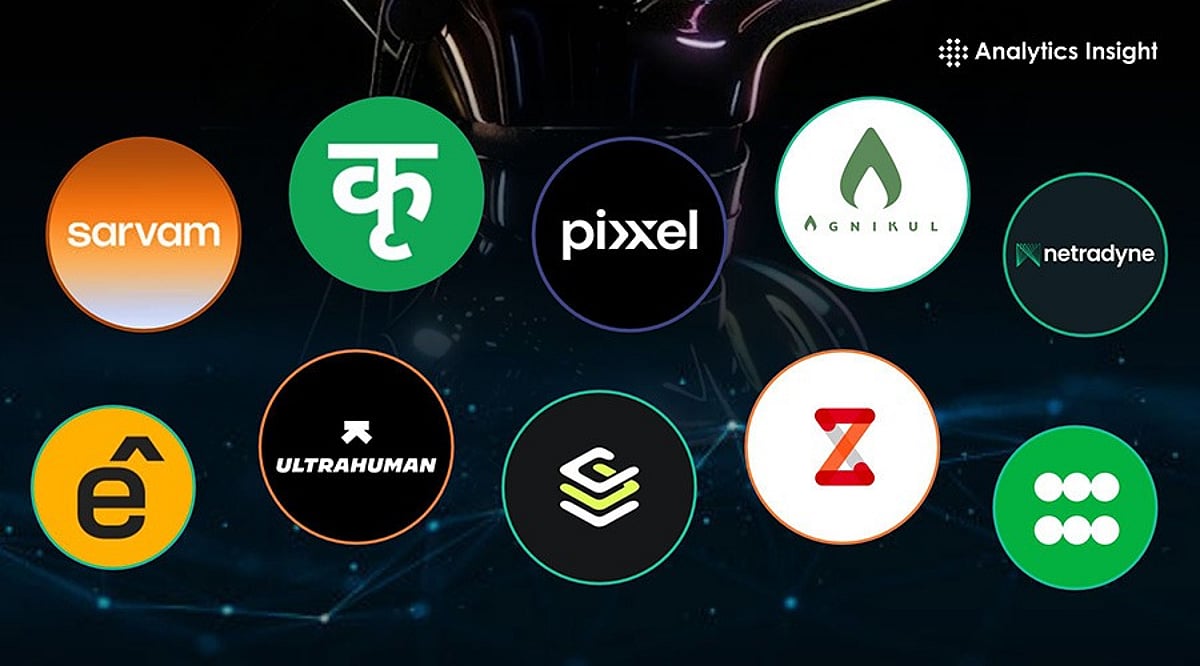
    India’s 10 Most Promising Tech Startups Shaping 2026

    India’s startup ecosystem is undergoing a significant transformation. While previous years were dominated by conversations about massive funding rounds and valuations, the focus in 2026 has shifted toward sustainable growth, real-world problem-solving, and long-term profitability. Investors are now asking more critical questions: Is the business growing steadily? Does it solve a genuine problem? Can it generate sustainable revenue?

    This shift has created fertile ground for a new generation of startups across artificial intelligence, healthcare, financial services, electric vehicles, cloud computing, and space technology. These companies are building products that businesses and consumers actually need—from efficiency tools to accessible financial services. Below are ten Indian tech startups that are set to make an impact in 2026.

    Why Investors Are Paying Attention

    The startup landscape has become more pragmatic. While innovation remains paramount, investors are backing ventures with clear purpose and viable business models. Most startups now focus on solving everyday challenges rather than chasing trends. Government support for technology development and innovation is also fueling this growth.

    What Makes These Startups Different?

    Many startups launch every year, but only a few stand out. The companies on this list prioritize solving real problems. Some help businesses manage data more efficiently, others simplify financial services, and several are advancing health tracking or building space technology. Additionally, many of these startups are designed for global markets, giving them access to a larger customer base and more expansion opportunities. Most importantly, these companies are building products people actually use—substance over hype.

    Big Trends Shaping Indian Startups in 2026

    Businesses need tools that enable employees to work faster and smarter. Startups are delivering practical, less complex AI solutions. The healthcare sector is expanding rapidly due to rising consumer interest in health and fitness, opening doors for wellness-focused tech companies. Fintech continues to thrive as demand for faster, more convenient financial services grows. Electric mobility is also gaining traction, creating a pressing need for robust charging infrastructure. Meanwhile, space technology—once the domain of government agencies—is now attracting private players, with several Indian companies already achieving notable results.

    Why These Companies Matter

    The most successful startups are often not the loudest. They quietly solve problems every day—helping businesses save costs, making healthcare more accessible, improving financial services, and supporting emerging industries. These companies are building products with real impact, which is why investors, customers, and industry experts are closely watching them.

    Looking Ahead

    India’s startup environment is maturing. The “growth at any cost” mindset is giving way to value creation, problem-solving, and sustainability. The success stories of 2026 won’t come from companies that make the most noise; they will come from those that create something useful and earn customer trust. The ten firms highlighted here are among those to watch as India’s technology industry enters its next phase of growth.

    Why It Matters

    India’s next generation of technology startups is shaping the future of innovation across multiple industries. By developing practical solutions, creating employment opportunities, attracting investment, and expanding globally, these companies are strengthening India’s digital economy and driving long-term technological growth.

    FAQs

    Which are the top Indian tech startups to watch in 2026?

    Some of the most promising include Sarvam AI, Krutrim, Pixxel, Agnikul Cosmos, Netradyne, Exponent Energy, Ultrahuman, Lucidity, Zolve, and Equal. These companies are driving innovation across AI, space tech, fintech, healthtech, and cloud computing.

    Why are investors focusing on Indian tech startups in 2026?

    Investors are backing startups with sustainable business models, strong revenue potential, and products solving real-world problems. They prioritize long-term profitability, customer adoption, operational efficiency, and scalability across domestic and international markets.

    Which sectors are driving India’s startup ecosystem in 2026?

    AI, fintech, healthtech, electric mobility, cloud computing, identity technology, and commercial space technology are among the fastest-growing sectors. These industries benefit from digital adoption, supportive policies, private investment, and rising technology-driven demand.

    Why is AI becoming a major focus for Indian startups?

    AI startups are developing language models, enterprise automation tools, customer service platforms, and productivity solutions tailored to India’s diverse market. Businesses across industries adopt AI to improve efficiency, reduce costs, automate tasks, and enhance customer experiences.

    What makes Indian space startups attractive to investors?

    Private companies like Pixxel and Agnikul Cosmos are building satellite technologies, launch vehicles, and Earth observation solutions with global commercial potential. Government reforms and increased private participation have created new opportunities for innovation and international partnerships.

  • Daily Tech Roundup: Qualcomm Deepens AI Chip Ambitions, QOSMIC Raises $3.3M, Infosys Boosts Hiring, and Crypto Compliance Tightens

    Good morning! Here’s your quick roundup of the latest developments across AI infrastructure, startup funding, IT services, cryptocurrency markets, and generative AI technologies.

    Qualcomm Expands AI Chip Push With Microsoft and Meta

    Qualcomm has launched an aggressive plan to expand its AI infrastructure capabilities, supplying its new AI processors to major partners including Microsoft and Meta. The company aims to achieve substantial revenue growth in its data centers and become a competitive player in the growing AI hardware market. Qualcomm’s processors are designed to deliver efficient AI performance at lower costs.

    QOSMIC Raises Fresh Capital for Space Communications

    Bengaluru-based space-tech startup QOSMIC has secured $3.33 million in seed funding, led by Accel and Prosus. The company specializes in optical communication hardware for fast data transmission between satellites and ground stations. The new capital will support manufacturing, testing, engineering expansion, and deployment of operational systems for global customers.

    Infosys Accelerates Graduate Hiring and Deal Growth

    Infosys has ramped up its workforce plans by recruiting approximately 20,000 new graduates, while also closing several large deals worth a total of $1.49 billion in FY26. This reflects the company’s continued optimism about corporate technology spending despite broader economic concerns.

    Crypto Compliance Risks Draw Increased Regulatory Attention

    Concerns around cryptocurrency compliance and illicit financial activity remain a key focus for regulators worldwide. Recent discoveries have highlighted the role some cryptocurrency exchanges play in facilitating sanctioned or restricted transactions. These developments reinforce growing pressure on crypto platforms to strengthen monitoring, transparency, and anti-money laundering frameworks as the sector matures.

    Claude AI Tokens Become Key Enterprise Discussion

    As organizations deploy increasingly sophisticated generative AI systems, understanding tokens and context windows has become critical. Claude AI’s token structure influences the amount of data processed in a conversation, impacting system efficiency, cost, and user experience.