
Tag: SPCX

  • SpaceX Leads MEXC RealStocks’ Debut Month with Nearly 30% of Trading Volume

    SpaceX Leads MEXC RealStocks’ Debut Month with Nearly 30% of Trading Volume

    MEXC, a leading zero-fee digital asset trading platform, has released the first-month trading insights for its newly launched RealStocks product. The feature allows eligible users to purchase real US stocks and ETFs through a licensed securities broker partner. Launched on June 1, 2026, RealStocks quickly showed distinct trading patterns, with one event-driven name—SpaceX (ticker: SPCX)—capturing massive consensus and AI-related interest spreading beyond the most obvious tickers.

    According to the data, SPCX accounted for 29.70% of June’s total trading volume and 29.06% of trading users, finishing far ahead of every other asset. The simultaneous rise in both metrics indicates that SpaceX attracted not just heavy volume from a narrow group of aggressive traders, but also broad participation from a wide user base placing modest orders—making it the firmest consensus holding of RealStocks’ opening month.

    Seven AI-related assets—AAOI, MU, NVDA, MRVL, DRAM, AVGO, and SNDK—together accounted for 23.67% of total trading volume. These names span GPU compute, memory and storage, data center networking, and optical communications, reflecting how investor interest traveled well beyond the single best-known compute name and followed data center demand into its supply chain—a pattern that echoes the wider AI capital rotation seen across markets in June.

    Three distinct trading structures emerged over the month:

    • Well-known large caps: AAPL, MSFT, INTC, and GOOGL drew broad participation and widened overall user coverage.
    • Core hot assets: SPCX, NVDA, MU, TSLA, SNDK, and MRVL combined wide participation with heavy activity.
    • Narrower industry-chain names: AAOI, DRAM, STRC, and AVGO reached the top 10 by volume without reaching the top 10 by users, meaning fewer traders each contributed more. MRVL exemplifies this split, drawing 2.12% of trading users but 3.15% of volume.

    Similar themes surfaced on both RealStocks and MEXC’s futures products: SPCX, MU, NVDA, SNDK, and MRVL ranked in the top 10 by volume for both. However, concentration diverged sharply. RealStocks’ top 10 assets made up 57.71% of volume versus roughly 84.94% for futures, leaving 42.29% of RealStocks volume spread across everything outside the leaderboard. AAOI, DRAM, TSLA, and AVGO placed high on RealStocks but ranked lower on futures, and STRC has no corresponding futures product.

    “Futures follow the news cycle. RealStocks showed conviction as a portfolio product,” said Vugar Usi, CEO of MEXC. “More than 40% of first-month volume sat outside the top ten names. That is portfolio building, not headline trading. Our users finally got real access to this market and they used it like investors.”

    RealStocks supports USDT funding, charges 0 trading fees, and delivers the ownership rights attached to real shares—including eligible dividend distributions. The product is supported by Atomic Vaults Securities (AVS), a FINRA-registered broker-dealer, providing access to real U.S. equities through regulated securities infrastructure. Over 120,000 users signed up during the first month; more than half of those new accounts went on to make a first deposit. As of July 27, 2026, RealStocks had settled dividends for 154 stocks and ETFs.

    Alongside RealStocks, MEXC offers more than 260 stock and index futures products, tokenized US equities, and a Pre-IPO Launchpad—covering derivatives, on-chain exposure, and early-stage opportunities within a single account.
  • SPCX Stock Falls After NASDAQ-100 Debut as Analysts Deliver Mixed Forecasts

    SPCX Stock Falls After NASDAQ-100 Debut as Analysts Deliver Mixed Forecasts

    SpaceX stock (ticker: SPCX) experienced a decline following its first day of trading on the NASDAQ-100 index, closing at $149.47 on Tuesday. The 7% drop came despite expectations that index inclusion would trigger buying from funds tracking the benchmark. The stock remains above its $135 IPO price but is more than 25% below its June 16 closing high of $201.80.

    The NASDAQ-100 entry had been anticipated to bring demand from index-tracking funds, which collectively manage approximately $800 billion in assets. However, this anticipated buying did not materialize into a rally, suggesting that some of the index demand may have been priced into the stock earlier. SPCX had gained nearly 6% in the week leading up to the index addition, and investors sold off shares as the first NASDAQ-100 session failed to extend that upward move.

    Meanwhile, ARK Invest increased its position in SpaceX by purchasing 44,196 SPCX shares on Tuesday, valued at around $6.6 million based on the closing price. ARK funds already held approximately 3.29 million shares by the end of SpaceX’s first public trading day.

    Wall Street analysts have begun issuing coverage following the end of the post-IPO quiet period, with a wide range of price targets reflecting significant uncertainty about the company’s valuation. The average analyst target stands near $236, implying roughly 58% upside from Tuesday’s close. Nineteen analysts have issued ratings so far.

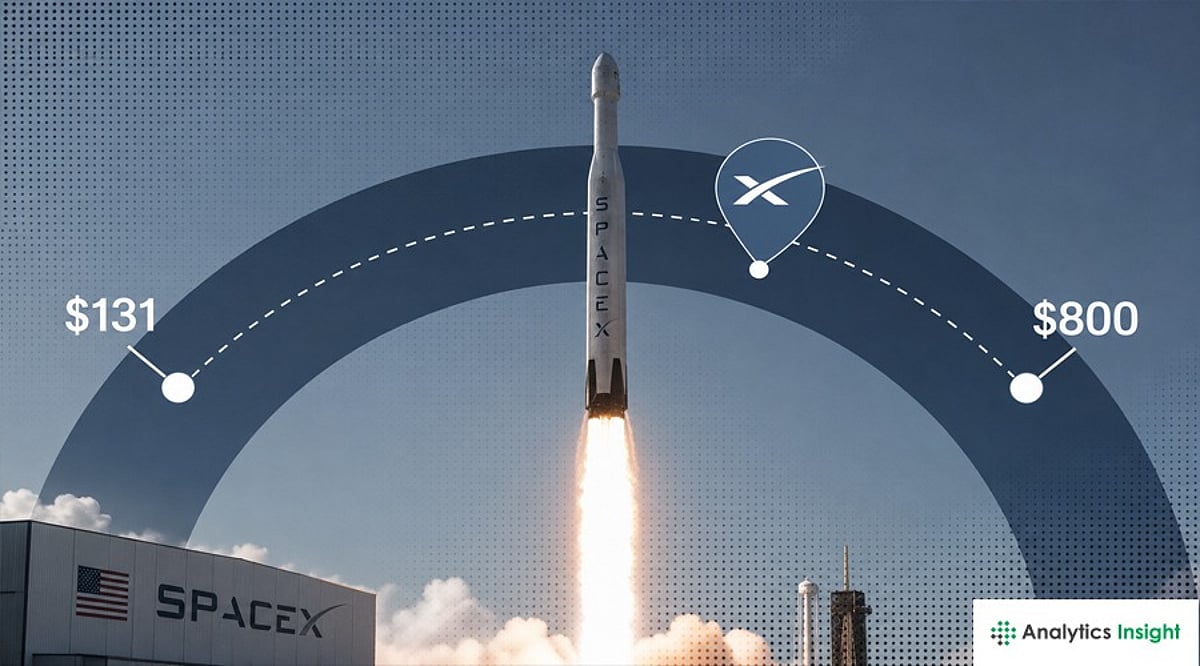
    Deutsche Bank initiated coverage with a Buy rating and a $255 target, citing SpaceX’s reusable rockets, Starlink satellite internet business, and potential use in AI infrastructure. Cantor Fitzgerald started with an Overweight rating and a $246 target, describing SpaceX as a “planetary infrastructure company.” Raymond James set the highest target on the Street at $800. Citi rated the stock a Buy at $200, linking a longer-term $900 case to the Starship program. Morgan Stanley set a $300 base case, with a $600 bull case and a $75 bear case.

    However, not all analysts share this optimism. MoffettNathanson set a $131 target with a neutral rating, questioning SpaceX’s valuation and long-term business forecasts. The firm called the company’s $30 trillion addressable market estimate “absurd” and expressed doubts about plans tied to orbital compute, stating, “There is simply no credible financial model that can support what is at the time of this writing a roughly $2 trillion valuation.”

    In other news, SpaceX has raised prices for Starlink Business Aviation customers. The Aviation Regional 25GB plan increased to $4,000 per month from $2,000, with additional data priced at $250 per GB. The company also introduced Aviation Regional Unlimited at $12,500 per month and raised Aviation Global Unlimited to $20,000 per month from $10,000, offering worldwide coverage and speeds up to 1 Gbps with the Aviation Performance Antenna. Starlink aviation equipment costs also rose to $200,000 per business jet, up from $145,000 last year.

  • SPCX Perpetual Liquidations Surpass $50 Million as SpaceX Stock Tests Nasdaq Debut

    SPCX Perpetual Liquidations Surpass $50 Million as SpaceX Stock Tests Nasdaq Debut

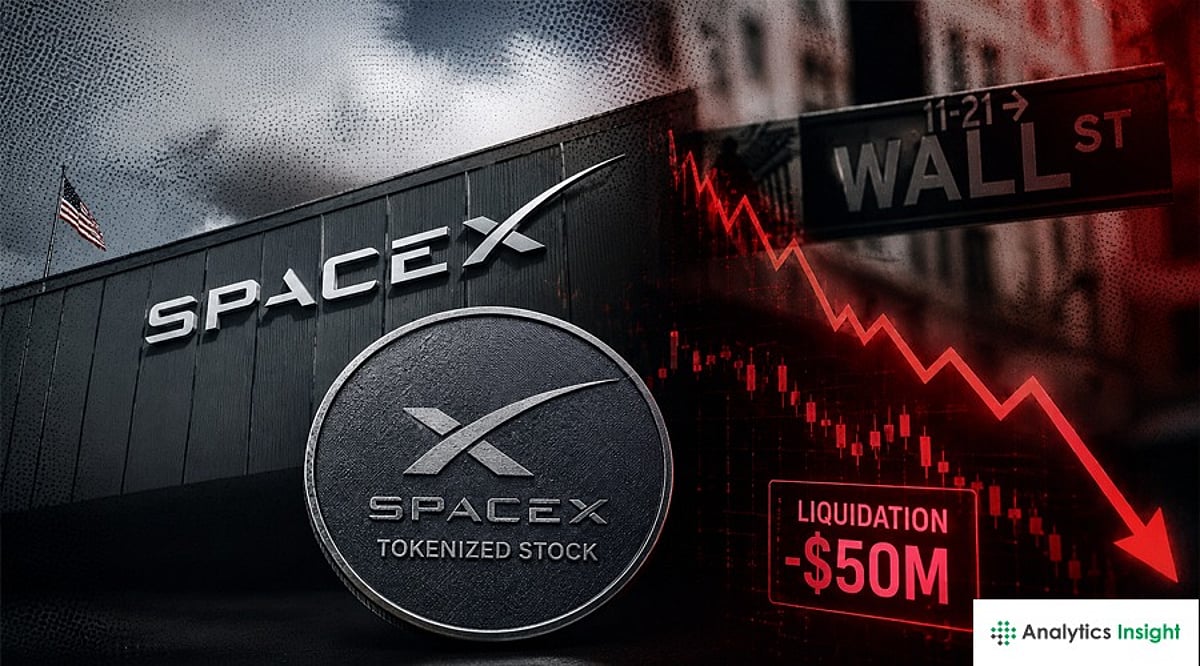
    SPCX perpetual contracts have witnessed over $50 million in liquidations within 48 hours as SpaceX shares dipped below their $150 Nasdaq opening price. The event underscores the heightened volatility and risk inherent in leveraged tokenized stock products, which can react far more aggressively than traditional equity markets.

    What Happened

    According to market data, SPCX-linked perpetual contracts recorded more than $50 million in forced closures, trailing only Bitcoin and Ethereum in liquidation volume among crypto derivatives during that period. The liquidations followed a sharp decline in SpaceX stock, which fell below its Nasdaq debut price after a major drawdown. Investors who bought shares above the company’s $135 initial public offering price are now facing losses.

    How SPCX Differs from Traditional Stock Ownership

    SPCX products are pre-IPO or equity perpetual contracts that offer leverage, cash settlement, and funding mechanisms. Unlike owning actual shares, these instruments provide price exposure without ownership rights, voting rights, or share delivery. Binance lists SPCXUSDT as a USDT-settled pre-IPO perpetual contract, while Coinbase explains that such products settle entirely in cash. Crypto.com describes a structure allowing conversion between SpaceX pre-IPO perpetuals and equity perpetuals depending on platform mechanics.

    This structure places traders in a derivatives-driven environment where margin requirements and funding rates dictate outcomes. If prices move sharply against a position, exchanges can liquidate traders automatically at any time—without waiting for a market close.

    Liquidation Pressure Builds Around Leveraged Exposure

    The $50 million liquidation figure is a notable signal because Bitcoin and Ethereum typically dominate liquidation rankings due to deep liquidity and large leveraged positions. SPCX joining that group reflects strong demand for SpaceX-linked exposure. Liquidation risk does not require a total collapse in the underlying asset—a combination of leverage, open interest, and adverse price movement can easily trigger forced exits.

    While traditional investors may still be evaluating whether the decline reflects temporary weakness or fundamental concerns, perpetual contract markets react instantly, closing positions as soon as collateral support drops.

    Tokenized Stock Perpetuals Face a Different Risk Cycle

    Tokenized stock perpetuals trade around the clock, using venue-specific mark prices and funding systems while enforcing margin requirements continuously. This continuous trading can amplify disagreements over value into sudden liquidation pressure, even as traditional investors are still assessing the stock’s outlook.

    These products may ultimately serve as effective risk-transfer markets, but that will require improved liquidity and reduced leverage. Until then, high open interest and persistent volatility will likely sustain heavy market stress.

    What’s Next

    SpaceX stock slipped below its Nasdaq opening price, triggering the $50 million liquidation wave for SPCX. The event highlights how tokenized stock perpetuals can lead to rapid forced exits when leverage and margin rules kick in. Market participants are now watching to see if the asset stabilizes and whether open interest, funding rates, and liquidation activity will flatten out.