Tag: Sports Analytics

  • Daily Briefing: China’s AI Chip Push, DeepMind’s Revealing Pitch Deck, Workplace Culture Debate, Crypto Derivatives Surge, and AI in Sports

    Daily Briefing: China’s AI Chip Push, DeepMind’s Revealing Pitch Deck, Workplace Culture Debate, Crypto Derivatives Surge, and AI in Sports

    Good morning! Here’s your quick scan of the latest developments in artificial intelligence, workplace culture, technology, cryptocurrency markets, and sports innovation.

    What’s New Today

    China is ramping up support for its homegrown AI chipmakers, as Beijing keeps pushing for more technological independence. Meanwhile, a dress code policy from a Noida-based firm has sparked quite a bit of chatter about workplace culture, mostly after an IIM alumnus posted a viral recount of their work experience. And then, the pitch deck that Demis Hassabis of DeepMind used back in 2019 during his transition reportedly sheds some fresh light on how the company thinks about AI. At the same time, traditional finance seems to be shifting at speed into crypto derivatives, while AI-driven sports analytics tools are quietly changing how teams are evaluated and how performance gets interpreted.

    Fast-Track Insights

    • China is feeding its semiconductor ambitions with new rounds of funding going toward domestic AI chipmakers.
    • Workplace rules are now being rechecked, after a viral post brought the conversation about toxic office culture back into the public eye.
    • Documents that describe DeepMind’s AI approach during its growth phase have surfaced.
    • On the crypto side, TradFi participants are seeing traction in perpetual futures trading.
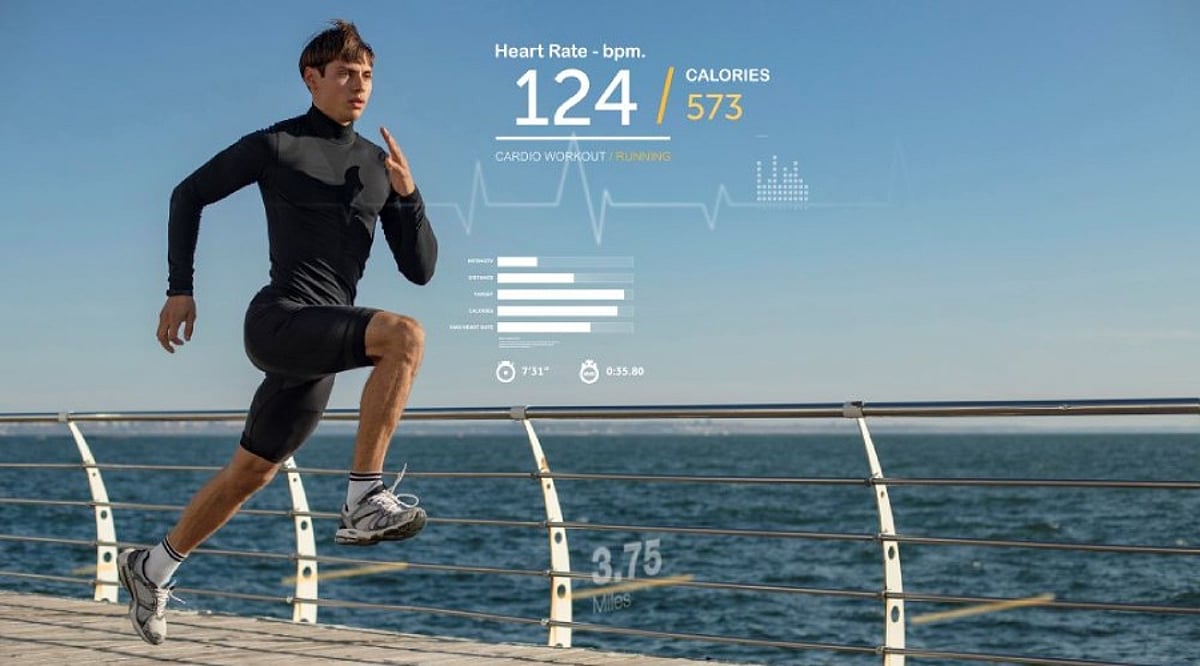
    • AI is increasingly influencing how team sports performances are measured and understood.

    China Accelerates Support for Domestic AI Chip Manufacturers

    Chinese manufacturers of chips used in AI applications should see gains from Beijing’s efforts to achieve technological independence. Increased government support, rising internal demand, and limitations on access to external chips create room for local semiconductor manufacturers to enter the AI hardware space. The step taken by the Chinese authorities represents their strategy of minimizing reliance on technology from other countries.

    Workplace Culture Debate Reignited After Noida Firm’s Denim Policy Sparks Outcry

    An IIM alumnus’s post on LinkedIn has brought up the issue of corporate culture once again after his allegation that workers were scolded at their office in Noida for wearing jeans to work. The post has received widespread attention on social media, with many people raising questions about the strictness of corporate policies.

    DeepMind’s 2019 Pitch Deck Reveals Early AI Strategy and Vision

    A newly discovered 2019 pitch deck belonging to Demis Hassabis has come to light, providing an insight into how DeepMind marketed itself during its crucial phase of transition. The deck explains the company’s long-term vision, research focus areas, and business goals in detail.

    Traditional Finance Giants Drive 10x Surge in Crypto Perpetual Futures Trading

    The “proper” finance world is making quick, noticeable gains in crypto perpetual futures trading, and people say volumes have gone up by about ten times in 2026. This now makes up a big portion of the total crypto derivatives scene, mostly because more regulated players from traditional finance are jumping in and staying involved.

    UK-Based AI Systems Transform Sports Analytics Across Multiple Disciplines

    Sports analytics is being reshaped by AI systems built in the UK. These systems let teams boost player output, lower injury risk, refine game plans, and decide with speed in real time. Football, cricket, rugby, and other sports are frankly kind of unable to do without AI-based analysis today, so it has become a key ingredient in sports strategy.

  • How UK-Based AI Platforms Are Revolutionizing Sports Analytics and Officiating

    How UK-Based AI Platforms Are Revolutionizing Sports Analytics and Officiating

    UK AI companies are reshaping modern sports through intelligent officiating, player tracking, and real-time analytics. Platforms like Hawk-Eye, Genius Sports, and Stats Perform now support major global leagues. Their growing influence also highlights the importance of balancing AI-driven decisions with effective human oversight.

    Overview

    UK AI companies such as Hawk-Eye, Genius Sports, and Stats Perform are transforming sports analytics through intelligent officiating, player tracking, and real-time performance data across global leagues. From Wimbledon’s electronic line-calling system to the Premier League’s AI-powered offside technology, British platforms now play a central role in how major sporting events are officiated and analyzed. As AI adoption accelerates across professional sports, UK firms are combining computer vision, machine learning, and predictive analytics to reshape decision-making while highlighting the growing need for human oversight and governance.

    A missed AI call at Wimbledon shocked fans and showed how deep technology now runs through sport. Behind it, UK firms quietly power the world’s biggest leagues through smart analytics.

    New Layer of Infrastructure

    A tennis crowd went quiet at Wimbledon in 2025, not for a missed shot, but for a missed call. The line-calling system that had replaced human judges after 147 years of tradition simply switched off mid-match. That single moment captures where sports technology stands today. It’s not a support tool sitting on the sidelines anymore. It runs inside the competition itself, shaping decisions as they happen.

    Sports analytics blends computer vision, machine learning, and statistical modelling. Together, these tools support coaching decisions, officiating, athlete performance, and fan engagement. A group of UK-based platforms sits at the center of this shift, supplying the officiating systems, data feeds, and tracking tools that major leagues now rely on every week. A survey of 675 sports-media executives by Stats Perform found that 81% had raised their use of AI over the past 12 months. That figure points to structural adoption, not a passing trend among a few forward-leaning clubs.

    Hawk-Eye Redefines Officiating

    Hawk-Eye Innovations has changed competitive sport more than any other UK platform. Built originally for tennis line calls, its technology now powers ball tracking and player tracking across cricket, football, baseball, and rugby. Wimbledon 2025 marked the clearest example yet. Line judges were replaced for the first time by electronic line-calling built by Hawk-Eye. It uses 18 cameras around each court to track the ball and produce automated voice calls. A British system took over calls that human eyes had made for close to 150 years.

    Its reach extends well past tennis. Sony’s Hawk-Eye system has powered Goal Line Technology in the Premier League since the 2013/14 season, and VAR technology has run since 2019. In cricket, it drives LBW trajectory simulation under ICC approval. In baseball, the system took over part of MLB’s Statcast optical tracking from 2024.

    Three Platforms, Three Roles

    Each major UK sports AI company occupies a distinct part of the pipeline, from raw officiating decisions through to distributed match data.

    When the System Fails

    Adoption has not come without friction. During the fourth round at Wimbledon, the electronic line-calling system was switched off by accident for three points on Centre Court, missing a clear-out call in a match between Anastasia Pavlyuchenkova and Sonay Kartal. Organizers apologized afterwards and traced the fault to human error rather than the underlying technology. A separate malfunction during a quarterfinal between Taylor Fritz and Karen Khachanov forced officials to replay a point after the system misread a player’s serve motion as the start of a new rally. Neither incident undoes the wider shift toward automated officiating. Both point to a governance gap that leagues are still closing. Automated systems remove one source of human error and introduce a different one, tied to operators, calibration, and design choices. Wimbledon now keeps roughly 80 staff on hand as match assistants in case the technology fails again.

    Genius Sports Builds the Premier League’s Data Spine

    Genius Sports, headquartered in London, holds an equally central role in football’s data economy. The company is the official low-latency data partner of the Premier League, collecting data from every player in every match to power statistics, visualisations, and betting markets, under a contract that runs to 2029. Low latency matters here. Broadcast graphics, betting markets, and officiating decisions all draw on the same feed, arriving within a fraction of a second of real play, keeping fans, bookmakers, and referees working from one shared picture of the match.

    Its work has grown past raw data delivery. The GeniusIQ platform builds full 3D renders of every player, the ball, and the offside wall within seconds. Match officials use these renders to make precise semi-automated offside calls, paired with graphics ready for broadcast. This is real-time sports analytics running at officiating speed, not just reporting speed.

    Stats Perform Anchors the Data Pipeline

    Stats Perform, headquartered in London, formed through the merger of Stats and Perform, has invested in AI since 2015. Its Opta brand remains the name most fans and broadcasters recognize, feeding statistics into television coverage, apps, and club scouting departments around the world. Its scale stands out. Through its OptaAI Studio platform, Stats Perform processes more than 3.5 million data points each season across upwards of 30 sports globally, using machine learning to generate real-time game data, predictive analytics, and performance intelligence. That output turns into contextualized insights for broadcasters and coaching staff alike, often within minutes of a match ending.

    Why the UK Became a Hub

    A few forces explain why this cluster of expertise sits in Britain. The Premier League’s global broadcast reach gives UK data and officiating providers an unmatched testing ground, with millions of viewers watching every technical decision in real time. Decades of sports broadcasting heritage, built around cricket, tennis, and football coverage, produced great technical skill in camera systems and live data handling. A mature betting and data licensing industry added steady commercial demand for precise, fast feeds. Officiating technology also found an early foothold in Britain, with Hawk-Eye’s tennis and cricket work predating most global competitors by years.

    A Market Still Defining Its Scale

    Estimates of this market shift depending on scope. The AI-in-sports segment alone was valued at USD 1.2 billion in 2024, with an estimated growth rate of 14.7% a year between 2025 and 2034. The wider sports analytics category, which folds in broadcast, betting, and traditional data services alongside AI tools, runs larger still. The distinction matters for anyone tracking where investment actually concentrates.

    Final Thought

    The next frontier for UK sports AI is not prediction but prescription, with systems moving toward recommending specific in-game adjustments in real time rather than simply reporting or forecasting outcomes. Wimbledon’s 2025 malfunctions were a reminder that speed and precision only carry value when paired with clear rules for who steps in, and when, once the system gets something wrong.

    FAQs

    1. Which UK companies are leading sports analytics with AI? Hawk-Eye, Genius Sports, and Stats Perform are among the leading UK companies using AI for officiating, player tracking, real-time data analysis, and sports performance insights.
    2. How does Hawk-Eye technology work in sports? Hawk-Eye uses high-speed cameras, computer vision, and AI to track ball movement and player positions, enabling accurate line calls, goal-line decisions, and officiating support.
    3. What role does Genius Sports play in the Premier League? Genius Sports is the Premier League’s official low-latency data partner, providing real-time match data, 3D visualisations, and technology that supports semi-automated offside decisions.
    4. What is OptaAI Studio by Stats Perform? OptaAI Studio is Stats Perform’s AI-powered analytics platform that processes millions of sports data points to generate real-time insights, predictive analytics, and performance intelligence.
    5. Why is human oversight still important in AI-powered sports analytics? While AI improves speed and accuracy, system failures, calibration issues, and operational errors show that human oversight remains essential for ensuring fairness, reliability, and effective governance.

  • 2026 World Cup Data Analysis: Top Three Contenders According to the Numbers

    2026 World Cup Data Analysis: Top Three Contenders According to the Numbers

    As the 2026 FIFA World Cup enters its knockout rounds, the eye test and advanced analytics are finally aligning. Betting markets, predictive models, and ratings systems like Silver Bulletin’s PELE model all point to a select group of teams that have separated themselves both statistically and on the pitch. Here is a data-driven breakdown of the three strongest contenders and why the analytics back them.

    1. France — The Model’s Clear Favorite

    Across nearly every data source, France sits at the top. Their case is built not just on reputation but on performance quality. France reached the quarterfinals without conceding a single goal in knockout matches—a defensive record that stands out in an expanded 48-team tournament where fatigue and depth usually surface. Their odds shifted from +500 at the start to as short as +175/+180 by the quarterfinal stage, one of the sharpest market moves of the competition.

    Underlying numbers support the shift. In the round of 32 win over Sweden, France produced a dominant attacking display, and against Morocco in the quarterfinals they recorded 22 shots, nine on target. Predictive models weight such shot volume and quality heavily when projecting knockout success. Squad depth is another structural advantage: France can rotate elite players at nearly every position without a meaningful drop-off, which matters more in a longer, physically demanding tournament.

    Why the data likes them: elite expected-goals output, a defense untouched in knockouts, and depth that absorbs injuries or suspensions without losing quality.

    2. Argentina — Pedigree Meets a Skeptical Model

    Argentina presents a fascinating gap between market sentiment and pure model output. The reigning World Cup and Copa América champions have improved dramatically in betting markets—from around +950 at the start to roughly +400 by the quarterfinals—driven by tournament experience, a settled defensive structure, and Messi’s continued brilliance (he entered the quarterfinals as the tournament’s leading scorer at age 39).

    However, data-driven models are more cautious. Advanced ratings systems flag that Argentina’s underlying performance metrics haven’t matched their results. Back-to-back 3-2 knockout wins, including a dramatic late comeback against Egypt, actually caused some model-based ratings to decline because match control and shot data didn’t fully support the scorelines. That combination—proven knockout pedigree and a defense anchored by Emiliano Martínez, but statistically shakier performances—makes Argentina a dangerous contender, especially skilled at winning ugly even when models aren’t fully convinced.

    Why the data likes (and questions) them: elite goalkeeping and knockout experience, but underlying match metrics suggest more vulnerability than results indicate—a classic tension between clutch performance and sustainability in predictive modeling.

    3. Spain — Efficiency and Squad Balance

    Spain entered the tournament as a co-favorite with France and, despite an early stumble (a 0-0 draw with Cape Verde), rebuilt its case through the knockout rounds, including eliminating Portugal. Betting markets have Spain as a solid second or third choice, and the analytical case rests on similar pillars: two capable options at nearly every position, elite attacking talent, and recent tournament pedigree as reigning European champions.

    What separates Spain analytically is efficiency. Instead of overwhelming shot volume, Spain’s model-friendly profile comes from possession control and conversion quality—squeezing high-value chances out of matches rather than needing high shot counts to win. This trait historically endures across deep World Cup runs, holding up against various opponent styles, from possession-heavy sides to disciplined counter-attacking defenses.

    Why the data likes them: balanced squad depth, elite individual attacking talent, and a possession-efficiency profile that travels well against different tactical setups.

    The Bigger Picture

    What models and markets agree on is that this remains an unusually open World Cup. The expanded 48-team format has widened the field of realistic contenders and increased volatility. Teams like Norway, Morocco, Belgium, and England remain live threats. But when you filter for underlying performance data, squad depth, and tournament experience, France, Argentina, and Spain are the three teams the numbers keep pointing to as the final rounds approach.

    If you want to watch the finish live, check available World Cup 2026 final tickets to see the contenders battle on the biggest stage in football.

    Odds and statistics referenced are current as of early July 2026 and subject to change as the knockout rounds progress.