

Tag: Square

  • 10 Fintech Leaders Revolutionizing Digital Payments Worldwide

    10 Fintech Leaders Revolutionizing Digital Payments Worldwide

    From mobile wallets to global payment networks, a new wave of fintech companies is transforming how the world sends and receives money. Here are ten key players driving innovation in digital payments.

    Stripe

    Stripe powers online payments for millions of businesses with developer-friendly APIs and global payment solutions, making it a cornerstone of modern e-commerce.

    PayPal

    PayPal remains one of the world’s most trusted digital payment platforms, serving both consumers and merchants with secure and convenient transactions.

    Block (Square)

    Block, formerly known as Square, simplifies digital payments for businesses while expanding into banking, Bitcoin, and financial services.

    Adyen

    Adyen enables seamless omnichannel payments for global brands through a unified commerce platform, catering to enterprise-level needs.

    Razorpay

    Razorpay has become a leading fintech firm in India, offering payment gateways and business banking solutions to a growing market.

    PhonePe

    PhonePe continues to drive UPI adoption across India with digital payments, financial services, and merchant solutions.

    Revolut

    Revolut combines digital banking, global payments, investing, and cryptocurrency services in a single app, appealing to modern consumers.

    Wise

    Wise makes international money transfers faster and cheaper through transparent exchange rates, challenging traditional remittance services.

    These companies exemplify the rapid evolution of fintech, each contributing to a more accessible and efficient financial ecosystem.
  • Why These 10 Major Companies Changed Their Names – And What It Means

    Why These 10 Major Companies Changed Their Names – And What It Means

    Rebranding is a bold strategic move that can signal a shift in vision, target audience, or even an entire industry. Over the years, several high-profile companies have changed their names to reflect new ambitions, shed outdated associations, or simplify their identity. Here are ten notable examples and the stories behind their name changes.

    • Facebook to Meta: Mark Zuckerberg rebranded the social network to emphasize its focus on virtual reality, augmented reality, and the metaverse, moving beyond traditional social media.
    • Google to Alphabet: In 2015, Google created a parent company called Alphabet to allow its core business and experimental ventures (like self-driving cars and life sciences) to operate independently under one umbrella.
    • Twitter to X: After Elon Musk acquired Twitter, he rebranded it as X, aiming to transform the platform into an all-in-one digital services hub for payments, messaging, and more.
    • Square to Block: The payment processing company expanded its scope to include blockchain, financial services, and decentralized technology, adopting the name Block to reflect that broader vision.
    • Dunkin’ Donuts to Dunkin’: The chain dropped “Donuts” from its name to emphasize its growing beverage menu and modern coffee-shop identity, appealing to a wider audience.
    • Weight Watchers to WW: The weight-loss program rebranded to WW, focusing on holistic wellness and healthy lifestyles rather than just weight loss.
    • Philip Morris to Altria: The tobacco giant adopted a new corporate name to distance itself from its cigarette heritage while diversifying into other industries.
    • Andersen Consulting to Accenture: After a legal split from Arthur Andersen, the consulting firm needed a fresh identity. The name Accenture (meaning “accent on the future”) was born and has since become a global leader in technology consulting.
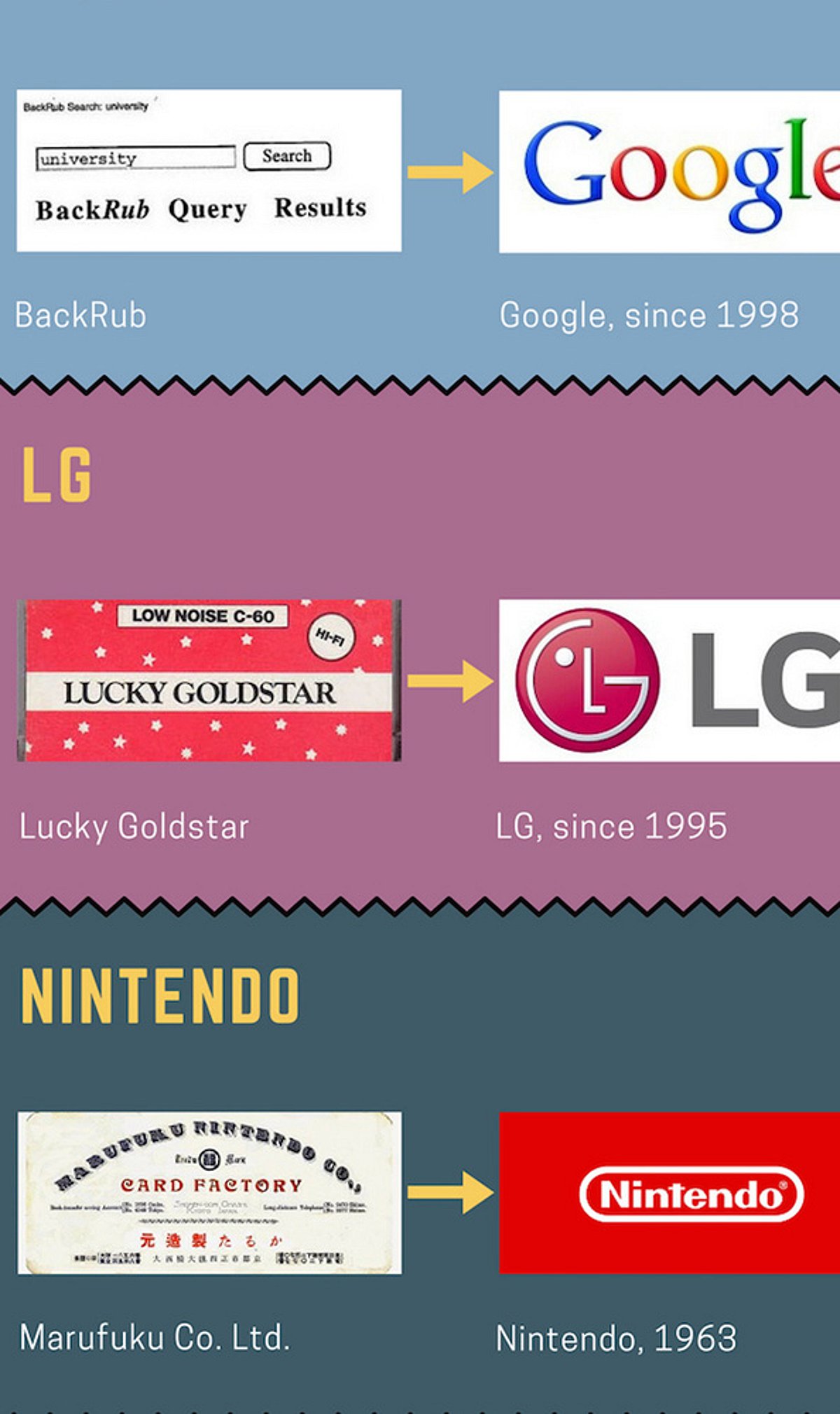
    • BackRub to Google: Before becoming a household name, Google started as BackRub. Founders Larry Page and Sergey Brin renamed it to represent the immense scale of information they aimed to organize.

    Each of these name changes was a carefully calculated decision, often accompanied by a shift in business strategy. Whether to pivot to new technologies, shed negative connotations, or simplify branding, these companies show that a name is more than just a label—it’s a statement of intent.