
Tag: stargazing

  • First Telescope Guide: Smart Automation vs. Traditional Hands-On Stargazing

    First Telescope Guide: Smart Automation vs. Traditional Hands-On Stargazing

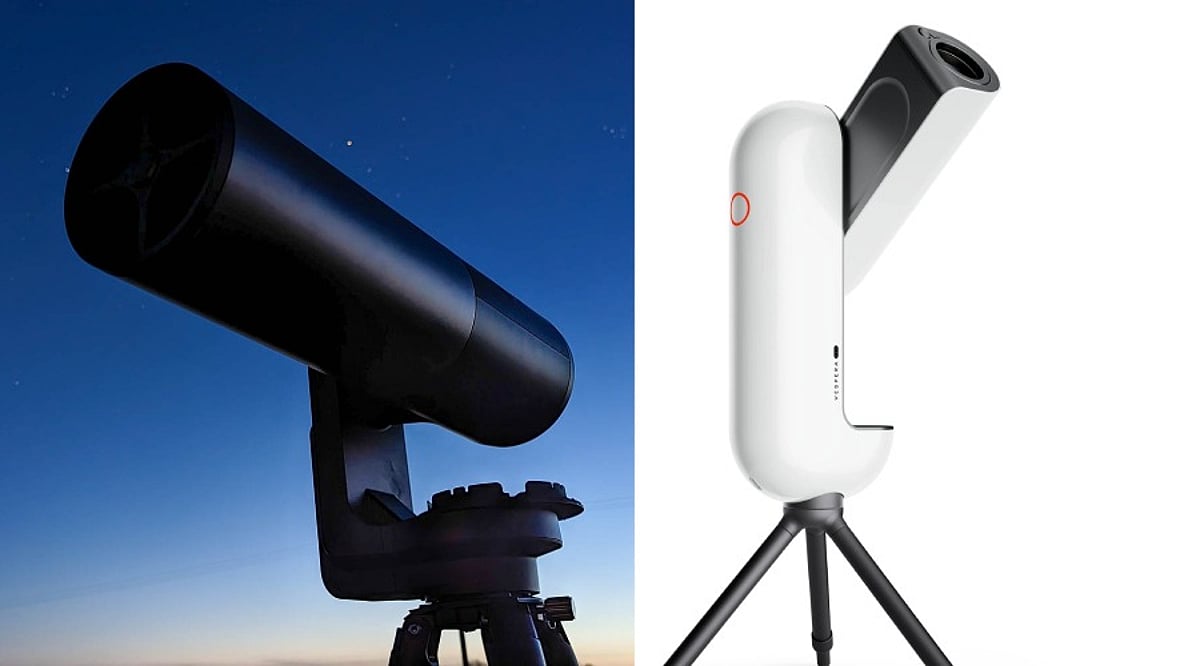
    A first telescope is less about raw specs and more about the kind of astronomy a beginner wants to practice. Smart telescopes automate target finding, tracking, and imaging through cameras, motorized mounts, and apps. Traditional telescopes keep the observer in control, teaching manual aiming, focusing, and sky navigation. Both can reveal the night sky, but they ask for different levels of effort and build different skills.

    How smart telescopes change the beginner experience

    Finding a target is often the hardest part of stargazing. Smart telescopes combine optics, a camera, a motorized mount, and companion software to locate and follow objects automatically. Many models show the view on a screen instead of an eyepiece, and some stack multiple exposures to bring out detail in faint objects. The result is a shorter path from setup to a first image, especially for beginners who want astrophotography without a steep manual learning curve.

    What traditional telescopes teach

    A manual refractor or reflector puts the beginner at the controls. The observer aims the tube, adjusts focus, and uses a finder or star chart to locate targets. The payoff is a direct eyepiece view rather than a processed screen image. Basic operation is easy to learn, but tracking down faint galaxies, nebulae, and star clusters takes practice. That practice builds real skill in sky navigation, optics, and visual observation.

    Skills develop differently

    Traditional telescopes train users to focus, track by hand, choose eyepieces, and read the night sky. Smart telescopes shift the learning toward framing shots, managing captures, using software, and understanding basic astrophotography. Neither path is skill-free; they simply develop different abilities.

    Compare the full cost, not just the price tag

    Entry-level models exist in both categories, but the sticker price is only part of the story. A traditional telescope can start simply and become more expensive as the observer adds eyepieces, filters, a sturdier mount, or a camera. A smart telescope often bundles more hardware and software at purchase, though upgrades may be tied to one manufacturer’s accessories and software ecosystem. Because prices change often, checking current listings before buying is worthwhile.

    Light pollution affects each setup differently

    Smart telescopes can stack exposures to reveal more detail in faint objects under bright city skies, but they do not erase light pollution. With a traditional telescope, the eye receives the view directly, so light pollution has a stronger impact on how much of a dim target is visible.

    Match the telescope to the target

    Target Smart telescope Traditional telescope
    Moon Captures surface detail on a screen Offers a direct eyepiece view
    Planets Can image planets, though methods differ from deep-sky work Delivers a strong visual reward through the eyepiece
    Nebulae and galaxies Strong fit because cameras gather faint light over time Visible, but faint targets demand dark skies and practice
    Star clusters Works well with automated capture Works well depending on aperture and sky conditions

    How a beginner should decide

    Choose a smart telescope if the goal is capturing deep-sky images with minimal setup and automated help. Choose a traditional telescope if the goal is learning manual observing, optics, and sky navigation. Trying both through a local astronomy club, observatory, or dealer can clarify which experience fits before spending money.

    Final takeaway

    Automation and manual observing are converging as telescope technology improves, and future models will likely borrow features from both sides. A beginner who understands what each system demands today can choose with confidence and adapt later as their interest in astronomy grows.

    Frequently asked questions

    Are smart telescopes good for beginners?

    Yes. They simplify target finding, tracking, and image capture, making them a good fit for beginners who want automated observation and astrophotography.

    Are traditional telescopes harder to use?

    They usually require more manual work. Beginners may need to learn target finding, focusing, and tracking, but those steps build practical observing skills.

    Are smart telescopes better for galaxies and nebulae?

    They are designed around imaging, so they can stack exposures to reveal more detail from faint deep-sky objects. Traditional scopes can show these objects too, but faint targets are more demanding visually.

    Can traditional telescopes be used for astrophotography?

    Yes. They can be paired with cameras and suitable mounts, though additional equipment may be needed depending on the type of imaging.

    Should a beginner choose smart or traditional?

    It depends on the desired experience. Smart telescopes suit automated imaging and easier setup; traditional telescopes suit hands-on control and visual astronomy.

  • Top Telescopes for Stargazers: Best Picks for Beginners and Experts in 2026

    Top Telescopes for Stargazers: Best Picks for Beginners and Experts in 2026

    Looking up at the night sky is exciting, but seeing it through a telescope is a completely different experience. The Moon suddenly shows its craters, bright planets become easier to spot, and stars look far more beautiful than they do with the naked eye. Whether you are buying your first telescope or looking for a better one, choosing the right model makes all the difference.

    A good telescope helps you enjoy the Moon, planets, and stars in much greater detail. Beginners should choose simple models, while experienced users benefit from larger and more powerful telescopes. The best telescope depends on your experience, budget, and what you want to observe.

    The first time you look through a telescope, it feels like you are seeing the sky all over again. The Moon no longer looks like a bright circle. You can spot its craters and rough surface. On a clear night, even planets become easier to identify. That’s why picking the right telescope is important.

    Not every telescope is made for everyone. If you’re just getting started, a simple model is usually the better choice, but if you’re a professional who works in astronomical fields, a larger telescope that collects more light and shows finer details will be better.

    To help you choose, we compared some of the most popular telescopes available in 2026. We looked at their features, prices, and how well they suit different users.

    Best Telescopes for Beginners

    Let’s begin the list with the beginner-friendly telescope models that are easy to set up and offer users an out-of-this-world experience. These beginner-friendly models don’t take much time to set up. They are easy to carry and work well for watching the Moon, bright stars, and nearby planets. If you’re buying your first telescope, any of these can be a good place to start.

    Best Telescopes for Professionals

    The next list is for those who work in the field and want a better quality telescope for detailed analysis of everything they see in the sky. Larger telescopes collect more light, which makes distant objects appear brighter and clearer. They also let you enjoy better views of planets, star clusters, and other objects in the night sky. While these models take a little more effort to set up, the viewing experience is worth it.

    Which Telescopes Would I Recommend?

    Even after making the list short, it’s still hard to make a choice. Well, if I have to recommend models based on my testing, I would first recommend the Sounce 40X60 HD Monocular. This one is for the beginners but offers the right balance between price and performance. The model is easy to assemble and simple to use. The best part involves the clarity it offers. I think most beginners will enjoy using it from day one.

    My second choice would surely be the Pie Matrix Phoenix 60700 Refractor Telescope. I have found it to be one of the finest choices when I want to explore the night sky for longer. The larger aperture lets in more light, so planets and star clusters look brighter and more detailed. In my opinion, it will offer users room to learn and improve over time.

    The third telescope I’d recommend is the Sounce 70mm Astronomical & Sky Refractor Telescope. It sits comfortably between beginner and advanced models. It offers better image quality than basic telescopes without becoming too difficult to handle. For someone ready to move beyond a starter model, this is a solid choice.

    Final Thoughts

    A telescope is more than just another gadget. It gives you a chance to enjoy a cosmic view that many people miss. From watching the Moon on a quiet evening to spotting bright planets with family or friends, every session brings something new.

    The best choice depends on what matches your expectations and how you plan to use it. If you’re taking your first step into astronomy, keep things simple and learn as you go. If you’ve been exploring the night sky for a while, investing in a more capable telescope can open up many more sights to enjoy. No matter which one you choose, a clear night and a little curiosity are all you need to begin your journey across the stars.

    FAQs

    1. Which telescope is best for beginners?
    Ans: The Zhizuka ZH400 is one of the best options for beginners. It is simple to set up, easy to use, and offers clear views of the Moon and other bright objects.

    2. What aperture is good for a beginner’s telescope?
    Ans: A telescope with a 50mm to 70mm aperture is a good starting point. It gathers enough light for viewing the Moon, planets, and some bright stars.

    3. Can I use a telescope during the day?
    Ans: Yes. Many refractor telescopes can also be used to observe mountains, birds, and distant landscapes, making them useful beyond night-time stargazing.

    4. Does higher magnification always mean a better telescope?
    Ans: No. Good image quality depends more on the telescope’s aperture and lens quality. A clear image at lower magnification is often better than a blurry high-zoom view.

    5. Which telescope offers the best overall value?
    Ans: The Pie Matrix Pegasus 76700 is an excellent choice for experienced users, while the Zhizuka ZH400 offers great value for beginners who are just starting their astronomy journey.