Tag: startup ecosystem

  • Top Universities Producing the Most Unicorn Founders: Stanford, Harvard, and MIT Lead

    Top Universities Producing the Most Unicorn Founders: Stanford, Harvard, and MIT Lead

    Stanford University tops the global list of universities whose alumni have founded the most unicorns, with 478 such companies, according to Dealroom data. Harvard University follows with 320 alumni-founded unicorns, and MIT ranks third with 295. These three institutions dominate the ranking, highlighting their strong connections to startup creation.

    Tsinghua University brings China into the top four with 200 unicorns founded by its alumni. The University of California, Berkeley, ranks fifth with 190, showing robust representation from both Chinese and US institutions. The University of Pennsylvania is sixth with 165 alumni-founded unicorns, and the University of Cambridge ranks seventh with 140, making it a leading institution outside the US and China.

    Tel Aviv University and Peking University each have 130 alumni-founded unicorns, underscoring the role of universities in Israel and China in the global startup ecosystem. Technion Israel Institute of Technology records 120, while the University of Oxford and INSEAD each have 95. The ranking also includes IIT Bombay with 90 and IIT Delhi with 75, representing India. Other notable institutions in the top 20 include Carnegie Mellon, Princeton, Yale, Columbia, and the University of Toronto.

  • Google Selects 20 AI-First Startups for India Accelerator 2026 Cohort

    Google Selects 20 AI-First Startups for India Accelerator 2026 Cohort

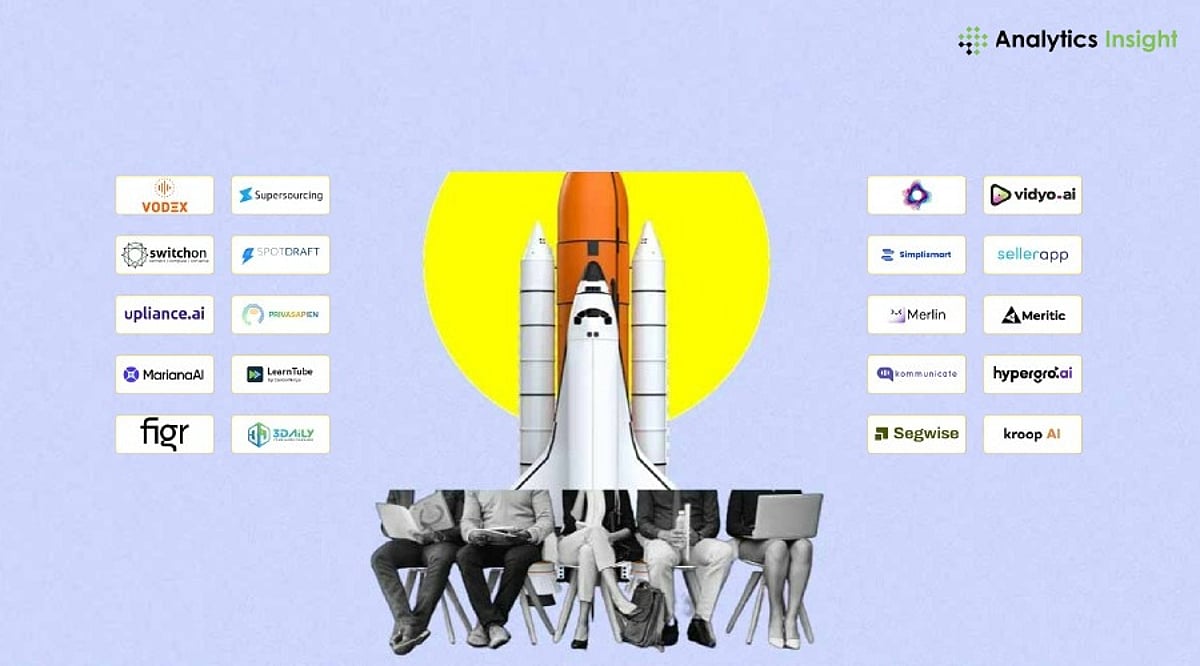
    Google has chosen 20 homegrown AI-first startups for the 2026 cohort of its Google for Startups Accelerator: India program. The tech giant selected these companies from more than 2,500 applications, highlighting the growing depth of India’s AI startup ecosystem.

    The selected startups recently completed an in-person bootcamp at Google’s Bengaluru campus. Over the next three months, Google will provide mentorship, AI tools, cloud resources, and technical guidance to help founders refine their products, strengthen infrastructure, and scale globally.

    A Cohort Built Around Applied AI Infrastructure

    This year’s selections lean heavily toward startups building AI infrastructure and vertical-specific tools rather than consumer apps. Several are tackling embedded and industrial AI: CraftifAI and H2Loop AI automate embedded software and firmware development for robotics, automotive, and semiconductor hardware, while Jidoka applies computer vision to manufacturing quality inspection.

    Others focus on enterprise workflows: Binocs automates financial due diligence, OnFinanceAI builds compliance and risk tools for banks and insurers, and TartanHQ handles identity verification and onboarding through AI-powered APIs. Healthtech and climate tech also feature prominently, with Aikenist building AI-accelerated radiology tools, FlexifyMe offering AI-guided chronic pain therapy, and Aurassure and Fitsol tackling environmental monitoring and carbon emissions tracking respectively.

    Notable Names and Their Backers

    A few startups in the cohort have already built visible track records. Adalat AI, incubated at MIT, applies speech transcription and workflow automation to reduce courtroom case backlogs. Dodo Payments, backed by Antler and 100Unicorns, is building global payment infrastructure for SaaS and AI companies across more than 150 countries. Pipeshift, which came out of Y Combinator’s Summer 2024 batch, focuses on low-latency inference infrastructure for open-source AI models, while Soundverse AI, featured on Shark Tank India, offers a generative AI music platform for prompt-based composition. Several others, including CraftifAI, H2Loop AI, and Binocs, have already raised institutional funding from investors such as Accel, Ankur Capital, and IvyCap Ventures.

    What the Accelerator Offers Founders

    Google India vice president and country manager Preeti Lobana said the program is designed to equip founders with Google’s full AI stack and deep technical mentorship. She framed it as a way to accelerate their path to enterprise scale while strengthening the technical capabilities that support the broader India AI Mission. Google first launched the accelerator in April 2024, and its 2025 cohort included companies such as Apptile, Knit, MyWonder, Phot.AI, and SparkyAI.

    What Comes Next for the Cohort

    Beyond mentorship, Google’s accelerator model typically emphasizes technical depth over generic startup coaching. Founders will stress-test their architecture and prepare for scaled, enterprise-grade deployment rather than simply polishing a pitch deck. With this cohort skewing heavily toward infrastructure-level AI tools serving manufacturing, financial services, and healthcare, the selections suggest Google is positioning the program as a pipeline for startups building the underlying technical layers of India’s AI economy, rather than consumer-facing AI products alone.

  • India’s Startup Boom: Government Support, Digital Adoption, and Youthful Innovation Fuel Growth

    India’s Startup Boom: Government Support, Digital Adoption, and Youthful Innovation Fuel Growth

    Overview

    India’s startup ecosystem is expanding rapidly, driven by government support, digital adoption, investor confidence, and a youthful population. With over 2 lakh DPIIT-recognized startups and 16.6 lakh jobs created, the country now ranks second globally in entrepreneurial activity. This article explores the key factors behind this remarkable transformation.

    Government Initiatives Boost the Startup Ecosystem

    The Indian government has played a pivotal role in fostering a startup culture through initiatives like Startup India, tax exemptions, and simplified compliance. Digital literacy campaigns, startup boot camps, and innovation hubs have encouraged young entrepreneurs to experiment. Sectors such as agritech, fintech, and technology have benefited from state-backed incubators and accelerators, contributing to GDP growth, employment, and quality of life.

    Rise in Investor Confidence and Funding

    India attracts substantial global venture capital and private equity. Angel networks and crowdfunding platforms empower small founders with seed and expansion capital. Major success stories like Flipkart and Zomato highlight the potential, while micro-VCs and regional investors support startups in smaller cities, unlocking niche markets and driving ecosystem growth.

    Creative Founders and Diversified Sectors

    Founders today come from diverse backgrounds—not just engineers from top institutions, but also farmers, homemakers, and dropouts. They focus on research, innovation, and solving real problems rather than following trends. This diversity has led to successful ventures in fintech, healthtech, edtech, AI, clean energy, e-commerce, and SaaS.

    Youthful Energy and Cultural Shift

    With 65% of the population under 35, India’s young entrepreneurs are reshaping the startup landscape. Programs like Shark Tank have popularized entrepreneurship, and the cultural stigma around failure is fading. Resilience and experimentation are now valued, inspiring more people to pursue entrepreneurship as a full-time career.

    Challenges of the Startup Ecosystem

    Despite the momentum, startups face regulatory complexity, infrastructure gaps, intense competition, and uneven access to mentorship. Scaling beyond initial success remains difficult. However, collaborative ecosystems, industry associations, and cross-border partnerships are gradually addressing these hurdles.

    Why It Matters

    The startup surge is a solution to brain drain, regional innovation, and unemployment. It generates revenue, reduces poverty, and drives progress in green energy, AI, health, and smart living. As more people embrace entrepreneurship, India’s startup ecosystem becomes a powerful engine for national development and global leadership.

    Final Thoughts

    India’s startup boom is not a temporary trend—it represents a fundamental transformation. The convergence of technology, policy, and youthful ambition is creating jobs, boosting GDP, and fostering innovation. Startups are shifting traditional business methods toward adaptive, modern markets that define smart living and economic growth.

    FAQs

    1. Why is India’s startup ecosystem growing so rapidly?
    Increased digital adoption, supportive government initiatives, higher investor confidence, improved access to funding, and a young entrepreneurial population are driving rapid growth.

    2. What role does the government play in supporting startups in India?
    The government supports startups through initiatives like Startup India, tax benefits, simplified compliance, incubators, innovation hubs, and policies that encourage entrepreneurship and job creation.

    3. Why are Tier-2 and Tier-3 cities becoming startup hubs?
    Improved internet connectivity, digital literacy, affordable technology, regional investors, and the ability to solve local problems have enabled entrepreneurs from smaller cities to build successful startups.

    4. Which sectors are driving India’s startup boom?
    Fast-growing sectors include fintech, agritech, healthtech, edtech, artificial intelligence (AI), clean energy, e-commerce, and software-as-a-service (SaaS).

    5. What are the biggest challenges faced by Indian startups?
    Common challenges include regulatory complexity, intense competition, limited access to mentorship, infrastructure gaps, and difficulties in scaling sustainably.

  • Regulatory Hurdles Slow India’s Startup Funding as VCs Tighten Scrutiny

    Regulatory Hurdles Slow India’s Startup Funding as VCs Tighten Scrutiny

    India’s startup ecosystem remains a vibrant hub for entrepreneurship, but the pace of venture capital investment has slowed as investors grow more selective amid regulatory uncertainty. Data shows a decline in private equity and venture capital funding, and experts warn that stricter digital policies could dampen long-term growth.

    VC Investments Decline in the Second Quarter

    According to current industry figures, private equity and venture capital (PE-VC) funding in India totaled $6.45 billion during the second quarter of 2026—3% less than a year ago and 42% below the previous quarter. This deceleration reflects increasing caution among investors, who now favor startups with sound business models and clear paths to profitability over rapid expansion.

    It is important to note that investor interest has not vanished. Instead, firms have tightened their due diligence processes and are concentrating on companies with strong fundamentals and reliable revenue streams.

    Regulatory Environment Adds to Investor Concerns

    Beyond funding challenges, policy uncertainty has emerged as a significant hurdle for India’s startup community. An analysis by Oxford Economics, commissioned by Digital Prosperity Asia (DPA), indicates that stricter digital industry regulations could reduce venture capital funding by up to 25% annually through 2035. This would also lead to fewer startups, jobs, and innovations.

    Industry representatives emphasize that predictable, innovation-friendly regulation is critical for entrepreneurs making long-term investment decisions.

    Source: Oxford Economics report commissioned by Digital Prosperity Asia (DPA).

    Capital Is Becoming More Selective

    Despite the funding slowdown, India remains one of the world’s largest startup ecosystems, with over 150,000 DPIIT-registered startups. Investments continue to flow into artificial intelligence, deep technology, healthcare, and enterprise software—but they are now driven by business fundamentals rather than growth potential alone.

    The current environment suggests that startups with strong governance and efficient capital allocation will find it easier to secure funding compared to those without.

    Long-Term Outlook Depends on Confidence

    While opportunities in India’s startup landscape remain plentiful, experts believe rebuilding investor trust will require stable regulations that nurture innovation. A balanced approach—protecting users while promoting entrepreneurship—could sustain India’s position as a leading startup nation.

    As investors become more selective, entrepreneurs must focus on profitability and operational efficiency to attract funding.

  • India’s Startup Ecosystem Enters a New Era: Prioritizing Profitability, Public Markets, and Deep-Tech Innovation

    India’s Startup Ecosystem Enters a New Era: Prioritizing Profitability, Public Markets, and Deep-Tech Innovation

    India’s startup ecosystem is entering a defining phase. The years of easy capital, rapid expansion, and soaring valuations have given way to a more measured approach. Investors are asking tougher questions, founders are focusing on sustainable growth, and public markets are emerging as a key source of capital.

    The shift marks a turning point for a sector that transformed India’s business landscape over the past decade. With more than 1.59 lakh DPIIT-recognized startups and over 1.66 million jobs created, the ecosystem remains one of the country’s strongest engines of innovation. The challenge now is not whether startups can grow, but whether they can build durable businesses while maintaining momentum.

    Why Profitability Has Become a New Benchmark

    Previously, success for startups was mostly measured by how many rounds of funding they managed to raise, and at what valuations. The whole idea was to push hard on customer acquisition and growth while ignoring profitability, or assuming it could come later. But now, the dynamics of success have shifted. Higher interest rates, greater investor caution, and a generally hard-edged funding environment have pushed startups to rethink what matters most. Just growing revenue isn’t enough anymore. Investors want clearer signals, such as solid unit economics, operational efficiency, and a path toward profitability.

    This shift is already visible in the Indian tech space. Many startups are either turning profitable or at least trimming losses, suggesting a more careful, disciplined approach to management.

    Public Markets Are Reshaping Startup Ambitions

    Another major change is the growing role of public markets. The IPO is now an option available to mature startups. Companies that relied heavily on venture capital funding in their early days are now raising capital through stock offerings on public exchanges. This brings a new level of accountability. The importance of sound governance, financial transparency, efficient cash flow management, and business sustainability outweighs the hype about growth in the public markets environment. Startup founders now focus on such matters much earlier than ever before.

    Beyond Bengaluru and Mumbai

    India’s entrepreneurial journey is no longer confined to a few metro cities. Young entrepreneurs from tier-II and tier-III cities are setting up companies across sectors such as fintech, logistics, healthcare, education, and more. Internet connectivity, digital payment systems, and access to an online workforce have significantly lowered barriers, even for those working outside traditional startup hubs. Smaller cities themselves have become emerging markets, as technology adoption rises and consumer spending power increases steadily. This geographic expansion has diversified the startup landscape in the country.

    Deep-Tech Emerges as the Next Frontier

    Consumer internet businesses dominated India’s startup ecosystem for much of the past decade. The next wave may come from deep-tech sectors. Firms engaged in artificial intelligence, semiconductor design, robotics, climate technology, space technology, and sophisticated software have become a major area of interest for investors. However, deep-tech firms face specific challenges: large sums of capital, long gestation periods, and specific talent requirements. Nevertheless, investors and policymakers recognize that India’s future economic success will depend on its capacity to develop innovative deep technologies.

    Challenges That Refuse to Disappear

    The ecosystem must not ignore its problems. Investments remain selective, especially for early-stage startups. Investors prefer startups with proven business models and revenue streams. Startups face a talent shortage, particularly in areas such as artificial intelligence, chip design, and advanced engineering. Some regulations could pose challenges, especially for startups without sufficient funds to comply. Uncertainty about the global economy adds yet another problem: slow growth in key markets could negatively impact investments and expansion.

    What Comes Next for Indian Startups

    The startup ecosystem in India is transitioning from its teenage phase to adulthood. The focus will shift from chasing valuations to building robust companies. Profitability will serve as a competitive advantage. Corporate governance systems are improving. Capital markets have opened new ways to raise money. Deep technology innovation leads to opportunities beyond consumer-facing offerings. The coming decade could witness more stable businesses rather than eye-catching funding rounds. It will be imperative for entrepreneurs to strike the right balance between innovation, financial prudence, scalability, and performance.

    This is a pivotal time for the Indian startup ecosystem. The decisions made by entrepreneurs and investors will determine whether India succeeds in nurturing future global leaders or falls short.