Tag: startup funding

  • Personal AI Agent Developer Instinct Secures $1 Billion Series C at $10 Billion Valuation

    Personal AI Agent Developer Instinct Secures $1 Billion Series C at $10 Billion Valuation

    Instinct, a San Francisco-based startup building personal AI agents, has raised $1 billion in a Series C funding round, pushing its valuation to $10 billion. The round was backed by Sequoia Capital, Benchmark Capital, and Coatue, signaling strong investor confidence in autonomous AI assistants.

    The company previously raised $250 million, bringing total pre-Series C funding to $350 million. Reports earlier this month hinted at the $1 billion raise at a $10 billion valuation. Instinct is developing an AI agent that goes beyond answering questions — it can autonomously perform everyday tasks like booking trips, ordering groceries, canceling subscriptions, and making phone calls through its new Concierge service.

    Instinct has also introduced inter-agent communication, allowing multiple Instinct agents to coordinate plans and share files such as documents, images, and spreadsheets. The company remains in early access but has already attracted over 100,000 users, facing capacity pressure from rising demand. The fresh capital will help expand infrastructure and bring the product to more consumers.

    Competition in the personal AI space is heating up. Meta recently launched Muse, a task-oriented AI assistant. Instinct’s funding gives it substantial resources to develop privacy and security measures, including isolated environments, temporary credentials, and execution controls. The company aims to turn its early-access product into a widely used consumer service as demand for truly autonomous personal agents continues to grow.

  • AI Infrastructure, Biotech, and Enterprise Startups Secure Major Funding This Week

    AI Infrastructure, Biotech, and Enterprise Startups Secure Major Funding This Week

    This week’s venture capital activity demonstrates that investor enthusiasm for artificial intelligence extends well beyond foundational models. Five startups spanning optical connectivity, drug discovery, procurement, enterprise workflows, and retail automation collectively raised significant funding, highlighting a broadening of AI investment into infrastructure and practical applications.

    PicoJool Raises USD 27.5 Million for AI Optical Connectivity

    PicoJool, a developer of optical connectivity products for AI data centers, closed a USD 27.5 million Series A round led by Socratic Partners, with participation from Hudson River Trading. The company’s total funding now stands at USD 39.5 million, following an earlier USD 12 million seed round. PicoJool’s portfolio includes 200G VCSELs, microVCSELs, and optical links designed for hyperscale AI workloads. The new capital will be used to expand teams and facilities in the United States and Taiwan, as well as to boost manufacturing capacity to meet demand from hyperscalers and data-center operators.

    BigHat Biosciences Closes USD 75 Million Series C for AI-Designed Therapeutics

    Biotech startup BigHat Biosciences secured a USD 75 million Series C round co-led by DFJ Growth and Premji Invest, bringing its total funding to USD 223 million. The company leverages an agentic data platform to design protein therapeutics using artificial intelligence. Its pipeline includes BHB810, an antibody-drug conjugate currently in Phase 1 trials. BigHat plans to use the fresh capital to advance its clinical-stage pipeline and further develop its protein-design data generation platform.

    Axya Lands USD 17 Million CAD to Expand AI Procurement Platform

    Montreal-based Axya raised USD 17 million in Series A funding, led by McRock Capital with participation from Yamaha Motor Ventures and existing investors. The company offers AI-powered procurement software for manufacturers, covering sourcing and purchasing workflows. Axya intends to invest the proceeds in product development, AI capabilities, geographic expansion, and scaling its engineering and go-to-market teams.

    Ema Adds USD 77 Million in Series B for Enterprise AI Agents

    Enterprise AI company Ema raised USD 77 million in a Series B round led by Creaegis, with additional investments from Accel, Section 32, and Prosus. This brings Ema’s total funding to USD 140 million. The company’s platform deploys AI agents to automate corporate functions such as HR, IT, and finance, helping enterprises streamline operations.

    Thri5 Secures USD 5.4 Million Seed Round for Retail AI Execution

    Retail-focused startup Thri5 closed a USD 5.4 million seed round co-led by Whitecap Venture Partners and Mistral Venture Partners. Its AI execution platform converts retail data and recommendations into actionable in-store actions. A nine-week pilot with Wild Fork Foods reportedly delivered gains in sales, profit, and inventory accuracy, leading the retailer to expand the deployment.

    Together, these deals reflect a maturing AI funding cycle where capital is moving beyond model development into the hardware, data, biotech, and enterprise workflows that make AI operational. For startups, the challenge remains turning investment into products that deliver measurable, real-world results.

  • AI-Powered Startups Raise $310.7 Million in Latest Venture Capital Roundup

    AI-Powered Startups Raise $310.7 Million in Latest Venture Capital Roundup

    This week, five startups across artificial intelligence, semiconductor verification, enterprise software, HR technology, and interactive content collectively raised $310.7 million in fresh venture funding. The largest deals included a $200 million round for software development company Factory and a $53 million seed extension for enterprise AI services startup Hang Ten Systems. Investors continue to back applied AI solutions, with deals ranging from seed to Series B.

    Factory Leads with $200 Million at $5 Billion Valuation

    Software development startup Factory secured the largest disclosed round this week, raising $200 million at a $5 billion valuation. The financing included Blackstone, Khosla Ventures, Sequoia Capital, Insight Partners, Evantic Capital, Sound Ventures, NEA, Mantis VC, and Clearlake. The company said total funding now exceeds $400 million. Factory develops autonomous software-engineering systems for enterprises and plans to use the new capital for research, product development, and global expansion. Customers include NVIDIA, Blackstone, RBC, Palo Alto Networks, Adobe, and T-Mobile.

    Hang Ten Systems Adds $53 Million for Enterprise AI

    Enterprise AI services startup Hang Ten Systems, founded by former Infosys CEO Vishal Sikka, raised an additional $53 million in seed funding. The round was led by Xora Innovation, backed by Singapore’s Temasek, with participation from Mayfield and Aramco Ventures. This brings Hang Ten’s total funding to $85 million after its $32 million seed round in June. The company helps large enterprises apply AI to software development, migrations, finance, and analytics. The new funds will support engineering and consulting expansion, increased customer delivery capacity, and further development of its AI platform and reusable skills library.

    Flam Secures $40 Million Series B for AI Interactive Content

    AI interactive-content startup Flam raised $40 million in Series B funding led by QED Investors. Other participants included Claypond Capital, Martin Chavez, Olivier Pomel, Venky Harinarayan, and Shah Rukh Khan, with existing investors RTP Global and Dovetail increasing their stakes. Flam plans to direct the funding toward AI research, product development, and international enterprise expansion. The company reports more than 100 enterprise customers, including Google, Emirates, and KFC, using its technology for marketing, product visualization, learning, entertainment, and customer engagement.

    BoomerangHR Raises $12.7 Million for AI-Powered HR Platform

    AI-powered HR platform BoomerangHR raised $12.7 million in seed funding from Kalos Ventures, Album Ventures, Monta Vista Capital, Capital Eleven, and Strada Education Foundation. The company focuses on employee offboarding and maintaining relationships with former employees, enabling businesses to identify potential candidates for future roles. Its platform combines automated offboarding processes with verified alumni profiles, job matching, and reporting. BoomerangHR said the funding will support building long-term talent networks and expanding adoption among employers.

    VerifAIX Raises $5 Million for AI-Driven Semiconductor Verification

    AI-native semiconductor verification company VerifAIX raised $5 million in seed funding co-led by Endiya Partners and Bluehill VC. The company plans to use the capital for product development, customer deployments, and expansion of its engineering teams across the US, India, and Israel. VerifAIX is developing a verification platform for increasingly complex chip designs. Its technology, built around what the company calls a ‘Formal Brain’, combines AI with formal verification methods to help engineers assess whether chip designs meet intended specifications. The startup was founded in 2024 by Madhulima Tewari, Kenneth Roe, and Avner Landver.

    Closing Note

    Together, the week’s $310.7 million in disclosed funding shows continued investor interest in applied AI across multiple sectors, from enterprise software and chip verification to HR technology and interactive content. Capital is flowing into companies at various stages seeking to turn AI capabilities into commercial products and services.


  • Weekly Startup Funding Roundup: AI, Legal Tech, and Mobility Attract $5.8 Billion in Fresh Capital

    Weekly Startup Funding Roundup: AI, Legal Tech, and Mobility Attract $5.8 Billion in Fresh Capital

    Startup funding remained robust this week as investors poured capital into artificial intelligence, infrastructure, and specialized technology sectors. Five companies—Positron AI, Inspiren, Motive, The Boring Company, and Harvey—collectively announced nearly $5.8 billion in fresh funding, spanning AI chips, senior care, fleet management, underground transport, and legal technology.

    Positron AI Raises $875 Million at $5 Billion Valuation

    AI chip startup Positron AI secured $875 million in a new funding round, pushing its valuation to $5 billion, according to The Wall Street Journal. This marks a sharp increase from its $1.06 billion valuation earlier this year. Based in Reno, Nevada, Positron develops specialized processors for running AI models, focusing on inference. Its upcoming Asimov chip uses a memory-first architecture and can offer up to 2.3 terabytes of memory per chip. The company has already shipped around 50 Atlas servers to customers including Oracle, Jump Trading, and Parasail.

    Inspiren and Motive Bring AI into the Physical World

    Senior-living technology company Inspiren raised $70 million in Series C funding at a valuation exceeding $500 million. NewView Capital led the round, bringing Inspiren’s total funding to $225 million. The company develops technology that combines ambient awareness with resident data to help care teams identify emergencies and changes in residents’ conditions.

    Meanwhile, physical-operations platform Motive secured more than $1.3 billion in growth financing from General Catalyst’s Customer Value Fund. Motive said its annual recurring revenue has crossed $600 million, having grown 30% year over year. The company plans to use the capital to expand its AI platform, product development, and go-to-market operations.

    UAE Leads $3 Billion Round for The Boring Company

    Elon Musk’s tunneling company, The Boring Company, raised $3 billion in a Series D funding round led by the United Arab Emirates, taking the company’s valuation to $23 billion. Other participants included Andreessen Horowitz, Sequoia Capital, Human Capital, Vy Capital, and Valor Equity Partners. The funding will support plans to develop more than 150 kilometers of tunnels in the UAE, while also helping the company expand projects in Las Vegas, Nashville, and Dubai.

    Harvey Reaches $15.5 Billion Valuation

    Legal AI startup Harvey raised another $550 million, valuing the company at $15.5 billion. Diffusion and Lightspeed Venture Partners co-led the round, with existing investors including Sequoia, Kleiner Perkins, Andreessen Horowitz, and GIC also participating. According to Harvey, 80% of Am Law 100 firms now use its platform. The fresh funding will support its push to help legal and professional-services teams develop and control their own AI capabilities.

    Closing Note

    The week’s funding deals show investors continuing to back startups tackling large, specialized markets—from AI computing and senior care to fleet management, legal technology, and urban transport. With billions flowing into these companies, the focus is increasingly shifting from raising capital to turning ambitious technology into scalable businesses.

  • Today’s Tech Roundup: India’s ₹2,500 Crore Chip Plant, Shiplog’s $930K Funding, and More

    Today’s Tech Roundup: India’s ₹2,500 Crore Chip Plant, Shiplog’s $930K Funding, and More

    Good morning, tech enthusiasts! Here are the top tech stories making headlines today, from a major semiconductor plant launch in India to key developments in AI funding, job markets, and cryptocurrency.

    PM Modi Launches ₹2,500 Crore Semiconductor Plant in Visakhapatnam

    Prime Minister Narendra Modi has inaugurated the construction of ASIP Technologies’ ₹2,500 crore semiconductor plant in Visakhapatnam. This facility is South India’s first approved chip packaging unit under the India Semiconductor Mission. The project is expected to generate jobs, boost domestic chip production, attract further investment, and reduce India’s reliance on imported semiconductors.

    Shiplog Raises $930K for AI-Powered Marketing Platform

    AI startup Shiplog has secured $930,000 in pre-seed funding to develop AI agents that automate marketing research, campaign planning, and execution. The company aims to save businesses time by handling repetitive tasks. The fresh capital will be used to enhance the product, expand the team, and scale operations.

    AI Makes It Harder for Fresh Graduates to Land Jobs

    Many recent college graduates are facing increased difficulty securing their first job as companies integrate AI into both workflows and hiring processes. Some have submitted hundreds of applications with little success. Experts note that AI is reshaping the job market, creating new barriers for entry-level candidates.

    DeepSeek V4 Flash Offers High Performance at Lower Cost

    DeepSeek’s V4 Flash model delivers strong AI performance at a significantly reduced price, sparking debate over whether AI is becoming a commoditized product. As more affordable models enter the market, competition may shift from model quality to tools, services, security, and user experience.

    Telegram’s Brief App Store Removal Rattles Crypto Traders

    Telegram was temporarily removed from Apple’s App Store, causing concern among cryptocurrency traders. The outage led to a drop in GRAM-related tokens amid fears of user access disruption. The app was later restored, but the incident highlighted the sensitivity of crypto prices to platform availability.

  • Morning Tech Digest: IBM’s 0.7nm Chip, Revspot Funding, Graduate Hiring Gap, Coinkite Alert, and OpenAI vs ChatGPT

    Morning Tech Digest: IBM’s 0.7nm Chip, Revspot Funding, Graduate Hiring Gap, Coinkite Alert, and OpenAI vs ChatGPT

    Good morning! Here’s your quick roundup of today’s biggest developments across semiconductors, startup funding, graduate hiring, cryptocurrency security, and artificial intelligence.

    What’s New Today

    IBM has introduced the world’s first 0.7nm chip technology with its new 3D Nanostack architecture, marking a major leap for AI computing and energy-efficient processors. Startup Revspot has secured fresh funding to accelerate growth and expand its technology offerings. A HirePro report shows that only 9% of employers consider fresh graduates job-ready despite 68% of students believing they are. Crypto hardware wallet maker Coinkite has warned Coldcard Mk3 users about a potential security flaw affecting wallet seed generation. Meanwhile, a new explainer outlines the difference between OpenAI, the AI company, and ChatGPT, its popular conversational AI assistant.

    Fast-Track Insights

    • IBM unveils the world’s first 0.7nm chip with 3D Nanostack architecture.
    • Revspot secures fresh funding to support expansion and product development.
    • HirePro report reveals only 9% of graduates are job-ready on day one.
    • Coinkite urges Coldcard Mk3 users to secure funds after wallet warning.
    • OpenAI vs ChatGPT: Understanding the company behind the AI chatbot.

    IBM Debuts World’s First Sub-1nm Chip

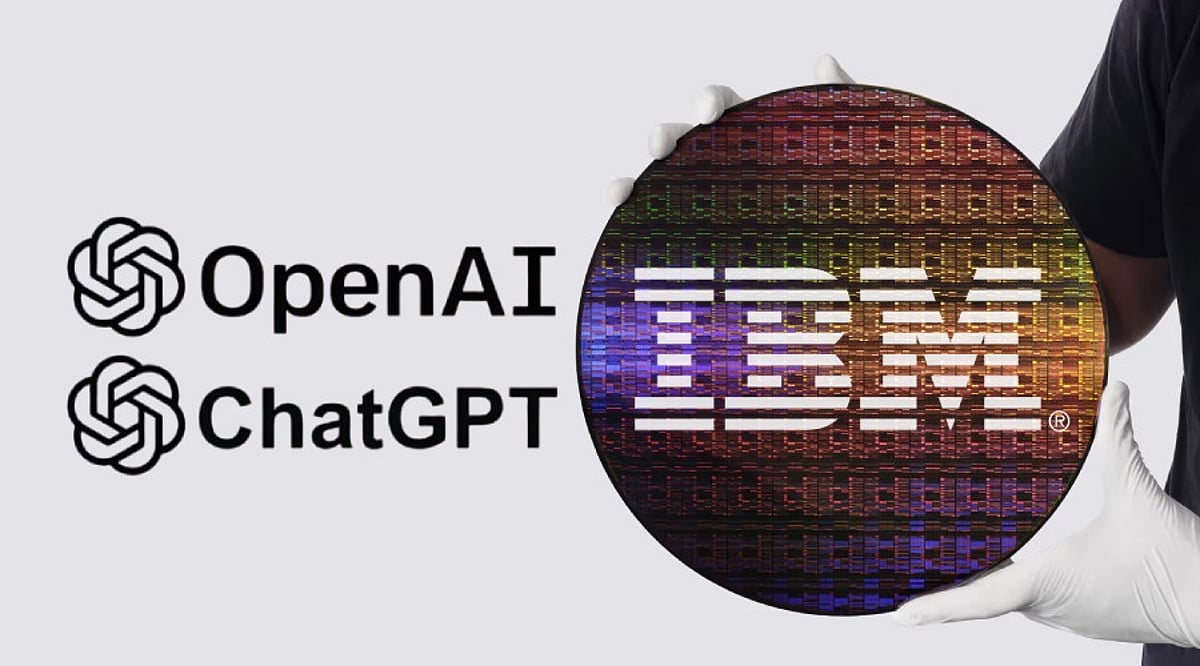
    IBM unveiled the world’s first 0.7nm chip technology powered by its new 3D Nanostack architecture. The breakthrough packs nearly 100 billion transistors, promising faster performance, improved energy efficiency, and stronger capabilities for AI, cloud computing, and next-generation data centers.

    Revspot Raises Funding

    Tech startup Revspot has secured fresh funding to accelerate growth and expand its technology offerings. The investment will support hiring, product development, and market expansion.

    Only 9% of Graduates Are Job-Ready: HirePro Report

    A HirePro report reveals that only 9% of employers believe fresh graduates are job-ready on their first day at work, while 68% of students think they are. The findings underline a significant gap between academic education and industry expectations.

    Coinkite Warns Coldcard Mk3 Users

    Coinkite has issued a security advisory for users of its Coldcard Mk3 hardware wallet, warning that a potential flaw may have affected wallet seed generation. The company advises impacted users to move their funds immediately and create a new wallet with a secure seed.

    OpenAI vs ChatGPT Explained

    The article explains the difference between OpenAI and ChatGPT, clarifying that OpenAI is the artificial intelligence company responsible for developing AI models, while ChatGPT is its AI-powered chatbot designed to help users with writing, coding, research, learning, and everyday tasks.

  • Colossal Biosciences Eyes $20 Billion Valuation as De-Extinction Efforts Gain Investor Momentum

    Colossal Biosciences Eyes $20 Billion Valuation as De-Extinction Efforts Gain Investor Momentum

    Colossal Biosciences, the U.S. biotechnology company working to resurrect extinct species such as the woolly mammoth and the dire wolf, is reportedly in talks to raise new capital at a valuation of at least $20 billion. According to a report by Axios, the funding round could value the Dallas-based startup between $20 billion and $30 billion, nearly doubling its $10.2 billion valuation from early 2025. While the lead investor has not been disclosed, discussions have been ongoing for months and are said to be nearing completion.

    From Ambitious Science to Commercial Growth

    Founded in 2021 by entrepreneur Ben Lamm and Harvard geneticist George Church, Colossal is known for its “de-extinction” technology, which uses gene-editing techniques to recreate the traits of species that vanished thousands of years ago. Unlike its previous funding round when the company was pre-revenue, Colossal is now generating income — a significant shift in its business model. Investors view its technology as applicable beyond wildlife conservation, extending to pharmaceuticals, biodiversity preservation, climate adaptation, and longevity research.

    Recently, Colossal announced it had successfully hatched chicks from artificial eggs, a step toward reviving the extinct giant moa bird. CEO Ben Lamm has stated that the company plans to develop an artificial womb for mammals within the next year.

    Conservation Mission Draws Investor Interest

    Beyond de-extinction, Colossal collaborates with governments and research institutions to preserve the genetic material of endangered species. It has also spun off two businesses focused on plastic degradation and DNA analytics, broadening its commercial portfolio. The fundraising effort comes amid growing investor appetite for deep-tech startups, driven by advances in artificial intelligence, biotechnology, and climate innovation.

    Critics Urge Caution

    Despite billions in funding, Colossal remains under close scrutiny from scientists and conservation experts. Some critics argue that bringing back extinct animals generates headlines but does little to address the immediate threats facing living species. Others worry about ecological ripple effects: if genetically engineered animals are reintroduced into current ecosystems, they could disrupt food webs or compete with existing species. Colossal maintains that the technologies developed for de-extinction are also designed to bolster protection programs for species that still exist.

  • E3 Electric.Ai Launches India’s First AI-Powered Electric Scooter with Rs 100 Crore Funding

    E3 Electric.Ai Launches India’s First AI-Powered Electric Scooter with Rs 100 Crore Funding

    Bengaluru-based electric mobility startup E3 Electric.Ai has raised Rs 100 crore in Series A funding to launch what it claims is India’s first AI-powered electric scooter. The round was led by BluVenture Holdings, with Rs 75 crore in equity and Rs 25 crore in debt financing.

    The company will use the capital to develop its AI-driven scooter ecosystem, which includes 18+ patents, predictive safety features, and a modular vehicle platform designed for urban commuters.

    E3 TRION: AI Features and Safety

    The flagship model, E3 TRION, will launch first in Bengaluru before expanding to 90 cities across India, including Delhi. The scooter includes 10 smart AI features, such as:

    • Pre-ride health check: A 10-second diagnostic scan before every ride to detect potential issues.
    • Range-aware navigation: AI suggests the optimal route based on remaining battery charge to prevent unexpected stops.
    • Predictive maintenance: Alerts for battery health, motor performance, and other components.
    • Crash detection and SOS: If the system detects a rider fall, it sends alerts to emergency contacts via the E3 mobile app.
    • Roadside assistance: Integrated support for breakdowns.

    Modular Platform and Patent Portfolio

    E3 Electric.Ai has developed a modular chassis that can accommodate different scooter models, making it easier to upgrade batteries, motors, and controllers as technology evolves. The startup has filed over 18 patents covering battery systems, modular design, and AI-based safety technologies.

    Asset-Light Manufacturing Model

    Founded in 2024 by former TVS Motor EV executive P. Sanjeev, E3 Electric.Ai follows an asset-light strategy. Instead of building its own factories, the company partners with manufacturers and focuses its investment on software and AI development.

    Competitive Market Entry

    India’s electric two-wheeler market recorded around 1.81 lakh registrations in June 2026, showing strong demand. E3 Electric.Ai will compete with players like Ola Electric, Ather Energy, TVS Motor, and Bajaj Auto, betting that its AI-first approach will differentiate it in a crowded field.

    Bookings have not yet opened, but the company has launched a waitlist on its website to gauge customer interest ahead of the official launch.

  • AI Legal Startup Norm Secures $120M, Reaches $1.2B Valuation to Transform Law Firm Model

    AI Legal Startup Norm Secures $120M, Reaches $1.2B Valuation to Transform Law Firm Model

    Norm has joined the growing list of billion-dollar AI companies after raising $120 million in a Series C funding round led by Khosla Ventures. The latest investment values the AI law startup at $1.2 billion, granting the company unicorn status. Norm also confirmed it has raised more than $260 million since launching less than three years ago. The new funding will help the company improve its products and hire more lawyers as demand for AI-powered legal services continues to grow.

    Norm is taking a different approach from many legal technology companies. Instead of only building software for lawyers, the company runs an AI-native law firm called Norm Law. Its AI agents complete legal and compliance work while experienced attorneys review every important task before clients receive the final results. This model allows businesses to use AI without removing human legal expertise from the process.

    A Different Business Model

    Another major difference is how Norm charges its customers. Traditional law firms usually bill clients by the hour, but Norm offers outcome-based pricing based on the results it delivers, making legal costs easier to predict for businesses. Many enterprise companies, especially financial firms, want faster compliance support while keeping legal expenses under control. Norm believes this pricing model better matches the needs of modern businesses.

    Several well-known investors joined the funding round alongside Khosla Ventures. The list includes Bain, Craft Ventures, Coatue, Vanguard, New York Life, TIAA, Fenwick LLP, Tony James, and Jeff Hammes. The company plans to use the fresh investment to expand its AI platform, develop more legal products, and bring more attorneys onto its team.

    The latest funding also shows that investors are backing AI companies focused on specific industries rather than general AI tools. Legal work often includes large amounts of paperwork, compliance checks, and complex regulations. AI can complete many of these tasks much faster while lawyers continue supervising the work. This combination makes legal services more efficient for large businesses.

    Growing Competition in Legal AI

    Norm also competes in a fast-growing legal AI market alongside companies such as Harvey and Legora. Those companies mainly build AI tools that help lawyers complete their work. Norm follows a different strategy by directly providing legal services through its AI-powered law firm. This approach gives the company a unique position in the legal technology industry.

    Norm’s latest funding shows that investors now see AI as more than a tool for improving office work. Companies are starting to build complete AI-powered services with human experts checking the final results. This trend could change how legal services work over the next few years, especially for businesses that deal with strict regulations.

    Norm still has challenges ahead as it grows. Legal regulators may closely watch AI-based law firms, while large businesses will expect accurate legal advice and strong data security. The company’s future success will depend on building trust, meeting legal standards, and expanding its customer base.

    The new funding gives Norm a strong position to grow during 2026. If the company successfully expands its AI agents and legal team, it could encourage more law firms to adopt AI while moving away from the traditional hourly billing model.