
Tag: STEM

  • India’s AI Ambitions Get a Boost: PM Modi Inaugurates Param Pragya Supercomputer at IIT Delhi

    India’s AI Ambitions Get a Boost: PM Modi Inaugurates Param Pragya Supercomputer at IIT Delhi

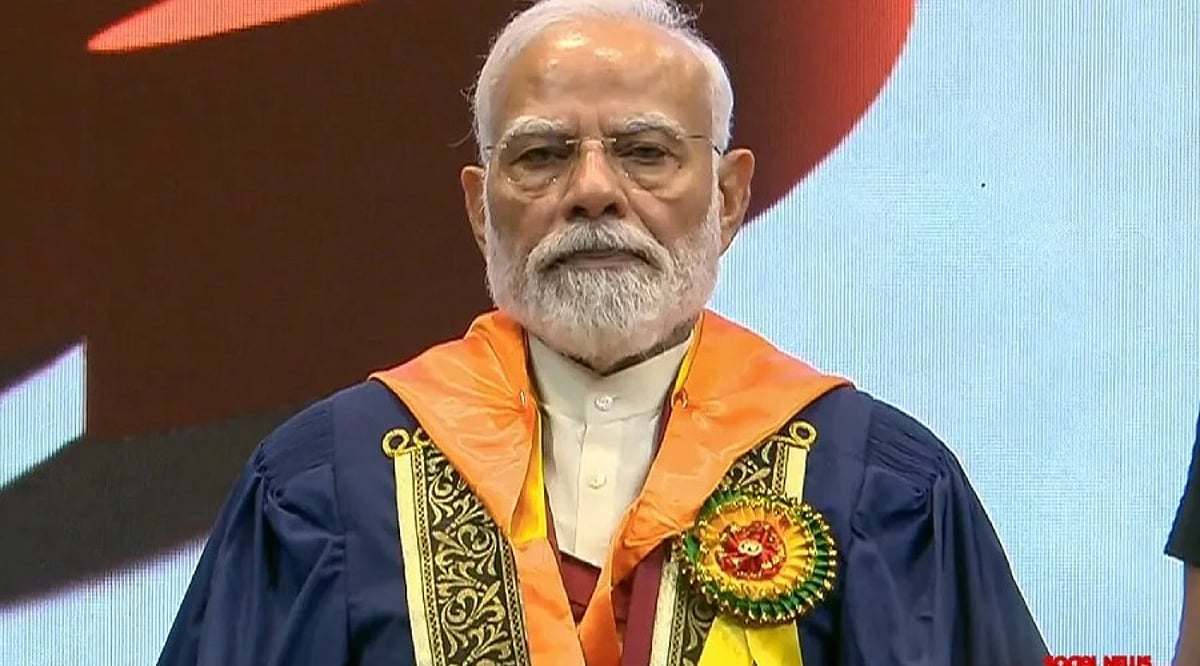
    Indian Prime Minister Narendra Modi inaugurated the ‘Param Pragya’ AI supercomputer at IIT Delhi during the institute’s 57th convocation ceremony, underscoring the government’s commitment to advancing national AI capabilities.

    The event, held at IIT Delhi’s Sonipat campus, saw PM Modi also present prestigious medals to graduating students, including the President’s Gold Medal and the Director’s Gold Medal. Harish Salve, Chairperson of IIT Delhi’s Board of Governors, and Institute Director Prof. Rangan Banerjee felicitated the Prime Minister and Union Minister Prahlad Joshi.

    PM Modi on Technology and Youth

    Addressing the graduating students, PM Modi described the convocation as marking the start of a new journey for the country’s talented youth. He noted that the world is advancing rapidly and technology is driving a shift in the global balance of power. “Unicorns, digital payments, and the fintech revolution have provided a platform for millions of the country’s youth to do something significant,” he said.

    Param Pragya: A Leap for AI Research

    The newly inaugurated Param Pragya facility is an AI-powered high-performance supercomputing center designed to strengthen IIT Delhi’s research in artificial intelligence, advanced computing, data science, and interdisciplinary fields. The launch comes at a time when AI and high-performance computing are becoming critical for innovation and technological development.

    Higher Education Expansion

    Union Minister Prahlad Joshi highlighted that enrollment in higher education has crossed 45 million students. Since 2014, the number of universities has increased by nearly 70 percent, with over 650 new universities, 14,000 new colleges, and 4,000 new Industrial Training Institutes established. He also noted that women now account for nearly 44 percent of enrollment in STEM disciplines, one of the highest proportions globally.

  • MIT Comparative Media Studies and Writing: Exploring Media, Science, and Society

    MIT Comparative Media Studies and Writing: Exploring Media, Science, and Society

    The MIT Department of Comparative Media Studies/Writing (CMS/W) is a hub for examining how media, technology, and communication shape our world. From the ethical dimensions of artificial intelligence to the history of vaccine hesitancy, CMS/W faculty, students, and alumni are at the forefront of critical inquiry and creative expression.

    Recent highlights from the department illustrate its broad impact. A Scientific American feature showcases the role of curiosity-driven science in America’s success, spotlighting MIT researchers. Thomas Levenson’s new book delves into the long history of vaccine hesitancy, tracing arguments against vaccination back to the origins of the technology itself. The MIT Ethics of Computing Research Symposium brought together experts to examine the crucial human component in computing and AI.

    Students are also making headlines. In a collaboration with The Associated Press, MIT science writing students developed and pitched local climate stories, working alongside visual journalists. The MIT4America Calculus Project connects MIT undergraduates with high schoolers, providing tutoring in a subject that is a gateway to many STEM careers.

    The department mourns the loss of Les Perelman, a longtime faculty member and champion of writing education, who fiercely criticized automated essay grading and established an influential writing program. Meanwhile, new faculty join CMS/W and other humanities departments, and professors like T.L. Taylor (named a 2026-27 CASBS Fellow) and Justin Reich (leading efforts to help K-12 schools navigate AI) continue to push boundaries.

    Through courses that mix beats, history, and technology—such as a unique DJ’ing class—and through honors like the Knight-Hennessy Scholarship for alumnus Steven Truong, CMS/W exemplifies MIT’s commitment to integrating the arts and sciences. The department’s work underscores how studying media and writing is essential for understanding and shaping the future.