Tag: stocks

  • 7 Key Assets for Building Long-Term Wealth

    7 Key Assets for Building Long-Term Wealth

    Building wealth is a long-term endeavor that requires a strategic approach to investing. By diversifying across different asset classes, you can spread risk and increase your potential for returns. Here are seven assets that can help you build wealth over time.

    1. Stocks

    Stocks offer long-term growth potential by giving investors exposure to company performance, market movements, and economic conditions. However, they come with varying levels of risk depending on the company and market trends.

    2. Bonds

    Bonds provide income through regular interest payments and can help diversify a portfolio. Their returns and risk depend on the issuer and prevailing market conditions, making them a more stable option compared to stocks.

    3. Gold

    Gold is a tangible asset that often moves differently from financial assets, offering a hedge against inflation and economic uncertainty. Its price can fluctuate based on global economic factors, but it remains a popular diversification tool.

    4. Real Estate

    Investing in physical property can generate rental income and appreciate in value over time. However, it requires significant capital and ongoing maintenance costs, making it less accessible for some investors.

    5. REITs (Real Estate Investment Trusts)

    REITs allow you to invest in real estate without directly buying properties. They offer accessibility and potential income through distributions, making real estate investment more liquid and manageable.

    6. Mutual Funds

    Mutual funds pool money from multiple investors to invest in a diversified portfolio of securities. They are professionally managed, making them a convenient way for individuals to achieve diversification without picking individual stocks or bonds.

    7. Yourself

    Investing in your own education, skills, and professional development can significantly improve your earning potential. This personal investment supports stronger long-term financial decision-making and career growth.

    Diversification and Risk Management

    Combining different asset classes spreads exposure across investments, reducing dependence on any single asset’s performance. Your asset choices should align with your personal goals, risk tolerance, and investment time horizon rather than following popular trends.

    By carefully selecting a mix of these assets, you can build a robust portfolio that works toward your financial future.

  • Stock Futures Hold Near Flat Ahead of Trump-Xi Summit and Iran Negotiations

    Stock Futures Hold Near Flat Ahead of Trump-Xi Summit and Iran Negotiations

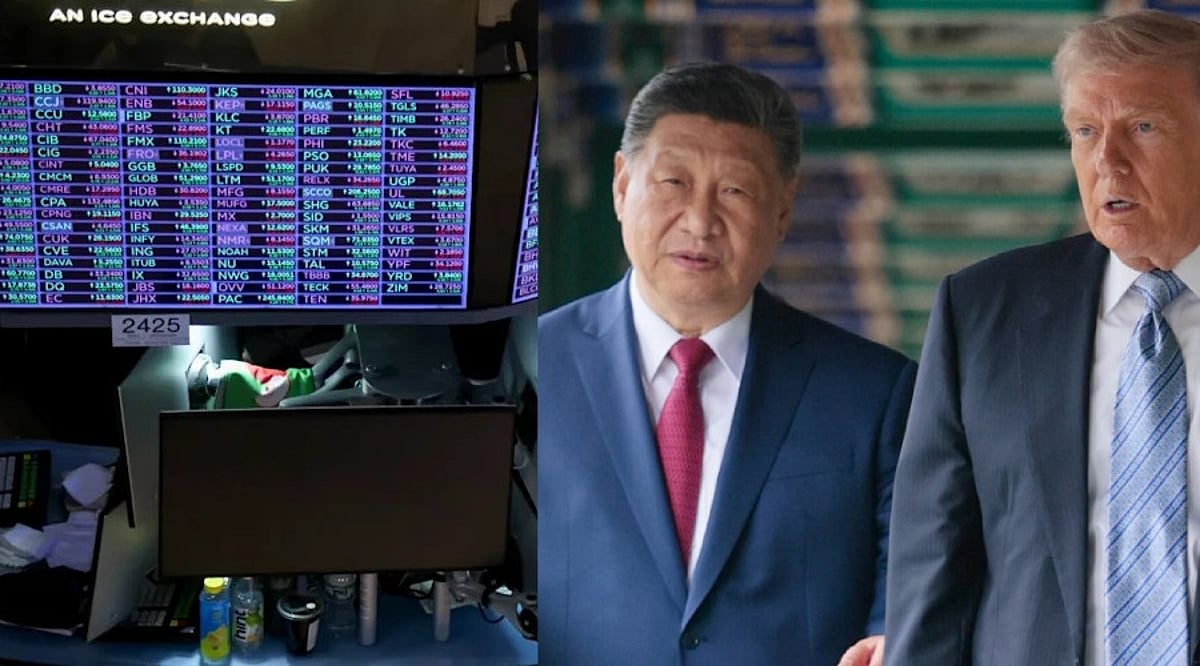
    U.S. stock futures were little changed early Wednesday, September 23, following a record close for the Nasdaq Composite. Investors kept their focus on oil price movements, ongoing U.S.-Iran discussions, and the anticipated meeting between President Donald Trump and Chinese President Xi Jinping.

    Futures Show Modest Declines

    At 7:50 a.m. ET, Dow futures slipped 31 points, or 0.31%, while S&P 500 futures gave back 0.13% and Nasdaq-100 futures fell 0.33%. All three contracts remained close to Tuesday’s closing levels as markets awaited fresh catalysts from geopolitics and economic data.

    The flat open followed a mixed session on Wall Street. The Nasdaq Composite rose 0.45% to 27,244.28 for its second consecutive record close, while the S&P 500 finished essentially unchanged at 7,764.64. The Dow Jones Industrial Average dropped 0.36% to 51,863.69. Chip stocks outperformed, with Micron advancing about 5% and SanDisk gaining nearly 7%.

    However, gains were uneven. Six of the S&P 500’s 11 sectors fell on Tuesday, led by financials. JPMorgan Chase and Wells Fargo each lost more than 3%. The divergence between tech strength and financial weakness remained a key theme on Wednesday.

    Oil Prices and U.S.-Iran Talks

    Brent crude traded below $100 per barrel during the morning, easing 0.40% to $98.83. Reports indicated that Saudi Arabia had restarted operations at its East-West Pipeline and might resume exports from the Red Sea port of Yanbu, helping to ease supply concerns.

    Market participants were also parsing the latest U.S.-Iran talks held on the sidelines of the United Nations General Assembly. President Trump described the meeting as “very good,” but his U.N. speech mentioned a choice between reaching a deal and “annihilating” the country, leaving traders uncertain about the path to an agreement. Oil prices are a key market driver because fuel costs influence business expenses and inflation readings.

    Trump-Xi Meeting on Trade and AI

    President Xi is scheduled to arrive in Washington on Wednesday ahead of a Thursday meeting with Trump. The agenda is expected to cover the U.S.-China trade truce, artificial intelligence regulation, and U.S. arms sales to Taiwan. Xi is also slated to meet executives from General Motors, Meta, Apple, Amazon, and Tesla.

    The talks come as AI-related stocks boost the Nasdaq. Strong interest in Meta’s Muse assistant has supported AI infrastructure providers, while some investors worry that task-performing assistants could disrupt consumer businesses, contributing to losses in financial and travel-related shares on Tuesday.

    Investors are watching the summit for any policy announcements, though no new agreement has been confirmed. The Nasdaq’s record close remains the most recent confirmed market result.

    Economic Data and Fed Speakers Ahead

    S&P Global’s September purchasing managers’ index is due Wednesday, with economists polled by Reuters expecting continued expansion in U.S. business activity. Federal Reserve Governor Michael Barr is also scheduled to speak, offering further clues on monetary policy after last week’s rate increase.

    Boston Fed President Susan Collins expressed support for the rate hike due to inflation concerns. According to CME Group’s FedWatch tool, futures traders currently price in a high chance of another 25-basis-point hike next month, a view that could shift with upcoming data and Fed commentary.

  • MEXC Launches Opportunity Compass to Bridge Crypto and Traditional Finance Knowledge Gaps

    MEXC Launches Opportunity Compass to Bridge Crypto and Traditional Finance Knowledge Gaps

    MEXC, a pioneer in zero-fee digital asset trading, has officially launched Opportunity Compass, a global markets education initiative designed to help crypto-native users better understand both digital and traditional financial markets. The program arrives as new research reveals that 53.7% of crypto users have already invested in stocks, yet significant knowledge gaps remain.

    Why Opportunity Compass Matters

    According to a joint survey by MEXC and CoinGecko, trading volumes for traditional financial assets on crypto exchanges hit $1.45 trillion in the first half of 2026—nearly ten times the total for all of 2025. The survey also found:

    • 53.7% of respondents have invested in stocks, indicating growing crossover between crypto and traditional markets.
    • Among those who haven’t used stock products, 43.1% cite insufficient investment knowledge as a key barrier.
    • Among former stock investors who stopped, 48.3% said limited knowledge contributed to their decision.
    • Current stock investors are influenced by individual stock price movements (44%) and the AI boom (34%).

    These findings underscore that access to financial products is expanding faster than financial literacy. MEXC’s Opportunity Compass aims to close that gap.

    A Five-Season Educational Journey

    The program features five seasons with 30 episodes, guiding users from foundational market knowledge to advanced opportunity evaluation:

    1. See the Global Opportunities – Understand the global financial landscape and how markets connect.
    2. Understand Asset Value – Explore what gives stocks, gold, commodities, ETFs, Bitcoin, and other assets their value.
    3. Decode Market Trends – Learn about interest rates, inflation, market cycles, earnings, and industry trends like AI and semiconductors.
    4. Explore Emerging Opportunities – Dive into tokenized assets, real-world assets, prediction markets, and other models at the intersection of crypto and traditional finance.
    5. Become an Opportunity Explorer – Build an independent framework for evaluating markets, opportunities, and risks.

    Content will roll out from September through December 2026 via a dedicated education hub.

    Industry Partnerships

    Opportunity Compass is not just an MEXC initiative—it brings together partners including xStocks by PAYWARD, Plume, Tether, Pyth, Optimism, CMT Digital, and RootData. These participants represent different parts of the digital asset and financial ecosystem, providing diverse perspectives.

    CEO’s Vision

    “Finding opportunities is important. What matters even more is having a systematic way to understand, evaluate, and act on them,” said Vugar Usi Zade, CEO of MEXC. “As financial markets become more connected, users need more than access alone. Opportunity Compass helps users understand what drives different markets, evaluate opportunities and risks, and build their own framework for navigating a more complex financial landscape.”

    All content is for educational purposes only and does not constitute financial or investment advice.

    About MEXC

    Founded in 2018, MEXC is a global multi-asset trading platform serving users across 170+ markets. It offers zero-fee trading for crypto, stocks, tokenized assets, derivatives, and TradFi-linked opportunities through a single account. MEXC is committed to making global opportunities more accessible.

  • Top 10 Stocks to Watch in August 2026: Strong Earnings and Growth Catalysts

    Top 10 Stocks to Watch in August 2026: Strong Earnings and Growth Catalysts

    August 2026 presents opportunities across AI, semiconductors, fintech, digital infrastructure, and industrials. This curated list of 10 stocks highlights companies with strong fundamentals, earnings potential, and long-term growth prospects while emphasizing diversification, valuation, and disciplined risk management for investors.

    Overview

    Indian equities entered August 2026 with improving earnings momentum as stronger Q1 FY27 results, renewed FII inflows, and a stable interest-rate outlook supported sectors including IT, banking, defence, auto, pharma, and quick commerce. Companies such as TCS, Infosys, LTIMindtree, ICICI Bank, Bajaj Finance, HAL, Sun Pharma, and Swiggy reported key financial milestones, ranging from margin expansion and profit growth to record order books and improving profitability.

    The outlook for these stocks is shaped by upcoming catalysts including large deal execution, banking and fintech expansion, defence order conversion, rural demand, AI adoption, and sector-specific risks such as valuation pressure, regulatory scrutiny, and competitive intensity.

    How the List Was Built

    Each stock combines strong quarterly performance across revenue, margin, and profit with a durable edge over peers, a specific catalyst landing in August, and enough trading volume to enter and exit without friction. Several names on this list still carry Buy or Outperform ratings from major brokerages after their Q1 FY27 results. The goal is not to chase every green number but to isolate the ones that will keep mattering past this earnings season. This selection reflects editorial analysis of public disclosures and works best as a research starting point rather than a fixed ranking.

    The Ten Stocks at a Glance

    TCS: Margin Stability Keeps it Ahead

    TCS remains the steadiest name in the group. Its Q1 FY27 revenue reached Rs 72,275 crore, up 13.9%, and it held a 24% operating margin while peers battled wage-cycle pressure. New order value hit $9.5 billion, with North America contributing roughly half. The soft spot is USD revenue growth of just 2.7%, a sign that offshore pricing remains tight even as deal volumes grow.

    Infosys: AI Demand Continues to Drive Growth

    Infosys sits closer to the center of enterprise AI adoption than any other name here. AI-linked revenue reached 8.2% of the total, and large deal value came in at $3.6 billion with 61% net new business, a stronger mix than Wipro managed in the same quarter. The company trimmed its FY27 growth guidance to 1.5–3%, a sign that discretionary spending across the sector remains cautious even as AI budgets expand.

    LTIMindtree: Fastest Growth Among Large-Cap IT

    LTIMindtree posted the fastest revenue growth among the large-cap IT names on this list, at 17.96%, ahead of HCLTech’s 14% for the same period. Profit rose 17% to Rs 1,469 crore, beating consensus, while trading at a lower multiple than most peers. That combination makes LTIMindtree one of the more attractively positioned large-cap IT stocks in this list.

    ICICI Bank: Profitability Remains the Key Strength

    ICICI Bank posted profit growth among the strongest of India’s largest private lenders this quarter, with return on assets at 2.49%, a figure brokerages flagged as best in class. Its balance sheet improved year on year, though HDFC Bank still posted a lower absolute bad-loan ratio, so ICICI’s edge sits in profitability and returns rather than having the cleanest book in the sector.

    Bajaj Finance: Record ROE Signals Continued Momentum

    Bajaj Finance had one number that stood out above the rest: return on equity crossed 20% for the first time in the company’s history. AUM grew 23.9% to Rs 5.47 lakh crore, and new loan bookings rose 20% to 16.13 million. Profit climbed 28% to Rs 6,081 crore. The stock trades at a premium NBFC multiple, which leaves little cushion if credit costs move against it in coming quarters.

    Jio Financial Services: Rapid Growth with Premium Valuation

    Jio Financial Services had a quieter quarter in absolute size but a sharp one in growth. Profit jumped 156% to Rs 830 crore, and both Jio Payments Bank and Jio Payment Solutions turned operationally positive for the first time. JioBlackRock AMC closed the quarter with Rs 18,412 crore in assets, up 21% sequentially. The business is still young, and its valuation already prices in a lot of that future growth, so any slowdown in scale-up would hit the stock harder than an established peer.

    HAL: Defense Orders Provide Long-Term Visibility

    HAL carries the most visible defense order book in the country, at Rs 2.54 lakh crore, more than seven years of revenue at current run rates and roughly 3.5 times the size of Bharat Electronics’ Rs 72,258 crore book. Results land mid-August and will shape sentiment through the rest of the quarter.

    Mahindra & Mahindra: Rural Demand Supports Growth

    Mahindra and Mahindra grew across every metric that matters, with return on equity at 23%, well past its own target, while kharif acreage points to stronger tractor demand ahead.

    Sun Pharma: Strong Domestic Business, Ongoing Regulatory Watch

    Sun Pharma kept its formulation business growing at double digits, though it still carries an active US FDA warning letter from a 2024 inspection, a reminder that regulatory risk in Indian pharma rarely disappears completely.

    Swiggy: A High-Risk Growth Bet

    Swiggy rounds out the list as the speculative name: Instamart reached contribution-margin break-even in May, a real milestone, but competition from Blinkit and Zepto keeps the stock better suited to a small position than a core holding.

    Reading the List with Discipline

    Ten names span seven sectors, and that spread matters more than any single pick. Position sizes should reflect risk: TCS and ICICI Bank warrant more weight than JFSL or Swiggy. Entries are worth staggering around pending results, HAL most of all. IT already accounts for three of the ten picks, so adding more exposure there raises concentration risk rather than reducing it. Each name deserves a second look once the next quarter’s numbers land, since a single strong print is a starting point, not a guarantee.

    Markets will keep reacting to headlines. Long-term returns come from businesses that keep executing on earnings, margins, and capital allocation quarter after quarter. Every name on this list earned its spot through verified Q1 FY27 numbers, not market excitement.

    Final Thoughts

    The next test for these ten stocks arrives fast. HAL reports mid-August, rate decisions loom for the banks, and IT demand signals for the rest of FY27 will sharpen as the quarter closes. Investors who track execution over headlines, sector by sector, will read the next data set more clearly than the market’s first reaction to it.


  • Key Players in the EV Ecosystem: Stocks Powering Electric Mobility’s Future

    Key Players in the EV Ecosystem: Stocks Powering Electric Mobility’s Future

    Electric Vehicle Market Enters a New Growth Phase

    The electric vehicle industry is expanding beyond car manufacturers, creating opportunities across batteries, charging infrastructure, software, and energy solutions. Companies supporting the EV ecosystem are becoming important players as global demand for cleaner transportation increases. Investors are closely watching businesses that contribute to the development, production, and adoption of electric mobility worldwide.

    EV Manufacturers Lead the Transformation

    Electric vehicle makers remain central to the industry’s growth as they introduce new models, improve battery efficiency, and compete for global market share. Companies developing affordable, premium, and specialized electric vehicles are influencing the future of transportation. Their progress depends on innovation, production capacity, technology improvements, and the ability to meet changing consumer expectations.

    Battery Companies Power Electric Mobility

    Battery technology is one of the most important parts of the EV ecosystem because it determines range, performance, and cost. Battery manufacturers and suppliers are investing heavily in advanced materials, faster charging solutions, and improved energy storage. Companies involved in battery production are becoming increasingly important as automakers seek reliable partners for future electric vehicle growth.

    Charging Networks Build EV Infrastructure

    The expansion of electric vehicles depends heavily on charging infrastructure. Companies developing charging stations, fast-charging technology, and energy management systems are helping create a stronger EV network. As more drivers switch to electric vehicles, charging providers are expected to play a larger role in supporting convenient and accessible transportation solutions.

    Semiconductor and Software Companies Gain Importance

    Modern electric vehicles rely on advanced chips, artificial intelligence, and software systems to improve performance and safety. Semiconductor companies and technology providers are becoming key contributors to the EV ecosystem. Their innovations support autonomous driving features, battery management systems, connected services, and smarter vehicle experiences for future generations of electric cars.

    Global Competition Shapes EV Investments

    The EV market includes companies from different regions competing through technology, pricing, and innovation. Manufacturers, battery suppliers, and infrastructure providers are expanding their capabilities to capture growing demand. Investors are monitoring businesses with strong growth potential while considering challenges such as supply chain risks, changing regulations, and increasing market competition.

    The Future of EV Ecosystem Stocks

    The electric vehicle revolution extends far beyond vehicle production, creating opportunities across multiple industries. Companies involved in batteries, charging, software, and renewable energy solutions will continue influencing the future of transportation. As EV adoption increases globally, ecosystem-focused businesses are expected to remain important areas of interest for technology and mobility investors.

  • Stocks to Watch Today: Major Indian Companies Under Market Spotlight

    Stocks to Watch Today: Major Indian Companies Under Market Spotlight

    Investors are closely monitoring a lineup of prominent Indian companies today as market activity is expected to be influenced by sector developments, financial performance expectations, and broader economic indicators. Below is a breakdown of the key stocks in focus and the factors driving investor attention.

    Reliance Industries: Market participants will track business developments, expansion plans, and sector trends that could influence trading activity throughout the session.

    Tata Consultancy Services: Technology sector cues, client demand, and company-specific updates are being watched for their impact on investor sentiment.

    Infosys: Order wins, digital transformation demand, and global technology spending trends remain focal points for stock movement.

    HDFC Bank: Banking sector developments, lending trends, and regulatory announcements could keep the country’s largest private lender in focus.

    ICICI Bank: Strong financial performance expectations and banking sector momentum may influence trading activity.

    State Bank of India: Public sector banking updates, credit growth, and economic indicators are key drivers of investor attention.

    Bharti Airtel: Telecom sector developments, subscriber additions, and network expansion plans could shape share movement.

    Larsen & Toubro: Infrastructure orders, project execution updates, and government spending announcements may affect sentiment around the engineering major.

    Adani Ports: Port traffic, logistics demand, and infrastructure developments are expected to keep the company on watchlists.

    For more stories and real-time updates, join our WhatsApp Channel to get the latest news, exclusives, and videos.

  • Top Fintech Stocks to Watch in July 2026: Global and Indian Picks for Digital Payments and Lending

    Top Fintech Stocks to Watch in July 2026: Global and Indian Picks for Digital Payments and Lending

    The fintech sector continues to surge, offering investors a mix of high-growth opportunities and varied risk profiles. From global payments leaders to Indian digital-finance champions, these seven stocks provide exposure to digital payments, lending, cross-border finance, and financial technology innovation.

    PayPal (PYPL, US)

    PayPal stock trades at $56.08 with a market cap of $49.53 billion, a P/E ratio of 10.64, and a dividend yield of 0.74%. Growth drivers include rising digital payments, merchant services, and new products like cryptocurrency and buy now, pay later (BNPL). The stock is down 27.72% over the past year after peaking in 2025, with a 52-week range of $38.46 to $79.50.

    Risks: Intensifying competition (Visa, fintechs), margin pressure, regulatory scrutiny.
    Thesis: PayPal’s entrenched network and transition to AI-driven merchant tools and crypto features could revive growth, though near-term execution and macro uncertainty temper the outlook.

    Block, Inc. (SQ, US)

    Block trades at $77.15 with a market cap of $45.92 billion, a P/E of 63.33, and average daily volume of 4.9 million shares. Its 52-week range is $48.21 to $84.08. Key drivers are Cash App (payments, Bitcoin) and SMB payment terminals (Afterpay BNPL). Analysts give a Positive/Buy rating.

    Risks: High valuation, crypto volatility, consumer spending slowdown.
    Thesis: Block’s diversified fintech ecosystem (POS, digital bank products, crypto) drives strong revenue growth. Prudent reinvestment and expansion in developing markets and crypto can reward long-term holders despite short-term volatility.

    Adyen (ADYEY, Netherlands)

    Adyen’s market cap is $28.55 billion, stock at $9.01. The company powers payments for global merchants (Netflix, Shopify) and expands in Asia. FY25 net revenue grew 17%, but market cap dropped 50% YoY amid margin pressure. P/E is 23.7, and analysts rate it Buy on 30%+ long-term EPS growth.

    Risks: E-commerce slowdown, pricing competition, FX swings.
    Thesis: Adyen’s unified platform and global reach support above-market growth. Despite headwinds, its conservative profitability and digital commerce migration make it attractive.

    Wise plc (WISE, UK)

    Wise market cap is £9.28 billion, FY25 revenue £1.212 billion, profit before tax £565 million. It has 10 million+ users for low-cost cross-border transfers and multi-currency accounts. P/E is 24.8. Analysts rate it Buy.

    Risks: FX risk, competition from banks and fintechs, economic downturn cutting remittances.
    Thesis: Wise dominates peer-to-peer currency transfers with a trusted brand and asset-light model. As cross-border payments grow, Wise should deliver steady profit growth.

    One97 Communications (PAYTM, India)

    Market cap: Rs. 82,213 crore ($9.8 billion), FY25 revenue Rs. 6,494 crore (+5.7% YoY). Turned profitable in FY26 (est. profit $5.4 billion). Paytm’s digital payments, financial services (UPI, wealth, lending), and commerce platforms fuel India growth. Q1 FY26 revenue rose 28% YoY to Rs. 2,410 crore. Analysts raised target to Rs. 1,476.

    Risks: Regulatory changes, intense competition (Google Pay, banks), profitability execution.
    Thesis: India’s leading fintech super-app with immense scale. Government push for digital finance and expansion into banking/loans should drive outsized growth. Suits high-growth, India-focused investors.

    Bajaj Finance (BAJFINANCE, India)

    Market cap: Rs. 6,30,565 crore, FY25 net profit Rs. 16,779 crore, AUM Rs. 4.17 lakh crore. Bajaj Finance offers consumer loans, BNPL, insurance, and app-based lending. Stock up 10% in one year, near fair value per analysts. P/E is 32.6.

    Risks: Rising credit defaults (auto, MSME loans), higher borrowing costs, regulatory lending limits.
    Thesis: Blends fintech innovation (BFL app) with prudent risk management. Should deliver 20%+ annual growth, strong franchise and capital make it a core long-term holding in India.

    MercadoLibre (MELI, Argentina/US)

    Market cap: $91.2 billion, FY25 net revenues over $30 billion (Q126: $8.8 billion, +49% YoY). Net income $1.99 billion (2025 estimate). Dominates Latin American e-commerce and fintech (MercadoPago payments, credit). Trades at 46x earnings. Analysts: Moderate Buy.

    Risks: Latin America economic instability, high valuation, rising competition.
    Thesis: With 600M+ addressable users and increasing fintech penetration, MercadoLibre is uniquely positioned. Diversified model (commerce + fintech) should generate strong double-digit growth. High-risk, high-reward.

    Frequently Asked Questions

    1. Which fintech stocks are included in this July 2026 list? The seven companies are PayPal, Block, Adyen, Wise, MercadoLibre, One97 Communications (Paytm), and Bajaj Finance.
    2. Which stock may suit value-focused fintech investors? PayPal’s P/E of 10.64 is considerably lower than peers, though its valuation reflects competition and margin concerns.
    3. Which two Indian fintech stocks are covered? One97 Communications (Paytm) and Bajaj Finance — the former high-growth digital ecosystem, the latter established consumer lending.
    4. Which stock carries the highest growth and valuation risk? Block and MercadoLibre, due to valuation and execution risks, crypto volatility, consumer spending, and economic instability.
    5. Are fintech stocks suitable for conservative investors? Fintech can be volatile. Conservative investors may prefer Bajaj Finance or PayPal over speculative high-growth names.

    Disclaimer: This article is for informational purposes only and does not constitute investment advice. Always conduct your own research before investing.

  • Dow Rises, Nasdaq Slips as Wall Street Awaits Alphabet and Tesla Earnings Amid Rising Oil Prices

    Dow Rises, Nasdaq Slips as Wall Street Awaits Alphabet and Tesla Earnings Amid Rising Oil Prices

    U.S. stocks ended mixed on Wednesday as investors weighed rising oil prices, a downturn in semiconductor shares, and anticipation of major earnings reports from technology giants. The Dow Jones Industrial Average gained roughly 0.5%, while the S&P 500 hovered near the flatline. The Nasdaq Composite fell about 0.3%, dragged lower by weakness in chip stocks.

    Big Tech Earnings in Focus

    Alphabet, Tesla, IBM, ServiceNow, and Texas Instruments are set to report quarterly results after the closing bell. Their updates are expected to shed light on artificial intelligence spending, cloud demand, and corporate technology budgets. Alphabet and Tesla are the first members of the ‘Magnificent Seven’ to release second-quarter results, with investors closely watching revenue growth, capital expenditure, and forward guidance.

    Alphabet shares traded near $346 ahead of the report. The company faces scrutiny over its AI strategy after delaying a model launch tied to its development plans. Tesla’s results will also be closely watched as the automaker continues heavy spending on new projects. Analysts will focus on cash flow, operating costs, and capital outlays.

    Sam Stovall, chief investment strategist at CFRA Research, noted that investors may adopt a ‘wait-and-see attitude’ before making larger market moves, with spending levels playing a central role in the response to these earnings.

    Oil Prices Surge on Geopolitical Tensions

    Oil prices climbed as the United States conducted its eleventh straight round of strikes against Iran. Brent crude rose about 3% to trade above $93 per barrel, briefly crossing $95. West Texas Intermediate advanced above $86 per barrel. U.S. Secretary of State Marco Rubio stated that Washington would continue protecting shipping through the Strait of Hormuz and described Iran as ‘not serious’ about negotiations.

    Higher energy prices reignited concerns about inflation and interest rates. Federal funds futures indicated a strong likelihood that the Federal Reserve will hold rates steady at its next meeting, though markets still price in a potential rate increase later in 2026.

    Chip Stocks Weigh on Nasdaq

    Technology stocks were the weakest sector during morning trading, with semiconductor shares under pressure after several volatile sessions. The Philadelphia Semiconductor Index traded near unchanged levels, having closed lower in five of the past ten sessions. Texas Instruments edged lower ahead of its earnings release. Investors are scrutinizing chip demand, order growth, and management forecasts during this earnings season. AI infrastructure spending has supported semiconductor valuations, but recent price swings have slowed the Nasdaq’s momentum.

    Materials and utilities sectors moved higher, limiting broader market losses. Strength in industrial and materials shares also supported the Dow. Market breadth remained positive, with advancing stocks outnumbering decliners on both the NYSE and Nasdaq.

    Notable Stock Movers

    Super Micro Computer surged more than 20% after the AI server maker issued a strong business update, securing over $60 billion in new fourth-quarter orders and forecasting gross margins above previous expectations. AT&T gained about 3% after adding more wireless subscribers than analysts anticipated and reporting better-than-expected quarterly earnings.

    GE Vernova shares fell despite reporting $11.1 billion in revenue and raising its 2026 guidance, as earnings missed market estimates. The company posted an 88% rise in total orders to $24.2 billion, with data center orders exceeding $5 billion in the first half of the year—more than double its full-year total in 2025.

    Shares of generic drugmakers declined after President Donald Trump announced plans for future tariffs on imported generic medicines, starting with a 100% tariff in August 2028 and rising to 200% a year later.

    With oil prices rising and Big Tech earnings approaching, markets remain focused on the next major catalyst for direction.

  • FTSE 100 Opens Lower Amid Mixed UK Jobs Data and Falling Oil Prices

    FTSE 100 Opens Lower Amid Mixed UK Jobs Data and Falling Oil Prices

    The FTSE 100 opened 22 points lower at 10,502 on Tuesday as investors weighed a proposed 10-day US-Iran ceasefire against fresh attacks in the Strait of Hormuz. Stronger-than-expected UK jobs data and lower June public borrowing offered a mixed picture for markets.

    Market Overview

    Brent crude futures fell 0.54% to $88.74 per barrel, while US West Texas Intermediate (WTI) declined 0.19% to $82.32 per barrel. Sterling strengthened to $1.3446 early Tuesday, up from $1.3418 at the London equities close on Monday. Against the euro, sterling rose to 1.1767 from 1.1755 a day earlier.

    Gainers & Losers

    On the upside, Babcock International Group surged 6.65% to £11.07, Antofagasta advanced 3.58% to £35.89, and BAE Systems gained 3.17% to £19.35. Endeavour Mining climbed 3.15% to £35.32, while Fresnillo rose 2.89% to £25.28. Glencore also added 2.19% to £5.23.

    On the downside, Games Workshop Group fell 1.44% to £198.50, London Stock Exchange Group declined 1.31% to £87.28, and Unilever slipped 1.19% to £45.84. Diploma lost 1.02% to £72.95, Admiral Group dropped 1.51% to £35.22, and Next edged 0.61% lower to £147.90.

    UK Unemployment Declines

    UK unemployment fell to 4.9% in the three months to May, down 0.1 percentage points on the quarter and below the 5% forecast, the Office for National Statistics (ONS) reported Tuesday. Employment rose by 148,000 in the quarter, well above analysts’ estimate of 80,000, pushing the employment rate to 75.1%. Average weekly earnings grew 4.3% year-on-year, just shy of the 4.5% forecast, while pay excluding bonuses rose 3.4%, in line with expectations.

    Private-sector regular pay growth was 2.9%, compared with 5.5% in the public sector. Vacancies fell by 7,000 to 712,000 in the second quarter.

    MHA’s Pre-Tax Profit Rises

    Professional services firm MHA posted double-digit revenue growth in its first year as a London-listed company. The group’s pre-tax profit jumped 11% to £39 million as revenue grew 12% to £251 million. Over the past year, listed client fees surged 16%, driven largely by 15% organic growth within that client base. Since its IPO, MHA has completed two key acquisitions: Baker Tilly South-East Europe and MS UAE in the Middle East. The firm aims to double its current size, targeting annual revenues of over £500 million.

    Key Fiscal Target Missed

    Official data on Tuesday showed the current budget deficit exceeded forecasts from the Office for Budget Responsibility (OBR). The ONS reported that borrowing to fund day-to-day public sector spending was £11.8 billion in June, around £1.3 billion above the OBR’s estimate. Government borrowing was slightly lower than expected at £16 billion in the month, though total borrowing in the current financial year reached £57.6 billion. Public sector debt was higher than the same point last year at 94.9% of GDP.

    Global Market View

    In the US, the S&P 500 fell on Monday as oil prices advanced, dropping 0.19% to close at 7,443.28. The Nasdaq Composite lost 0.05%, and the Dow Jones Industrial Average fell 307.16 points, or 0.59%. In Asia, Tokyo’s Nikkei 225 rose 3.26% to 66,232.19, while China’s Shanghai Composite advanced 1.79%. Hong Kong’s Hang Seng fell 0.094%, and South Korea’s Kospi gained 3.56%. In India, both the Nifty 50 and the Sensex fell by 0.33% and 0.41%, respectively.

  • Trump Shifts $1.4 Billion in Crypto Profits to Stocks and Bonds, Filings Reveal

    Trump Shifts $1.4 Billion in Crypto Profits to Stocks and Bonds, Filings Reveal

    Donald Trump’s latest financial filings with the US Office of Government Ethics reveal that he earned more than $1.4 billion from his family’s crypto businesses in 2025. Instead of keeping those profits entirely in digital assets, he invested a large portion into traditional stocks and bonds, according to a review by Reuters.

    The filings show that Trump’s traditional investment portfolio grew at least four times over the past two years. By the end of 2025, his stock and bond holdings were estimated to be worth between $703 million and $2.6 billion, up from $225 million to $608 million a year earlier. While exact figures are not provided, financial experts say the documents clearly indicate a preference for moving crypto earnings into more stable, conventional investments.

    Most of the crypto income came from World Liberty Financial and the Trump meme coin, which became major revenue sources during the year. Despite the shift, Trump continues to hold significant crypto assets: the filings show he owns 15.75 billion World Liberty Financial governance tokens valued at over $50 million, and companies linked to him hold at least $160 million in Bitcoin and Ether, along with up to $6 million in other digital tokens.

    Timothy Massad, director of Harvard University’s Digital Assets Policy Project and former chairman of the Commodity Futures Trading Commission, commented: “The filings show an interesting investment strategy.” He believes Trump earned large profits from crypto projects and then placed much of that money into stocks and bonds for greater financial stability.

    The White House stated that Trump’s assets remain in accounts managed by independent financial institutions. The Trump Organization said the filings reflect a strong financial position with valuable assets and healthy liquidity, but did not explain why much of the crypto income later appeared in traditional investments. World Liberty Financial emphasized its commitment to digital assets, saying the company “continues building for the future and believes digital assets will play a major role in financial services over the coming years.”

    The disclosures come amid reports that retail investors in four Trump-backed crypto projects had lost about $2.3 billion by April, increasing criticism from some lawmakers who question the ethics of public officials profiting from crypto while supporting friendly policies for the industry. Eric Trump continued promoting Bitcoin throughout the year, calling it one of the world’s strongest financial assets, even as his father’s filings showed growing investments in stocks and bonds.

    Overall, the filings paint a clear picture: crypto earnings generated billions in 2025, but stocks and bonds remain the preferred destination for protecting and growing wealth over the long term.