
Tag: succession planning

  • N Chandrasekaran Reappointed Tata Sons Chairman for Five Years in Leadership Reversal

    N Chandrasekaran Reappointed Tata Sons Chairman for Five Years in Leadership Reversal

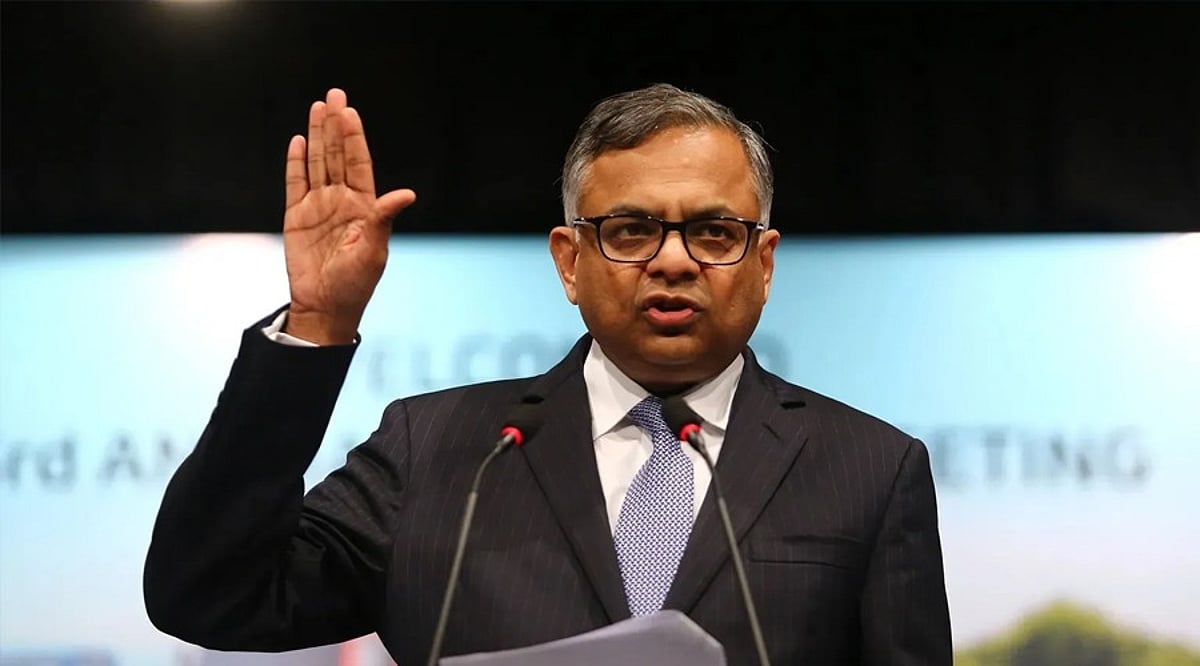
    Tata Sons has reappointed N Chandrasekaran as chairman for a five-year term, overturning his decision to step down in August. The board approved the move on September 17 after asking Chandrasekaran to reconsider, citing the group’s broader interests during a significant corporate transition.

    Chandrasekaran, who first took the helm in 2017 following Ratan Tata, had announced on August 12 that he would not seek another term. The Nomination and Remuneration Committee later urged him to stay, highlighting his contributions and the need for continuity. He accepted, and the board confirmed the reappointment by a majority vote, effective after his current term ends on February 20, 2027.

    The leadership reversal comes as Tata Sons navigates regulatory hurdles with the Reserve Bank of India (RBI). The RBI rejected the company’s request to surrender its registration as an upper-layer nonbanking financial company, imposing enhanced compliance and potential listing obligations. Tata Sons stated it would begin compliance steps and seek guidance from stakeholders.

    The RBI dispute has deepened divisions between Tata Sons and Tata Trusts, which controls 66% of the conglomerate. Tata Trusts opposed Chandrasekaran’s reappointment and a possible public listing. Reports indicate that Noel Tata voted against the reappointment, and Tata Trusts called the decision ‘illegal’ under the company’s articles of association.

    Despite the board’s resolution, unresolved questions around succession planning, governance, and regulatory compliance continue to loom. The reappointment settles the immediate leadership question, but the broader governance challenges remain open.

  • Why Custody and Succession Planning Are Becoming Crypto’s Next Big Trust Challenge

    Why Custody and Succession Planning Are Becoming Crypto’s Next Big Trust Challenge

    India’s crypto market has evolved beyond early speculation. According to a June survey by Mudrex, over 41% of Indian crypto investors now identify as long-term, buy-and-hold investors. This shift toward long-term ownership brings a critical question: What happens to digital assets when the owner is no longer around to access them?

    From Speculation to Long-Term Ownership

    Prateek Gupta, Head of Business at Mudrex, noted a generational trend: short-term trading drops steadily with age. Nearly a third of investors aged 18-24 trade short-term, compared to below 8% among those aged 55 and above. “Crypto ownership in India has been shifting from short-term speculation to long-term wealth building,” he said.

    The Access Problem

    Legal ownership does not guarantee wallet access. “A family can have every legal right to a deceased holder’s assets and still be locked out without the private keys or a registered nominee,” Gupta explained. He urged platforms to build nomination, succession documentation, and estate-planning support directly into the product.

    Regulatory Framework Strengthens Investor Confidence

    As of mid-2026, 54 Virtual Digital Asset Service Providers are registered with the FIU-IND under the Prevention of Money Laundering Act, including major exchanges like CoinDCX, CoinSwitch, Mudrex, ZebPay, WazirX, and Binance. The framework mandates strict KYC, suspicious transaction reporting, and continuous monitoring.

    Nomination: A Sign of Maturity

    CoinSwitch co-founder Ashish Singhal highlighted the platform’s nomination feature, comparing it to established practices in equities. “Just as nomination is an established practice across equities and other financial assets, crypto ownership needs the same level of preparedness,” he said. The feature allows investors to nominate a person for asset transfer in case of unforeseen circumstances.

    What Platforms Must Prioritize

    Building trust requires clear nomination processes, simplified documentation for legal heirs, secure key management, transparent communication, and regular audits of custody infrastructure.

    Final Words

    India’s crypto ecosystem has matured in compliance and investor behavior. The next phase hinges on solving the succession puzzle. Platforms that build robust nomination systems and transparent custody practices will earn deeper investor confidence.

  • Kotak Mahindra Bank Shares Decline as CEO Ashok Vaswani Plans Departure by Late 2026

    Kotak Mahindra Bank Shares Decline as CEO Ashok Vaswani Plans Departure by Late 2026

    Kotak Mahindra Bank shares experienced a dip on Monday, trading near Rs. 398.95 on the NSE after CEO Ashok Vaswani confirmed he will step down at the end of his tenure on December 31, 2026. The stock touched an intraday high of Rs. 410.95 and a low of Rs. 398.95, reflecting investor caution over the leadership transition.

    Leadership Transition Sparks Selling Pressure

    The announcement that Ashok Vaswani will not seek another term as Managing Director and CEO raised concerns among investors about the future leadership of one of India’s largest private lenders. The bank’s management clarified that Vaswani will remain in his role until the end of his tenure and will collaborate closely with the board to ensure a smooth succession. Succession planning is already underway, subject to regulatory approval.

    Investors Eye Succession Clarity

    While the bank has reiterated its unchanged long-term strategy, the unexpected news has affected market sentiment. A leadership change often brings uncertainty, especially as Vaswani had been driving the company’s transformation. Investors are now focused on the board’s selection process for a new CEO, which will be critical in restoring confidence in the coming months.

    Analysts See Temporary Impact

    Despite the sharp decline, several brokerages maintain a positive outlook on Kotak Mahindra Bank, viewing the downturn as temporary. Nomura and Jefferies, among others, remain bullish on the stock, citing strong capitalization and solid fundamentals. Analysts believe that once the board identifies a suitable successor, attention will shift to profitability and growth. Such management changes are common in the banking industry.

    Growth Strategy Remains Intact

    Vaswani’s departure comes as the bank accelerates its growth strategy following the removal of regulatory restrictions on its digital business. Over the past year, the company has enhanced its technology framework, compliance systems, and focused on expanding retail lending. The bank continues to explore opportunities in consumer banking, wealth management, commercial lending, and digital financial services. With one of the strongest balance sheets in the private banking sector, Kotak Mahindra Bank is open to organic and inorganic growth avenues, including loan portfolio acquisitions. These strategic initiatives are institutionally supported and likely to continue irrespective of the leadership change.

    Smooth Succession as Key Catalyst

    From an investor perspective, a successful succession process will be the primary catalyst for rebuilding confidence and removing current uncertainties surrounding the share price. Analysts expect share price movements to remain tied to succession-related news. However, most market professionals view the bank’s capital adequacy, technological advancements, growing credit book, and high profitability as strong indicators for long-term investment. While the leadership announcement has introduced volatility, the underlying business remains robust.