
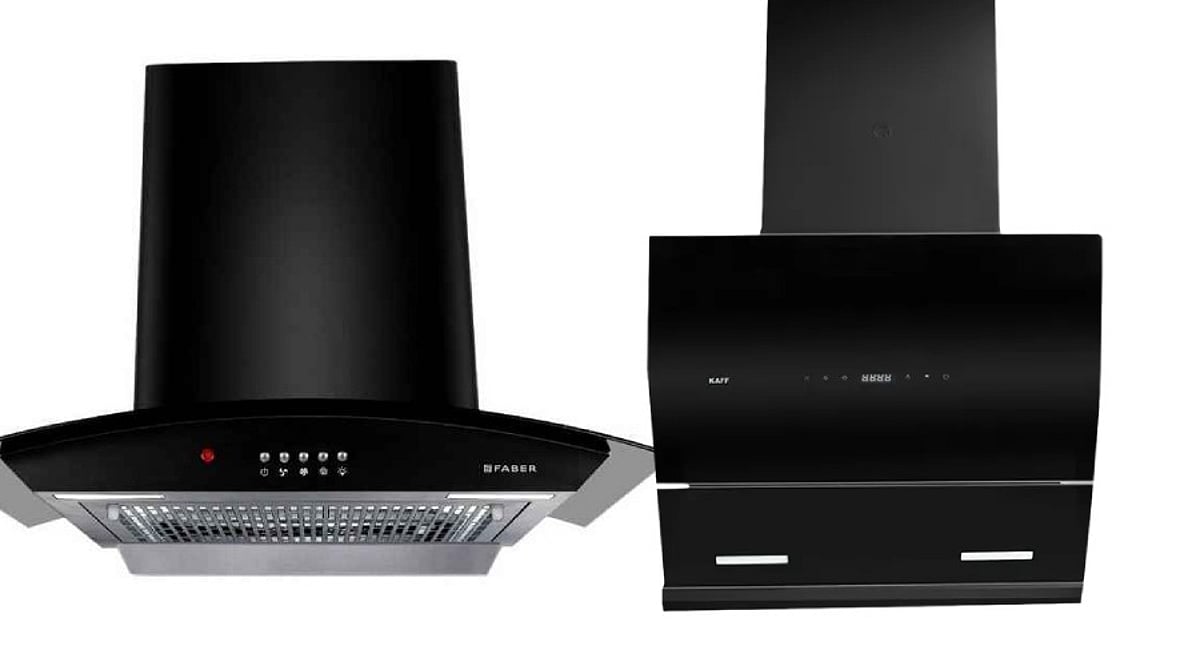
Auto-clean kitchen chimneys simplify maintenance by reducing grease buildup and maintaining consistent suction performance. This guide compares leading models based on motor technology, suction power, and filter design. It also highlights the features that matter most for efficient ventilation in Indian kitchens.
How Auto Clean Technology Actually Works
Filterless chimneys use centrifugal separation instead of a conventional grease filter. Incoming air spins fast enough that oil particles fling outward against the housing rather than passing through a mesh. A sealed motor keeps oil and water vapor away from the internal blower, while separated grease drains into a removable tray. Pressing the auto clean button activates a heating element that liquefies any built-up residue so it drains fully, cutting manual cleaning from a weekly task to an occasional one.
A second category, baffle-filter auto clean, keeps a conventional curved steel filter in place but adds an oil collector tray to catch drained residue. It reduces hand-cleaning frequency without removing the filter altogether.
Suction power matters alongside the mechanism. A rough guide: multiply kitchen length, width, and height in meters and then by ten to estimate the minimum m³/hr needed. Most Indian modular kitchens need 1000 to 1400 m³/hr. Chimney width should match stove size. A 60 cm chimney suits 2- to 4-burner cooktops, and a 90 cm chimney suits 4- to 5-burner setups. A BLDC motor typically consumes less power and runs quieter than a standard induction motor. It is worth paying extra for if budget allows, though higher suction generally brings more noise regardless of motor type. Duct diameter and the number of bends in the exhaust pipe affect real-world performance too. A shorter, straighter duct run keeps suction closer to the rated figure.
Elica WDFL 600 BLDC: Best Overall
This 60cm filterless chimney delivers 1500 m³/hr suction from a BLDC motor rated at roughly 80W annual energy consumption. Well below the 140 to 250W draw of standard motors in this category. Touch and motion sensor control lets a cook cycle through speeds without touching the panel, useful with oily hands. The warranty runs 15 years on the motor and 5 years comprehensively, the strongest terms checked here. Pricing sits close to ₹16,000, though this needs confirming at checkout.
Glen 6058 BL: Best Value
A filterless, heat-auto-clean chimney with 1200 m³/hr suction and a 150 to 180W motor, backed by a 7-year motor warranty. Touch controls with motion sensors cover the basics without a BLDC premium attached. The trade-off is real price movement. Listed prices for this exact model ranged from roughly ₹11,500 to ₹14,900 across different sellers during verification, so checking multiple listings before buying is worth the extra time.
Faber Hood Crest Plus: Best Brand Trust
A filterless, heat-auto-clean chimney rated at 1200 m³/hr on a 180W motor from a company with a long-established Indian service network built over decades in the category. The warranty runs 5 years on the motor and 1 year on the product, shorter than Elica’s terms. Starting prices across Faber’s comparable filterless auto clean range begin near ₹10,990.
Wonderchef Ultima: Best Baffle Filter Auto Clean
This pick works differently from the rest. It keeps a stainless steel baffle filter in place rather than going filterless, pairing it with an oil collector tray for auto-clean drainage. A 140W motor delivers 1200 m³/hr suction with a metal motor housing for lower noise. Touch controls with a 3-speed motion sensor and a 7-year motor warranty plus a 1-year comprehensive product warranty. Worth considering for buyers who prefer a physical filter as backup rather than relying on centrifugal separation alone.
Buying Mistakes to Avoid
Choosing a 60 cm chimney over a 3- to 4-burner stove leaves the outer burners uncovered. Assuming a filterless design works without proper external ducting cuts its effectiveness fast, since these units depend on ducted venting rather than recirculation. Comparing suction figures alone while ignoring motor wattage misses the real running cost gap between a BLDC unit and a standard one.
Final Thought
Auto clean solves the maintenance problem an Indian kitchen creates daily, but the mechanism matters as much as the label. Duct length and bends decide whether the rated suction actually shows up in the kitchen.
Frequently Asked Questions
1. What is an auto clean kitchen chimney?
An auto clean kitchen chimney uses a heating element to melt accumulated grease, which then drains into a removable oil collector. This reduces manual cleaning and helps maintain consistent suction performance over time.
2. Is a filterless chimney better than a traditional filter chimney?
Filterless chimneys are generally better suited for Indian kitchens because they use centrifugal technology to separate grease without mesh filters. This reduces maintenance while maintaining efficient airflow during regular cooking.
3. What suction power is ideal for an Indian kitchen?
For most Indian households, a chimney with 1,000 to 1,400 m³/hr suction is suitable. Homes with heavy frying, grilling, or multiple burners may benefit from models offering up to 1,500 m³/hr suction.
4. Are BLDC motor kitchen chimneys worth buying?
Yes. BLDC motor chimneys are typically more energy-efficient, quieter, and longer-lasting than conventional motor models. They are a good choice for households looking for lower power consumption and improved performance.
5. How often should I clean an auto clean kitchen chimney?
Even with auto clean technology, you should empty the oil collector regularly and wipe the exterior surfaces to prevent grease buildup. Periodic inspection of the duct and ventilation system also helps maintain optimal performance.