Tag: Sui

  • 2026 Crypto Watchlist: BlockDAG, Sui, Cardano and Stellar Draw Market Attention

    2026 Crypto Watchlist: BlockDAG, Sui, Cardano and Stellar Draw Market Attention

    As digital-asset markets look for the next major breakout, four cryptocurrencies are drawing attention for different reasons: BlockDAG, Sui, Cardano and Stellar. Each offers a distinct setup, from a stated buyback program to high trading turnover and large-cap recovery potential. The figures below reflect market data and project details reported on September 25, 2026.

    BlockDAG: Buyback Terms in Focus

    BlockDAG (BDAG) is being highlighted for its USDT buyback offer. Eligible direct-coin purchases of Legacy BDAG and New BDAG are listed at $0.000000005, with a stated $0.05 USDT buyback price for eligible amounts. According to the project, Legacy and New BDAG purchases are combined into one live USDT Buyback Balance visible through a dashboard. Cashouts are scheduled to begin in November and will be processed in batches. The current offer window is described as having only a few days left, so participants should review eligibility rules and terms before it closes.

    Sui: Heavy Trading Volume

    Sui (SUI) is trading at $1.03 after gaining 25.23% in one day and 43.52% over the week. Daily trading volume reached $2.12 billion against a $4.23 billion market cap, roughly 50% daily turnover. Despite the strong short-term move, SUI remains 26.34% lower year to date. The high volume suggests active market interest, though sustained buying pressure would be needed to support a recovery.

    Cardano: Large-Cap Catch-Up Potential

    Cardano (ADA) is trading at $0.2421, up 9.25% for the day and 16.10% for the week. Daily volume was $865.57 million, with a market cap near $8.9 billion, creating a turnover ratio of about 10%. ADA is still down 27.24% year to date. Cardano has historically moved later in broader market rotations, which could make it one to watch if demand across large-cap altcoins continues to improve.

    Stellar: A Steadier Payment-Focused Setup

    Stellar (XLM) is trading at $0.2083, up 8.87% for the day and 9.58% for the week. Unlike several major altcoins, XLM has been nearly flat over the past year and is up just 0.05% year to date. Its focus on cross-border payments could attract interest if payment-related assets begin moving together. Daily volume was $380.23 million against a $7.26 billion market cap, giving Stellar a relatively steady base with room for a stronger move if market flows increase.

    What to Watch

    Evaluating these assets requires looking beyond price changes. Sui stands out for trading activity, Cardano for a possible catch-up setup, and Stellar for relative stability. BlockDAG differs because of its stated buyback structure and the limited window for the current offer. Market participants should review project terms, eligibility requirements and underlying data before making decisions.

    Project Links

    Presale: purchase.blockdag.network
    Website: blockdag.network
    Telegram: t.me/blockDAGnetwork
    Discord: discord.gg/Q7BxghMVyu

    Disclaimer: This article is for informational purposes only and does not constitute financial or investment advice. Cryptocurrency investments carry risk, including the possible loss of principal. Readers should conduct their own research (DYOR) before investing.

  • Top 7 Altcoins to Watch This Month: ETH, SOL, XRP, BNB, LINK, AVAX, SUI, and More

    Top 7 Altcoins to Watch This Month: ETH, SOL, XRP, BNB, LINK, AVAX, SUI, and More

    Top 7 Altcoins to Watch This Month

    As the cryptocurrency market continues to evolve, investors are closely monitoring a select group of altcoins that show strong potential for growth and innovation. Here are seven altcoins that are capturing attention this month, along with a bonus pick that merges blockchain with artificial intelligence.

    1. Ethereum (ETH)

    Ethereum remains the largest smart contract platform, and it continues to attract developers thanks to its robust DeFi ecosystem, NFT marketplaces, and enterprise adoption. Despite increasing competition from other blockchains, Ethereum’s network effects and ongoing upgrades keep it at the forefront of the industry.

    2. Solana (SOL)

    Solana is renowned for its high transaction speeds and low fees, making it a favorite for decentralized applications, gaming, and meme coin ecosystems. Its performance advantages continue to draw developers and users alike, solidifying its position as a top altcoin to watch.

    3. XRP

    XRP remains under the spotlight due to ongoing regulatory developments and its partnerships in cross-border payments. Its growing role in institutional financial services makes it a key asset for investors monitoring the intersection of crypto and traditional finance.

    4. BNB

    Binance Coin (BNB) powers one of the world’s largest cryptocurrency ecosystems. It offers trading discounts on the Binance exchange, supports DeFi applications, and underpins blockchain infrastructure. BNB’s utility and widespread adoption make it a staple in many portfolios.

    5. Chainlink (LINK)

    Chainlink provides decentralized oracle services that enable smart contracts to securely access real-world data across multiple blockchain networks. As the demand for reliable data feeds grows, Chainlink’s role becomes increasingly critical, making LINK a notable altcoin for investors.

    6. Avalanche (AVAX)

    Avalanche continues to expand through enterprise partnerships and scalable blockchain infrastructure. Its growing decentralized finance applications and focus on interoperability position it as a strong contender in the smart contract platform race.

    7. Sui (SUI)

    Sui is gaining attention for its high-speed blockchain architecture and developer-friendly tools. With increasing adoption among decentralized application builders, Sui is emerging as a promising platform for next-generation dApps.

    Bonus: Render (RENDER) and Artificial Superintelligence Alliance (FET)

    Render combines blockchain with decentralized GPU computing, allowing creators and AI developers to access distributed rendering power efficiently. Meanwhile, the Artificial Superintelligence Alliance (FET) focuses on AI-focused blockchain solutions, drawing attention as artificial intelligence and decentralized technologies become increasingly interconnected investment themes.

    These altcoins represent a mix of established players and emerging projects, each offering unique value propositions. As always, investors should conduct thorough research and consider their risk tolerance before diving into the volatile crypto market.

  • Sui’s Quantum-Safe Upgrade Preserves Existing Wallet Addresses With Post-Quantum Signatures

    Sui’s Quantum-Safe Upgrade Preserves Existing Wallet Addresses With Post-Quantum Signatures

    Sui is rolling out quantum-safe account security that lets users keep their current blockchain addresses while upgrading to post-quantum cryptography. The network will support ML-DSA-65 for standard accounts and SLH-DSA-SHA2-128s for high-value Move-based vaults, both designed to resist attacks from future quantum computers.

    Address Aliases Enable Seamless Migration

    Normally, switching cryptographic schemes requires creating a new address and moving all assets—a disruptive process for tokens, NFTs, identities, and smart contracts. Sui’s Address Aliases system avoids that entirely. An account can authorize a new post-quantum signer while the original blockchain address remains the transaction sender. Once native ML-DSA support is live, users simply authorize the new signer and later make it the sole authorized signer.

    Users can also derive an ML-DSA-65 key from their existing recovery phrase via a fresh derivation path, eliminating the need for a separate backup. Sui cautions that wallet software must clearly communicate the authority granted when adding an alias.

    Two Cryptographic Systems for Different Needs

    Sui splits quantum protection across two NIST‑standardized schemes:

    • ML-DSA-65 (FIPS 204, NIST Category 3) – a lattice‑based signature chosen for frequent transactions because it balances a strong security margin with practical verification speed.
    • SLH-DSA-SHA2-128s (FIPS 205, Category 1) – a hash‑based system reserved for high‑value vaults, providing a different mathematical foundation so that a weakness in lattice‑based crypto does not compromise all assets.

    This dual approach lets developers replace the vault authentication scheme via smart‑contract upgrades if future cryptanalysis reveals flaws in one family.

    Larger Signatures Shape Deployment Timeline

    Post‑quantum signatures are bulkier than Ed25519: ML-DSA-65 signatures are 3,309 bytes (public key: 1,952 bytes), while SLH-DSA‑SHA2‑128s signatures reach 7,856 bytes. Despite the size increase, Sui notes that ML-DSA verification performance is close enough to Ed25519 that per‑signature network costs need not rise.

    The rollout is staged:

    • Quantum‑safe vaults on Mainnet before end of 2026.
    • Native ML-DSA-65 accounts on Testnet by late 2026 and Mainnet in Q1 2027.
    • Wallet, SDK, and CLI support alongside independent audits and Testnet feedback.

    No immediate action is required from existing users. The migration is additive and optional, with clear warnings about potential scams that ask users to move all assets to a new address.

    Conclusion

    Sui’s quantum‑safe upgrade uses ML-DSA-65 accounts and SLH-DSA vaults while preserving existing addresses via Address Aliases. Users need do nothing now; audits, testing, and phased deployment continue.

  • BlockDAG Ships 22,800 Miners as SUI and Avalanche Navigate Token Unlock Challenges

    BlockDAG Ships 22,800 Miners as SUI and Avalanche Navigate Token Unlock Challenges

    Blockchain security fundamentally determines network value, and three major projects—SUI, Avalanche, and BlockDAG—currently demonstrate contrasting approaches to defense and token distribution. Understanding these strategies helps evaluate long-term investment potential.

    SUI’s Staking and Token Unlock Dynamics

    SUI relies on a validator-based Proof-of-Stake mechanism to maintain network integrity, but ongoing token unlocks pressure its price. On August 1, 13.72 million SUI tokens (worth approximately $9.9 million) were unlocked as scheduled, representing a 0.34% supply increase. This release affected tokens from the community pool, initial contributors, and Mysten Labs treasury, contributing to a price dip of over 5%. As of early August, SUI trades around $0.68.

    Despite price weakness, underlying metrics show strong engagement. The network has processed over 4.53 billion cumulative transactions, with daily active users exceeding 200,000 on multiple days in July. The team continues development, revealing plans for Sui Basecamp 2026 and enterprise workflow tools called Spheres. However, SUI’s complete dependence on digital stake-based consensus means validator yield mechanisms remain crucial for network security.

    Avalanche’s Strong Staking and Institutional Growth

    Avalanche secures its network through capital commitment, supported by a dedicated validator base. AVAX traded between $6.59 and $6.60 on August 2, reflecting a 4% 24-hour gain while remaining flat week-over-week. A Bitwise staking report highlights that 41.5% of all AVAX is staked, indicating significant supply illiquidity and structural community commitment.

    Technological progress continues. The Avalanche Foundation launched the Helicon update on its Fuji testnet, adding continuous execution to the C-Chain, though mainnet deployment is pending. In practical adoption, Crypto.com reports that Hyundai is testing Avalanche for global stablecoin settlements. An upcoming token unlock on August 10 may create near-term volatility. Avalanche’s security model relies entirely on locked capital, making staking density a key metric.

    BlockDAG’s Hardware-Driven Security and Global Distribution

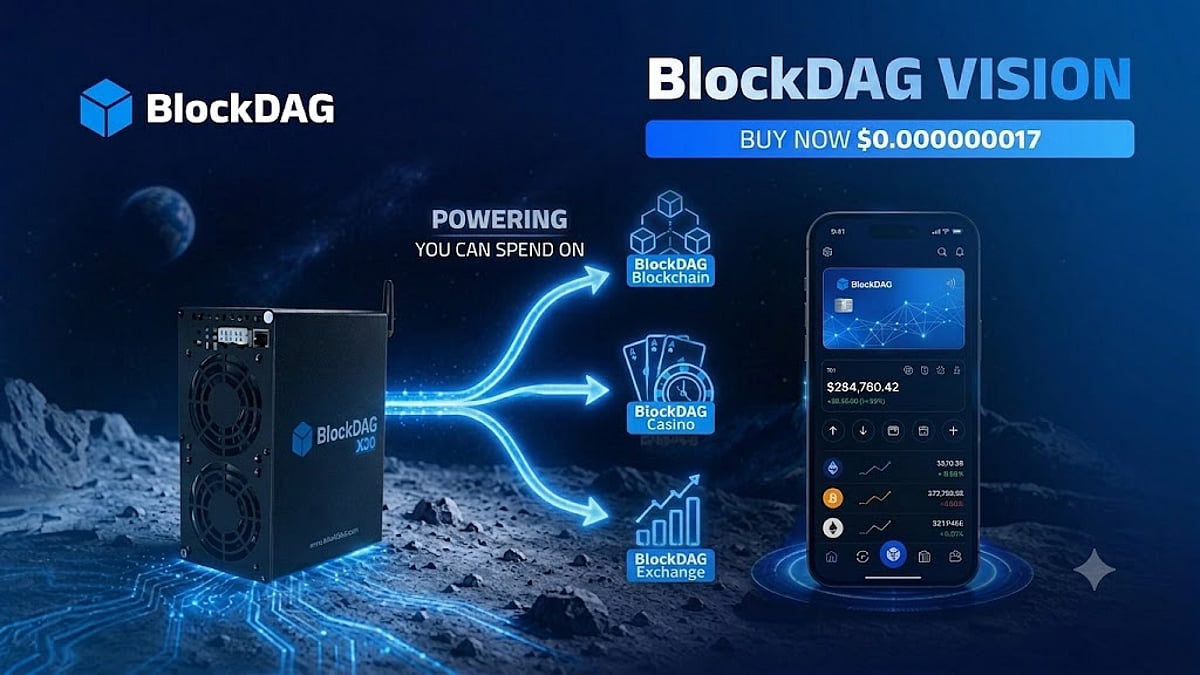
    BlockDAG takes a fundamentally different approach, using physical Proof-of-Work hardware for chain security and user acquisition. The project has begun shipping 22,800 miners across its X10, X30, and X100 product lines, scaling manufacturing toward 2,400 units per week. This physical rollout coincides with a promotional price of $0.000000017 and a planned $0.025 BuyBack target, plus a 22% discount for Live Swap buyers.

    This hardware-first strategy achieves two goals simultaneously. First, decentralized hardware mining distributes hash power, securing the ledger more robustly than concentrated capital pools. Second, physical delivery directly onboards users—each shipped miner converts a retail purchaser into an active network participant receiving ongoing mining rewards into their ecosystem wallet for trading, staking, or spending.

    Geographic diversification strengthens the network further. Deploying hardware nodes across multiple jurisdictions eliminates single-point vulnerabilities and regulatory risks. Additionally, over 3.6 million users employ the X1 mobile app as a frictionless second onboarding layer. Where SUI and Avalanche depend on financial assets locked in their ledgers, BlockDAG merges hardware security with organic user growth.

    Key Takeaways

    • SUI boasts impressive transaction throughput with 4.53 billion historical transactions, but ongoing supply unlocks pressure its $0.68 price.
    • Avalanche demonstrates strong holder commitment with 41.5% of supply staked at $6.60, backed by enterprise initiatives like Hyundai’s stablecoin project and the Helicon testnet launch.
    • BlockDAG differentiates by deploying 22,800 physical mining machines alongside 3.6 million X1 app miners, increasing network participation and scaling device throughput to 2,400 per week.

    For market participants evaluating long-term durability, the strategic distinction is clear: traditional platforms lock capital to secure ledgers, while BlockDAG uses physical hardware distribution to secure its chain while continuously onboarding daily users. This dual-purpose approach positions BlockDAG as a standout network ahead of its main exchange listings.

    Further Information

    Presale: https://purchase.blockdag.network
    Website: https://blockdag.network
    Telegram: https://t.me/blockDAGnetworkOfficial
    Discord: https://discord.gg/Q7BxghMVyu

    Disclaimer: This article is for informational purposes only and does not constitute financial or investment advice. Cryptocurrency investments carry risk; always conduct your own research before making decisions.

  • Top Altcoins Poised to Dominate the Crypto Market in H2 2026

    Top Altcoins Poised to Dominate the Crypto Market in H2 2026

    The cryptocurrency market is entering the second half of 2026 with a renewed focus on utility, adoption, and real-world applications. While Bitcoin continues to command significant attention, several altcoins are emerging as strong contenders for market leadership. Investors are shifting away from hype and toward projects with robust technology, active user bases, institutional backing, and clear growth trajectories.

    This article explores the most promising altcoins for H2 2026, including Ethereum, Solana, Chainlink, XRP, BNB, Sui, Bittensor, Render, Hyperliquid, and Ondo. Each represents a major trend such as artificial intelligence (AI), real-world assets (RWA), decentralized finance (DeFi), payments, and blockchain infrastructure.

    Ethereum (ETH): The Undisputed Blockchain Leader

    Ethereum remains a cornerstone of the crypto ecosystem, trading around $1,850–$1,900 with a market capitalization of approximately $213–$220 billion. Its vast ecosystem supports thousands of decentralized applications (dApps), DeFi platforms, and blockchain services. Institutional investors view Ethereum as a premier network for tokenized assets and digital products.

    Key growth drivers for H2 2026 include the expansion of Layer-2 networks, which enhance transaction speed and reduce costs, and the tokenization of real-world assets (RWA). Favorable market conditions could push ETH toward $3,500–$5,000, with a conservative estimate of $2,200–$2,800.

    Solana (SOL): The High-Speed Challenger

    Solana is a major player in the smart contract space, trading near $75–$80 with a market cap of $40–$45 billion. Its platform offers fast transaction speeds, low fees, and robust support for DeFi, payments, and digital asset initiatives. The growing adoption of stablecoins and real assets on Solana further strengthens its position.

    However, Solana faces increasing competition from other Layer-1 blockchains and must manage high market expectations.

    Chainlink (LINK): Bridging Crypto and Traditional Finance

    Chainlink provides essential data services that connect blockchains to external information, a role that becomes increasingly critical as financial institutions explore tokenized assets and blockchain systems. Trading at $12–$15 with a market cap of $8–$10 billion, LINK offers strong potential for two-fold growth or more during a bullish market phase.

    The growth of RWA creates a major opportunity for Chainlink, as banks and investment firms require secure data feeds for blockchain applications.

    XRP: The Global Payment Network

    XRP continues to attract attention with its focus on fast international transfers and financial settlement. Trading around $1–$1.10 with a market cap near $120 billion, its future growth depends on regulatory progress and wider institutional adoption. Given its already large market value, real adoption and market confidence will be key.

    BNB: The Exchange Ecosystem Token

    BNB remains one of the largest cryptocurrencies, priced near $575–$600 with a market cap above $77 billion. Its value derives from utility within the Binance ecosystem, blockchain activity, and DeFi services. While BNB enjoys strong market recognition, regulatory challenges pose the biggest risk to future growth.

    Sui (SUI): A Next-Generation Layer-1 Project

    Sui represents a newer generation of blockchain networks, trading near $0.80 with a market cap of approximately $2.5 billion. It uses the Move programming language and focuses on speed, gaming, and dApps. Its smaller market size offers higher growth potential but also carries greater risk, as it must continue to attract users and developers.

    Bittensor (TAO) and Render (RENDER): AI Crypto Leaders

    Artificial intelligence remains one of the strongest themes in crypto for 2026. Bittensor focuses on decentralized AI networks, while Render provides decentralized GPU computing services. TAO attracts interest through its AI infrastructure model, and Render benefits from rising demand for computing power to support advanced AI systems.

    Both assets offer high growth potential but are subject to sharp price fluctuations during market shifts.

    Hyperliquid (HYPE) and Ondo (ONDO): Future Finance Trends

    Hyperliquid focuses on decentralized trading and on-chain derivatives, gaining attention from users seeking alternatives to traditional exchanges. Ondo represents the RWA sector, specializing in tokenized financial products and institutional blockchain adoption. Both align with key crypto themes for H2 2026: DeFi and asset tokenization.

    Final Outlook for H2 2026

    The strongest altcoin opportunities for H2 2026 center around Ethereum, Solana, Chainlink, Bittensor, Ondo, and Render. These projects are tied to major trends such as blockchain adoption, AI, institutional finance, and digital asset infrastructure.

    Large-cap assets like ETH, SOL, LINK, XRP, and BNB offer greater stability, while smaller projects like TAO, RENDER, SUI, HYPE, and ONDO provide higher growth potential with increased risk. The next phase of the crypto market may favor projects with real technology, active ecosystems, and clear practical use cases over short-term speculation.

    Frequently Asked Questions

    1. Which altcoins could lead the crypto market in H2 2026? Ethereum, Solana, Chainlink, XRP, Bittensor, Render, and Ondo are among the altcoins with strong growth potential.
    2. Why is Ethereum considered a top altcoin for 2026? Ethereum remains a leading blockchain with a large ecosystem, institutional interest, DeFi activity, and strong support for tokenized assets.
    3. Can AI crypto projects perform well in H2 2026? AI-focused projects such as Bittensor and Render may gain attention as demand for decentralized AI infrastructure continues to grow.
    4. Are smaller altcoins better than large-cap cryptocurrencies? Smaller altcoins can deliver higher returns, but they also carry higher risks compared with established assets like ETH, SOL, and LINK.
    5. What crypto trends could shape H2 2026? Artificial intelligence, real-world asset tokenization, decentralized finance, blockchain payments, and institutional adoption may influence the next market cycle.

    Disclaimer: This article is for informational purposes only and does not constitute investment advice. Cryptocurrency investments carry significant risk. Always conduct your own research (DYOR) before making any investment decisions.

  • Top Crypto Assets for Your Roth IRA: Tax-Free Growth Strategies

    Top Crypto Assets for Your Roth IRA: Tax-Free Growth Strategies

    Investing in cryptocurrencies through a Roth IRA can offer substantial tax-free growth potential for your retirement. Here are the top crypto assets to consider for a Roth IRA portfolio, each with unique strengths that align with long-term investment goals.

    Bitcoin (BTC)

    Bitcoin remains the leading cryptocurrency, offering long-term growth potential, strong institutional support, and broad market acceptance for retirement-focused investors today.

    Ethereum (ETH)

    Ethereum powers decentralized applications and smart contracts, making it a strong Roth IRA choice with steady adoption and long-term growth prospects.

    Solana (SOL)

    Solana offers fast transactions, low fees, and a growing ecosystem of projects, making it an attractive cryptocurrency for long-term retirement investment portfolios.

    XRP (XRP)

    XRP focuses on cross-border payments, offering speed and efficiency while benefiting from growing institutional interest and improving regulatory clarity globally.

    Chainlink (LINK)

    Chainlink connects blockchain networks with real-world data, supporting decentralized applications while strengthening its long-term investment potential for retirement accounts.

    Avalanche (AVAX)

    Avalanche delivers scalable blockchain solutions with fast processing speeds, attracting developers and projects that support its future growth opportunities consistently.

    Cardano (ADA)

    Cardano emphasizes research-driven development, energy efficiency, and network security, making it a reliable option for patient, long-term cryptocurrency investors.

    Sui (SUI)

    Sui continues expanding through decentralized applications and growing ecosystem support, offering promising long-term potential for investors seeking emerging blockchain opportunities.

    Polkadot (DOT)

    Polkadot enables blockchain interoperability, helping different networks communicate efficiently while supporting long-term innovation and portfolio diversification within retirement investments.

    Read more stories on our website. Join our WhatsApp Channel to get the latest news, exclusives and videos on WhatsApp.

  • Best Cryptocurrencies to Buy in July 2026: Top 10 Picks for Long-Term Growth

    Best Cryptocurrencies to Buy in July 2026: Top 10 Picks for Long-Term Growth

    The cryptocurrency market has undergone significant transformation in 2026. After a rocky start, the market has gained strength as institutional adoption, Bitcoin ETFs, and tokenized assets have boosted investor confidence. With the total market capitalization fluctuating between $2.5 and $3 trillion and Bitcoin maintaining a 58%–62% market share, now is a prime time to consider these top 10 cryptocurrencies for July 2026.

    Key Takeaways

    • Bitcoin and Ethereum remain the strongest long-term choices due to institutional adoption and market leadership.
    • Solana, Chainlink, Avalanche, Sui, and Ondo Finance offer higher growth potential with greater risk.
    • A diversified crypto portfolio can help balance stability and high-growth opportunities while managing market volatility.

    1. Bitcoin (BTC)

    Bitcoin remains the world’s largest cryptocurrency, trading near $64,600 with a market cap of about $1.26 trillion. Often called digital gold, its limited supply of 21 million coins attracts institutional investors. Large financial firms continue to buy Bitcoin through ETFs, and many companies hold it as a reserve asset. Experts forecast 40% to 120% returns over the next three to five years.

    2. Ethereum (ETH)

    Ethereum is the second-largest cryptocurrency, priced near $1,780 with a market cap of ~$215 billion. It powers thousands of decentralized apps, NFT platforms, and financial services, and leads the real-world asset tokenization sector. Staking provides additional incentives. Analysts expect Ethereum to rise 70% to 200% in the coming years.

    3. Solana (SOL)

    Solana trades around $76.60 with a market cap of $44.6 billion. Its high speed and low fees attract developers and users. Despite past technical issues, confidence has returned. Market experts see potential gains of 100% to 300% over the next few years.

    4. XRP

    XRP is priced at ~$1.07 with a market cap of $67.1 billion. It focuses on fast international payments and works with financial institutions. Better regulatory clarity has improved sentiment, and analysts see possible returns of 50% to 200%.

    5. BNB

    BNB trades around $570 with a market cap of $76.7 billion. It supports the Binance ecosystem, one of the largest crypto exchanges. Regular token burns reduce supply, potentially boosting value. Despite regulatory concerns, BNB has a solid long-term outlook.

    6. Chainlink (LINK)

    Chainlink is priced between $15–$18 with a market cap of $10–$12 billion. It provides secure data feeds for smart contracts. Banks and blockchain projects rely on Chainlink, and as tokenized assets grow, demand may rise. Analysts estimate 100% to 250% gains.

    7. Avalanche (AVAX)

    Avalanche trades between $24–$30 with a market cap of $10–$13 billion. Its fast blockchain supports business apps and gaming, with subnet technology for private systems. Despite competition, Avalanche has room to grow, with potential returns of 100% to 300%.

    8. Sui (SUI)

    Sui is one of the fastest-growing blockchains in 2026, priced between $3–$5 with a $12–$16 billion market cap. Its high speed and modern technology attract developers and venture capital. As a young network, volatility is high, but analysts see 150% to 400% upside.

    9. Cardano (ADA)

    Cardano trades around $0.16 with a market cap of $5.8 billion. It follows a research-driven, secure approach. While growth has been slower than rivals, strong community support persists. Analysts suggest 100% to 250% ROI if development continues.

    10. Ondo Finance (ONDO)

    Ondo Finance has become a standout project in 2026, trading between $0.80–$1.20 with a market cap of $2–$4 billion. It focuses on tokenized real-world assets, especially US Treasuries. Experts believe this sector could be a major trend, with potential returns of 200% to 500%—though higher risk applies.

    Final Thoughts

    July 2026 offers numerous opportunities for crypto investors. Bitcoin and Ethereum provide stability and long-term growth. Solana, XRP, BNB, and Chainlink give exposure to evolving blockchain tech. Avalanche and Sui have high growth prospects, while Cardano remains a steady long-term project. Ondo Finance stands out for its real-world asset tokenization. Always do thorough research, diversify your portfolio, and only invest what you can afford to lose.

    FAQs

    1. Which cryptocurrency is considered the safest investment in July 2026?
    Bitcoin is generally viewed as the safest due to market dominance, institutional adoption, and limited supply.

    2. Why is Ethereum still a top investment?
    Ethereum powers DeFi, NFTs, tokenized assets, and smart contracts, making it a leading blockchain ecosystem with long-term growth potential.

    3. Which cryptocurrencies have the highest growth potential?
    Sui, Ondo Finance, Solana, Avalanche, and Chainlink are considered high-growth opportunities, though they carry increased risk.

    4. Is it better to invest in one cryptocurrency or several?
    Diversifying across established and emerging cryptocurrencies can reduce risk while improving exposure to different market opportunities.

    5. What should investors consider before buying cryptocurrencies?
    Research each project’s fundamentals, market trends, adoption, and risk level. Only invest funds you can afford to lose due to crypto’s volatility.

    Disclaimer: This article is for informational purposes only and does not constitute financial advice. Always do your own research before investing.

  • Top Layer-1 Blockchain Coins to Watch in July 2026: Bitcoin, Ethereum, Solana, and More

    Top Layer-1 Blockchain Coins to Watch in July 2026: Bitcoin, Ethereum, Solana, and More

    Layer-1 blockchains are the backbone of the cryptocurrency ecosystem, enabling transactions, smart contracts, decentralized applications, and more. In July 2026, these foundational networks continue to attract significant investor attention. Here’s a look at the most promising Layer-1 coins to consider for your portfolio.

    Key Takeaways

    • Bitcoin remains the safest and most trusted Layer-1 cryptocurrency.
    • Ethereum leads the smart contract and decentralized application market.
    • Solana, Sui, and Hyperliquid offer higher growth potential with greater risk.

    Bitcoin (BTC) – The Gold Standard

    Bitcoin, currently trading at $63,056, is widely regarded as digital gold. Its limited supply and institutional adoption through ETFs make it a cornerstone of any crypto portfolio. While its growth may be slower than smaller coins, it remains the most secure choice for long-term investors.

    Ethereum (ETH) – Smart Contract Leader

    Ethereum, priced at $1,785, is the largest smart contract platform, hosting thousands of dApps, NFTs, and DeFi projects. Its robust community, staking rewards, and improved scalability keep it among the top Layer-1 investments for 2026.

    BNB and Solana – Strong Ecosystem Growth

    BNB ($570) powers one of the most extensive blockchain ecosystems, used for trading, payments, and DeFi. Solana ($76.6) is renowned for its high-speed, low-cost transactions, attracting developers in gaming and finance. Both networks continue to expand their user bases.

    TRON and Hyperliquid – Rising Stars

    TRON ($0.32) has become a key network for stablecoin transfers, handling billions daily. Hyperliquid ($60) is a newer Layer-1 focused on decentralized trading, gaining traction among traders despite higher risk.

    Cardano, Avalanche, Sui, and Aptos – Diverse Options

    Cardano ($0.16) emphasizes research-backed development and staking rewards. Avalanche ($20-25) allows custom blockchain creation, attracting enterprise users. Sui and Aptos, both modern Layer-1s, are growing rapidly with DeFi ecosystems, though they carry higher risk due to smaller market caps.

    Investment Strategy

    A balanced portfolio might include 35% Bitcoin, 25% Ethereum, 15% Solana, 10% BNB, 5% Avalanche, 5% Sui, and 5% Hyperliquid. For lower risk, stick with Bitcoin and Ethereum. For higher potential returns, consider Solana, Hyperliquid, and Sui.

    FAQs

    1. What is a Layer-1 blockchain?

    A Layer-1 blockchain is the main network that processes transactions and supports apps, smart contracts, and other blockchain services.

    2. Which Layer-1 coin is the safest to invest in?

    Bitcoin is widely considered the safest Layer-1 cryptocurrency because of its strong security and global adoption.

    3. Why is Ethereum still popular?

    Ethereum has the largest smart contract ecosystem and supports thousands of decentralized apps and crypto projects.

    4. Which Layer-1 coins have high growth potential?

    Solana, Sui, Hyperliquid, Avalanche, and Aptos are popular choices for investors seeking higher growth opportunities.

    5. Should beginners invest only in one Layer-1 coin?

    Many investors prefer a mix of Layer-1 coins to reduce risk and increase long-term growth potential.

    Disclaimer: This article is for informational purposes only and does not constitute financial advice. Cryptocurrency investments carry risk; always do your own research before investing.

  • 5 Promising Altcoins to Consider Before Bitcoin’s Next Rally

    5 Promising Altcoins to Consider Before Bitcoin’s Next Rally

    As Bitcoin trades near $64,000 as of July 20, 2026, many investors anticipate the next major bull run. Historically, Bitcoin leads market rallies, but altcoins often deliver larger percentage gains afterward. This pattern has shifted focus toward projects with strong technology, real-world utility, and active communities. Here are five altcoins that stand out for their ecosystems and growth potential.

    Key Takeaways

    • Ethereum continues to lead smart contracts with institutional support.
    • Solana, XRP, Chainlink, and Sui each offer unique strengths in payments, infrastructure, and scalability.
    • Strong adoption and healthy ecosystems often matter more than short-term price movements.

    Ethereum (ETH) – $1,855.60

    Ethereum remains the largest smart contract blockchain, powering thousands of decentralized applications, DeFi platforms, and NFT projects. Layer-2 solutions have improved speed and reduced fees, while major financial institutions continue to build tokenization projects on the network. Analysts expect Ethereum to perform well in the next bull market due to strong retail and institutional demand.

    Solana (SOL) – $75.86

    Solana is known for its high throughput—processing thousands of transactions per second with low fees. It has attracted developers in gaming, payments, NFTs, and DeFi. After recovering from previous market challenges, the ecosystem shows healthy developer activity and new project launches, boosting investor confidence.

    XRP – $1.08

    XRP focuses on cross-border payments, enabling faster and cheaper international transfers for banks and financial institutions. Regulatory clarity in recent years has improved confidence, allowing Ripple to expand partnerships globally. If payment adoption grows, XRP could see increased demand during the next rally.

    Chainlink (LINK) – ~$18

    Chainlink provides oracle services that connect blockchains to real-world data, such as prices and weather. It is essential for DeFi and tokenized assets, where accurate data is critical. As blockchain adoption in traditional finance grows, Chainlink’s unique position attracts long-term investors.

    Sui (SUI) – $0.7499

    Sui is a fast-growing Layer-1 blockchain optimized for speed, low costs, and consumer applications like gaming. Active addresses on the network surged 92% in the past week, indicating rising user and developer interest. Strong network growth often precedes price strength in a broader market recovery.

    Latest Crypto Market News

    Despite price fluctuations, market optimism remains as Bitcoin holds near $64,000. Institutional accumulation and improving fundamentals support a potential bull run. Ethereum gains ground through tokenization, Solana stays strong in developer adoption, XRP benefits from regulatory clarity, Chainlink consolidates its oracle dominance, and Sui shows rapid network expansion.

    Final Thoughts

    While Bitcoin historically triggers rallies, altcoins with solid ecosystems, real use cases, and growing adoption often outperform. Ethereum leads smart contracts, Solana offers speed, XRP targets payments, Chainlink provides critical infrastructure, and Sui brings innovation. If Bitcoin surges again, these altcoins are well-positioned for significant gains.

    FAQs

    1. Why do altcoins usually rise after Bitcoin?

    Bitcoin attracts initial investment, and capital later flows into altcoins as market confidence grows.

    2. Which altcoin has the strongest ecosystem?

    Ethereum remains the largest smart contract platform with the biggest developer community and DeFi ecosystem.

    3. Why is Solana popular?

    Solana offers fast transaction speeds, low fees, and supports a wide range of decentralized applications.

    4. What makes Chainlink different?

    Chainlink provides real-world data to blockchain networks, essential for many decentralized applications.

    5. Is Sui a high-risk investment?

    Sui is a newer project with strong growth potential but may experience higher volatility than established cryptocurrencies.

  • Top Altcoins to Watch in July 2026: Beyond the Altcoin Season Slowdown

    Top Altcoins to Watch in July 2026: Beyond the Altcoin Season Slowdown

    Key Takeaways

    • Bitcoin dominance remains high, delaying a broad altcoin season.
    • AI, RWA, DeFi, and Layer-1 ecosystems continue to attract the strongest investor interest.
    • Ethereum, Solana, Chainlink, Sui, Ondo Finance, TAO, Render, Hyperliquid, Avalanche, and XRP are among the top projects to watch.

    As of July 2026, Bitcoin continues to dominate the cryptocurrency market, with many altcoins unable to match its recent performance. The long-anticipated altcoin season has yet to materialize. Experts note that Bitcoin dominance remains near 58–60%, while the Altcoin Season Index hovers around 30–35. A true altcoin season typically begins only when at least 75% of leading altcoins outperform Bitcoin over a 90-day period—a condition that has not been met. This suggests that most investors still favor Bitcoin over smaller cryptocurrencies. Market analysts believe the next rally may benefit only a select group of strong projects rather than the entire altcoin sector.

    Ethereum Holds Its Lead

    Ethereum continues to rank among the strongest altcoins despite the slow market. The blockchain supports decentralized finance (DeFi), stablecoins, and tokenized real-world assets. Its Layer-2 networks help lower transaction fees and improve speed. Large financial firms continue to choose Ethereum due to its trusted network and vast developer community. Although its price has lagged behind Bitcoin recently, Ethereum retains strong long-term value. Many experts believe it could be one of the biggest winners once market activity picks up.

    Solana Continues to Impress

    Solana has established a strong foothold through fast transaction speeds and low costs. It serves a growing variety of decentralized applications, including DeFi, NFT collectibles, blockchain gaming, and other user-facing services. New applications are constantly being built on Solana, fostering an ecosystem that thrives despite bearish sentiment. Institutions are also becoming more engaged with Solana, making it a highly discussed cryptocurrency heading into July 2026.

    Chainlink Benefits From Strong Demand

    Chainlink has become one of the most important infrastructure projects in blockchain. Its oracle system enables smart contracts to receive secure real-world data. The project also plays a key role in cross-chain communication and tokenized real-world assets. As banks and financial companies show greater interest in blockchain technology, demand for Chainlink’s services is likely to increase. Strong utility and widespread adoption continue to support its long-term outlook.

    Sui and Ondo Finance Stay Among Top Picks

    Sui has gained attention as one of the fastest-growing Layer-1 blockchains. The network has attracted many developers, blockchain games, and staking users. Strong ecosystem growth has helped Sui earn a place among leading altcoins this year. However, scheduled token unlocks may create short-term price pressure.

    Ondo Finance has become a major name in the real-world asset (RWA) sector. The platform offers tokenized Treasury products, bonds, and other financial assets. Since tokenized assets have become a hot trend in 2026, Ondo Finance continues to receive strong support from market analysts.

    AI Projects Keep Market Interest Alive

    Artificial intelligence remains one of the strongest themes in crypto. Bittensor (TAO) has attracted attention through its decentralized AI network that connects machine learning models with developers. Render has also become important by providing decentralized GPU power for AI, 3D graphics, and digital content creation. As AI technology expands across industries, both cryptocurrencies continue to attract investors seeking long-term opportunities beyond traditional blockchain projects.

    Hyperliquid, Avalanche, and XRP Stay Relevant

    Hyperliquid has emerged as one of the fastest-growing decentralized futures trading platforms. High trading volume and strong liquidity have helped the project gain popularity in DeFi.

    Avalanche remains an important blockchain focused on enterprise solutions, gaming, and custom blockchain networks. Many companies continue to test its technology for large-scale business use.

    XRP still holds a strong position due to its focus on cross-border payments. Financial institutions continue to explore its payment technology, while investors closely follow legal developments that may influence future adoption. Although price performance has been mixed, XRP remains among the largest cryptocurrencies by market cap.

    Strong Narratives Shape the Market

    In July 2026, the market is more selective than in prior cycles. Instead of a broad rally across hundreds of assets, capital is flowing into projects with tangible value and advanced technology. Areas that have outperformed—and are likely to continue if sentiment shifts—include artificial intelligence, tokenization of real-world assets, blockchain infrastructure, decentralized finance, and high-performance Layer-1 networks.

    Final Outlook

    July 2026 presents a cautious but promising outlook for altcoins. Bitcoin continues to dominate, yet several established projects stand out for their strong technology, active ecosystems, and practical use cases. Ethereum, Solana, Chainlink, Sui, Ondo Finance, Bittensor, Hyperliquid, Render, Avalanche, and XRP remain among the top cryptocurrencies to watch. A full altcoin season has not arrived, but these projects appear well-positioned to benefit if market conditions improve during the second half of the year.

    Frequently Asked Questions

    1. Why hasn’t the altcoin season started yet?

    Bitcoin dominance remains around 58–60%, and the Altcoin Season Index is well below the level typically associated with a broad altcoin rally.

    2. Which sectors are expected to lead the next crypto rally?

    Artificial intelligence (AI), real-world assets (RWA), DeFi, blockchain infrastructure, and high-performance Layer-1 networks are considered the strongest narratives.

    3. Why is Ethereum still a top altcoin?

    Ethereum continues to lead in DeFi, stablecoins, tokenized assets, and developer activity, making it one of the most established blockchain ecosystems.

    4. Which emerging altcoins are gaining momentum?

    Sui, Ondo Finance, Hyperliquid, Bittensor (TAO), and Render have attracted attention due to ecosystem growth, AI adoption, and real-world utility.

    5. Should investors expect all altcoins to rally together?

    Not necessarily. Current market conditions suggest capital is likely to favor fundamentally strong projects rather than the entire altcoin market.