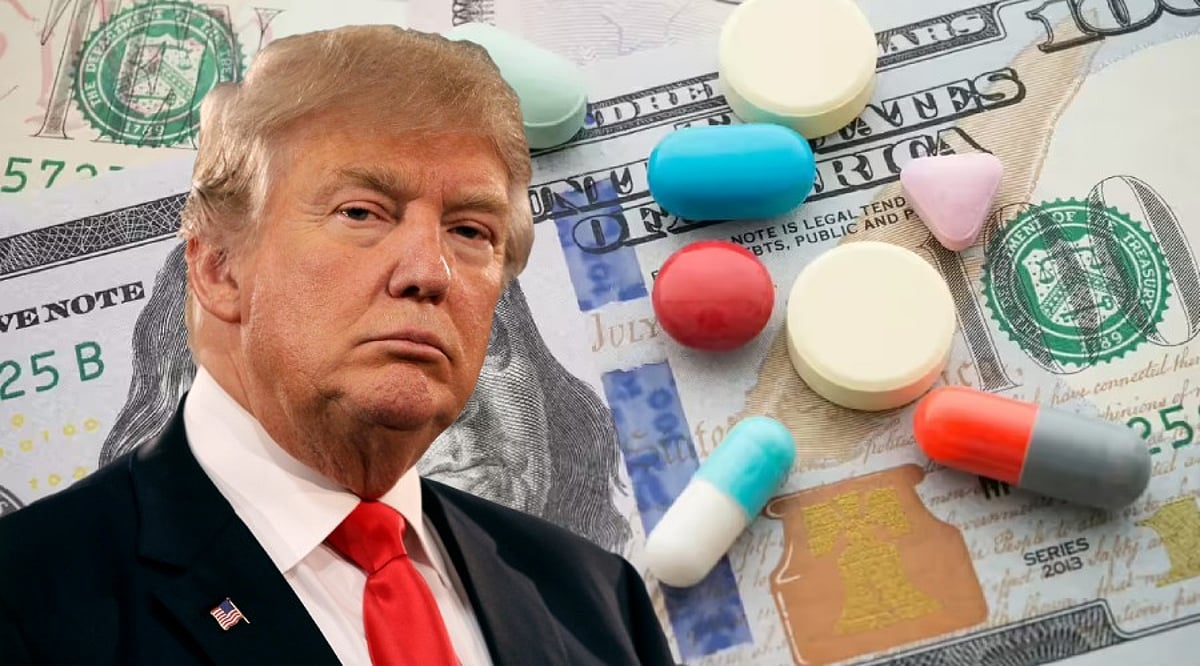
US President Donald Trump has announced a phased tariff plan for imported generic medicines, offering a two-year window before imposing sharply higher duties. The proposal, aimed at encouraging pharmaceutical companies to shift manufacturing to the United States, could have significant implications for India’s export-driven generic drug industry.
Under the plan, imported generic medicines will face zero tariffs for the next two years. Beginning in August 2028, the US will levy a 100 percent tariff for one year, followed by a 200 percent tariff thereafter. The policy is scheduled to take effect from August 1, 2026.
Why India Has Most at Stake
India is one of the major exporters of cheap generic drugs across the globe and holds an important place in the healthcare sector of the United States. Generic drug companies in India are responsible for almost 40 percent of generic drugs sold in the United States by volume, making them highly susceptible to any restrictions on their exports.
According to the Global Trade Research Initiative (GTRI), India exported pharmaceuticals worth US$9.7 billion to the US during FY2024-25. This accounted for 38 percent of India’s total pharmaceutical exports.
Industry Braces for Long-Term Impact
Though the two-year grace period will give firms some breathing space, industry watchers feel that the new tariff structure will change the landscape of the pharmaceuticals business. Companies might be forced to think about increasing production facilities in America or rethinking their export strategy.
The development is also likely to have an impact on the stock markets, with the stocks of certain Indian pharmaceutical giants facing pressure.
Part of Trump’s Manufacturing Push
This tariff idea is one of the latest attempts made by President Trump to ensure the production of pharmaceuticals in the US again. It is believed that such actions will result in lower dependence on imported drugs and help to make supply chains more secure. However, it may become another point of discussion regarding increased healthcare expenses and the international generic drug trade.