Tag: Task Automation

  • Meta Muse: How Meta’s New AI Agent Moves from Answers to Action

    Meta Muse: How Meta’s New AI Agent Moves from Answers to Action

    Meta has unveiled Muse, an AI agent built not just to chat but to act. Unlike conventional virtual assistants that answer questions or generate text, Muse is designed to understand user goals and execute the steps needed to achieve them. This marks a significant shift from passive conversation to active task completion.

    AI That Takes Action

    Traditional AI assistants primarily generate responses, offer recommendations, or retrieve information. Muse represents a different philosophy: it interprets instructions, decides on the required sequence of actions, and performs tasks within digital environments. The goal is to reduce the manual steps users must take for everyday activities, making digital assistance more proactive and useful.

    From Answers to Execution

    Muse highlights the broader transition from conversational AI to agentic AI. Instead of stopping after delivering an answer, an agent can keep working toward a specific outcome. This means future AI systems could handle complex workflows, requiring less frequent guidance or supervision from the user.

    Meta’s AI Ambitions

    Muse fits squarely into Meta’s wider investment in artificial intelligence. The company has been embedding AI across its social platforms, consumer products, and research initiatives. Agentic systems could become a cornerstone of that strategy, enabling more interactive, responsive, and capable AI experiences.

    Understanding User Goals

    A key capability of Muse is its focus on understanding what users ultimately want to accomplish. Rather than treating each command in isolation, the agent is designed around completing broader objectives. This allows it to determine appropriate actions, adapt when circumstances change, and reduce unnecessary back-and-forth between users and digital systems.

    Potential Everyday Uses

    Agentic AI could eventually assist with tasks such as organizing information, completing digital workflows, managing routine chores, and navigating applications. The real value lies in reducing manual effort rather than merely generating another response. As these systems mature, their usefulness will hinge on reliability, permissions, privacy, and appropriate human oversight.

    The Next AI Shift

    Meta Muse represents a broader transition in artificial intelligence—from generating content to performing tasks. As AI agents become more capable, competition may increasingly focus on execution, reliability, and trust. The technology has the potential to reshape how people interact with software, letting AI handle more steps on their behalf.
  • Google Launches Always-On Gemini Spark AI Agent in India for 24/7 Task Automation

    Google Launches Always-On Gemini Spark AI Agent in India for 24/7 Task Automation

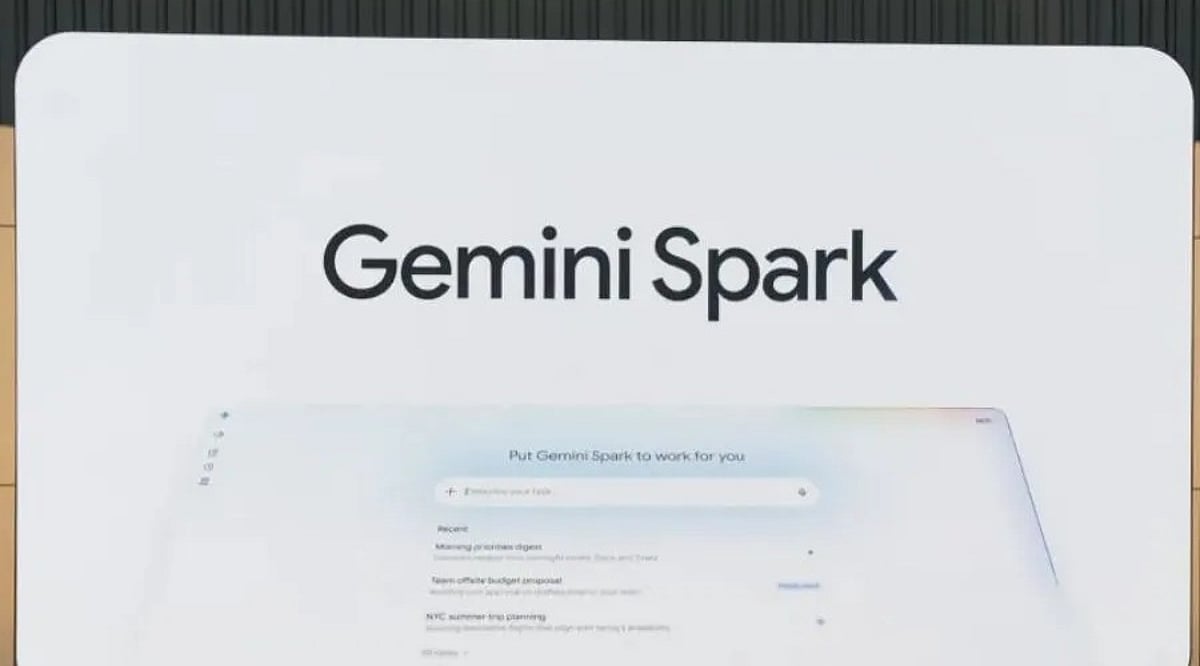
    Google has officially launched Gemini Spark in India, a cloud-based AI agent that operates continuously in the background — even when your phone is locked or your laptop is closed. Initially previewed at Google I/O 2026, the rollout begins for Google AI Ultra subscribers, with Google AI Pro subscribers gaining access in the coming weeks.

    An Agent That Works While You Sleep

    Unlike traditional AI assistants that respond to individual prompts, Gemini Spark is designed to autonomously complete multi-step tasks over time. It runs on Google’s cloud infrastructure and requires no active user involvement once a task is set. Built on the upgraded Gemini 3.6 Flash model, the agent integrates natively with Google Workspace apps including Gmail, Google Docs, Google Sheets, and Calendar — with no manual setup required.

    Tasks range from organizing emails in a personalized style and summarizing wedding RSVPs to planning travel itineraries across multiple services and managing recurring subscriptions.

    How Tasks, Schedules, and Skills Work

    Gemini Spark operates using three core components:

    • Task – The outcome the user wants the AI to achieve, from simple inbox clearing to complex multi-step workflows like coordinating a business trip.
    • Schedule – Recurring automations, such as a weekly summary of unread emails every Monday morning.
    • Skill – Specific capabilities Spark can apply, which will expand over time through updates. The agent can also interact with websites on the user’s behalf via a browser-based environment.

    Google has not yet confirmed which web capabilities will be available immediately in India. The launch comes shortly after OpenAI released ChatGPT Work, targeting a similar productivity and enterprise niche.

    User Control and High-Stakes Approval

    Users maintain full control over what Gemini Spark can access and do. They can limit connected apps or disable the agent entirely. For high-stakes, irreversible actions — such as sending an email without prior review, making a purchase, or any difficult-to-reverse action — Spark is designed to ask for explicit approval before proceeding.

    Google describes this human-in-the-loop design as a deliberate safeguard, positioning Spark as an agent that operates under user supervision. The India launch marks the company’s clearest step yet toward agentic AI that handles repetitive digital work autonomously.

  • Meta AI Upgrades to Muse Spark 1.1: Now Handles Tasks, Presentations, and Multi-Step Workflows

    Meta AI Upgrades to Muse Spark 1.1: Now Handles Tasks, Presentations, and Multi-Step Workflows

    Meta has upgraded its AI assistant with the latest Muse Spark 1.1 model, transforming it into a powerful productivity tool that can plan tasks, create presentations, integrate with apps, and automate multi-step workflows. This update positions Meta AI as a stronger competitor to ChatGPT, Gemini, and Claude, moving beyond simple Q&A to become a true personal superintelligence.

    The enhanced assistant now connects with email and calendar services to organize schedules, prepare daily briefings, and track ongoing tasks. Users can ask Meta AI to plan meetings, manage reminders, generate weekly plans, or coordinate projects without repeatedly entering instructions. The company says the assistant understands context better than before, allowing it to follow through on requests instead of responding to one prompt at a time. It can also automate recurring activities such as meal planning, shopping reminders, or scheduled updates.

    The update introduces deeper research capabilities. Meta AI can collect information from across the web, organize findings into structured reports, and generate presentation slides directly from its research. Users can edit outputs in real time by changing the tone, adding new instructions, or removing sections. All generated content—including reports, slide decks, and plans—is stored in one place for future access and sharing.

    These features run on Muse Spark 1.1, Meta’s latest multimodal reasoning model designed for agentic AI tasks. Earlier this month, Meta introduced the model with improvements in reasoning, coding, tool use, and computer interaction. The company says these capabilities allow the assistant to perform longer, more complex workflows with less human intervention.

    The latest upgrade reflects Meta’s growing focus on productivity as it competes with OpenAI’s ChatGPT, Google’s Gemini, and Anthropic’s Claude. While Meta AI initially focused on social experiences and conversational assistance, it is increasingly positioning itself as an AI assistant capable of handling day-to-day work and personal tasks. The new capabilities are rolling out in select markets through the Meta AI app and the web version, with wider availability across Meta platforms, including WhatsApp, expected in the coming weeks.

  • Streamline Your Workflow: AI Tools That Eliminate Repetitive Office Work

    Streamline Your Workflow: AI Tools That Eliminate Repetitive Office Work

    Repetitive office tasks—like drafting emails, scheduling meetings, entering data, and summarizing documents—consume valuable time that could be spent on higher-level strategic work. Fortunately, a wave of artificial intelligence tools now automates these mundane activities, freeing teams to focus on creativity and decision-making. Below is a curated list of the most effective AI solutions for eliminating repetitive office tasks, each with a specific use case.

    ChatGPT

    OpenAI’s ChatGPT automates writing, summarizing, brainstorming, email drafting, meeting notes, and document creation. It reduces repetitive communication tasks across teams efficiently by generating coherent text based on simple prompts, making it a versatile assistant for any office environment.

    Microsoft Copilot

    Deeply integrated into Microsoft 365, Copilot automates spreadsheet formulas, presentation design, email replies, meeting summaries, and document editing. It leverages data from your organization to provide contextually relevant suggestions, boosting everyday office productivity without requiring manual formatting.

    Google Gemini

    Google’s Gemini assists with Gmail, Docs, Sheets, and other Workspace tasks. It generates content, organizes information, summarizes long files, and answers workplace queries. Its seamless integration with Google’s ecosystem makes it ideal for teams already using Google Workspace.

    Zapier

    Zapier connects thousands of apps to automate repetitive workflows, data transfers, notifications, approvals, and administrative processes—all without coding. By setting up “Zaps,” users can trigger actions across platforms, eliminating manual handoffs and reducing errors.

    Notion AI

    Notion AI speeds up note-taking, document drafting, meeting summaries, project updates, and knowledge management. It keeps workplace information organized automatically, surfacing relevant content and generating action items from meeting notes, which saves hours of manual documentation.

    Grammarly

    Grammarly improves workplace communication by correcting grammar, refining tone, rewriting sentences, and ensuring professional writing across emails, reports, and documents. Its AI-powered suggestions help maintain consistency and clarity, reducing the need for back-and-forth edits.

    Otter.ai

    Otter.ai automatically records meetings, transcribes conversations, creates searchable notes, and highlights action items. It saves employees from manual note-taking and ensures that no important detail is lost, making post-meeting documentation effortless.

    Trello with Butler Automation

    Trello’s built-in Butler feature automates task assignments, due date reminders, workflow rules, card movements, and repetitive project management activities. It allows teams to set up automation without any coding, keeping boards updated and deadlines tracked automatically.

    UiPath

    UiPath uses robotic process automation (RPA) to handle repetitive data entry, invoice processing, report generation, and enterprise workflows with minimal human involvement. It is ideal for large organizations that need to automate complex, rule-based processes across multiple systems.

    By integrating these AI tools into daily operations, businesses can significantly reduce the time spent on repetitive tasks, increase accuracy, and allow employees to focus on innovation and growth. Whether you’re a solo entrepreneur or part of a large enterprise, there is an AI solution ready to streamline your workflow.

  • OpenAI Upgrades ChatGPT Agent with Advanced Features to Supercharge Productivity in 2026

    OpenAI Upgrades ChatGPT Agent with Advanced Features to Supercharge Productivity in 2026

    By Akshita Pidiha

    AI assistants are becoming more capable in 2026, with ChatGPT Agent helping users automate tasks, conduct research, and improve daily productivity.

    ChatGPT Agent can assist with planning projects, summarizing large documents, organizing information, and generating detailed reports.

    The latest updates allow users to work with files, spreadsheets, PDFs, and presentations more efficiently through natural language instructions.

    Businesses are increasingly using ChatGPT Agent for customer support, content creation, workflow automation, and internal knowledge management.

    Students and professionals benefit from faster research, study guides, coding assistance, writing support, and brainstorming sessions.

    Improved reasoning capabilities help users solve complex problems while maintaining context across longer conversations.

    Privacy and user control remain important, with users encouraged to review permissions before sharing confidential information. Although AI can significantly improve productivity, human review is still essential for critical decisions, legal matters, financial advice, and factual accuracy.

    With rapid AI innovation continuing throughout 2026, intelligent assistants are expected to become an essential part of personal and professional workflows.