Tag: tax compliance

  • Meesho Denies GST Allegations, States No SEBI Notice Received

    Meesho Denies GST Allegations, States No SEBI Notice Received

    Meesho has denied allegations concerning its Goods and Services Tax (GST) treatment, following reports that proxy advisory firm InGovern had asked the Securities and Exchange Board of India (SEBI) to review the company’s tax practices. The e-commerce platform clarified that it has not received any notice or communication from SEBI or any other regulatory body.

    The controversy emerged after ET Now reported that InGovern raised concerns about Meesho’s GST treatment. The representation to SEBI reportedly highlighted potential financial, disclosure, and regulatory risks linked to the company’s tax position. However, there is no confirmation that SEBI has initiated an investigation or requested clarification from Meesho.

    A Meesho spokesperson stated, “Meesho rejects the claims in this representation, which reflects no finding by SEBI or any tax authority. We have not received any communication from SEBI or any regulator on this matter.” The spokesperson added that the company remains confident in its tax position, asserting that its GST treatment complies with the existing legal framework and that it continues to meet all disclosure requirements.

    Meesho also questioned the authenticity of the documents attached to the representation. According to the company, the sample invoice included in the complaint appears to belong to an Amazon employee whose LinkedIn profile identifies the person as a finance manager. This raises questions about the credibility of the supporting material.

    The issue arises at a time when Meesho is already contesting a separate GST demand of Rs. 14.29 crore. Despite the latest allegations, the company reiterated that it has received no communication from any regulator. SEBI has not yet issued any public statement on the matter.

  • Why the RBI Warns Private Cryptocurrencies Threaten Emerging Economies Like India

    Why the RBI Warns Private Cryptocurrencies Threaten Emerging Economies Like India

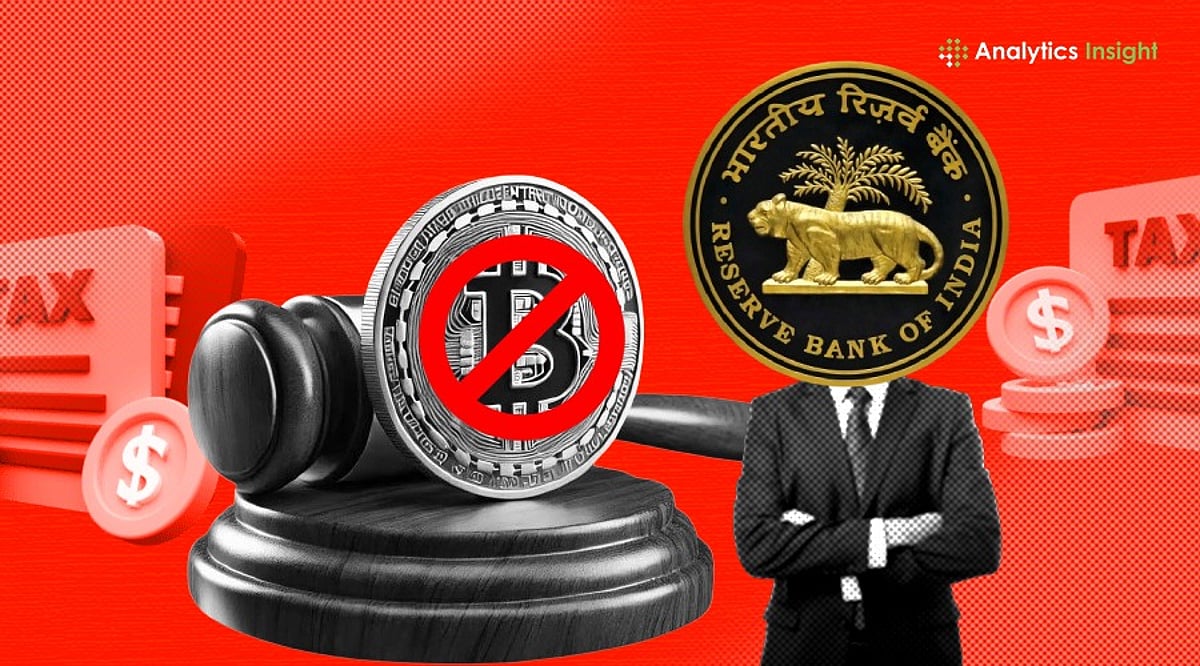
    The Reserve Bank of India (RBI) has reiterated its warning that private cryptocurrencies pose significant risks to emerging economies like India. In its latest comments before a parliamentary standing committee, the central bank underscored that virtual digital assets (VDAs) should not receive legal recognition as they could undermine the country’s financial system.

    According to RBI officials, private cryptocurrencies operate outside the control of India’s financial system, creating risks that are difficult to manage. The central bank supports strict restrictions rather than full legal approval, emphasizing that innovation is welcome only when it protects the economy.

    Loss of Control Over the Economy

    One of the RBI’s primary concerns is the potential loss of control over India’s monetary system. Central banks manage money supply, interest rates, and inflation to maintain economic stability. If cryptocurrencies become widely used for savings or payments, fewer people may rely on the Indian rupee, reducing the RBI’s ability to implement effective monetary policy. This risk is amplified if foreign stablecoins gain acceptance, as they are tied to currencies like the US dollar rather than the rupee.

    Financial Stability Risks

    The RBI warns that cryptocurrencies can cause financial instability due to their extreme price volatility. A digital asset may surge in value one week and plummet the next, leading to heavy investor losses. If a large portion of household savings shifts into cryptocurrencies, a market downturn could reduce consumer spending and savings, affecting the broader economy. Unlike bank deposits, cryptocurrencies lack government backing or deposit insurance, leaving investors unprotected if a platform fails or a token collapses.

    Illegal Transactions and Tax Compliance

    Another major concern is the facilitation of illegal activities through cryptocurrencies. Cross-border transactions and offshore exchanges make it difficult for authorities to track money movements, potentially enabling money laundering, tax evasion, and financing of unlawful activities. Even when suspicious transactions are identified, enforcement is challenging if the platform is based abroad.

    India taxes cryptocurrency profits at 30%, with a 1% Tax Deducted at Source (TDS) on many transactions. However, tax compliance remains weak. Despite nearly 39 million crypto holders and digital assets worth $2.1 billion as of May 2026, fewer than 25% of traders correctly reported their holdings in 2022-23. Offshore exchanges and private wallets exacerbate this issue.

    Greater Vulnerability of Emerging Economies

    The RBI believes developing countries face higher risks than advanced economies. India’s financial system relies heavily on banking for economic growth. A shift of household savings from banks to cryptocurrencies could reduce deposits, limiting loans to businesses and consumers. Additionally, investments in foreign-backed digital assets may pressure the Indian rupee, especially during economic uncertainty.

    Digital Rupee as the Preferred Alternative

    Instead of supporting private cryptocurrencies, the RBI promotes the Digital Rupee (e₹), India’s Central Bank Digital Currency (CBDC). Unlike private digital assets, the Digital Rupee is issued and backed by the RBI, offering digital payment speed and convenience while maintaining official monetary oversight. This approach allows financial innovation without exposing the economy to the uncertainties of private crypto assets.

    With nearly 39 million Indians holding virtual currencies worth $2.1 billion, the debate over cryptocurrency regulation is crucial. The RBI continues to advocate for financial innovations that ensure stability as India advances its digital economy.

  • Top Accounting Software for Small Business: Key Features to Consider

    Top Accounting Software for Small Business: Key Features to Consider

    Selecting the right accounting software is critical for small businesses aiming to streamline financial operations and focus on growth. Modern solutions offer a range of features that automate manual tasks, improve accuracy, and provide real-time insights. Below are the essential capabilities to look for when evaluating accounting software for your business.

    Cloud Accessibility

    Cloud-based platforms enable you to access financial records anytime, anywhere, from any device. This facilitates seamless collaboration among team members, ensures real-time updates, and provides secure data management across multiple devices without the need for on-premise hardware.

    Automated Bookkeeping

    Reduce manual data entry by automating transaction recording, expense categorization, and bank reconciliation. Automated bookkeeping minimizes human errors, saves time, and ensures your financial records are always up-to-date.

    Invoice Management

    Create professional invoices quickly, send automated payment reminders, and track outstanding payments with ease. Effective invoice management improves cash flow by streamlining billing processes and reducing the time spent on follow-ups.

    Expense Tracking

    Monitor business expenses in real time, digitally organize receipts, and categorize spending to maintain accurate financial records. Robust expense tracking helps you make better budgeting decisions and identify cost-saving opportunities.

    Tax Compliance

    Simplify tax filing with automated calculations, compliance reports, and accurate recordkeeping. Accounting software that supports GST and other tax requirements reduces filing errors and saves valuable time during tax season.

    Financial Reporting

    Generate real-time profit and loss statements, balance sheets, cash flow reports, and other key financial insights. These reports are essential for informed financial planning, strategic decision-making, and demonstrating financial health to stakeholders.

    Payroll Integration

    Manage employee salaries, tax deductions, benefits, and payroll processing efficiently within the same platform. Integrated payroll ensures compliance with labor and taxation regulations while reducing administrative workload.

    Third-Party Integrations

    Connect your accounting software with CRM, payment gateways, inventory systems, banking platforms, and e-commerce tools. This connectivity streamlines business operations, eliminates data silos, and boosts overall productivity.

    Scalability and Security

    Choose software that offers advanced security features such as encrypted backups and user permissions, along with scalable capabilities that grow with your business. This ensures your financial data remains protected as your operations expand.

  • Why India Must Replace Crypto Prohibition with a Clear Regulatory Framework

    Why India Must Replace Crypto Prohibition with a Clear Regulatory Framework

    For nearly a decade, India has debated cryptocurrency as a binary choice: ban it or allow it. That framing has outlived its usefulness. With roughly 39 million Indians holding an estimated $2.1 billion in digital assets, according to Indian tax-department estimates cited by Reuters in July 2026, the country now ranks among the world’s largest crypto markets by user base.

    The debate flared again this month when the Reserve Bank of India told a parliamentary panel that it favors prohibition, warning that a formal framework might lend crypto legitimacy. It’s an understandable instinct from a central bank guarding monetary sovereignty. But it misreads the problem. Prohibition does not erase demand; it relocates it. Push activity underground and it flows to precisely the channels regulators fear most: offshore exchanges, private wallets, and peer-to-peer transfers that are far harder to trace than a registered domestic platform.

    Uncertainty Is the Real Cost

    The status quo—legal to trade, but unregulated as a product, taxed heavily, and periodically threatened with a ban—is the worst of all worlds. It punishes everyone who plays by the rules while rewarding those who route around them.

    Startups feel it first. A founder cannot raise capital, hire, or build a compliance function around a policy that has been drafted, shelved, and redrafted more times than anyone can count. India’s own crypto discussion paper has reportedly been postponed on multiple occasions. Talent and companies that could have built here have simply incorporated in Dubai, Singapore, or elsewhere. That is innovation leaving, not innovation being contained.

    Consumers feel it too. Without a licensing regime that sets standards for custody, disclosure, and how exchanges use client funds, users have little protection when a platform fails or a scam unfolds. “Buyer beware” is not a consumer-protection strategy; it is the absence of one.

    Indians Will Use Crypto Regardless

    Here is the fact that should anchor the entire policy conversation: Indian users will be pushed further into international platforms if there is a ban or if a regulatory grey area persists. The tax department has already flagged this. In the year ending March 2023, fewer than one in four Indians who transacted in crypto reported it on their returns—largely because overseas exchanges and non-custodial wallets make beneficial owners nearly impossible to identify.

    A ban does not fix that gap; it widens it. Every user driven off a compliant, FIU-registered Indian exchange and onto an anonymous foreign one is a user the taxman can no longer see. Prohibition would hand the government the compliance nightmare it claims to be solving.

    Regulation Is the Visibility the State Actually Wants

    The paradox is that a clear framework serves the government’s own goals better than a ban ever could. Regulation is what produces visibility, accountability, and tax compliance.

    India already has the scaffolding. Exchanges must register with the Financial Intelligence Unit and follow KYC and anti-money-laundering rules. A 30% tax on gains and a 1% TDS are in place. From April 2026, stricter transaction-reporting standards carry real penalties. What is missing is the connective tissue: a licensing regime, a token-classification system that separates payment tokens from securities and utility tokens, and clarity on who regulates what. SEBI has already floated a multi-regulator model—a far more workable path than an outright ban.

    Onshoring is the prize. If compliant domestic platforms operate under clear, enforceable rules, capital and trading volume return to where they can be taxed and traced. That is how India protects consumers and revenue at the same time.

    The world is not waiting. Institutional adoption abroad keeps accelerating, and the OECD’s cross-border reporting framework arrives in 2027. India can shape sensible rules now, or inherit someone else’s later. A ban is a decision to look away. A policy is a decision to govern. India should choose to govern.

  • India’s Crypto Policy Hardens: RBI Pushes for Ban as Tax Department Flags Offshore Tracking Risks

    India’s Crypto Policy Hardens: RBI Pushes for Ban as Tax Department Flags Offshore Tracking Risks

    India’s cryptocurrency policy remains in flux, but internal government documents reviewed by Reuters indicate that authorities are increasingly leaning toward stricter control over digital assets. The Reserve Bank of India (RBI) has reiterated its stance favoring a policy that ‘leans toward prohibition,’ while the Income Tax Department has raised serious concerns about regulating transactions conducted through offshore exchanges and private wallets.

    The RBI believes that banks and financial institutions should be barred from holding, trading, or gaining any exposure to cryptocurrencies and privately issued stablecoins. The central bank is particularly worried about the potential impact of crypto-related exposures on the broader financial system. Although there is no official ban preventing Indian banks from transacting with crypto assets, most top lenders have voluntarily avoided the sector following multiple RBI alerts.

    A source familiar with the RBI’s thinking, who spoke on condition of anonymity, told Reuters that the central bank prefers keeping cryptocurrencies entirely outside the regulated financial system.

    Stablecoins remain a major concern. According to the RBI, foreign currency-backed stablecoins could threaten India’s monetary sovereignty, while rupee-backed tokens would result in lost government revenue from currency issuance and pose risks during periods of market stress.

    The Income Tax Department has also warned that monitoring cryptocurrency trading conducted through overseas exchanges is extremely difficult. As of May 31, India had approximately 39 million cryptocurrency traders holding about $2.1 billion in digital assets, according to the documents.

    The department identified significant gaps in tax reporting. Fewer than 25% of the 645,000 individuals who conducted crypto transactions during the financial year ending March 2023 reported those transactions in their tax returns. Foreign exchanges, private wallets, and peer-to-peer rupee trades make it challenging to identify beneficial owners and collect taxes.

    India’s current tax regime imposes a 30% rate on crypto asset gains, but volatility and a lack of uniform valuation methods complicate assessment. The Ministry of Corporate Affairs is also reviewing accounting standards and guidance for virtual digital assets.

    India has allowed cryptocurrencies to exist in a legal gray zone since a 2018 court ruling struck down RBI policies that effectively banned them. A 2021 draft bill to ban private cryptocurrencies was never introduced in Parliament, while a broader discussion paper has been repeatedly delayed.

    The newly surfaced documents suggest that India’s policy debate is shifting from light-touch regulation toward tighter restrictions, as unresolved issues around financial stability, tax compliance, and monetary sovereignty continue to mount.

  • 2026 Financial Transaction Reporting Thresholds: What Indian Taxpayers Must Know

    2026 Financial Transaction Reporting Thresholds: What Indian Taxpayers Must Know

    The Income Tax Department of India has notified the Income-tax Rules, 2026, effective from April 1, 2026. A common misunderstanding among taxpayers is that these rules impose blanket banking caps; in reality, they are primarily reporting thresholds under the Statement of Financial Transaction (SFT). The SFT is a mechanism through which taxpayers disclose material financial transactions to the department via Form 61A, with filings generally due by May 31 after the financial year ends. This data feeds into the taxpayer’s Annual Information Statement (AIS).

    Key Reporting Thresholds for 2026

    The SFT triggers are data-driven. Banks must report:

    • Cash deposits or withdrawals of ₹50 lakh or more in one or more current accounts during a financial year.
    • Cash deposits of ₹10 lakh or more in accounts other than current accounts and time deposits (e.g., savings accounts).
    • Time deposits of ₹10 lakh or more.
    • Credit card bill payments of ₹1 lakh or more in cash, or ₹10 lakh or more by other modes.
    • Property transactions of ₹30 lakh or more.
    • For tax-audited businesses, cash receipts above ₹2 lakh for the sale of goods or services not already covered elsewhere.

    Why PAN Matters More Than Ever

    Tax compliance is increasingly tracked via PAN, which helps the department link tax payments, TDS/TCS credits, returns, and specified transactions. PAN is mandatory for opening most bank accounts and for cash deposits exceeding ₹50,000 per day. Where PAN is unavailable, Form 60 may be used. Importantly, the SFT framework requires reporting entities to aggregate all accounts of the same nature held by a person during the year and attribute joint-account values to all holders. Splitting cash across multiple accounts does not reliably avoid reporting.

    TDS on Cash Withdrawals and Additional Restrictions

    Large cash withdrawals trigger a second compliance layer. Under Section 194N, banks, cooperative banks, and post offices must deduct TDS at 2% or 5%, depending on the taxpayer’s filing history and withdrawal level. For regular return filers, the key threshold is ₹1 crore in a year; for specified non-filers, TDS can begin once cash withdrawals cross ₹20 lakh.

    Taxpayers should not confuse SFT reporting with separate anti-cash rules. Section 269ST restricts receiving ₹2 lakh or more in cash in specified cases, and Section 40A(3) can disallow business cash expenses above ₹10,000 per day per person.

    Why This Matters

    The true risk is not crossing a threshold by itself—it is crossing a threshold without an income trail that matches your return. The AIS now displays SFT information reported by banks and other institutions, and the department advises taxpayers to review their AIS, update the Taxpayer Information Summary where needed, and file returns only after checking for errors to avoid notices due to mismatches.

    What Taxpayers Should Do Now

    • Review your AIS and Taxpayer Information Summary before filing returns.
    • Ensure all high-value transactions are backed by declared income.
    • Keep PAN details updated across all accounts and transactions.
    • Consult a tax professional if you anticipate crossing any reporting thresholds.

    Frequently Asked Questions

    1. Are these transaction limits or reporting limits?

    Most high-value financial thresholds under SFT are reporting limits, not direct restrictions on banking transactions. Crossing a threshold means banks or institutions may report the transaction to the Income Tax Department.

    2. What are the key cash deposit reporting limits in 2026?

    Cash deposits of ₹10 lakh or more in savings-type accounts are reportable under SFT. For current accounts, cash deposits or withdrawals of ₹50 lakh or more in a financial year must be reported.

    3. Why is PAN important for high-value transactions?

    PAN helps the Income Tax Department link bank accounts, TDS/TCS credits, returns, and specified transactions. Splitting money across accounts may not avoid reporting as transactions are aggregated by PAN.

    4. When does TDS apply to cash withdrawals?

    For regular return filers, TDS under Section 194N generally applies when cash withdrawals exceed ₹1 crore in a year. For specified non-filers, TDS can begin after withdrawals cross ₹20 lakh.

    5. How should taxpayers avoid notices from AIS mismatches?

    Taxpayers should review their AIS and Taxpayer Information Summary before filing returns. The main risk is not crossing a threshold, but having high-value transactions that do not match declared income.