

Tag: tech startups

  • How Five Billion-Dollar Tech Companies Started as Side Hustles

    How Five Billion-Dollar Tech Companies Started as Side Hustles

    Many of the world’s most influential tech companies didn’t begin as ambitious business plans. They started as small side projects, built to solve one person’s frustration. Twitter, Slack, Shopify, GitHub, and Postman all followed this path. Each began as a simple fix for a specific problem, and each grew into a platform that serves millions. Here’s how they made the leap from side hustle to industry leader.

    Twitter: From Internal Experiment to Global Platform

    Twitter originated inside Odeo, a podcasting company that lost its direction when Apple integrated podcasting into iTunes. Looking for a new direction, the team experimented with a short-message service pitched by Jack Dorsey. What started as a side project within the company quickly gained more traction than Odeo’s core business. The founders eventually abandoned podcasting and bet everything on the new idea. That decision turned an internal experiment into one of the most recognized social platforms in the world.

    Slack: A Productive Failure

    Slack’s origin is unusual. It came from Tiny Speck, a company that built an online game called Glitch. The game failed and was shut down soon after launch. But during development, the team created an internal messaging tool to coordinate across offices. That tool proved more valuable than the game itself. Stewart Butterfield and his team recognized its potential, rebuilt it for external use, and launched Slack. Today, millions of teams rely on it for communication.

    Shopify: Founder Pain as Product Insight

    Shopify began with a snowboard shop called Snowdevil. Co-founder Tobias Lütke couldn’t find e-commerce software that met his needs, so he built his own. Other small shop owners noticed and asked if they could use it too. What started as a custom solution for one store became the backbone for millions of online businesses worldwide. Word of mouth, not a grand plan, drove its growth.

    GitHub: Scratching Your Own Itch

    Before GitHub, version control with Git was cumbersome for teams. Chris Wanstrath, PJ Hyett, and Tom Preston-Werner built a hosting service to solve their own collaboration problems. Their platform made branching, merging, and code review easier than existing tools. Other developers facing the same frustrations adopted it quickly, and GitHub spread far beyond its original creators.

    Postman: The Side Tool That Outgrew Everything Else

    While interning at Yahoo in Bangalore, Abhinav Asthana worked extensively with APIs. The available testing tools were clunky, so in 2012 he built a simple Chrome extension for his own use. Within weeks, word spread through the developer community. Asthana later brought in former Yahoo colleagues Ankit Sobti and Abhijit Kane to turn the side project into a company. Postman eventually moved its headquarters to San Francisco. What began as a browser extension for one frustrated intern became a company valued at $5.6 billion.

    Common Thread: Solving Real Problems

    These five companies emerged from different industries, but they share a pattern. Each founder encountered a personal problem, built a solution, used it enough to validate it, and only later realized it could become a real business. This sequence keeps repeating across the tech world — and it might be one of the most reliable ways to create something genuinely useful.

    Final Thoughts

    Somewhere right now, the next big platform may already exist in a much smaller form, quietly solving one person’s problem. Products born from genuine need often reshape entire industries.

    Frequently Asked Questions

    1. What do these tech companies have in common?
    Twitter, Slack, Shopify, GitHub, and Postman all began as solutions to specific problems before evolving into successful technology companies.

    2. Why do many successful tech companies start as side projects?
    Side projects allow founders to test ideas, solve real-world problems, and refine products through practical use before turning them into full-fledged businesses.

    3. Which company started as a Chrome extension?
    Postman began as a Chrome extension created by Abhinav Asthana to simplify API testing before growing into a leading API collaboration platform.

    4. How did Slack originate?
    Slack evolved from an internal communication tool built by the Tiny Speck team while developing the online game Glitch, which was eventually discontinued.

    5. What lesson do these founder stories highlight?
    The stories show that solving a genuine personal problem with a practical solution can create products that eventually serve millions of users and transform entire industries.
  • India’s 10 Most Promising Tech Startups Shaping 2026

    India’s 10 Most Promising Tech Startups Shaping 2026

    India’s startup ecosystem is undergoing a significant transformation. While previous years were dominated by conversations about massive funding rounds and valuations, the focus in 2026 has shifted toward sustainable growth, real-world problem-solving, and long-term profitability. Investors are now asking more critical questions: Is the business growing steadily? Does it solve a genuine problem? Can it generate sustainable revenue?

    This shift has created fertile ground for a new generation of startups across artificial intelligence, healthcare, financial services, electric vehicles, cloud computing, and space technology. These companies are building products that businesses and consumers actually need—from efficiency tools to accessible financial services. Below are ten Indian tech startups that are set to make an impact in 2026.

    Why Investors Are Paying Attention

    The startup landscape has become more pragmatic. While innovation remains paramount, investors are backing ventures with clear purpose and viable business models. Most startups now focus on solving everyday challenges rather than chasing trends. Government support for technology development and innovation is also fueling this growth.

    What Makes These Startups Different?

    Many startups launch every year, but only a few stand out. The companies on this list prioritize solving real problems. Some help businesses manage data more efficiently, others simplify financial services, and several are advancing health tracking or building space technology. Additionally, many of these startups are designed for global markets, giving them access to a larger customer base and more expansion opportunities. Most importantly, these companies are building products people actually use—substance over hype.

    Big Trends Shaping Indian Startups in 2026

    Businesses need tools that enable employees to work faster and smarter. Startups are delivering practical, less complex AI solutions. The healthcare sector is expanding rapidly due to rising consumer interest in health and fitness, opening doors for wellness-focused tech companies. Fintech continues to thrive as demand for faster, more convenient financial services grows. Electric mobility is also gaining traction, creating a pressing need for robust charging infrastructure. Meanwhile, space technology—once the domain of government agencies—is now attracting private players, with several Indian companies already achieving notable results.

    Why These Companies Matter

    The most successful startups are often not the loudest. They quietly solve problems every day—helping businesses save costs, making healthcare more accessible, improving financial services, and supporting emerging industries. These companies are building products with real impact, which is why investors, customers, and industry experts are closely watching them.

    Looking Ahead

    India’s startup environment is maturing. The “growth at any cost” mindset is giving way to value creation, problem-solving, and sustainability. The success stories of 2026 won’t come from companies that make the most noise; they will come from those that create something useful and earn customer trust. The ten firms highlighted here are among those to watch as India’s technology industry enters its next phase of growth.

    Why It Matters

    India’s next generation of technology startups is shaping the future of innovation across multiple industries. By developing practical solutions, creating employment opportunities, attracting investment, and expanding globally, these companies are strengthening India’s digital economy and driving long-term technological growth.

    FAQs

    Which are the top Indian tech startups to watch in 2026?

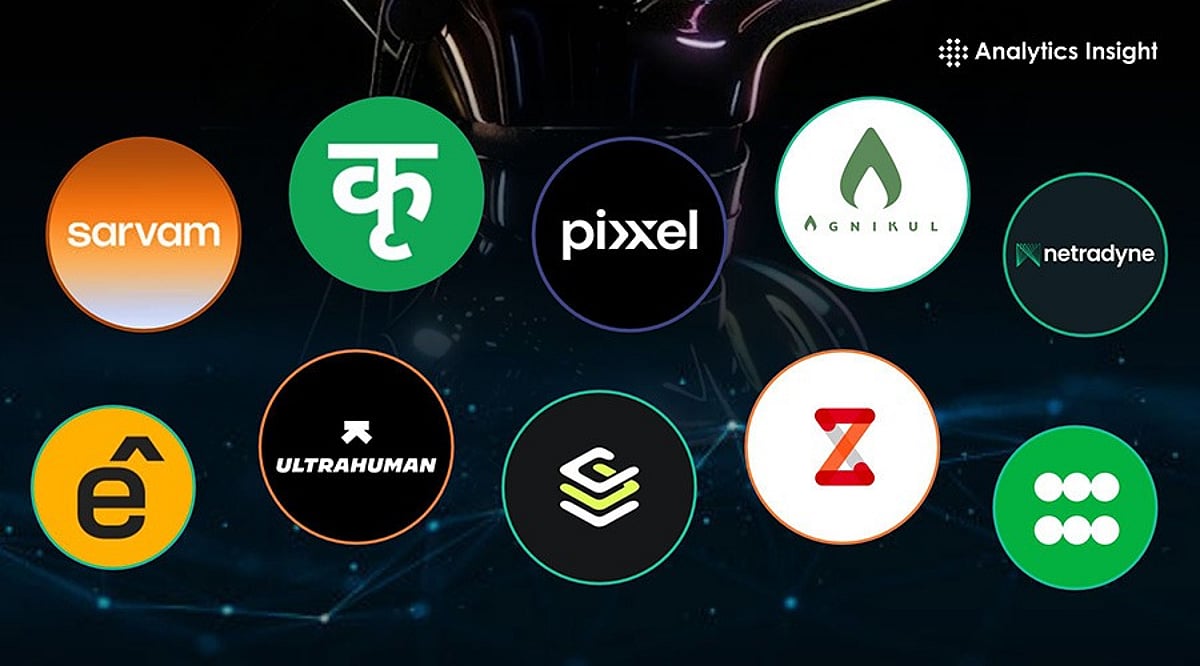
    Some of the most promising include Sarvam AI, Krutrim, Pixxel, Agnikul Cosmos, Netradyne, Exponent Energy, Ultrahuman, Lucidity, Zolve, and Equal. These companies are driving innovation across AI, space tech, fintech, healthtech, and cloud computing.

    Why are investors focusing on Indian tech startups in 2026?

    Investors are backing startups with sustainable business models, strong revenue potential, and products solving real-world problems. They prioritize long-term profitability, customer adoption, operational efficiency, and scalability across domestic and international markets.

    Which sectors are driving India’s startup ecosystem in 2026?

    AI, fintech, healthtech, electric mobility, cloud computing, identity technology, and commercial space technology are among the fastest-growing sectors. These industries benefit from digital adoption, supportive policies, private investment, and rising technology-driven demand.

    Why is AI becoming a major focus for Indian startups?

    AI startups are developing language models, enterprise automation tools, customer service platforms, and productivity solutions tailored to India’s diverse market. Businesses across industries adopt AI to improve efficiency, reduce costs, automate tasks, and enhance customer experiences.

    What makes Indian space startups attractive to investors?

    Private companies like Pixxel and Agnikul Cosmos are building satellite technologies, launch vehicles, and Earth observation solutions with global commercial potential. Government reforms and increased private participation have created new opportunities for innovation and international partnerships.