Tag: technology stocks

  • Canadian TSX Surges Over 200 Points as Tech and Mining Stocks Rally

    Canadian TSX Surges Over 200 Points as Tech and Mining Stocks Rally

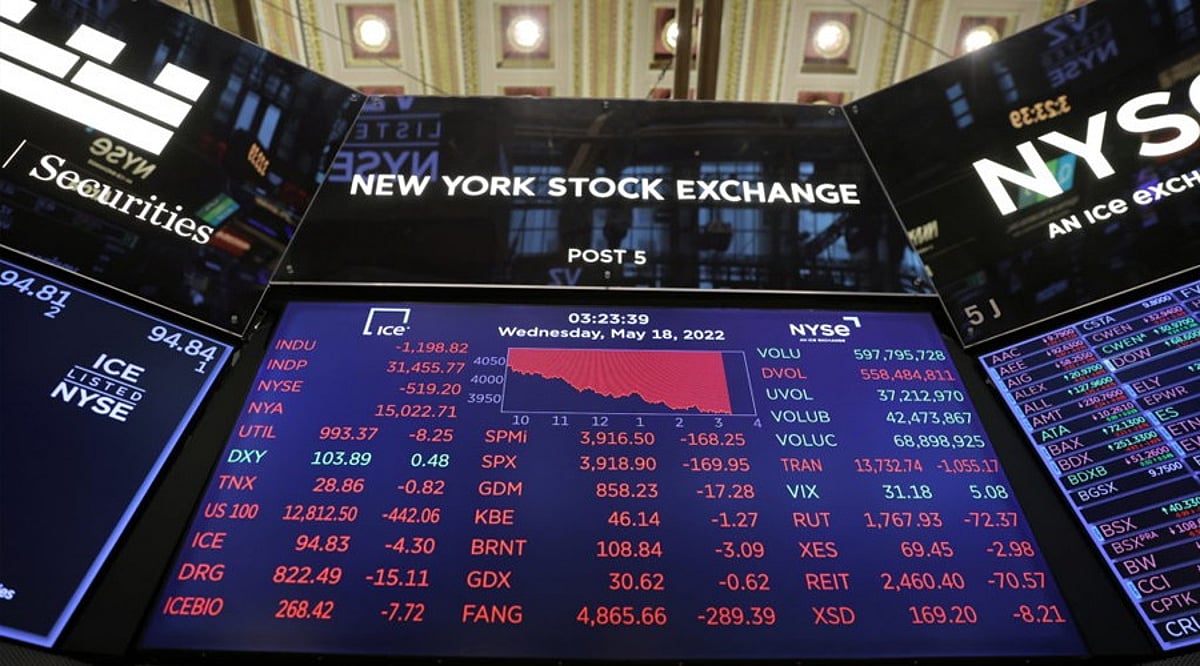
    Canada’s main stock index, the S&P/TSX Composite, climbed more than 200 points on Monday, driven by gains in technology and base metals stocks. The index rose 202.75 points, or 0.57%, to close at 36,009.40, recovering from Friday’s close of 35,804.86.

    Technology and Mining Lead the Advance

    The information technology sector led the rally with a 3.0% gain, while base metals advanced 1.6% and financial stocks added 1.4%. However, energy and telecommunications shares declined, with energy falling 2.5% and telecoms down 1%, as oil prices slipped.

    US Markets Also Move Higher

    In New York, the Dow Jones Industrial Average rose 366.19 points (0.7%) to 52,048.83, the S&P 500 gained 114.20 points (1.5%) to 7,764.70, and the NASDAQ Composite climbed 599.55 points (2.3%) to 27,122.09. Lower oil prices and falling Treasury yields supported US equities, with semiconductor stocks boosting the NASDAQ.

    Oil Prices and Currency Movements

    The November crude oil contract fell $3.71 to $92.37 per barrel, pressured by potential diplomatic progress between the US and Iran and signs of recovering Saudi oil shipments. The Canadian dollar weakened slightly to 71.32 US cents from 71.42 US cents on Friday. Gold also declined, with the December contract dropping $41 to $4,383.90 an ounce.

    Investors are also monitoring comments from Bank of Canada Governor Tiff Macklem and ongoing US-Canada trade tensions for clues on the economic outlook and interest rate path.

  • Wall Street Rises After Surprise July Job Cuts Fuel Hopes of Fed Rate Pause

    Wall Street Rises After Surprise July Job Cuts Fuel Hopes of Fed Rate Pause

    The S&P 500 posted gains on Friday after a surprising decline in U.S. payrolls for July dampened expectations of a September interest rate hike by the Federal Reserve. Technology and software stocks led the rally, while Treasury yields fell following the release of the employment report.

    The index moved toward a second consecutive weekly gain after hitting a record high earlier in the week. Traders are now turning their attention to July inflation data, which could further shape the central bank’s next policy move.

    S&P 500 Rises on Weak Payroll Data

    The S&P 500 climbed 0.6%, while the NASDAQ Composite gained 1.1%. The Dow Jones Industrial Average added approximately 140 points, a 0.3% increase. According to the Labor Department, U.S. employers cut 23,000 jobs in July, contrasting sharply with economists’ expectations of an 83,000-job gain (Dow Jones poll) and an 80,000 increase projected by a Reuters survey.

    The unemployment rate edged down to 4.1% from 4.2%, but the labor force participation rate fell to its lowest level in more than five years. Revised data also eliminated a combined 103,000 jobs from May and June payroll figures.

    The disappointing report reduced the probability of a Fed rate hike at its September meeting. LSEG data placed the likelihood of an increase near 20%, down from 55% before the payroll release.

    Fed Rate Outlook Shifts Toward a Pause

    Fed funds futures traders now largely expect policymakers to hold rates within the current 3.50% to 3.75% range. The central bank kept rates unchanged during its July meeting. Under Chair Kevin Warsh, the Fed has offered limited guidance on its next move, leading investors to scrutinize labor, inflation, and wage data closely.

    Anthony Saglimbene, chief market strategist at Ameriprise Financial, noted that the report gives policymakers more time. “Even with a negative job print, the job market remains healthy. But it gives the Fed some room to pause in September,” he said.

    Former Dallas Fed Chair Richard Fisher added that he did not view the report as entirely weak. He pointed to slowing wage growth, which could affect consumer spending, and said he did not support raising rates at this time.

    Technology Stocks Lead Wall Street Rally

    Software and semiconductor shares fueled Friday’s gains. Atlassian surged more than 30% after its quarterly profit and revenue exceeded estimates, and the company issued a stronger financial forecast. Cloudflare also rose after raising its annual revenue outlook above market expectations. Microchip Technology advanced after forecasting quarterly revenue above estimates. NVIDIA and Broadcom also recorded gains.

    The Philadelphia Semiconductor Index rose more than 2%, while the S&P 500 software and services index gained about 1.3%. The iShares Semiconductor ETF increased nearly 7% over the week.

    Airbnb climbed approximately 14% after reporting stronger quarterly profit and revenue and raising its full-year revenue and margin guidance, pushing its shares to their highest level in four years. In contrast, Trade Desk dropped nearly 25% after issuing a third-quarter revenue forecast below analysts’ expectations.

    Inflation Data Becomes the Next Market Test

    The S&P 500 has gained more than 3% this week, while the NASDAQ has risen about 5%, on track for its strongest weekly performance since May. The Dow has added about 3%. Corporate earnings have supported the recovery: more than 400 S&P 500 companies have reported quarterly results, with over 85% exceeding analysts’ estimates, according to LSEG data.

    Investors will now monitor the July consumer price index report on Wednesday. Economists expect annual headline inflation of 3.4% and core inflation of 2.5%. Producer price data will follow on Thursday. Retail sales figures are due Friday, offering another measure of household spending. Applied Materials, Cisco, and CoreWeave will also report earnings next week.

    Treasury yields declined after the payroll release. The 10-year yield slipped to 4.65%, while the two-year yield fell to 4.20%, before partially recovering. Oil prices rose about 1% as investors watched US-Iran talks concerning the Strait of Hormuz. Brent crude traded near $83 per barrel, while West Texas Intermediate held around $78. Oil movements remain central to inflation expectations and future Fed decisions.

    Weaker U.S. jobs data boosted hopes of a Federal Reserve pause, lifting Wall Street and supporting gains in technology stocks. Investors will now watch upcoming inflation and retail sales data for further clues on the direction of interest rates.

  • 7 Leading Technology Stocks for July 2026: From Apple’s Ecosystem to IonQ’s Quantum Leap

    7 Leading Technology Stocks for July 2026: From Apple’s Ecosystem to IonQ’s Quantum Leap

    Overview

    Technology stocks continue to benefit from AI, cloud computing, data storage, and quantum computing advancements. The global tech industry is worth over $21 trillion, and investors are looking for companies with strong earnings and scalable business models. This July 2026, we highlight seven stocks with market caps above $1 billion and EPS growth over 20% in the past year.

    Top Technology Stocks for July 2026

    1. Apple Inc. (AAPL)

    Market Cap: $4.88 trillion | EPS Growth: 28.6%. Apple’s ecosystem of iPhone, Mac, iPad, Apple Watch, and services provides recurring revenue. AI integration into devices is expected to fuel the next growth phase.

    2. Sandisk Corporation (SNDK)

    Market Cap: $208.9 billion | EPS Growth: 370%. Sandisk leads in flash memory storage for consumer devices, AI servers, and enterprise systems, benefiting from increasing demand for high-speed storage.

    3. Dell Technologies Inc. (DELL)

    Market Cap: $253.66 billion | EPS Growth: 96.71%. Dell provides PCs, servers, storage, and IT infrastructure. Its data center solutions are critical for AI workloads.

    4. Seagate Technology Holdings plc (STX)

    Market Cap: $167.1 billion | EPS Growth: 51.4%. Seagate is a key supplier of hard disk drives for computers and data centers, important for global data creation.

    5. Western Digital Industries Ltd (WDI)

    Market Cap: $160.9 billion | EPS Growth: 267.47%. Western Digital specializes in HDDs and enterprise storage, driven by demand from data centers and cloud platforms.

    6. Everpure, Inc. (P)

    Market Cap: $22.73 billion | EPS Growth: 73.68%. Everpure offers enterprise data-storage and management solutions, focusing on all-flash storage for AI and analytics.

    7. IonQ, Inc. (IONQ)

    Market Cap: $13.1 billion | EPS Growth: 125.83%. IonQ works on trapped-ion quantum computers, providing cloud access. Though early-stage, it offers exposure to transformative quantum technology.

    Final View

    Apple provides ecosystem scale, Dell leads in AI infrastructure, and storage demand benefits Sandisk, Seagate, Western Digital, and Everpure. IonQ introduces high-growth quantum computing. These seven stocks cover the technology stack from devices to next-gen computing.

    Disclaimer: This article is for informational purposes only and does not constitute investment advice. Always conduct your own research before investing.

  • Wall Street Rises as Bank Profits and Tech Rally Boost Dow, S&P 500, and NASDAQ

    Wall Street Rises as Bank Profits and Tech Rally Boost Dow, S&P 500, and NASDAQ

    Wall Street climbed on Wednesday as investors weighed stronger-than-expected bank earnings and cooling wholesale inflation data. The Dow Jones Industrial Average, S&P 500, and NASDAQ Composite all posted gains, led by financial and technology shares.

    Indexes Gain as Inflation Eases

    The Dow rose approximately 0.4%, the S&P 500 added 0.3%, and the NASDAQ Composite gained 0.4%, supported by consumer discretionary and technology stocks. Nine of the 11 S&P 500 sectors traded in positive territory, with consumer discretionary leading and financials up 0.6%.

    Market sentiment was buoyed by a weaker-than-expected Producer Price Index report, which showed final demand prices fell 0.3% in June against expectations of no change. This followed Tuesday’s softer Consumer Price Index reading, together reducing expectations for an immediate Federal Reserve rate hike.

    Bank Earnings Support Financial Shares

    BlackRock shares surged more than 7% after the asset manager beat quarterly forecasts, reporting earnings of $13.91 per share on revenue of $7.08 billion—above the $6.72 billion expected by analysts. Assets under management rose to $15.35 trillion from $13.90 trillion.

    Morgan Stanley also gained after reporting second-quarter profit above market estimates, extending a strong start to earnings season for financial firms. “The large banks continue to demonstrate the strength of the US consumer and corporate balance sheets,” said Charlie Anderson of UBS Wealth Management, adding that healthy banks support broader economic confidence.

    PayPal Jumps on Reported Takeover Offer

    PayPal shares jumped nearly 14% following reports that Stripe and Advent International submitted a joint acquisition offer valuing the company at approximately $53 billion, or $60.50 per share—a premium of about 28% over Tuesday’s close. The offer comes as PayPal works to improve growth and defend its position in digital payments. Neither party announced a completed agreement during the session.

    Technology Stocks Add to Market Gains

    Large technology stocks supported the broader market. Amazon, Apple, and Microsoft each gained around 3%, while Alphabet rose more than 1%. ASML shares advanced after the Dutch chip equipment maker raised its sales forecast, citing strong demand for systems used in advanced AI chip production. ASML also plans to expand equipment production capacity by 30%, easing supply chain concerns.

    Investors are also watching TSMC, which will report second-quarter earnings on Thursday, with focus on spending plans, AI chip demand, advanced packaging capacity, and its 2-nanometer production schedule.

    Fed Policy and Oil Prices Stay in Focus

    Traders reduced the probability of a July rate hike to about 12%, down from 41% before Tuesday’s CPI release, according to CME FedWatch data. Federal Reserve Chair Kevin Warsh continued his congressional testimony, cautioning that one inflation report is not enough to confirm a lasting trend.

    Oil prices moved higher after the United States launched additional strikes against Iran, with West Texas Intermediate above $80 per barrel and Brent above $85. Higher crude prices limited some of the market’s advance as investors monitored the Middle East conflict for effects on energy costs and future inflation readings.

    Meanwhile, Elevance Health fell more than 8% despite raising its annual profit forecast, as the revised outlook failed to meet investor expectations. Advancing stocks outnumbered decliners on both major US exchanges.

    Disclaimer: Analytics Insight does not provide financial advice or guidance on cryptocurrencies and stocks. This article is for informational purposes only and does not constitute investment advice. Always conduct your own research before making investment decisions.

  • Wall Street Poised for Best Quarter in Years as Tech Stocks Rebound Amid Geopolitical Calm

    Wall Street Poised for Best Quarter in Years as Tech Stocks Rebound Amid Geopolitical Calm

    Wall Street is on track to close the second quarter with its strongest performance in years, even as ongoing US-Iran tensions continue to create geopolitical uncertainty. Investors have maintained buying momentum, buoyed by optimism over the upcoming earnings season and easing concerns about Middle East hostilities. Major indexes posted solid gains, with technology shares staging a recovery after a challenging June.

    Major US Indexes Target Strongest Quarterly Gains

    The S&P 500 and NASDAQ Composite are heading toward their best quarterly gains in six years, while the Dow Jones Industrial Average is on pace for its strongest quarter since 2022. In Tuesday trading, the S&P 500 rose 0.34%, the NASDAQ gained 0.76%, and the Dow traded nearly flat. These gains reflect continued investor confidence despite earlier volatility driven by semiconductor weakness.

    The Dow is also on track for its best first-half performance since 2021. The S&P 500 has posted more than an 8% gain during the first six months of 2026, while the NASDAQ has advanced over 11%. The Russell 2000 has outperformed larger indexes, climbing more than 21% in the same period.

    Technology Stocks Recover as Earnings Season Approaches

    Technology stocks helped lift markets after suffering sharp losses earlier in June. Investors are now shifting focus to the upcoming corporate earnings season, expecting strong results to support current valuations. Chipmakers led Tuesday’s rally: NVIDIA gained more than 1%, Advanced Micro Devices advanced about 3%, and Intel climbed roughly 4%.

    Semiconductor exchange-traded funds also delivered record quarterly gains. The VanEck Semiconductor ETF surged around 70% during the second quarter, while the iShares Semiconductor ETF gained approximately 94%. Micron was among the sector’s strongest performers, rising about 240% during the quarter.

    Despite Tuesday’s rebound, June remained challenging for several technology stocks. The S&P 500 and NASDAQ are still on track to end two consecutive months of gains as investors reassess AI-related valuations.

    Geopolitical Developments and Interest Rates Remain in Focus

    Investors continue monitoring US-Iran developments. Recent signs of reduced hostilities have improved market sentiment after both countries agreed to halt attacks and allow commercial shipping through the Strait of Hormuz. Oil prices remained relatively stable, with Brent crude trading near $73 per barrel and West Texas Intermediate around $70. Stable energy prices have helped ease concerns about additional inflation pressure.

    Markets are also focused on monetary policy expectations. Traders now anticipate at least one Federal Reserve rate hike before the end of 2026, following stronger economic data that shifted expectations away from earlier forecasts for rate cuts. Investors are awaiting comments from Federal Reserve Chair Kevin Warsh after fresh job openings and consumer confidence reports.

    Individual Stocks Post Mixed Performance

    Several individual companies recorded notable moves during Tuesday’s session. Concentrix shares fell more than 20% after lowering its full-year revenue and adjusted profit forecasts, pushing the stock to a record low. In contrast, AeroVironment surged about 22% after reporting a strong increase in quarterly revenue. Morgan Stanley slipped around 1% after Oppenheimer downgraded major Wall Street investment banks and encouraged investors to consider alternative asset managers.

    European markets also ended higher on the final trading day of June, with technology stocks leading regional gains. Major indexes in Germany, France, Italy, and the United Kingdom all closed in positive territory. Although analysts continue monitoring geopolitical developments and interest rate expectations, strong corporate earnings and resilient investor demand have kept Wall Street positioned for one of its strongest quarters in recent years.

  • OpenAI Weighs IPO Delay to 2027 Amid $1 Trillion Valuation Skepticism

    OpenAI Weighs IPO Delay to 2027 Amid $1 Trillion Valuation Skepticism

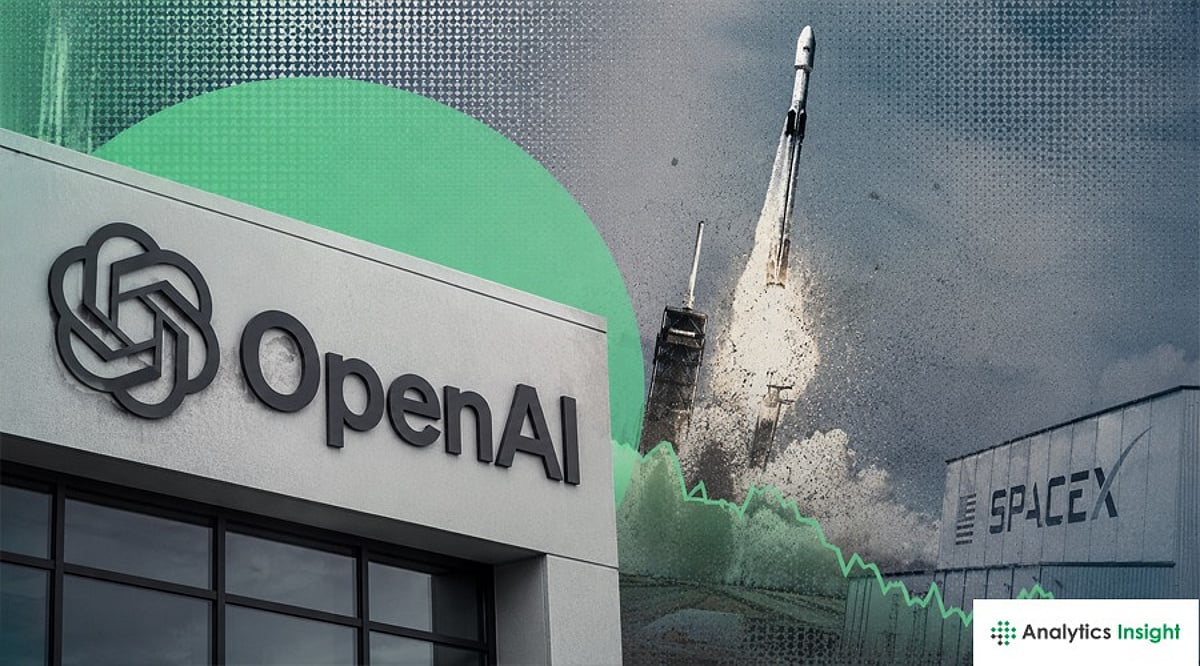
    OpenAI is reportedly considering delaying its initial public offering until 2027, as financial advisers question whether current market conditions can support a $1 trillion valuation. The ChatGPT developer had been preparing for a possible listing in late 2026 after filing confidential paperwork with the U.S. Securities and Exchange Commission.

    The potential shift follows notable volatility in technology shares. SpaceX’s stock, which soared after its June 2026 IPO, has since fallen sharply, raising concerns about investor appetite for high-valuation tech offerings.

    Advisers Flag Concerns Over 2026 IPO Timing

    OpenAI has engaged bankers and legal teams to explore a public listing. CEO Sam Altman reportedly directed the team to target a $1 trillion market capitalization, exceeding OpenAI’s most recent private valuation of roughly $852 billion. However, advisers cautioned that public markets may not show sufficient enthusiasm for the deal under current conditions.

    According to sources familiar with the discussions, two paths were presented: wait until 2027 to pursue the full valuation, or accelerate the timeline in 2026 at a lower price. Altman described any valuation reduction as a “nonstarter.” OpenAI confirmed it has filed confidential IPO documents but emphasized it has not committed to any specific timeline.

    Financial Readiness and Spending Pressures

    OpenAI generated approximately $13 billion in revenue last year while reporting a net loss of about $21 billion. The company expects sustained heavy spending on computing infrastructure, chips, data centers, and hardware through 2030. CFO Sarah Friar has voiced concerns about whether OpenAI is prepared for the rigorous public reporting requirements, including regular financial statements, risk disclosures, and cost guidance.

    Meanwhile, OpenAI is exploring new revenue streams. It has tested advertising within ChatGPT and is pursuing commerce partnerships with Shopify and Stripe. The company has also scaled back spending on some loss-making projects, such as parts of its Sora video business, as part of a broader cost-review initiative.

    SpaceX Market Activity Reshapes IPO Sentiment

    SpaceX went public on June 12 in a record-breaking IPO that raised more than $85 billion. Shares initially surged above $225 but later dropped to around $153, demonstrating how quickly investor sentiment can shift after a high-profile debut. This volatility has become a key reference for OpenAI’s advisers, reinforcing that a strong first trading day does not guarantee sustained support at elevated valuations.

    Broader weakness in the technology sector has also made investors more cautious toward capital-intensive companies. Anthropic, another AI firm, has filed confidentially for its own IPO, and other companies like Discord, Kraken, Strava, and Oura have also entered the IPO pipeline, creating a crowded market.

    OpenAI has not made a final decision. The company could still list in late 2026 at a lower valuation, or postpone to 2027. Any update will depend on its financial performance, spending trajectory, market stability, and investor confidence in the $1 trillion target.