Tag: technology trends

  • AI, Cloud, and Cybersecurity: The Three Forces Reshaping Tech Stocks in 2026

    AI, Cloud, and Cybersecurity: The Three Forces Reshaping Tech Stocks in 2026

    Technology stocks are entering a pivotal period as artificial intelligence, cloud computing, cybersecurity, and shifting enterprise spending patterns reshape the IT sector. For investors tracking technology companies, the focus is moving from traditional outsourcing growth to how businesses adapt to newer technology cycles.

    In India, this transition is already influencing the outlook for IT services companies. Recent industry assessments point to muted near-term growth as clients remain cautious about discretionary technology spending, while AI simultaneously creates new demand for cloud, data engineering, cybersecurity, and digital transformation.

    AI Is Changing the IT Services Model

    AI will be a major factor influencing technology stocks in the coming years. But AI will not only open new avenues for companies—AI-driven productivity gains are also pressuring IT service providers’ business models.

    According to Crisil Ratings, the IT services industry in India would see subdued revenue growth of 1-3% this fiscal year and next, driven by disruption from artificial intelligence, subdued discretionary spending, and geopolitical uncertainties. Companies will have to reimagine their models and move into newer services, the rating agency said.

    Meanwhile, ICRA forecasts an annualized revenue growth rate of 3-5% for its basket of Indian IT services firms in FY2027 from 3.5% in FY2026. It says demand for traditional services will continue to be affected by delays in discretionary spending tied to generative AI.

    Cloud Spending Remains Key Growth Area

    Cloud computing remains an important part of the technology investment cycle as businesses move more applications and workloads to scalable infrastructure.

    Gartner forecasts that end-user spending on public cloud services in India will grow 28.1% in 2026 to USD 17.5 billion, up from USD 13.7 billion in 2025. The research firm said demand for AI-ready infrastructure and application modernization is driving this increase.

    For technology companies, this creates opportunities beyond traditional application development. Cloud migration, modernization, and consumption-based technology models are becoming increasingly connected to enterprise AI strategies.

    Data Centers and Semiconductors Gain Importance

    The AI revolution is creating investment opportunities not only for software companies but also for the technologies needed to build and sustain AI infrastructure.

    According to Deloitte, India’s data center power capacity will increase from around 1.5 GW in 2025 to around 10 GW by 2030. Moreover, the sector’s electricity consumption would be around 57 TWh in FY2030.

    This indicates that tech investors are increasingly interested in firms that build infrastructure for AI and cloud-based computing, rather than focusing only on software firms.

    Importance of Cybersecurity Grows

    As more companies adopt cloud computing and AI applications, cybersecurity is becoming a critical area of technology investment. As per CRISIL, Indian IT firms will invest selectively in AI, cloud, cybersecurity, and digital engineering in the future. Healthy balance sheets and cash flow will enable these investments.

    What It Means for IT Stocks

    The evolving technology ecosystem is adding complexity for IT stocks. Firms heavily dependent on legacy services face pressure from subdued discretionary spending and productivity gains from artificial intelligence. On the other hand, AI deployment, cloud adoption, cybersecurity, and modernization create business opportunities.

    Recent market trends stem from this uncertainty. As reported by The Economic Times in September, the Nifty IT index surged 5% in a single day of trading, adding Rs 1.13 lakh crore to market cap.

    The Next Phase of Technology Growth

    The future performance of tech stocks is likely to depend not on AI use alone but on companies’ ability to turn AI demand into revenue and preserve margins despite improved productivity. For the Indian IT industry, this transition will also mean shifting its focus toward offering higher value-added services like AI-driven transformation, application modernization, data engineering, cloud, and cybersecurity solutions.

    According to ICRA, these verticals are expected to grow as organizations move generative AI initiatives from pilots to broader implementations across the company. Overall, the technology industry is currently experiencing a structural change cycle, not just a boom cycle, driven by AI changing how technology is developed and used, growing cloud infrastructure demand, and cybersecurity becoming crucial to operations.


  • AI Models to Watch in 2026: The Next Generation of Frontier Systems

    AI Models to Watch in 2026: The Next Generation of Frontier Systems

    2026 has ushered in a new wave of powerful AI models, with frontier systems pushing the boundaries of deep reasoning, coding, multimodal understanding, and autonomous computer use. Here are the key models shaping the fast-moving AI landscape.

    OpenAI GPT-6 Series

    • GPT-6 Astra: OpenAI’s flagship model for demanding end-to-end work, combining advanced reasoning with computer use, coding, research, and professional workflows.
    • GPT-6 Sol: Brings many of Astra’s advances into a more broadly usable model, balancing frontier intelligence with speed, affordability, and large-scale professional workloads.
    • GPT-6 Luna: Focuses on faster, more affordable AI access, bringing GPT-6 generation improvements to everyday users and high-volume workloads at a lower cost.

    Anthropic Claude Models

    • Claude Fable 5.1: Anthropic’s model for advanced coding and knowledge work, with research capabilities designed to support increasingly complex professional and scientific tasks.
    • Claude Opus 5.5: Another major contender from Anthropic, positioned around demanding professional work while reducing running costs compared to Opus 5.

    Other Notable Models

    • Gemini 3.1 Pro: Builds on Google’s Gemini 3 generation with stronger core reasoning and support for agentic workflows across Google’s consumer, developer, and enterprise products.
    • Grok 4.6: Focuses on long-running agents, interactive tasks, and visual work, with capabilities spanning research, information analysis, coding, and application creation.
    • Kimi K3: Stands out as an open-weight model with 2.8 trillion parameters, native vision, and a 1-million-token context window for long-horizon coding and knowledge work.

    These models represent the cutting edge of AI development in 2026, each bringing unique strengths to the rapidly evolving field.

  • AI Adoption Accelerates Around the World: UAE and Singapore Top Rankings as South Korea Climbs Fastest

    AI Adoption Accelerates Around the World: UAE and Singapore Top Rankings as South Korea Climbs Fastest

    AI Adoption Is Accelerating Worldwide

    Generative AI continues to expand its reach across the globe. According to Microsoft’s latest estimates, 18.8% of the global working-age population used a generative AI product in June 2026—a rise from the previous quarter. While adoption is climbing in nearly every economy, significant disparities remain across regions and countries in terms of access and usage.

    UAE Leads Global Adoption

    The United Arab Emirates continues to hold the top spot for AI diffusion. Microsoft’s June 2026 data shows that 73.3% of the country’s working-age population used AI tools. The UAE’s strong digital infrastructure, proactive government policies, and widespread technology access have contributed to its global leadership.

    Singapore Remains a Major Hub

    Singapore ranks second globally, with a 64.3% AI diffusion rate as of June 2026. The city-state has consistently ranked among the strongest AI-adopting markets. Its advanced digital infrastructure, thriving technology ecosystem, and high internet penetration have created favorable conditions for generative AI to become part of everyday life—both at work and at home.

    South Korea Shows Fastest Growth

    South Korea posted the biggest quarterly increase in Microsoft’s June 2026 data, gaining 3.5 percentage points. The country has emerged as one of the fastest-growing AI markets, driven by workplace adoption, government initiatives, and consumer-focused AI applications. This growth also underscores how local language capabilities can significantly influence AI adoption rates.

    Japan and Türkiye See Rapid Growth Too

    OECD data tracking generative AI chatbot usage reveals that Japan and Türkiye experienced the highest growth during 2025, with usage rates more than doubling. Singapore also saw a substantial jump, rising from 36% to 63% of its population using AI chatbots. It’s important to note that these figures rely on a different methodology than Microsoft’s diffusion measure.

    The Global AI Adoption Gap

    The gap between developed and developing economies remains wide. Microsoft estimates that 28.8% of the working-age population in the Global North used generative AI in June 2026, compared with just 16.2% in the Global South. Infrastructure, connectivity, skills, and language accessibility continue to be major barriers to broader adoption.

    What the Numbers Show

    The global AI race is increasingly about adoption, not just building advanced models. Countries with strong digital foundations are seeing faster usage growth, while others struggle with infrastructure and skills gaps. Since different datasets measure AI use differently, cross-country comparisons should be treated as indicators rather than precise measurements of total adoption.

  • India’s Data Science Job Market Set to Surge 34% as Generative AI Creates New Roles

    India’s Data Science Job Market Set to Surge 34% as Generative AI Creates New Roles

    India’s data science job market is entering a dynamic new phase, propelled by the rapid adoption of Generative AI, AI agents, and automation. According to the Data Science Education Report 2026, the sector is projected to grow by 34% between 2024 and 2034, with approximately 23,400 annual openings and 82,500 additional jobs over the period. Traditional roles like data analyst and machine learning engineer are being supplemented—and in some cases overtaken—by emerging positions in AI engineering, product management, governance, architecture, and domain-specific applications.

    GenAI Engineers Take Center Stage

    Generative AI is driving demand for professionals skilled in building and managing systems powered by Large Language Models (LLMs), Retrieval-Augmented Generation (RAG) pipelines, and AI agents. GenAI Engineers are responsible for developing AI applications, workflow automation, and intelligent decision-making systems. Prompt Architects, meanwhile, are evolving into “Logic Designers” focused on reducing AI hallucinations—a challenge cited by 56% of Indian companies. The report estimates that around 40% of Indian business applications could adopt AI agents by 2026.

    Bridging Technology and Business

    As AI projects move from pilots to scaled products, the AI Product Manager role is gaining prominence. These professionals understand how AI capabilities translate into business value, working across engineering and business teams to oversee adoption, track performance, and ensure commercial scalability. With 72% of Indian companies expanding Generative AI initiatives, the need for such cross-functional leaders is acute.

    AI Governance: A Trending Career Path

    The rise of AI also creates demand for governance and risk specialists who oversee ethical deployment, regulatory compliance, and risk management. According to EY India data, 51% of organizations have experienced negative outcomes from unmanaged AI systems, and there is a 53% talent gap in professionals skilled in algorithmic bias audits and Explainable AI (XAI). For data professionals, knowledge of data protection and responsible AI is becoming as essential as technical expertise.

    AI Architects Building Infrastructure

    AI Solutions Architects design the infrastructure for deploying AI across hybrid-cloud and multi-cloud environments. They build scalable systems, manage complexity, and support AI agents, distributed computing, and sovereign AI initiatives that comply with data residency regulations.

    Domain Expertise: A Key Differentiator

    The next wave of data science jobs will not be limited to tech companies. Hybrid roles combining AI skills with domain knowledge in healthcare, finance, agriculture, retail, and logistics are in high demand. Specialized positions include Foundation Model Scientists, Model Deployment Specialists, Revenue Intelligence Scientists, Product Intelligence Scientists, FinTech Analytics Scientists, retail analytics scientists, supply chain intelligence scientists, graph data scientists, risk data analysts, and experimentation scientists.

    Skills to Lead the Market

    To thrive, professionals should strengthen machine learning, Python, big data, cloud computing, real-time analytics, data engineering, deep learning, NLP, computer vision, and AI automation. Soft skills like critical thinking, debugging, and data quality management are increasingly vital. The employment outlook remains robust: data scientist roles are projected to grow 34% from 2024 to 2034, with about 23,400 annual openings.

    In summary, the future of data science belongs not only to those who can work with data, but to professionals who can build, deploy, govern, and apply AI to real business problems.

  • The Best Startup Podcasts for Entrepreneurs in 2026: Insights on AI, Funding, and Growth

    The Best Startup Podcasts for Entrepreneurs in 2026: Insights on AI, Funding, and Growth

    In 2026, startup podcasts have become an indispensable resource for entrepreneurs, investors, and business professionals. These shows offer a wealth of knowledge on company building, market trends, funding strategies, and technology shifts. As startups continue to explore artificial intelligence, automation, fintech, and other emerging sectors, podcasts provide accessible conversations with industry leaders and experienced founders.

    Founder Experiences Inspire New Entrepreneurs

    Founder-focused podcasts remain a magnet for audiences by sharing authentic stories of building companies from early ideas to successful businesses. Entrepreneurs openly discuss challenges such as raising capital, developing products, managing teams, and entering competitive markets. These conversations help aspiring founders understand the realities of entrepreneurship and learn practical lessons from those who have navigated the journey.

    AI Takes Center Stage in Startup Discussions

    Artificial intelligence continues to dominate startup podcasts in 2026. Founders and investors are exploring AI-powered businesses, automation tools, intelligent software, and the new opportunities created by generative AI. These discussions help entrepreneurs understand how emerging technologies can boost productivity, create innovative products, and transform traditional industries.

    Investors Share Funding Insights

    Podcasts are giving entrepreneurs unprecedented access to venture capital perspectives and funding strategies. Investors discuss shifting market conditions, startup valuations, business models, and what makes a company attractive for investment. As funding environments become more focused on strong fundamentals, founders are learning how to build sustainable businesses and craft better fundraising pitches.

    New Technologies Open Startup Opportunities

    Technology innovation is unlocking new possibilities across industries. Podcasts highlight developments in cybersecurity, robotics, climate technology, healthcare, blockchain, and enterprise software. These conversations help audiences understand how entrepreneurs are leveraging advanced technologies to solve real-world problems and create businesses designed for the future.

    Growth Strategies Take the Spotlight

    Modern startup discussions increasingly focus on efficient growth and long-term success. Entrepreneurs share strategies for customer acquisition, automation, team building, product development, and operational improvements. With businesses seeking smarter ways to scale, podcasts help founders discover methods to enhance performance while adapting to evolving market conditions.

    The Evolution of Startup Media

    Startup podcasts are set to remain a valuable resource for entrepreneurs and business enthusiasts as the ecosystem continues to evolve. By blending expert opinions, founder stories, and industry analysis, these platforms offer a window into the future of business. As new technologies emerge, startup conversations will keep shaping how companies are created and expanded globally.

  • 8 Breakthroughs Quantum Computing Could Deliver by 2030

    8 Breakthroughs Quantum Computing Could Deliver by 2030

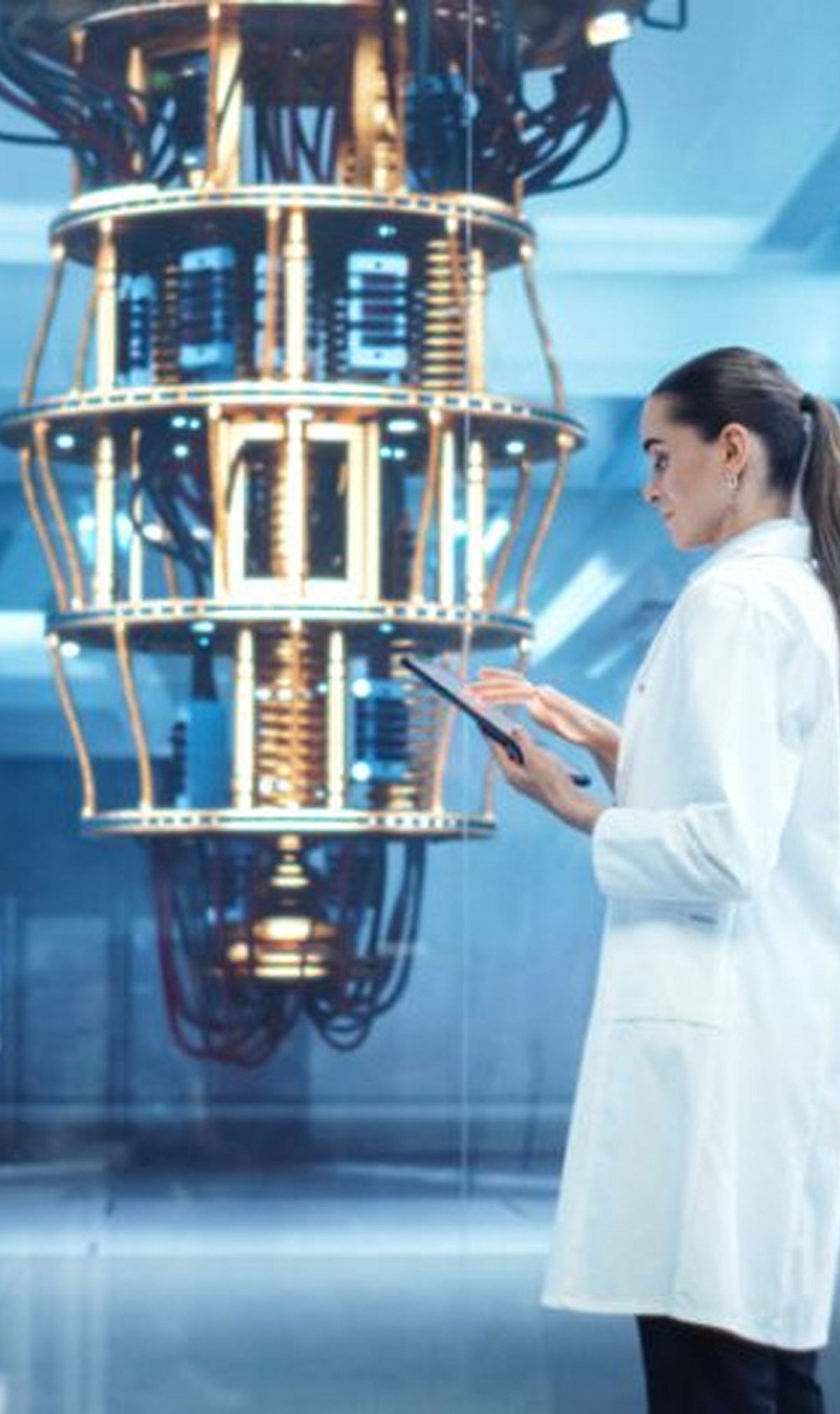
    Quantum computing is no longer a distant theoretical concept—it is rapidly advancing toward practical applications that could transform industries. By 2030, these powerful machines may solve some of the most complex problems facing humanity. Here are eight real-world challenges quantum computers are expected to tackle.

    Drug Discovery

    Quantum computers can simulate complex molecular interactions with unprecedented accuracy. This capability will help researchers identify promising drug candidates much faster than traditional computing methods, potentially accelerating the development of treatments for diseases like cancer and Alzheimer’s.

    Battery Development

    Advanced quantum simulations may revolutionize the design of batteries. By modeling chemical reactions at the quantum level, scientists could create longer-lasting, safer, and more efficient batteries for electric vehicles and renewable energy storage.

    Supply Chain Optimization

    Businesses face enormous complexity in logistics. Quantum algorithms can optimize shipping routes, warehouse operations, and inventory management, reducing costs and improving efficiency across global supply chains.

    Financial Modeling

    Banks and investment firms will use quantum computers to analyze risk scenarios and market trends far faster than classical systems. This will support more informed portfolio management and better forecasting of economic shifts.

    Climate Research

    Modeling Earth’s climate involves countless variables. Quantum computers can simulate atmospheric interactions with greater precision, improving weather forecasts and deepening our understanding of long-term climate change patterns.

    Cybersecurity Research

    Quantum systems offer both challenges and solutions for security. They can strengthen encryption research and help develop communication methods that are resistant to future cyber threats, safeguarding digital infrastructure.

    Material Science

    Designing new materials requires understanding molecular structures. Quantum simulations will enable researchers to create stronger, lighter, and more efficient materials for aerospace, electronics, and manufacturing.

    Traffic Management

    Urban congestion is a growing problem. Quantum-powered optimization algorithms could help cities design smarter traffic signals, improve transportation networks, and enhance public transit systems, reducing travel times and emissions.

  • 9 Technologies That Are Likely to Disappear by 2030

    9 Technologies That Are Likely to Disappear by 2030

    Technology evolves rapidly, and many once-essential tools are becoming obsolete. From authentication methods to transportation, here are nine technologies that are expected to fade away by 2030 as smarter, more efficient alternatives take over.

    Passwords

    Traditional passwords are increasingly vulnerable and inconvenient. Passkeys, biometrics (fingerprint, facial recognition), and multi-factor authentication offer stronger, more user-friendly security, likely making passwords a relic of the past.

    Physical SIM Cards

    eSIM technology is replacing removable SIM cards, simplifying device activation and allowing users to switch carriers without swapping cards. This innovation improves flexibility for mobile network users worldwide.

    Cable Television

    Streaming platforms and on-demand content are steadily replacing traditional cable subscriptions. Internet-based entertainment services offer flexible, personalized viewing experiences, driving the decline of cable TV.

    Gas-Powered Cars

    Electric vehicles (EVs) are advancing rapidly as governments enforce stricter emissions regulations and expand charging infrastructure. The transition to cleaner transportation is accelerating the phase-out of gasoline-powered cars.

    Cash Payments

    Digital wallets, UPI, contactless cards, and mobile banking continue to reduce dependence on physical currency for everyday transactions. The convenience and security of digital payments are pushing cash toward extinction.

    Standalone GPS Devices

    Smartphone navigation apps like Google Maps and Waze offer real-time traffic updates, offline maps, and continuous updates, eliminating the need for dedicated GPS hardware for most consumers.

    USB-A Ports

    USB-C is becoming the universal standard for charging and data transfer, offering faster speeds, higher power delivery, and reversible connectors. Manufacturers are progressively phasing out USB-A ports in modern devices.

    Mechanical Hard Drives

    SSDs (solid-state drives) are rapidly replacing traditional hard drives due to their superior speed, durability, energy efficiency, and decreasing cost per gigabyte. Mechanical drives are becoming obsolete for most applications.

    Manual Customer Support

    AI-powered chatbots and intelligent virtual assistants increasingly handle routine customer queries, providing instant responses 24/7. This reduces reliance on traditional human-only support systems, transforming customer service.

    These nine technologies represent major shifts in how we interact with the world. Staying informed can help businesses and consumers adapt to the inevitable changes ahead.

  • 7 Must-Read AI Newsletters for Business Leaders in 2026

    7 Must-Read AI Newsletters for Business Leaders in 2026

    As artificial intelligence reshapes industries at an unprecedented pace, executives need curated, reliable sources to separate signal from noise. The right AI newsletter delivers actionable insights, strategic analysis, and practical use cases—without overwhelming your inbox. Here are seven top newsletters every business leader should consider adding to their morning routine.

    Top AI Newsletters at a Glance

    The Rundown AI

    Perfect for those with only five minutes a day, The Rundown AI covers AI breakthroughs, product launches, and regulatory news in a concise format. It also includes productivity tips and tutorials, making it valuable for both engineers and executives seeking actionable insights.

    The Batch

    Created by DeepLearning.AI, The Batch translates complex AI research into digestible explanations for business leaders. It focuses on why a development matters and how companies can apply it, helping executives bridge the gap between technical teams and corporate strategy.

    Exponential View

    Written by technology analyst Azeem Azhar, Exponential View offers deep analysis of the intersection of AI, geopolitics, economics, and innovation. It’s ideal for long-term strategic thinking rather than daily news consumption.

    Superhuman AI

    Designed for professionals who want to leverage AI for productivity, Superhuman AI delivers practical tips on new tools, automation, and prompts. Busy executives will appreciate its focus on actionable suggestions without heavy technical jargon.

    The Neuron

    The Neuron presents the latest AI news in a conversational, easy-to-read tone. It covers major company updates, new products, enterprise software, and productivity—all in short articles perfect for morning reading.

    TLDR AI

    For executives working closely with engineering or product teams, TLDR AI summarizes research papers, product updates, and machine learning news in a few minutes. It’s a quick way to stay informed on technical developments.

    Ben’s Bites

    Founded by entrepreneur Ben Tossell, Ben’s Bites offers a founder’s perspective on the AI ecosystem, tracking startups, investments, product announcements, and real-world case studies. It’s a valuable source for executives scouting innovations, partnerships, and acquisition opportunities.

    Why This Matters

    Regularly reading a trusted AI newsletter sharpens strategic thinking, provides fresh ideas, and supports informed decision-making in an increasingly AI-driven world. A balanced mix of daily briefings and weekly deep-dives keeps leaders ahead without information overload.

    Conclusion

    No single newsletter covers everything. Combine a daily briefing like The Rundown AI for news, The Batch for knowledge, and Exponential View for long-term strategy. This trio ensures you stay informed, educated, and strategically prepared.

    Frequently Asked Questions

    Which AI newsletter is best for busy executives?

    The Rundown AI offers concise daily updates, helping executives stay informed about major AI developments, business trends, and useful productivity tools.

    Are AI newsletters free to subscribe to?

    Many leading AI newsletters offer free editions, while some provide premium subscriptions with deeper analysis, exclusive content, and additional resources.

    How often should executives read AI newsletters?

    Reading one daily newsletter and one weekly strategic publication is usually enough to stay updated without feeling overwhelmed by information.

    Which AI newsletter focuses on long-term business strategy?

    Exponential View examines AI, innovation, economics, and technology trends, helping leaders understand long-term business opportunities and emerging market shifts.

    Can AI newsletters help with business decision-making?

    Yes. They provide curated insights, practical use cases, and industry trends that support informed decisions on AI adoption and digital transformation.