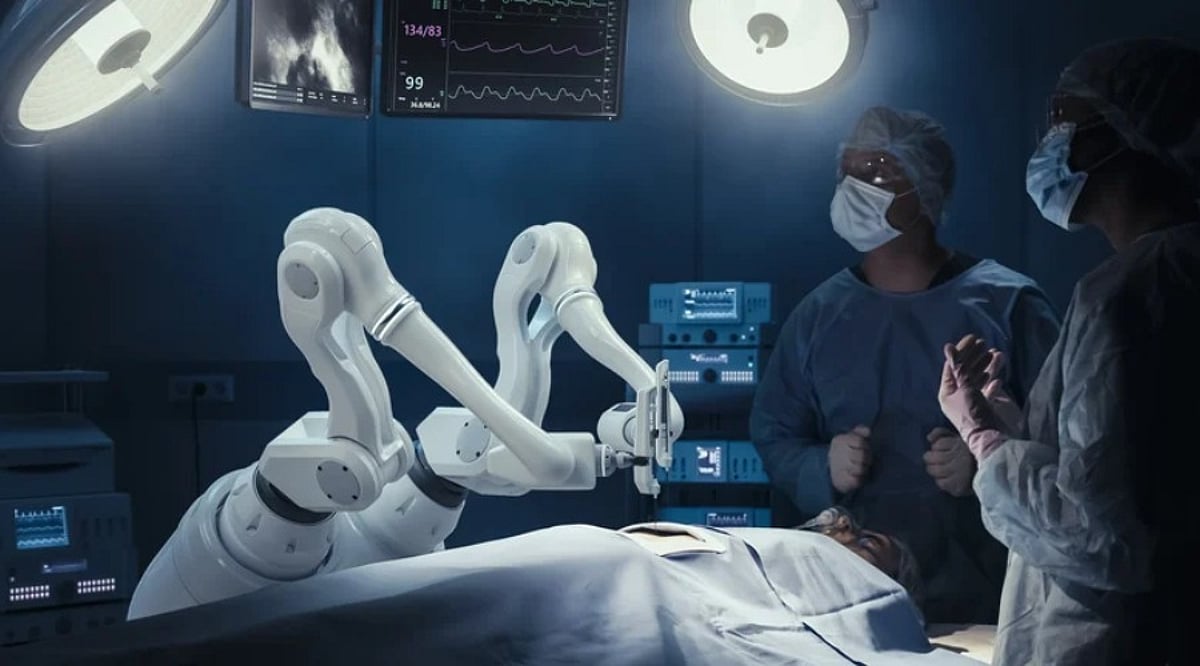
Healthcare innovation is transforming disease diagnosis, remote monitoring, hospital management, and public health through AI, IoT, and digital technologies. Practical solutions such as telemedicine platforms, wearable devices, and health informatics systems improve care delivery. Responsible data handling and ethical AI remain essential for building effective healthcare solutions.
Healthcare sits at the intersection of urgent real-world need and fast-moving technology. That combination makes it one of the few project categories where a student build can resemble something an early-stage health-tech startup might create. The twenty healthcare project ideas below span five categories: AI diagnostics, wearable and remote monitoring, telemedicine and access, hospital and health informatics systems, and public health and accessibility.
AI Diagnostics
A disease prediction model built on public datasets, such as the UCI Machine Learning Repository’s diabetes or heart disease records, teaches the full pipeline from cleaning to evaluation. A medical image classifier trained on the NIH Chest X-ray Dataset introduces convolutional neural networks in a context where accuracy differences carry real stakes. Brain tumor detection using MRI scans goes deep learning and image segmentation, and it remains a common final-year project in biomedical engineering programs. A skin condition scanner, built on the ISIC Skin Lesion Dataset and wrapped in a phone app, pairs a trained model with a usable interface instead of leaving it in a notebook.
Wearables and Remote Monitoring
A vital-sign smartwatch prototype, built on Arduino or Raspberry Pi with heart rate and oxygen sensors, teaches hardware and software integration end to end. A fall detection system for elderly users combines accelerometer data with a simple alert mechanism. This idea maps directly onto assistive technology already sold commercially. A glucose tracking app can simulate continuous monitoring and alert logic similar to tools diabetics use today. An ICU remote monitoring dashboard introduces real-time data streaming and threshold-based alerting, both core skills in health tech engineering roles.
Telemedicine and Access
A video consultation platform with appointment scheduling and secure record sharing covers full-stack development, along with an introduction to healthcare data privacy. An AI triage chatbot that routes patients to the right specialist combines natural language processing with a decision-tree backend. A rural health kiosk concept pairs basic vital-sign hardware with a video link to a doctor. It addresses a real access gap in regions with limited clinic coverage. An e-prescription system with pharmacy integration shows how healthcare software connects across multiple stakeholders rather than working in isolation.
Hospital and Health Informatics Systems
A hospital readmission predictor, built on public hospital datasets like MIMIC-IV, sits among the more research-backed categories on this list. Predictive analytics for readmissions is already deployed at many health systems, so the project mirrors real practice closely. A bed and resource allocation tool applies operations research to a scheduling problem hospitals face daily. An EHR summarizer uses natural language processing to condense long patient records into key points, addressing a documented pain point for clinicians managing heavy caseloads. A medication error checker that flags drug interactions from a prescription list combines a rules engine with a real safety use case. Students drawn to health informatics can also explore FHIR or HL7-based interoperability projects that improve secure data exchange between healthcare systems.
Public Health and Accessibility
A mental health check-in app, using short daily surveys and a simple analytics dashboard, offers an approachable way to work with sensitive personal data responsibly. Assistive technology for people with disabilities, such as voice-controlled home devices, blends hardware design with real accessibility research. An outbreak tracking dashboard, pulling from public health sources like WHO Open Data or the Johns Hopkins COVID-19 dataset, introduces geographic visualization and epidemiological reasoning. A nutrition planning tool for low-income families applies data science to a public health problem outside the usual hospital-centric framing.
Working with Health Data Responsibly
The protection of patient privacy must be built into any project that involves the use of actual or simulated patient information. Remove personal information before using the data. Apply basic principles of HIPAA and GDPR privacy as appropriate. Evaluate AI models by age and demographics for bias. The AI diagnosis or recommendations should be used to assist human decision-making, not to replace it.
Choosing a Project
The strongest student projects pick one clear problem and build a working version, rather than attempting an entire category at once. A disease prediction model with clean data and honest accuracy reporting outperforms an ambitious multi-feature platform left half-finished. Hosting the project on GitHub and deploying a live demo with Streamlit, Flask, or Vercel makes the work easier for recruiters and faculty to evaluate. What tends to matter most is a working prototype with clear documentation and results measured against real or well-known datasets, not a polished pitch alone.
Final Thought
The healthcare projects that stand out are rarely the most technically complex ones. They are the ones built around a problem the student can explain in one sentence and defend with real data. That clarity separates a project that reads well on paper from one that actually demonstrates working judgment.
FAQs
- What are the best healthcare project ideas for students? Some of the best healthcare project ideas for students include disease prediction models, AI-powered medical image classifiers, telemedicine platforms, wearable health monitoring devices, hospital management systems, mental health apps, and public health dashboards. These projects combine practical technology skills with real-world healthcare applications.
- Which healthcare projects are suitable for final-year engineering students? Final-year engineering students can build projects such as AI disease diagnosis systems, ICU remote monitoring dashboards, electronic health record (EHR) summarizers, medication error detection tools, hospital bed allocation systems, or IoT-based wearable health devices. These projects demonstrate skills in AI, IoT, data analytics, and software development.
- What technologies are commonly used in healthcare student projects? Healthcare student projects often use Python, TensorFlow, Scikit-learn, OpenCV, React, Node.js, Flutter, Arduino, Raspberry Pi, Firebase, SQL databases, and cloud platforms. The choice of technology depends on whether the project focuses on AI, mobile applications, IoT, or healthcare data management.
- Can I build a healthcare project without access to medical equipment? Yes. Many healthcare projects can be developed using publicly available datasets, simulated patient data, or software prototypes. Examples include AI diagnostic models, telemedicine applications, hospital analytics dashboards, nutrition planning tools, and healthcare chatbots without requiring specialized medical hardware.
- How do I choose the right healthcare project for my skill level? Choose a project that matches your technical skills and available time. Beginners can start with healthcare apps or data visualization projects; intermediate students can build machine learning models or telemedicine platforms, while advanced learners can develop IoT-based monitoring systems or deep learning applications using medical datasets.