Tag: Tether

  • Tether Assists US Authorities in Freezing $550 Million in Iran-Linked USDT Amid Expanded Sanctions

    Tether Assists US Authorities in Freezing $550 Million in Iran-Linked USDT Amid Expanded Sanctions

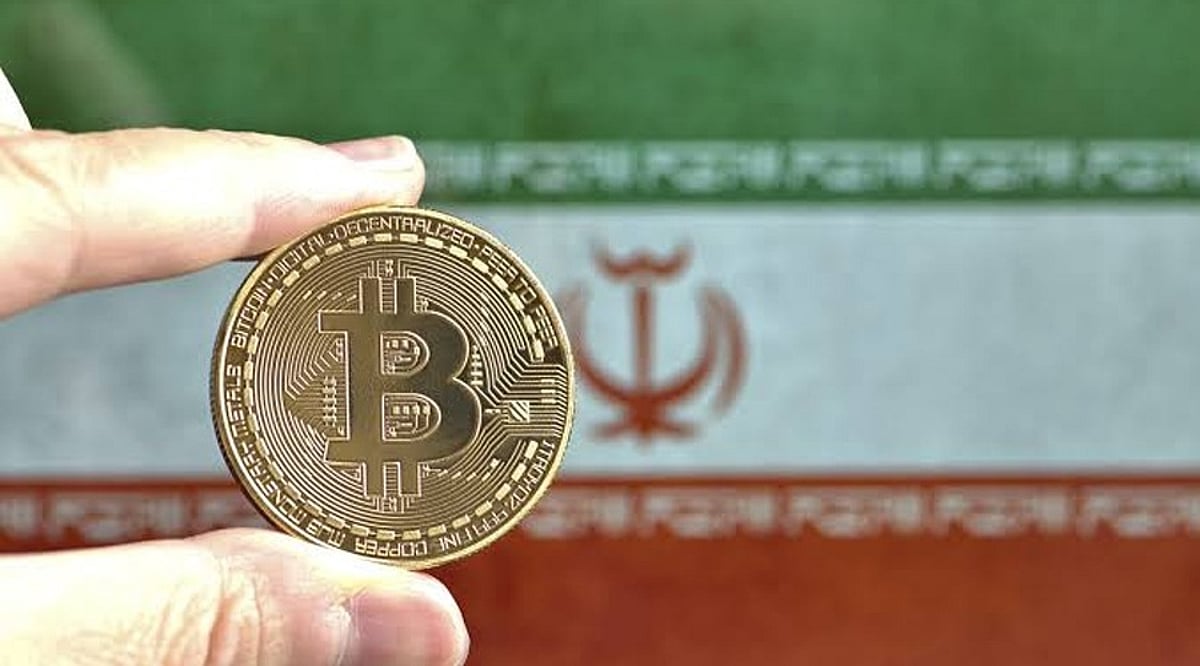
    Tether announced on Monday that it helped US authorities freeze nearly $550 million in Iran-linked USDT this year, as Washington expands sanctions involving cryptocurrency networks. The stablecoin issuer detailed two major freezes involving TRON addresses linked to US sanctions, which together accounted for more than $474 million of the total.

    April Freeze Targets Central Bank of Iran

    In April, Tether locked more than $344 million in USDT across two TRON addresses after receiving information from US authorities. The Treasury’s Office of Foreign Assets Control (OFAC) added both addresses to its Central Bank of Iran sanctions entry on April 24, linking the bank to the IRGC Qods Force and Hezbollah.

    July Freeze Follows OFAC Expansion

    OFAC later added four more TRON addresses to the same sanctions entry on July 14. Tether then froze more than $130 million in USDT across those wallets. The April and July actions together totaled more than $474 million. Tether said its Iran-related freezes this year reached nearly $550 million, though it did not itemize the remaining amount.

    Tether CEO Paolo Ardoino noted that public blockchains give authorities greater visibility into fund movements than cash, and that Tether can respond when law enforcement provides credible information.

    US Treasury Intensifies Pressure on Iran-Linked Networks

    The freezes came as the US Treasury increased pressure on Iran-linked financial networks. In June, Treasury sanctioned Nobitex, Iran’s largest cryptocurrency exchange, for helping Iran’s central bank obtain stablecoins that supported the falling rial. Treasury Secretary Scott Bessent launched Operation Economic Outcast on August 24, targeting financial networks connected to the Iranian government. The initiative covers digital assets, technology, gold, aviation, and shipping, as Treasury said Iran increasingly uses cryptocurrency to avoid sanctions, including transactions connected to the IRGC.

    On September 17, OFAC sanctioned Iranian crypto exchange BitBank, which Treasury said is controlled by sanctioned financier Babak Zanjani. Treasury alleged that BitBank moved hundreds of millions of dollars in Bitcoin to the IRGC during June and July.

    Broader Enforcement and Collaboration

    Tether also said it has worked with Israel’s National Bureau for Counter Terror Financing for several years. Through more than 40 referred cases, Tether froze over 22 million USDT. In September 2025, the bureau published 187 crypto addresses linked to the IRGC, and blockchain analytics firm Elliptic said those wallets received $1.5 billion in USDT. Tether later blacklisted 39 of those addresses and froze nearly $1.5 million remaining in them.

    Across all enforcement-related cases, Tether has helped freeze more than $4.9 billion, with over $2.4 billion of that amount involving US authorities.

    EQIBank Exposure Raises Separate Questions

    Tether has also disclosed exposure to EQIBank, which is challenging a US seizure involving payment processor Capstone Limited. On September 25, Tether told PYMNTS that its exposure represented less than 0.034% of the Tether group’s assets, without providing a dollar figure. The company did not say whether that exposure forms part of the reserves backing USDT. The US government filed a civil forfeiture complaint in July, listing about $83.03 million across three bank balances and approximately 1.18 million USDT at two addresses. A later court order identified the bank accounts as belonging to Capstone, but the court record does not identify the listed property as Tether’s assets. EQIBank sought the return of seized property, but a court denied that motion, leaving the final forfeiture case unresolved.

  • Bitcoin ETF Inflows, Tether Freeze, and BitMine’s 6M ETH Milestone: Crypto News Roundup

    Bitcoin ETF Inflows, Tether Freeze, and BitMine’s 6M ETH Milestone: Crypto News Roundup

    Bitcoin ETFs See $31 Million in Net Inflows

    Spot Bitcoin exchange-traded funds recorded a net inflow of $31.07 million on the latest trading day, according to SoSoValue. BlackRock’s IBIT led the charge with a daily net inflow of $54.84 million, bringing its historical net inflow to $65.34 billion. Grayscale’s BTC fund followed with $10.32 million in net inflows, while its GBTC product experienced the largest net outflow at $23.19 million. The total net asset value of all Bitcoin spot ETFs now stands at $107.82 billion, with a cumulative historical net inflow of $57.58 billion.

    Tether Freezes $550 Million in Iran-Linked USDT

    Stablecoin issuer Tether announced on September 28 that it had helped freeze approximately $550 million in USDT held in wallets connected to Iran. The company stated that the freeze was part of its ongoing cooperation with U.S. law enforcement, targeting addresses linked by U.S. authorities to the Central Bank of Iran and its sanctions networks. In April, Tether had already frozen more than $344 million in USDT across two addresses at the request of the Treasury Department’s Office of Foreign Assets Control (OFAC).

    Hedera Hits Eight-Month High

    Hedera’s native token HBAR surged roughly 25% in a single day, reaching its highest level since early January at around $0.13 before settling back to $0.12. This represents a 60% increase over the past two weeks. The rally pushed Hedera’s market capitalization above $5 billion, making it the 26th-largest cryptocurrency and surpassing Avalanche (AVAX) and Sui (SUI). A key catalyst for the uptrend was the partnership between IBM and the Hashgraph Group to bring Hedera-based IDTrust to IBM Cloud, enabling verifiable digital identity for AI agents.

    Verona Launches verUSD Stablecoin for AI Agents

    The Verona network (formerly XION) has launched verUSD, a dollar-pegged stablecoin designed for settling transactions and purchasing verified data between artificial intelligence agents. Unveiled at Korea Blockchain Week in Seoul, the stablecoin is backed by over $100 million in institutional commitments, including more than $60 million in contracted revenue volume and capital from firms such as Animoca Ventures, Figment Capital, and Sfermion. Issued through Brale and backed 1:1 by U.S. bank reserves, verUSD is initially available on Ethereum, Polygon, Avalanche, Optimism, Arbitrum, Celo, and Solana.

    BitMine Crosses 6 Million ETH

    Ethereum treasury company BitMine Immersion Technologies reported that its ether holdings have surpassed six million tokens, reaching 6,001,302 ETH, or approximately 4.9% of Ethereum’s 122.1 million-token supply. The NYSE-listed firm valued its combined crypto, cash, marketable securities, and equity stakes at $17.2 billion as of September 27. BitMine is now 98% of the way to its ‘Alchemy of 5%’ goal of holding 5% of all ether in circulation. Of its total holdings, 5,067,309 ETH (about 84%) is staked, valued at $2,698 per token based on Coinbase prices.

    FAQs

    How much flowed into Bitcoin spot ETFs yesterday?

    Bitcoin spot ETFs recorded $31.07 million in net inflows, led by BlackRock’s IBIT with $54.84 million, while Grayscale’s GBTC saw $23.19 million in outflows.

    Why did Tether freeze $550 million in USDT?

    Tether stated the freeze resulted from cooperation with U.S. law enforcement, targeting wallets linked by U.S. authorities to Iran’s central bank and sanctions networks. Approximately $344 million was frozen across two addresses in April.

    Why did Hedera’s HBAR price rise?

    HBAR jumped roughly 25% in a day and 60% over two weeks, reaching around $0.13. The rally coincided with an IBM-Hashgraph Group initiative involving Hedera-based digital identity infrastructure for AI agents.

    What is Verona’s verUSD stablecoin?

    verUSD is a dollar-pegged stablecoin designed for transactions and verified-data purchases between AI agents. It launched with over $100 million in institutional commitments and support across several blockchain networks.

    How much Ethereum does BitMine hold?

    BitMine reported holdings of 6,001,302 ETH, equivalent to about 4.9% of Ethereum’s total supply. Approximately 5.07 million ETH (84% of its holdings) is staked.

  • US Justice Department Files $61M Crypto Forfeiture Case Over Iranian Oil Sales

    US Justice Department Files $61M Crypto Forfeiture Case Over Iranian Oil Sales

    The US Justice Department has initiated a civil forfeiture action targeting more than $61 million in cryptocurrency allegedly connected to Iran’s black-market oil operations. Prosecutors assert that the proceeds were funneled through digital assets to finance Iran’s military and support terrorist activities.

    DOJ Targets Crypto Tied to Sanctioned Oil Network

    According to the complaint, Iran leveraged sanctioned crude oil sales to generate revenue outside conventional banking channels. Authorities allege a broader cryptocurrency network facilitated the movement of proceeds from these transactions. The Justice Department claims that crypto actors in China and other jurisdictions laundered over $1.5 billion from illicit Iranian oil sales, channeling funds toward Iran, its agents, and proxies.

    FBI officials stated the investigation traced money flows linked to sanctions evasion and suspected terrorist financing. This filing adds to a series of recent US legal actions against Iran-related financial networks.

    Binance Accounts Central to Laundering Allegations

    Prosecutors identified two Chinese companies—Blessed Trust and Hexa Whale—in the complaint, alleging both used Binance trading accounts to process proceeds from black-market Iranian oil sales. Blessed Trust is described as a wealth management or virtual asset custodian entity that also handled transfers and provided fiat-to-crypto on-ramp services. Hexa Whale allegedly offered similar services and collaborated with Blessed Trust and related entities. Authorities further claim both companies sent or received tens of millions of dollars through the US financial system.

    Binance responded, stating it does not tolerate sanctions violations or illicit activity. The exchange said it investigates risks, restricts or freezes accounts when appropriate, removes users, and reports cases to authorities.

    Tether Tokens to Be Replaced in Forfeiture Process

    The complaint notes that Tether Ltd will burn tokens held in the targeted addresses and issue replacement tokens of equal value for transfer into US government custody. The filing also indicates Blessed Trust and Hexa Whale served clients in China’s petroleum and petroleum-products sector. CNBC reported it could not reach either company for comment, while Tether had not responded.

    Washington sanctioned a Chinese independent refinery in April and warned financial institutions about dealings with Chinese refineries processing Iranian oil. Reuters later reported that Iran used barter-like arrangements to buy billions of dollars in goods from China. China ranked among the largest buyers of Iranian oil in 2025, taking more than 80% of Iran’s shipped oil, averaging about 1.4 million barrels per day.

    Conclusion

    The Justice Department’s $61 million forfeiture case centers on alleged crypto flows tied to sanctioned Iranian oil sales. Prosecutors say Blessed Trust and Hexa Whale used Binance accounts and the US financial system, while Tether’s token replacement process would place the targeted value under US government custody.

  • US Seizes $52 Million in Crypto and Shuts Down Xinbi Telegram Channels in Major Crackdown

    US Seizes $52 Million in Crypto and Shuts Down Xinbi Telegram Channels in Major Crackdown

    U.S. authorities have restrained approximately $52 million in scam-related cryptocurrency and seized Telegram channels operated by Xinbi Guarantee, a Chinese-language marketplace that served scam-center operators and vendors. The coordinated action involved Treasury sanctions, Department of Justice wallet seizures, and raids in Madagascar.

    Blockchain analytics firm Elliptic revealed that years of tracking Xinbi wallets enabled the U.S. Secret Service to act against the marketplace, which provides fraud websites, money laundering services, and recruitment for scam compounds in Southeast Asia. Elliptic first exposed Xinbi in May 2025 and now estimates at least $24 billion in transactions since 2022, ranking behind Huione Guarantee’s $31 billion.

    Xinbi Pay, a related payments platform, processed an additional $6 billion, mostly using Tether’s USDT on the TRON blockchain. The United Kingdom sanctioned Xinbi in March 2026, and prosecutors seized two payment wallets holding about $12 million, targeting 47 more wallets. The Justice Department credited Tether for assisting the operation.

    In response to the freezes, Xinbi exchanged roughly $2.8 million in remaining USDT for Decentralized USD (USDD), which lacks an issuer freeze function. However, Elliptic noted that USDD’s backing includes USDT, which issuers can freeze. The Telegram channel seizures disrupted a key communication and commerce route for merchants.

    Separately, Strike Force agents spent two weeks in Madagascar assisting local authorities against 13 Chinese-run scam compounds, leading to nearly 400 arrests and the seizure of over 3,200 electronic devices. About 30 detainees were identified as Chinese leaders and repatriated. The Strike Force has restrained about $938 million in cryptocurrency since its launch in November 2025, with the Xinbi action adding approximately $52 million in one day.

  • Who Regulates Tether (USDT)? A Global Guide to Stablecoin Oversight in 2026

    Who Regulates Tether (USDT)? A Global Guide to Stablecoin Oversight in 2026

    Tether’s USDT is the world’s largest stablecoin, with a market capitalization of $183.3 billion as of September 8, 2026. Yet no single regulator oversees USDT worldwide. Its treatment depends on the issuer, user location, distribution platform, and rules of each jurisdiction. CoinGecko data also showed daily USDT trading volume above $48.09 billion on September 8.

    Tether Is Regulated in El Salvador

    Tether has established significant operations in El Salvador, where the National Commission of Digital Assets (CNAD) regulates the country’s digital-asset market. CNAD lists USDT among the stablecoins authorized for trading, with its public-offering authorization dated May 19, 2025.

    Tether’s legal framework also identifies Tether International, S.A. de C.V. as operating under El Salvador’s digital-asset regime. However, authorization there does not automatically give USDT regulatory approval in other countries.

    United States Is Building a Different Framework

    The U.S. regulatory environment changed with the GENIUS Act. The Treasury said its expected effective date is January 18, 2027. From then on, a person generally cannot issue a payment stablecoin in the United States without an appropriate federal or state license.

    Treasury issued proposed implementation rules in August 2026. FinCEN and the Office of Foreign Assets Control have also proposed anti-money-laundering and sanctions-compliance requirements for permitted stablecoin issuers.

    Foreign-issued stablecoins face additional conditions, including requirements connected to compliance with lawful U.S. orders and recognition of comparable foreign regulatory regimes.

    Tether Created a Separate U.S. Stablecoin

    Tether launched USA₮ in January 2026 rather than making USDT its dedicated U.S.-regulated product. USA₮ is issued by Anchorage Digital Bank, N.A., a federally chartered bank supervised by the Office of the Comptroller of the Currency.

    Tether says USDT continues operating globally while progressing toward GENIUS Act compliance. USA₮ and USDT therefore remain separate products despite belonging to the broader Tether ecosystem.

    Europe Operates Under MiCA

    The European Union regulates crypto assets through Markets in Crypto-Assets (MiCA). The final transitional period for crypto-asset service providers expired on July 1, 2026, according to the European Securities and Markets Authority.

    After that date, firms serving EU customers generally need MiCA authorization. Whether a platform can offer USDT depends on the applicable MiCA requirements, the stablecoin’s status, and the platform’s own authorization.

    Why This Matters

    USDT’s regulatory status cannot be reduced to one regulator or license. Users need to consider the issuer, jurisdiction, and platform involved, as reserve, sanctions, licensing, and availability requirements can differ substantially across markets.

    Final Thoughts

    USDT remains a globally used stablecoin, but oversight is increasingly jurisdiction-specific. El Salvador authorizes USDT, while the U.S. and EU are applying separate frameworks. As stablecoin rules mature, regulatory compliance will increasingly determine where and how USDT can be offered.

    Also Read: How Long Does USDT Take to Transfer? TRC20 vs ERC20 Transfer Times, Fees

    FAQs

    1. Who regulates Tether USDT?
      There is no single regulator responsible for USDT worldwide. Oversight depends on where Tether operates, where USDT is offered, and the regulatory framework of each jurisdiction.
    2. Is USDT regulated in El Salvador?
      Yes. El Salvador’s National Commission of Digital Assets (CNAD) lists USDT among the stablecoins authorized for trading under the country’s digital-asset framework.
    3. How will the GENIUS Act affect USDT in the United States?
      The GENIUS Act introduces federal and state licensing requirements for payment stablecoin issuers. Foreign-issued stablecoins also face conditions involving lawful orders, sanctions compliance, and recognition of comparable regulatory regimes.
    4. What is the difference between USDT and USA₮?
      USDT is Tether’s globally used stablecoin, while USA₮ is a separate product launched for the U.S. market. USA₮ is issued by Anchorage Digital Bank under U.S. federal oversight.
    5. How does MiCA affect USDT in Europe?
      MiCA sets licensing, reserve, governance, and compliance requirements for crypto-asset firms serving EU customers. Whether platforms can offer USDT depends on MiCA rules, the token’s status, and each platform’s authorization.
  • Crypto Roundup: Bitcoin ETF Inflows Hit $170M, XRP Gains RLUSD Lending, TRON Surpasses 15B Transactions

    Crypto Roundup: Bitcoin ETF Inflows Hit $170M, XRP Gains RLUSD Lending, TRON Surpasses 15B Transactions

    Bitcoin Spot ETFs See $170 Million in Net Inflows

    According to data from SoSoValue, U.S. spot Bitcoin ETFs recorded a total net inflow of $170.09 million yesterday. BlackRock’s IBIT led the charge with $111.43 million in daily net inflows, bringing its historical total to $60.59 billion. Fidelity’s FBTC followed with $33.36 million, reaching a cumulative net inflow of $9.95 billion. The overall net asset value of Bitcoin spot ETFs now stands at $77.58 billion, reflecting an ETF net asset ratio of 6.06% and a historical cumulative net inflow of $51.49 billion.

    XRP Holders Can Now Borrow RLUSD on Ethereum

    Flare has integrated FXRP into Sentora’s $280 million RLUSD vault on Morpho, enabling XRP holders to use their assets as collateral to borrow Ripple’s RLUSD stablecoin—without selling their XRP. This marks the first time an XRP-based asset has been accepted as collateral in an institutionally curated lending vault on Ethereum mainnet, opening the door for XRP to participate in institutional decentralized finance (DeFi). Holders can convert XRP into FXRP, bridge it to Ethereum, deposit it into the vault, and borrow RLUSD, thereby increasing capital efficiency.

    TRON Crosses 15 Billion Transactions

    TRONSCAN data shows the network has processed more than 15 billion confirmed transactions as of press time, with over 12.56 million transactions in the preceding 24 hours. Total registered accounts reached 396.74 million, after adding about 158,871 accounts in the same period. The milestone reflects cumulative network operations including token transfers, smart contract calls, and staking activity. TRON DAO reported that the blockchain processed 950 million transactions in Q1 2026, a 0.62% increase from the previous quarter.

    Former FBI Agent Accused of Stealing $1 Million in Crypto

    Patrick Steven Yaroch, a former FBI agent, has been charged with interstate transportation of stolen goods and receipt of stolen goods after allegedly stealing approximately $1 million in cryptocurrency from wallets under FBI custody. Court documents indicate that the thefts occurred between early 2025 and July 2026, during which Yaroch worked in the Counterintelligence and Espionage Division with Top Secret security clearances. He is accused of accessing internal systems to retrieve recovery phrases for wallets seized in investigations targeting a foreign adversary.

    Tether Reports Strong Q2 2026 Operating Profits

    Tether announced $1.5 billion in net operating profit for Q2 2026, a 50% quarter-on-quarter increase. USDT supply grew to $184.6 billion, and the global user base surpassed 650 million. The company’s Q2 attestation showed $187.75 billion in assets against $183.64 billion in liabilities, resulting in a $4.11 billion surplus. Tether also added 14 tons of gold during the quarter, pushing its gold reserves past 146 tons, and increased its Bitcoin holdings to 98,932 BTC, valued at $5.8 billion.

  • Best Cryptocurrency Investments for July 2026: Top Coins by Market Cap

    Best Cryptocurrency Investments for July 2026: Top Coins by Market Cap

    As we move into July 2026, the cryptocurrency market continues to evolve, with established digital assets maintaining their dominance. Here’s a look at the largest coins by market cap that are leading the crypto world this month.

    Bitcoin (BTC)

    The world’s largest cryptocurrency continues to dominate as digital gold, offering a store of value and a hedge against inflation.

    Ethereum (ETH)

    The leading blockchain powering DeFi, NFTs, and thousands of decentralized applications remains a top investment choice.

    Tether (USDT)

    The most widely used stablecoin for trading and preserving value, providing liquidity and stability in volatile markets.

    XRP

    Designed for fast, low-cost international payments and financial institutions, XRP continues to gain traction in cross-border transactions.

    BNB

    Binance’s native token continues to power one of the world’s largest crypto ecosystems, offering utility across trading, DeFi, and more.

    Solana (SOL)

    Known for lightning-fast transactions and growing developer adoption, Solana is a strong contender for scalable blockchain solutions.

    Dogecoin (DOGE)

    The meme coin that remains popular thanks to its strong community support and increasing real-world use cases.

    Cardano (ADA)

    A research-driven blockchain focused on security, sustainability, and scalability, Cardano offers a methodical approach to development.

    These digital assets represent the top crypto investments for July 2026, each with unique strengths and growing ecosystems. For the latest news and updates, join our WhatsApp channel.

  • The 10 Largest Crypto Holders in 2026: Institutions and Governments That Dominate

    The 10 Largest Crypto Holders in 2026: Institutions and Governments That Dominate

    As the cryptocurrency market matures, a handful of institutions, corporations, and even governments have amassed significant digital asset holdings. Here are the ten biggest crypto holders projected for 2026, based on current trends and public disclosures.

    • MicroStrategy: Still the world’s largest corporate Bitcoin holder, with a treasury aggressively built through continuous purchases.
    • BlackRock iShares Bitcoin Trust: One of the fastest-growing institutional Bitcoin investment funds, attracting massive capital inflows.
    • Grayscale Investments: Continues to manage billions of dollars in crypto assets across multiple trusts.
    • United States Government: Holds a significant amount of Bitcoin obtained through law enforcement seizures, making it one of the largest anonymous holders.
    • Binance: One of the world’s largest crypto exchanges, with substantial reserves held in its corporate treasury and cold wallets.
    • Tether Holdings: Maintains large Bitcoin reserves as part of its stablecoin backing, ensuring liquidity and stability.
    • Marathon Digital: A major Bitcoin mining company that has steadily expanded its treasury through mining rewards and direct purchases.
    • Galaxy Digital: An institutional crypto investment firm with extensive digital asset holdings across Bitcoin, Ethereum, and other cryptocurrencies.

    These entities represent the growing institutionalization of crypto, influencing market dynamics and liquidity. Their holdings are a key indicator of mainstream adoption and regulatory developments.

  • Bitcoin Derivatives Activity Outpaces Spot Demand as Market Risks Persist

    Bitcoin Derivatives Activity Outpaces Spot Demand as Market Risks Persist

    Bitcoin continues to display a widening gap between derivatives activity and spot demand as macro uncertainty shapes investor behavior. Recent geopolitical tension involving the United States and Iran pushed markets into a risk-off phase, while spot Bitcoin exchange-traded funds recorded more than $85 million in net outflows after three consecutive days of inflows.

    At the same time, Bitcoin’s Coinbase Premium Index turned negative, signaling softer U.S. spot demand. Although the Crypto Fear & Greed Index remained above extreme fear levels, historical bear-market data suggest the current cycle may still have room to continue.

    Spot Demand Weakens as Derivatives Drive Market Activity

    Bitcoin’s latest market structure shows derivatives activity recovering faster than demand in the spot market. Data indicate that Bitcoin’s 30-day cumulative demand improved from nearly -500,000 BTC to around -75,000 BTC. Even so, futures markets accounted for nearly the entire recovery. Futures demand climbed from about negative 295,000 BTC to slightly above zero, while spot demand remained near negative 78,000 BTC.

    Meanwhile, Tether minted another $1 billion worth of USDT despite the broader stablecoin market continuing to contract. Instead of flowing directly into Bitcoin purchases, much of that liquidity appears to remain on the sidelines as investors hold capital in reserve. Consequently, the additional liquidity could increase derivatives activity rather than strengthen spot buying. That trend leaves speculative positioning ahead of genuine market demand.

    Macro Conditions Continue to Shape Bitcoin Sentiment

    Market conditions shifted after renewed geopolitical uncertainty affected investor sentiment. As a result, institutions reduced exposure, leading spot Bitcoin ETFs to post net outflows exceeding $85 million. Likewise, Bitcoin’s Coinbase Premium Index moved below zero, indicating weaker buying interest from U.S. investors. The change points to greater caution among institutional participants as broader market risks increased.

    Although the Crypto Fear & Greed Index stayed above extreme fear territory, historical comparisons present a different picture. Bitcoin’s current bear market has lasted 248 days, while the 2022 and 2018 bear markets extended for 381 and 385 days, respectively. Therefore, previous market cycles suggest the current downturn remains shorter than earlier bear markets despite recent improvements in derivatives demand.

    Bitcoin Miners Expand into AI as Costs Increase

    Bitcoin mining companies have also adjusted their strategies following pressure on profitability since the April 2024 halving. Many firms redirected energy infrastructure toward artificial intelligence operations to improve revenue. According to a July 9, 2026, report from Blocksbridge Consulting, executives and board members at several mining companies sold large amounts of company stock during this transition.

    By the end of 2025, the Bitcoin network’s hash rate had reached a record 1,160 EH/s, increasing competition across the industry. CoinShares reported that publicly listed mining companies faced an average production cost of about $80,000 per Bitcoin during the fourth quarter of 2025. As costs increased, between 15% and 20% of older ASIC mining machines reportedly operated at a loss. In response, several companies converted energy resources to power AI-focused supercomputers.

    One major example involved TeraWulf, which signed a 20-year lease agreement with Anthropic valued at nearly $19 billion. Besides expanding into AI, some mining companies also sold Bitcoin holdings to finance new investments. Marathon Digital Holdings sold more than 15,000 BTC from its institutional treasury, with its latest reported Bitcoin sale occurring in April 2026. The reported transactions reflect the capital demands associated with expanding AI infrastructure while mining economics remain under pressure.

    What’s Next?

    Bitcoin’s recovery remains driven mainly by derivatives activity while spot demand stays weak. ETF outflows, a negative Coinbase Premium Index, and ongoing macro uncertainty suggest the broader Bitcoin bear market may still be active. Investors may need to monitor leverage, institutional demand, and miner liquidity closely before expecting a sustained recovery.

  • Stablecoin Transaction Volumes Hit All-Time High of $1.79 Trillion in June, USDC Leads Growth

    Stablecoin Transaction Volumes Hit All-Time High of $1.79 Trillion in June, USDC Leads Growth

    Stablecoin Transaction Volume Reaches Record $1.79 Trillion in June

    Stablecoin transaction volume hit a record $1.79 trillion in June, marking the highest monthly level ever recorded. According to Visa’s stablecoin analytics dashboard, which uses Allium data, the figure represents a 63% increase from May’s $1.1 trillion total. The June total also surpassed the previous record of $1.78 trillion set in February 2026. On an annual basis, stablecoin transaction volume rose 125%, reflecting broader adoption of dollar-pegged crypto assets across payments, DeFi activity, and cross-border transfers.

    Record Monthly Volume Driven by Real User Activity

    Visa’s on-chain analytics dashboard reported $1.79 trillion in adjusted stablecoin transaction volume for June. The dashboard filters out inorganic activity, including bot-driven transfers and wash transactions, providing a clearer view of genuine user and institutional activity. The latest reading comes as stablecoins play an increasingly central role in crypto market infrastructure, being widely used for trading, lending, settlement, and payments. They also act as a bridge between traditional money and blockchain-based services.

    “June 2026 was another record month for stablecoin transaction volume, slightly ahead of February 2026,” said Grayscale Head of Research Zach Pandl, highlighting the narrow gap between the two record months. Notably, stablecoin usage grew even as the broader crypto market faced weaker price action, suggesting that stablecoins are used for more than just trading. Their role in payments and transfers has expanded as blockchain networks offer faster settlement and lower costs for certain use cases.

    USDC Leads Monthly Stablecoin Activity

    USDC accounted for the largest share of stablecoin transaction volume in June, processing about $1.21 trillion — nearly 67% of total adjusted volume. USDT, issued by Tether, ranked second with approximately $576 billion, or about 32% of the monthly total. PayPal’s PYUSD followed in third place with $2.42 billion in June volume.

    Although USDT still holds the largest stablecoin market capitalization, the June volume data shows stronger transaction activity for USDC. Regulatory conditions in Europe, particularly the Markets in Crypto-Assets (MiCA) rules, have added pressure on some stablecoins, leading several European platforms to reduce or end support for tokens that do not meet the new requirements. Circle has positioned USDC for regulated markets, including Europe, making the token more attractive for exchanges, payment firms, and institutions seeking clear compliance standards. Meanwhile, Tether has increased USDT supply, including a recent $2 billion mint on Ethereum.

    Base, Ethereum, and Tron Carry Most Stablecoin Transfers

    Base, Coinbase’s Ethereum Layer 2 network, processed the largest share of stablecoin transaction volume in June at approximately $565 billion (31.5% of the total). Ethereum followed closely with around $562 billion in volume. Tron ranked third among networks, with about $320 billion (close to 18% of the monthly total). Solana also saw strong activity, supported by low fees and fast settlement times.

    The network data reveals that stablecoin usage is spread across multiple blockchain systems. Ethereum remains central, while Base has grown rapidly as a major rail for USDC transfers. Tron continues to serve users moving stablecoins across borders and between exchanges. The broader stablecoin market has expanded, with total market capitalization crossing $322 billion. Visa’s dashboard shows about $10.2 trillion in adjusted stablecoin volume over the past 12 months. Additionally, Visa has expanded its stablecoin settlement pilot across several blockchain networks, with an annualized run rate of about $7 billion as of April.

    The June record underscores that stablecoins have become a fundamental part of digital asset activity, driven by payments, DeFi use, exchange transfers, and cross-border flows.