Tag: THORChain

  • OKX Founder Challenges THORChain’s Decentralization Claims After Bitget’s $387.5M Breach

    OKX Founder Challenges THORChain’s Decentralization Claims After Bitget’s $387.5M Breach

    OKX founder Star Xu has publicly questioned THORChain’s claim to true decentralization after funds linked to the Bitget security breach reportedly moved through the cross-chain network. The exchange now estimates the attacker made off with approximately $387.5 million and is asking industry partners to help block the stolen assets.

    Bitget Raises Loss Estimate to $387.5 Million

    On September 24, Bitget detected unauthorized transfers from certain hot wallets at 18:31 UTC. The exchange initially placed the damage at $351.6 million and paused withdrawals, while noting that cold wallets remained secure and its protection fund held more than $464 million.

    After further tracing, Bitget revised the amount sent to attacker-controlled addresses to $387.5 million. The update included Zcash and Tron transfers that were omitted from the initial figure; it did not reflect new transfers after the breach was contained. Mandiant and SlowMist are assisting with the investigation.

    Withdrawal restoration is scheduled in stages: Bitcoin on September 28, Ethereum on September 29, USDT on September 30, and other tokens, fiat withdrawals, and peer-to-peer services on October 2. Bitget stressed these dates are a restoration schedule, not confirmation that withdrawals have resumed.

    Star Xu Questions THORChain’s Validator Model

    Bitget CEO Gracy Chen asked THORChain to refuse transactions from addresses linked to the attacker. That request highlighted the network’s role in moving assets between blockchains and raised questions about whether its operators can act on publicly flagged wallets.

    In response, Xu argued THORChain should not be compared with Bitcoin or Ethereum. He said validators jointly control assets in vaults through a threshold-signing system. “I don’t think THORChain’s TSS + validator model represents true decentralization,” he wrote. “The selected validators set collectively controls the underlying assets in the TSS vaults. Once the signing threshold is reached, those validators can move the funds.”

    Under that model, a required group of validators can authorize transfers. Xu said this makes THORChain an intermediary, even though no single validator controls a vault.

    THORChain’s official account rejected that characterization, describing the network as decentralized and permissionless. It also questioned whether base-layer blockchains should face similar demands when stolen assets pass through them.

    Stablecoin Freezes and Recovery Efforts

    Circle and Tether froze roughly $318,000 in USDC and USDT at a wallet linked to the Bitget attack. The wallet held about 99,990 USDC and 218,023 USDT when the issuers blocked the tokens. Those issuer controls can stop stablecoin movement, but they do not give Circle or Tether control over Ethereum held at the same address.

    Bitget has also launched a recovery bounty program, offering eligible parties 5% of affected funds they help freeze or recover. The exchange published attacker addresses and a live tracing dashboard for firms monitoring the transfers.

    The confirmed freeze represents only a small portion of the $387.5 million estimate. Further recovery depends on where the assets move and whether the services handling them can restrict transfers. Bitget’s September 28 update is expected to provide more details on the investigation and withdrawal restoration.

  • OKX Founder Challenges THORChain’s Decentralization Claims After $387.5M Bitget Exploit

    OKX Founder Challenges THORChain’s Decentralization Claims After $387.5M Bitget Exploit

    OKX founder Star Xu has publicly questioned THORChain’s claim that it operates as a fully decentralized blockchain, after funds connected to the Bitget hack were reportedly moved through the cross-chain network. The dispute highlights the growing tension between permissionless infrastructure and efforts to freeze stolen crypto assets.

    Bitget has raised its confirmed loss estimate to approximately $387.5 million following unauthorized transfers detected at 18:31 UTC on September 24. The exchange has asked industry participants, including THORChain, to help block assets tied to the attacker.

    Bitget revises loss estimate upward

    Bitget initially estimated the affected amount at $351.6 million and temporarily paused withdrawals after spotting suspicious activity in some hot wallets. The exchange said cold wallets were not compromised and its protection fund held more than $464 million.

    After further tracing, Bitget revised the total to $387.5 million. The new figure includes Zcash and Tron transfers that were not part of the initial calculation, not new transactions after the breach was contained. The exchange said Mandiant and SlowMist are assisting with the investigation.

    Bitget has published a restoration schedule for withdrawals: Bitcoin is expected to resume on September 28, Ethereum on September 29, and USDT on September 30. Other tokens, fiat withdrawals, and peer-to-peer services are slated for October 2. The exchange stressed these dates are a schedule, not confirmation that services have resumed.

    Decentralization dispute intensifies

    Bitget CEO Gracy Chen asked THORChain to refuse transactions from addresses linked to the attacker. That request triggered a broader debate about whether THORChain’s validators can act on publicly flagged wallets.

    Star Xu argued that THORChain’s threshold-signature scheme (TSS) and validator model do not represent true decentralization. He said the selected validator set jointly controls assets held in vaults, and once the signing threshold is reached, those validators can move funds. From a custody perspective, he contends, THORChain acts as an intermediary even if no single validator controls a vault.

    THORChain’s official account rejected that interpretation, describing the network as decentralized and permissionless. It questioned whether base-layer blockchains should be expected to censor transactions when stolen assets pass through them. The two sides remain divided on both THORChain’s level of control and its responsibility in recovery efforts.

    Stablecoin freezes and recovery bounty

    Circle and Tether froze approximately $318,000 in USDC and USDT at a wallet linked to the Bitget attack. The wallet held roughly 99,990 USDC and 218,023 USDT when the issuers blocked the tokens. These issuer-level controls can stop those stablecoins from moving, but they do not give Circle or Tether control over Ethereum held at the same address.

    Bitget has also launched a recovery bounty program, offering eligible parties 5% of affected funds they help freeze or recover. The exchange published attacker addresses and a live tracing dashboard for firms monitoring the transfers.

    The confirmed freeze accounts for a small fraction of the $387.5 million estimate. The final recovery outcome will depend on where the assets move and whether the services handling them can impose transfer restrictions. Bitget’s next scheduled update on September 28 is expected to cover both the investigation and withdrawal restoration.

  • DeFi Needs Bitcoin, Not the Other Way Around: How Native Cross-Chain Trading Is Changing the Game

    DeFi Needs Bitcoin, Not the Other Way Around: How Native Cross-Chain Trading Is Changing the Game

    Bitcoin has spent years on the sidelines of the decentralized finance (DeFi) boom. Ethereum built decentralized exchanges, lending markets, and stablecoins. Solana created its own trading ecosystem. New chains launched with entire financial stacks from day one. Bitcoin kept doing what Bitcoin does: moving BTC and securing the network.

    So crypto found workarounds. Take Bitcoin, lock it somewhere, issue a token that represents it on another blockchain, and suddenly that value can move through DeFi. Wrapped Bitcoin became a major part of the market because the idea works—but it also created a strange situation. To use Bitcoin across crypto, users often had to stop using Bitcoin itself.

    There is now another option. Instead of rebuilding BTC as a token on somebody else’s blockchain, protocols can connect directly to Bitcoin and trade the native asset where it already lives. THORChain has spent years building around that idea.

    Bitcoin Never Needed to Be an Ethereum Token

    Most DeFi markets are built inside individual blockchains. ETH and ERC-20 tokens can interact easily because they live in the same environment. The same goes for assets inside Solana or other smart-contract networks. Bitcoin is somewhere else entirely.

    If someone owns BTC and wants ETH, there is no native Bitcoin function that simply hands the transaction over to Ethereum. The two networks were never built to talk to each other. Wrapped assets then must jump in to fill the gap.

    A user deposits BTC into a system that holds or secures it, and another token is created elsewhere. That token tracks Bitcoin’s value and can then be traded, lent, or deposited into applications on the destination chain.

    This opened a huge amount of Bitcoin-linked capital to DeFi—but it also means the user is now relying on several outside factors. There is the issuer or bridge. There are smart contracts. There is a redemption mechanism. There may be custodians involved. The token may be called Bitcoin, branded like Bitcoin, and trade close to the price of Bitcoin, but it is still another asset running on another network.

    For exchanging BTC into another cryptocurrency, it can be unnecessary steps.

    THORChain Trades Bitcoin as Bitcoin

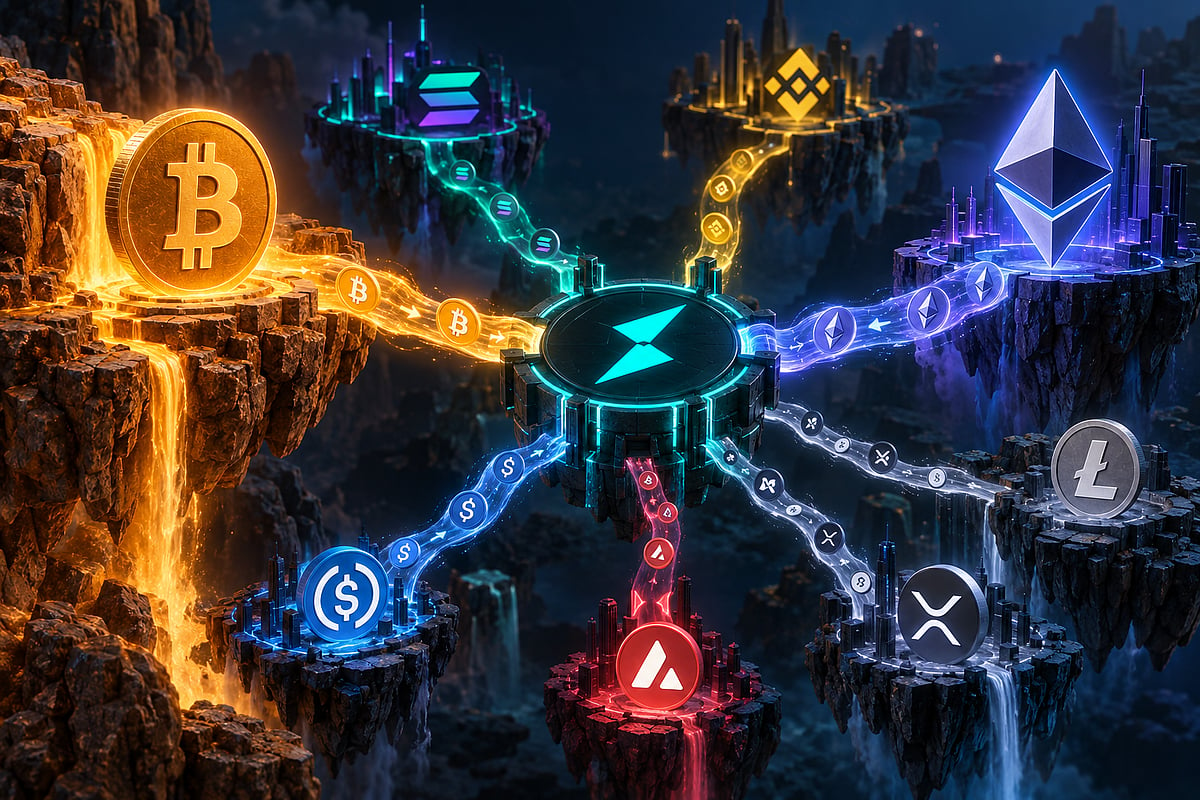
    THORChain is a decentralized exchange built to swap assets between blockchains without first wrapping them. Someone holding BTC can send Bitcoin from a Bitcoin wallet and receive ETH at an Ethereum address. The BTC stays native to Bitcoin until it enters the swap. The ETH that comes out is native ETH. No WBTC needs to be minted.

    The same basic setup works across the other networks supported by the protocol, including chains such as Solana, BNB Smart Chain, Avalanche, Base, XRP Ledger, and Litecoin. This puts THORChain in a different category above most standard decentralized exchanges.

    Uniswap trades tokens that already exist on Ethereum. A Solana DEX trades assets already sitting on Solana. THORChain deals with coins that live on separate networks and were never designed to share a market, which requires a different structure underneath.

    RUNE Is the Plumbing

    Every THORChain liquidity pool connects a supported asset with RUNE, the protocol’s native asset. A BTC-to-ETH trade does not need a dedicated BTC/ETH pool. The protocol can route BTC through a BTC/RUNE pool and then into an ETH/RUNE pool. The person making the trade does not need to go out and buy RUNE first—the routing happens behind the scenes.

    This keeps THORChain from having to create a separate liquidity market for every imaginable pair. Add more assets to a traditional pair-by-pair system and the number of pools explodes: BTC/ETH, BTC/SOL, BTC/USDC, ETH/SOL, ETH/USDC, SOL/USDC. Keep going and liquidity starts getting spread across dozens of separate markets. RUNE gives those pools a common connection.

    For traders, most of that is invisible. They send one asset and receive another.

    What Happens When BTC Is Swapped?

    Suppose someone wants to swap native BTC for native ETH. They choose BTC as the input, enter an Ethereum destination address, and send Bitcoin from their wallet. THORChain’s nodes detect the incoming Bitcoin transaction. The protocol handles the pool routing, then authorizes the outbound ETH transaction from its network vault.

    Those vaults do not work like a usual exchange wallet controlled by one company. THORChain uses threshold-signature cryptography, meaning no single node holds the full signing key needed to move the assets. Node operators also bond RUNE as collateral. That bond forms part of the protocol’s security model and can be penalized when nodes break the network’s rules.

    There is still infrastructure in the middle. There is still protocol risk. None of this should be confused with magically teleporting coins between chains. But the user does not leave BTC sitting in a centralized exchange account and does not receive a wrapped representation of Bitcoin on the other side. The trade settles from one native asset into another.

    People Are Actually Using It

    Native cross-chain trading is not just an interesting technical experiment anymore. THORChain reported $2.82 billion in swap volume during the first quarter of 2026. BTC-to-ETH was its biggest route, accounting for roughly $981 million. BTC-to-stablecoin trades added hundreds of millions more. Those numbers show what people are actually doing with the protocol.

    A meaningful chunk of THORChain activity comes from users moving between Bitcoin and other major crypto assets without putting a wrapped version of BTC in the middle. That is a very different version of “Bitcoin DeFi” from the one the industry has discussed for years.

    Bitcoin Can Stay Boring

    There is a constant effort to make Bitcoin do more. New layers promise smart contracts. New protocols are trying to build lending around BTC. Developers keep pushing more financial activity toward the Bitcoin ecosystem. Some of that will work; some of it probably will not.

    But Bitcoin does not need to become Ethereum for its liquidity to become useful across crypto. It can remain the relatively simple network it was designed to be, and instead infrastructure can be built around it. THORChain shows what that can look like. Bitcoin sits on Bitcoin. Ethereum sits on Ethereum. Solana sits on Solana. The protocol handles the exchange between them. Native cross-chain liquidity makes the world come to Bitcoin instead.

    Disclaimer: This article is provided for informational purposes and does not constitute investment advice. You are responsible for conducting your own research (DYOR) before making any investments. Cryptocurrencies are risky and may result in loss of capital.

  • Top Cross-Chain DEXs for Crypto Swaps in 2026: Platform Comparison and Guide

    Top Cross-Chain DEXs for Crypto Swaps in 2026: Platform Comparison and Guide

    Cross-chain decentralized exchanges (DEXs) have transformed how users swap tokens across different blockchains in 2026. Instead of juggling multiple bridges, wallets, and exchanges, these platforms aggregate liquidity from dozens of sources and automatically select the best route for speed, cost, and price. This guide compares the leading cross-chain DEXs, their strengths, supported networks, security considerations, and ideal use cases for every type of trader.

    Key Takeaways

    • LI.FI offers the best overall cross-chain swap experience with smart routing across 30+ blockchains.
    • deBridge stands out for fast transactions and low-slippage cross-chain transfers.
    • THORChain remains the top choice for native Bitcoin swaps without wrapped assets.
    • Across Protocol excels within the Ethereum ecosystem, especially Layer-2 networks.
    • Symbiosis Finance delivers a simple multi-chain swap experience.

    LI.FI – Best Overall Cross-Chain DEX

    LI.FI has become a trusted name in cross-chain swaps. It supports more than 30 blockchain networks and integrates multiple bridges and decentralized exchanges into one platform. Rather than forcing users to compare services manually, LI.FI automatically checks numerous routes and selects the optimal balance of speed, cost, and price. This saves time and money, especially when moving assets between Ethereum, Base, Arbitrum, Polygon, BNB Chain, Solana, and other popular networks. A clear fee display appears before each transaction, so users know the expected cost upfront. Because LI.FI relies on third-party bridges for execution, transaction quality can vary based on the bridge handling it. Nevertheless, its broad blockchain support and reliable routing make it the strongest all-round choice in 2026.

    deBridge – Fastest Cross-Chain Transfers

    Speed is critical when crypto prices fluctuate by the minute. deBridge supports more than 26 blockchain networks and focuses on rapid execution with low slippage. Many swaps between Ethereum Virtual Machine (EVM) chains complete in under two minutes. It also supports Solana, offering greater flexibility than many competitors. For traders who move funds between chains several times daily, this speed provides a significant advantage.

    THORChain – Native Asset Swaps Without Wrapping

    THORChain continues to attract users who prioritize true cross-chain decentralization. Unlike many platforms that require wrapped tokens, THORChain enables native asset swaps directly. Users can exchange Bitcoin for Ethereum or other supported assets without converting them into wrapped versions. It supports Bitcoin, Ethereum, Binance Coin, Avalanche, Dogecoin, and Litecoin. This approach reduces reliance on wrapped assets and gives users more control over their funds. A trade-off exists: during periods of high market activity, transaction fees may increase. Despite this, THORChain remains the leading choice for native Bitcoin swaps and decentralized liquidity.

    Across Protocol – Best for Ethereum Layer-2

    Across Protocol has built a strong reputation for transfers within the Ethereum ecosystem, particularly for Layer-2 networks such as Base, Arbitrum, and Optimism. Its relayer-based system speeds up transactions while keeping fees low, improving capital efficiency and reducing wait times. Across Protocol focuses on doing one job exceptionally well: anyone regularly transferring assets between Ethereum and its Layer-2 networks will likely find it one of the fastest and most affordable options available in 2026.

    Symbiosis Finance – Simplicity Across Chains

    Symbiosis Finance prioritizes convenience. Users can exchange almost any supported token for another on a different blockchain without dealing with separate bridge steps. It supports more than 30 blockchain networks across both EVM and selected non-EVM ecosystems. The entire process is simplified, making it attractive for those who value ease of use. Route performance varies depending on the blockchain and liquidity source, but Symbiosis Finance remains a practical option for users seeking simplicity.

    Other Notable Platforms

    1inch continues to dominate the EVM ecosystem with its advanced Pathfinder routing system. It searches multiple liquidity sources to select the best trading path, typically yielding better prices and lower slippage. However, its native support outside EVM networks remains limited.

    Jupiter remains the top DEX for the Solana blockchain, offering excellent liquidity and competitive pricing for Solana-based assets. Cross-chain features rely on external integrations, but its performance within Solana is among the best.

    Rango Exchange appeals to experienced users who need access to many chains. It supports over 70 blockchains by combining numerous bridges and DEXs. Its interface includes many advanced options, which may overwhelm beginners, but power users appreciate the flexibility.

    Security Considerations

    Cross-chain technology has advanced but still carries risks. Bridges are common targets for hackers in decentralized finance, so users should research reputable protocols with proven security records. It is essential to understand which bridges rely on third parties and to test small amounts before making large transactions. Always verify the bridge provider and consider performing a trial transfer first.

    Final Thoughts

    Cross-chain crypto swaps have become much faster and easier in 2026. Users no longer need to switch between several platforms to move assets from one blockchain to another. Modern cross-chain DEXs automate most of the work while searching for better prices, lower fees, and faster routes. LI.FI stands out as the best overall platform for its smart routing and support for over 30 networks. deBridge is the first choice for speed. THORChain leads native Bitcoin swaps. Across Protocol dominates Ethereum Layer-2 transfers, while Symbiosis Finance offers a simple experience across many networks. Jupiter remains the leader for Solana users, and Rango Exchange provides unmatched blockchain coverage for advanced traders.

    Frequently Asked Questions

    1. What is a cross-chain DEX?

    A cross-chain DEX allows users to swap crypto assets between different blockchains without using a centralized exchange.

    2. Which cross-chain DEX is the best in 2026?

    LI.FI is widely considered the best overall option due to its broad blockchain support and intelligent route optimization.

    3. Which platform offers the fastest cross-chain swaps?

    deBridge is known for very fast transaction settlement, with many transfers completing in under two minutes.

    4. Which DEX is best for native Bitcoin swaps?

    THORChain is the leading platform for native Bitcoin swaps since it does not require wrapped BTC.

    5. Is it safe to use cross-chain DEXs?

    Well-established platforms are generally safer, but users should always verify the bridge provider and test small amounts before making large transfers.

  • Hinkal Protocol Drained of $830K in Proofless Deposit Exploit; Stolen Funds Laundered Through Tornado Cash and Thorchain

    Hinkal Protocol Drained of $830K in Proofless Deposit Exploit; Stolen Funds Laundered Through Tornado Cash and Thorchain

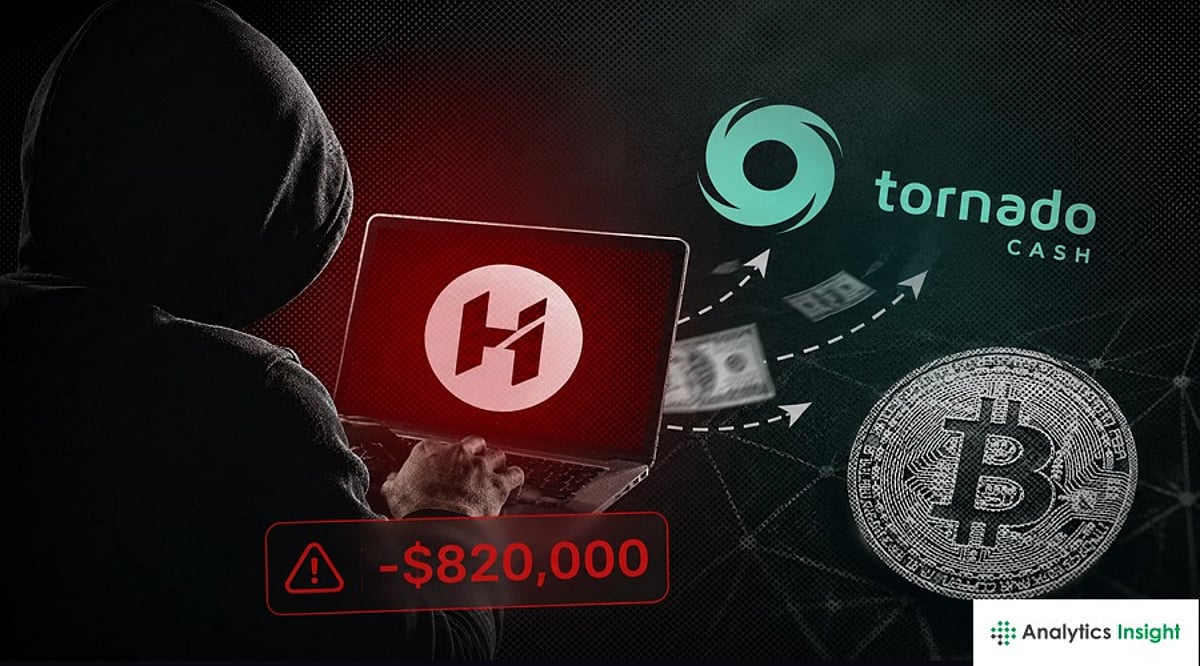
    On July 3, attackers exploited Hinkal, a privacy-focused DeFi protocol, draining approximately $830,000 in USDC — nearly the entire total value locked (TVL) across the five blockchains it supports. Blockchain security firm CertiK traced the breach to an externally owned account that repeatedly executed ‘Transact’ calls after completing a ‘proofless deposit.’ According to DeFiLlama, Hinkal’s TVL stood at roughly $829,000 just before the attack.

    How the Exploit Worked

    CertiK identified the attacker’s wallet as 0xbB3f01a1b1C68F3DEB36C55342b5F5706c32fc20 and reported that it siphoned over $800,000 from a Hinkal smart contract. Meanwhile, PeckShield, citing on-chain investigator Specter, placed the total loss near $820,000 — slightly lower than CertiK’s estimate. The exploit leveraged a vulnerability in Hinkal’s deposit mechanism, allowing the hacker to withdraw funds without providing the required proof.

    Laundering the Stolen Crypto

    After the theft, the attacker converted the stolen USDC into Ether and quickly moved the funds through privacy tools and cross-chain bridges. CertiK noted that the wallet deposited 410 ETH (worth about $700,000) into Tornado Cash, an Ethereum mixer currently under U.S. sanctions. Separately, PeckShield reported that the attacker sent 44.67 ETH through Thorchain, converting it into Bitcoin, which eventually reached an address beginning with bc1qr2sf. This laundering pattern — combining sanctioned mixers with decentralized bridges — is commonly observed in DeFi exploits.

    A research article presented at the ACM Web Conference 2026 found that sanctioned cryptocurrency mixers still provide effective anonymity despite increased regulatory pressure. CertiK has also noted that both criminals and legitimate privacy-conscious users continue to use Tornado Cash, complicating efforts to distinguish illicit transactions from lawful ones.

    Impact on Hinkal’s Institutional Privacy Model

    Hinkal markets itself as an institutional-grade privacy layer, enabling users to create shielded addresses and perform swaps, transfers, and payments without exposing balances or counterparties. The protocol operates on Ethereum, Arbitrum, Base, Polygon, and OP Mainnet. It raised $5.5 million in seed and strategic funding from investors including Draper Associates, Quantstamp, and NGC Ventures. Just one day before the exploit, Hinkal announced a partnership with wallet infrastructure provider Turnkey to bring privacy features to Turnkey users.

    At the time of the attack, Hinkal ranked near the bottom of privacy protocols by TVL. DeFiLlama listed Tornado Cash at $440 million, Railgun at $77.5 million, and Privacy Pools at about $7.8 million — while Hinkal held just $829,000 before the exploit drained nearly all of it.

    What’s Next

    The Hinkal exploit removed roughly $830,000 in USDC, nearly matching the protocol’s total locked value. Users are advised to monitor official updates from Hinkal and carefully assess the risks associated with privacy-focused DeFi platforms.

  • Top Cross-Chain Blockchain Projects Accelerating Crypto Innovation in 2026

    Top Cross-Chain Blockchain Projects Accelerating Crypto Innovation in 2026

    Introduction

    The blockchain ecosystem is evolving rapidly, with cross-chain interoperability becoming a cornerstone of crypto innovation. As we move into 2026, several projects are leading the charge in connecting disparate networks, enabling seamless asset transfers, and powering decentralized applications across multiple blockchains. Here are the most impactful cross-chain blockchain projects driving innovation this year.

    Chainlink CCIP

    Chainlink’s Cross-Chain Interoperability Protocol (CCIP) enables secure cross-chain messaging and token transfers. It helps developers connect multiple blockchain ecosystems with reliable interoperability and scalability, making it a foundational tool for multi-chain applications.

    Axelar Network

    Axelar provides decentralized cross-chain communication infrastructure, allowing applications to exchange assets and data seamlessly across numerous blockchain networks worldwide. Its universal connectivity simplifies integration for developers and enterprises alike.

    LayerZero

    LayerZero offers lightweight omnichain messaging technology that simplifies blockchain connectivity. It enables decentralized applications to operate across multiple ecosystems efficiently, reducing complexity and enhancing user experience.

    Wormhole

    Wormhole connects major blockchain networks through decentralized messaging, supporting cross-chain token transfers, NFTs, gaming assets, and enterprise blockchain integrations. It secures millions in value across ecosystems.

    Cosmos

    Cosmos uses the Inter-Blockchain Communication (IBC) protocol to create an ecosystem where independent blockchains exchange assets and information without centralized intermediaries. Its modular framework promotes sovereignty and scalability.

    Polkadot

    Polkadot connects specialized parachains through a shared security model, enabling scalable interoperability between blockchains designed for different decentralized applications and services. Its governance and flexibility attract a wide developer community.

    Synapse Protocol

    Synapse simplifies cross-chain asset transfers and liquidity management, helping decentralized finance platforms improve accessibility across multiple blockchain ecosystems. It focuses on user-friendly bridging solutions.

    THORChain

    THORChain enables native cryptocurrency swaps across different blockchain networks without wrapped assets, supporting decentralized liquidity and secure cross-chain trading experiences. Its non-custodial model maintains user control.

    Router Protocol

    Router Protocol builds cross-chain infrastructure that connects blockchain ecosystems, enabling decentralized applications to communicate, transfer assets, and expand user accessibility efficiently. It aims to bridge the gap between isolated networks.

    Conclusion

    These nine projects represent the forefront of cross-chain innovation in 2026, addressing the critical need for interoperability in an increasingly multi-chain world. Their combined efforts are driving the next wave of crypto adoption and decentralized application development.