Tag: TikTok

  • ByteDance Hits $120B in First-Half 2026 Revenue as AI Spending Eats Into Profits

    ByteDance Hits $120B in First-Half 2026 Revenue as AI Spending Eats Into Profits

    ByteDance, the parent company of TikTok, reported first-half 2026 revenue of $120 billion, representing a year-over-year increase of more than 30%, according to sources familiar with the company’s internal financials. The rapid growth was driven by stronger international advertising, livestreaming, and TikTok commerce, but heavy investment in artificial intelligence reduced net profit to around $20 billion during the period.

    The Beijing-based technology giant’s revenue acceleration comes as uncertainty around TikTok’s US operations eased following a January joint venture that resolved a long-running regulatory dispute. The White House subsequently lifted a 2023 restriction on TikTok’s use on federal government devices, providing further support for the platform’s commercial momentum.

    ByteDance’s full-year 2025 revenue was approximately $200 billion, reflecting 29% annual growth. The first-half 2026 figures show the company’s growth pace has slightly accelerated. However, net profit for all of 2025 reached $42 billion, making the latest decline more pronounced as AI spending expands.

    The company is investing heavily across its global operations in AI model families, computing capacity, and infrastructure to compete with US and Chinese technology firms. ByteDance operates several proprietary AI models and has developed Seedance for video generation. It continues to integrate AI capabilities across TikTok and its Chinese counterpart Douyin for content recommendations, creation, and commerce.

    Financing activity underscores the scale of the AI push. Earlier this month, nearly 30 global banks agreed to provide ByteDance with a $29.6 billion loan. Sources indicate the financing supports general corporate needs, including AI research and development.

    International advertising and e-commerce were key contributors to revenue gains, while AI research and infrastructure spending weighed on profitability during the period. ByteDance has not publicly confirmed the reported first-half figures, but the latest performance paints a picture of a company funding an expensive AI expansion while maintaining strong core business growth.


  • UK Regulator Probes TikTok Over Child Safety and AI Shopping Video Concerns

    UK Regulator Probes TikTok Over Child Safety and AI Shopping Video Concerns

    Ofcom has launched a formal investigation into TikTok, questioning whether the platform’s age-checking systems adequately protect underage users. The regulator also faces pressure from brands and creators over AI-generated shopping videos that some say mislead consumers and erode trust.

    Ofcom Questions TikTok’s Child Age Checks

    Ofcom has expressed ‘serious doubts’ about TikTok’s ability to identify users under 18. The regulator believes the platform’s age inference system—which estimates age based on user activity—may fail to detect many children who provide false birth dates or bypass restrictions. Kate Davies, Ofcom’s group director for strategy and research, stated: “We have serious doubts about them, and so we have launched an investigation into TikTok.”

    The UK Online Safety Act requires platforms to use effective age checks when children may encounter harmful material. Ofcom will examine whether TikTok has taken suitable steps to identify young users and limit their access to restricted content. TikTok responded that it strictly enforces age-based experiences through platform rules and advanced technology, and remains confident it meets its duties under the act.

    TikTok Risks Major Financial Penalty

    If the investigation finds TikTok violated UK online safety rules, Ofcom can impose a fine of up to £18 million or 10% of TikTok’s qualifying worldwide revenue—whichever is higher. This follows broader regulatory action against platforms failing to protect children. Child safety groups, including the Molly Rose Foundation, have called for wider scrutiny of TikTok’s recommendation systems.

    AI Shopping Videos Raise Trust Concerns

    TikTok Shop faces separate criticism over AI-generated product videos using virtual models. Creators say these automated clips compete with genuine reviews from people who own and test products. Affiliate creator Rosemarie Soma described it as ‘very frustrating’ when AI videos receive advertising support and generate sales. SharkNinja has banned affiliates from using TikTok’s AI Video Maker to promote its products, warning that violators could lose commissions. Rare Beauty also distanced itself from AI-generated promotional content after an unauthorized affiliate posted such videos.

    TikTok Shop sales in the United States are expected to reach $23.41 billion this year, according to eMarketer, while its affiliate network has grown from 2.3 million creators in 2024 to 11.3 million in 2026, per Charm.io. This rapid expansion makes it harder for brands to control unauthorized AI product videos.

  • The Evolution of Social Media: From Six Degrees to TikTok

    The Evolution of Social Media: From Six Degrees to TikTok

    Social media has transformed how we connect, communicate, and consume content. This timeline traces the major platforms that shaped the digital landscape over the past two decades.

    • Six Degrees (1997): Widely regarded as the first social networking website, it introduced friend lists, user profiles, and online connections before mainstream adoption.
    • Friendster (2002): Revolutionized online networking by emphasizing real-life friendships, inspiring future social platforms despite technical limitations and declining popularity later.
    • MySpace (2003): Dominated early social media through customizable profiles, music sharing, and artist promotion before Facebook overtook its massive user base.
    • Facebook (2004): Transformed global communication with personal profiles, business pages, communities, messaging, and powerful advertising tools reaching billions worldwide today.
    • YouTube (2005): Changed digital entertainment forever by enabling users to upload, watch, share, and monetize videos across every imaginable content category.
    • Twitter/X (2006): Popularized real-time conversations through short posts, becoming a leading platform for breaking news, public discussions, and live event updates.
    • Instagram (2010): Made visual storytelling mainstream through photos, Stories, Reels, influencer marketing, and advanced shopping experiences for global audiences everywhere.
    • Snapchat (2011): Introduced disappearing messages, augmented reality filters, and short-lived Stories, encouraging spontaneous communication among younger smartphone users globally.
    • TikTok (2016): Redefined short-form entertainment with AI-driven recommendations, viral trends, creative editing tools, and unmatched user engagement across diverse audiences worldwide.

    Read more stories and join our WhatsApp Channel to get the latest news, exclusives, and videos on WhatsApp.

  • Google Search Console Now Tracks Social Media Profiles: Insights for Instagram, YouTube, TikTok, and X

    Google Search Console Now Tracks Social Media Profiles: Insights for Instagram, YouTube, TikTok, and X

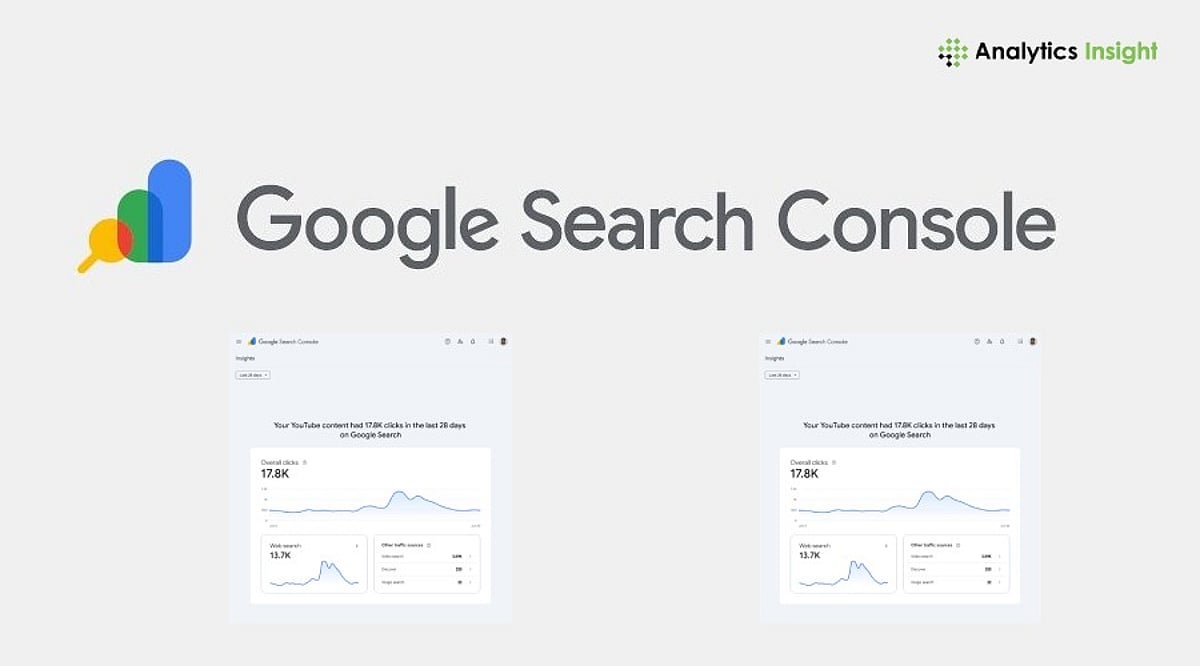
    Google has rolled out a significant update to Search Console, enabling businesses to monitor search performance for their social media profiles directly within the platform. The new feature supports Instagram, TikTok, X, and YouTube, allowing marketers and content creators to see how these accounts appear in Google Search and how users discover them.

    Search Console Adds Social Platform Reports

    With this update, Google Search Console introduces three dedicated reporting tools for social media profiles. The Performance Report delivers clicks, impressions, and other metrics, filterable by search queries or individual posts, with export capabilities. The Insights Report offers a high-level view of recent traffic trends, top-performing posts, and user discovery paths via Google Search. The Achievements Section lets creators track growth milestones, such as reaching new click thresholds in the last 28 days.

    To use the feature, users add a platform property in Search Console, select a supported platform, authorize the connection, and complete verification. This move signals that Google now considers social profiles a vital component of a brand’s online presence.

    Bridging Search and Social Data

    While many marketing teams rely on tools like Sprout Social, Hootsuite, or Buffer for cross-platform planning and tracking, Google’s new feature offers something distinct: it reveals how Google Search drives traffic to social accounts. This data was previously scattered and hard to consolidate. When combined with existing social media analytics, businesses gain a clearer picture of their overall online discoverability.

    This update brings search and social data closer together, helping marketers understand what truly brings audiences to their brand.

    Social Profiles as Digital Storefronts

    Google’s message is clear: social media pages are no longer just for posting content—they are essential digital storefronts. Many users search for a company’s Instagram page or YouTube channel before visiting its website. Businesses that keep these profiles active and optimized may improve their search visibility. The lesson for brands is straightforward: a strong social profile is not only about engagement but also about being easily found on Google.