Tag: Tim Cook

  • Tim Cook’s 2020 Warning on Facebook Tracking Paved the Way for Apple’s App Tracking Transparency

    Tim Cook’s 2020 Warning on Facebook Tracking Paved the Way for Apple’s App Tracking Transparency

    In December 2020, Apple CEO Tim Cook issued a stark warning to iPhone users regarding Facebook’s ability to track their activity across apps and websites. The warning came as Facebook criticized Apple’s upcoming privacy rules, which would require apps to request user permission before collecting data across other companies’ services.

    Cook took to Twitter (now X) to defend Apple’s privacy-first approach, stating: “We believe users should have the choice over the data that is being collected about them and how it’s used. Facebook can continue to track users across apps and websites as before; App Tracking Transparency in iOS 14 will just require that they ask for your permission first.”

    Apple later introduced App Tracking Transparency (ATT) with the release of iOS 14.5 in April 2021. This feature fundamentally changed how apps collect data for advertising and measurement across external services. Apps must now display a tracking permission prompt before accessing the device’s advertising identifier or using other covered tracking methods. Users who select “Ask App Not to Track” prevent the app from accessing the identifier, and they can later adjust their preferences in iPhone privacy settings.

    The policy ignited a major conflict between Apple and Meta, Facebook’s parent company. Meta argued that Apple’s rules could harm businesses relying on personalized advertising, later estimating a roughly $10 billion financial impact from the privacy changes.

    Cook’s 2020 statement became a pivotal moment in Apple’s broader privacy campaign. While Apple framed tracking permission as a matter of user choice, Meta viewed it as a threat to targeted advertising. The debate continues to shape mobile advertising privacy regulations worldwide.

  • How Tim Cook’s 2020 Warning About Facebook Tracking Changed iPhone Privacy

    How Tim Cook’s 2020 Warning About Facebook Tracking Changed iPhone Privacy

    In December 2020, Apple CEO Tim Cook issued a stark warning to iPhone users about Facebook’s ability to track their activity across apps and websites. The warning came as Facebook publicly criticized Apple’s planned privacy rules for iPhones, setting the stage for a major clash between the two tech giants.

    Cook explained that Apple’s upcoming App Tracking Transparency system would not completely stop tracking. Instead, it would require apps to ask for explicit permission before tracking users across other companies’ apps and websites. He shared his message on Twitter (now X), writing: “We believe users should have the choice over the data that is being collected about them and how it’s used. Facebook can continue to track users across apps and websites as before; App Tracking Transparency in iOS 14 will just require that they ask for your permission first.”

    Apple delivered on that promise with the release of iOS 14.5 in April 2021. The App Tracking Transparency feature fundamentally changed how apps collect data for advertising and measurement. Apps now must display a tracking permission request before accessing the device’s advertising identifier or using other covered tracking methods. Users who select “Ask App Not to Track” prevent the app from accessing that identifier, and permissions can be adjusted later through iPhone privacy settings.

    The policy sparked a fierce dispute between Apple and Meta, Facebook’s parent company. Meta argued that the rules would hurt businesses reliant on personalized advertising, later estimating a roughly $10 billion impact on its revenue from Apple’s privacy changes. Cook’s 2020 statement became a defining moment in Apple’s broader privacy campaign, framing tracking permission as a user choice while Meta viewed it as a threat to targeted advertising. The debate continues to shape mobile advertising privacy rules worldwide.

  • Apple’s Q3 Earnings Beat Estimates: Tim Cook Highlights AI Investments and iPhone Growth Amid Supply Concerns

    Apple’s Q3 Earnings Beat Estimates: Tim Cook Highlights AI Investments and iPhone Growth Amid Supply Concerns

    Apple reported stronger-than-expected fiscal third-quarter earnings, driven by record iPhone sales and robust Mac demand. The company posted revenue of $109.42 billion, up 16% year-over-year, and net profit of $29.79 billion. However, a cautious outlook for the upcoming quarter and ongoing supply constraints tempered investor enthusiasm, sparking discussions about Apple’s AI strategy and future growth trajectory.

    Record Quarter Powered by iPhone Demand

    iPhone sales reached an all-time high of $54.25 billion, reflecting strong global demand despite a competitive smartphone market. Mac sales surged nearly 29% as consumers responded positively to the latest product lineup. Apple described the June quarter as its best ever, with double-digit growth across most product lines and geographic regions, beating analysts’ projections by a wide margin.

    Supply Constraints Temper Growth Outlook

    Despite the strong quarter, Apple projected revenue growth of 9% to 11% for the September quarter, below market expectations. CEO Tim Cook attributed the conservative outlook to ongoing shortages of advanced memory components used in Apple-designed chips. The company is working to diversify suppliers, but executives cautioned that component availability could remain a challenge in the near term, leading to a dip in Apple’s share price after the earnings release.

    Services Slow, AI Strategy Under Scrutiny

    Apple’s services division underperformed relative to analyst expectations, generating $30.74 billion in revenue. Weakness in the App Store and growing competition in digital services weighed on the segment. The earnings report also reignited debate about Apple’s artificial intelligence strategy, with investors comparing the company’s pace of AI development to that of competitors who have made significant strides in generative AI. While Apple has rolled out AI-based features across its ecosystem, shareholders want clearer evidence of revenue potential from these investments.

    Cook Highlights Long-Term Confidence

    In what was likely one of his final earnings calls as CEO, Tim Cook reiterated that Apple’s long-term fundamentals remain strong. An expanding user base, consistent customer demand, and a robust innovation pipeline are expected to sustain the company’s competitive advantage. However, the market reaction suggests investors are increasingly focused on Apple’s ability to navigate supply disruptions while keeping pace in the rapidly evolving AI landscape. Balancing hardware growth with emerging technologies will be a central challenge as the company transitions to new leadership.

  • 6 Powerful Leadership Lessons from the World’s Most Innovative CEOs

    6 Powerful Leadership Lessons from the World’s Most Innovative CEOs

    Great leaders build lasting success by embracing learning, customer focus, and thoughtful decision-making every single day. Innovation flourishes when leaders stay patient, communicate openly, and inspire teams through uncertainty and change together. Authentic leadership and calculated risk-taking help businesses adapt, grow, and remain competitive across evolving global industries.

    Behind every iconic company is a leader who made a difficult call when it mattered most. Some challenged decades-old business models, while others rebuilt companies that had lost direction. Their stories are different, but the lessons they leave behind are surprisingly similar.

    Inside the Leadership Playbooks of Innovation Pioneers

    Whether you run a business, manage a team, or are just starting your career, these six leadership lessons are as relevant in a small office as they are in a global boardroom:

    Satya Nadella: Never Stop Learning

    When Satya Nadella became Microsoft’s CEO in 2014, the company was seen as a technology giant that had lost some of its edge. Rather than chasing quick wins, he changed the company’s culture. Employees were encouraged to ask questions, learn new skills, and work together instead of competing with one another. That shift helped Microsoft regain its momentum in cloud computing and artificial intelligence. Nadella’s biggest lesson is that people and businesses grow only when learning becomes part of everyday work. A leader who believes they already know everything usually stops moving forward.

    Jeff Bezos: Listen to Customers, Not the Noise

    Businesses often spend too much time watching competitors. Jeff Bezos took a different route. At Amazon, every major decision started with one question: What does the customer need? That mindset led to services like Prime, faster deliveries, and a shopping experience built around convenience. Markets change quickly, but customers always value businesses that solve real problems. Leaders who keep that focus rarely lose sight of what matters.

    Jensen Huang: Patience is a Competitive Advantage

    In the present day, NVIDIA has become synonymous with the AI revolution. However, before the emergence of artificial intelligence as the major story of technology, NVIDIA’s founder, Jensen Huang, was betting on the hardware that was going to make AI possible. At that time, those bets appeared to be quite risky. They have turned out to be essential for the company’s success. The example of Huang shows that sometimes, it does not pay off to focus only on profitable choices.

    Brian Chesky: People Remember How You Lead in a Crisis

    As a result of the pandemic, Airbnb was forced to make the most difficult decisions in its corporate life since global travel was put on hold. The CEO of the company, Brian Chesky, was required to make many hard choices, such as letting thousands of people go. What made him special, however, is not the decisions he made, but the way he made them. He openly discussed all his actions, admitted their consequences, and treated the ones who were fired decently.

    Tim Cook: Don’t Lead in Someone Else’s Shadow

    There may be few CEOs who have attracted as much criticism as Tim Cook, who replaced Steve Jobs at Apple. Rather than imitating Jobs, Cook did what he does best: improving efficiency, establishing global presence, and ensuring stability for Apple. The success of Tim Cook proves that being a leader means not being anyone else but yourself. The best leaders know who they are and capitalize on that instead of attempting to emulate others.

    Elon Musk: Big Ideas Demand Bold Decisions

    Electric cars were once considered a niche market. Reusable rockets sounded even more unrealistic. Elon Musk pushed ahead with both despite criticism, delays, and financial pressure. Not every risk pays off, but avoiding risk rarely changes an industry. Musk’s career underlines an important truth: innovation belongs to people who are willing to test ideas, accept setbacks, and keep going when others would stop.

    The Takeaway

    Leadership has no fixed formula. Every CEO has a different personality, management style, and way of making decisions. Yet the best leaders share a few common traits. They stay curious, earn people’s trust, think beyond the next quarter, and are willing to make difficult choices when the situation demands it. Technology will continue to evolve, and industries will keep changing. These leadership lessons, however, are unlikely to go out of date.

  • Apple MacBook and iPad Price Hikes Stir Supplier Tensions; Micron Points to 2023 Pricing Pressure

    Apple MacBook and iPad Price Hikes Stir Supplier Tensions; Micron Points to 2023 Pricing Pressure

    Apple has raised prices across several MacBook, iPad, Apple TV, HomePod, and Vision Pro models, attributing the increases to soaring memory and storage costs driven by AI data center demand. The company announced the broad price hikes on June 25, affecting multiple hardware products while leaving iPhone prices unchanged. According to Apple, the rapid expansion of AI infrastructure has created exceptional demand for memory and storage chips, reducing available supply for consumer electronics.

    CEO Tim Cook described the current market conditions as unlike anything Apple has experienced before. He stated, “There’s less supply at a time when consumers want devices and the memory guys are passing along huge price increases.” Cook also called the situation “unavoidable” and “unsustainable.”

    Market data supports the broader supply trend. Research firms report that memory and storage prices are now roughly four times higher than they were several quarters ago. TrendForce estimates memory chip prices rose by as much as 98% during the first quarter of 2026 and could increase by another 58% to 63% in the following quarter. Those higher component costs have reached consumers: the MacBook Neo increased from $599 to $699, while several MacBook and iPad models received price increases ranging from $100 to $300. Apple also confirmed that the affected devices did not receive additional memory or storage upgrades despite the higher prices.

    Micron Points to Pricing Pressure During the 2023 Downturn

    Shortly after Apple’s announcement, Micron Chief Business Officer Sumit Sadana offered a different explanation for today’s supply constraints in an interview with The Wall Street Journal. He said some major customers pushed suppliers to accept extremely low prices during the memory market collapse in 2023. Sadana stated, “We told a couple of the customers who were being very aggressive with pricing at that time that this is not constructive.” He added that poor pricing and weak margins forced many companies across the industry to reduce investment in new production capacity.

    Although Sadana never identified Apple by name, Apple is widely known for negotiating long-term supply agreements and purchasing large volumes of memory components. During 2023, Micron reported deeply negative margins as the memory market experienced one of its weakest periods in recent years. The company has since recovered, reporting strong quarterly financial results with revenue rising sharply alongside improved profitability. Its shares climbed after the earnings report, while Apple’s stock declined following the announcement of higher product prices.

    Supply Constraints May Continue Beyond 2027

    Industry analysts say both explanations reflect different parts of the same market cycle. AI servers require high-bandwidth memory, which uses far more manufacturing capacity than standard memory found in smartphones and laptops. As more production shifts toward AI hardware, fewer chips remain available for consumer devices. Meanwhile, reduced investment during the 2023 downturn limited the industry’s ability to expand manufacturing before AI demand accelerated. New semiconductor facilities require several years to build and reach full production, meaning additional capacity cannot arrive quickly.

    Apple has reportedly begun seeking additional memory suppliers, including Chinese manufacturer CXMT, to improve future supply. However, Tim Cook said Apple has no plans to enter the memory business itself. Several analysts expect memory costs to remain elevated through at least 2027. Research firms also estimate memory could account for a much larger share of smartphone production costs over the next two years, leading some industry observers to expect future iPhone price increases if current market conditions continue.

    Related Articles

    • Apple Stock Slides 6% After MacBook and iPad Price Hikes Worldwide
    • US Stock Market Today: NASDAQ Falls as Apple Slides Nearly 5% While Dow Surges 598 Points to Record High
    • Micron Stock Surges 16% After $9.8B Revenue Beat and $22B AI Supply Deals
    • US Stock Market Today: S&P 500 Rises as Oil Prices Slide and Investors Await Micron’s Earnings Report
    • US Stock Market Today: S&P 500 and NASDAQ Slide as Micron Leads Global Chip Stock Sell-Off
  • Musk and Cook Warn Memory Chip Shortage Could Stifle AI Growth as Prices Soar

    Musk and Cook Warn Memory Chip Shortage Could Stifle AI Growth as Prices Soar

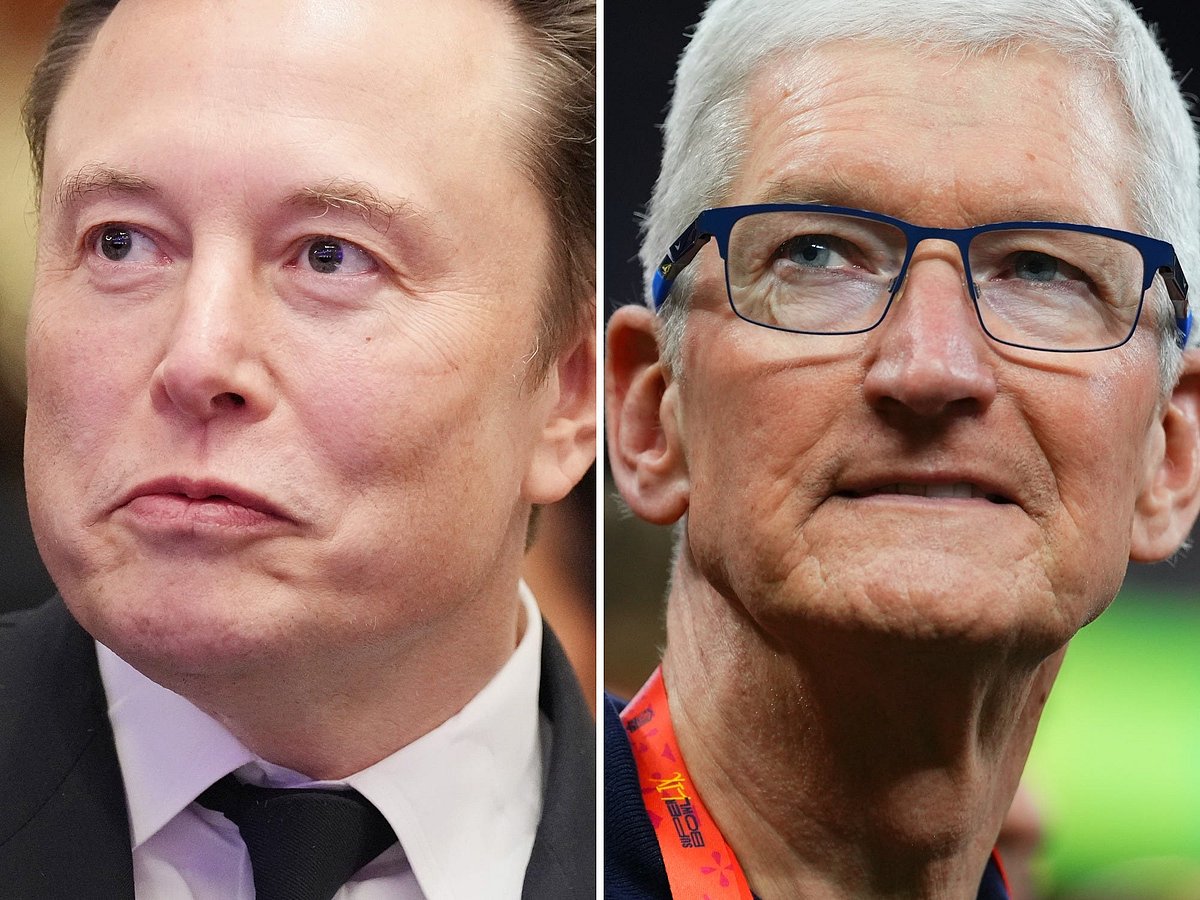
    Elon Musk has publicly backed Apple CEO Tim Cook’s stark warning about an unprecedented memory chip shortage, as surging costs driven by AI data center demand create ripple effects across the consumer electronics and automotive industries.

    Cook described the shortage as a “hundred-year flood,” noting he had not seen a similar cost shock in any sector in over four decades. Musk echoed that sentiment, calling it the “biggest price jump in anything I’ve ever seen.” Both executives are now calling for a massive expansion of production capacity to avert long-term constraints.

    AI Infrastructure Fuels Demand for Advanced Memory

    The rapid expansion of artificial intelligence infrastructure has dramatically increased demand for high-bandwidth memory (HBM) products, which are critical for running AI processors and handling large datasets. Chip manufacturers have shifted significant production capacity toward these higher-value components, creating tighter supplies of standard memory and storage chips used in smartphones, computers, televisions, and game consoles.

    Cook stated that Apple could no longer absorb the full increase in component costs, calling price hikes “unavoidable.” The company subsequently raised prices across several product lines, including Mac computers and iPads, with some increases reaching hundreds of dollars depending on the model and storage configuration. Apple also adjusted prices for its Apple TV, HomePod, and iMac products.

    Microsoft followed suit by announcing higher prices for Xbox consoles, and other electronics manufacturers have similarly adjusted their pricing as memory and storage costs climb throughout the supply chain.

    Tesla’s AI Ambitions at Risk

    Musk warned that the gap between memory demand and production capacity is “insane,” adding that the industry requires significantly higher output to alleviate the shortage. Tesla relies on advanced chips for its vehicles, AI systems, and Optimus robots. During Tesla’s fourth-quarter earnings call in January, Musk indicated that supplier output could constrain the company’s plans.

    He noted that memory could become “an even bigger limiter than AI logic.” While AI logic chips handle calculations, memory chips store and move the data those processors require. Both must be available in large volumes for AI systems to operate effectively.

    Tesla currently works with external manufacturers, including major chip producers in the United States and Asia, but Musk said the company faces risks if suppliers cannot ramp up production quickly enough. The shortage also impacts SpaceX and xAI, both of which require growing computing power for satellite systems, AI training, and data center projects.

    TeraFab Project Aims to Boost Production

    Musk has proposed TeraFab as a potential long-term solution. The project involves Tesla, SpaceX, and xAI, with Intel also announcing its participation. The planned facility would combine logic chip production, memory manufacturing, and advanced packaging, potentially reducing reliance on outside suppliers and supporting future AI and robotics projects.

    However, many details remain unclear. The companies have released limited information about production timelines, financing, and each participant’s exact role. Reports have noted that formal commitments between some parties have not been fully disclosed. Tesla has begun recruiting semiconductor workers with experience in advanced manufacturing, covering chip design, packaging, lithography, testing, and production management.

    Even with new factories, semiconductor facilities take years to build and prepare for mass production. Consequently, current supply pressure may persist as data center operators, automakers, and device manufacturers compete for available chips.

    For consumers, the immediate outcome is higher prices across computers, tablets, consoles, and other electronics that depend on memory and storage components. Both Cook and Musk have urged the industry to invest in new capacity, but relief is unlikely in the near term.


  • Apple Shares Tumble 6% After Raising MacBook and iPad Prices Globally

    Apple Shares Tumble 6% After Raising MacBook and iPad Prices Globally

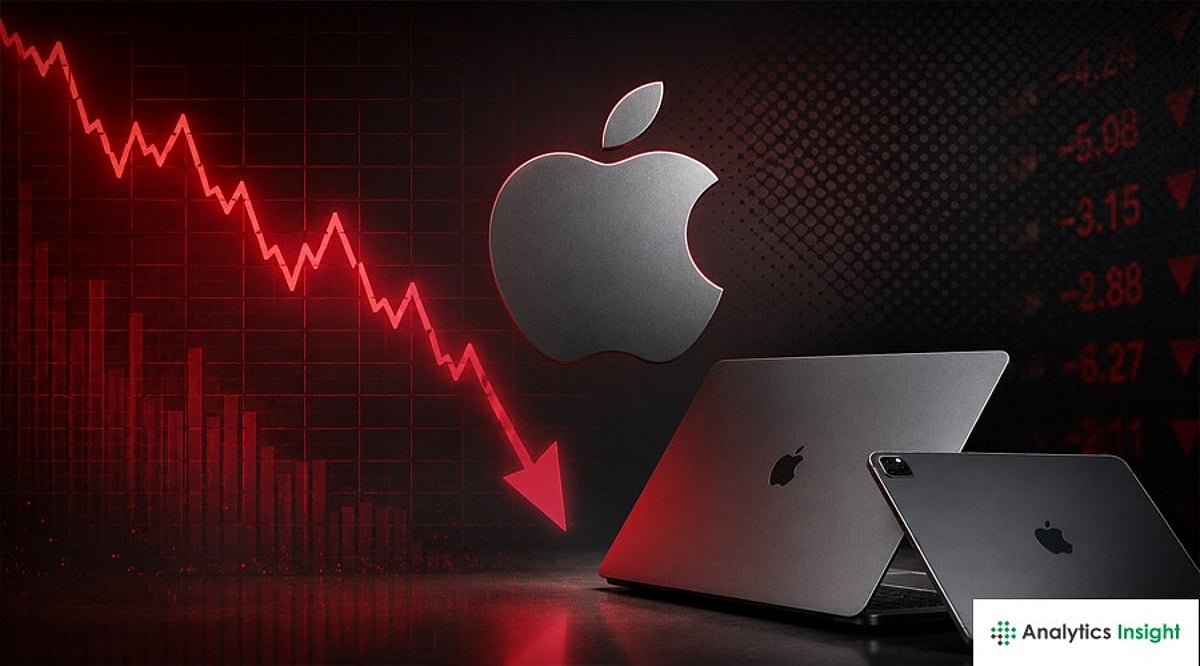
    Apple shares fell more than 6% on Thursday after the company raised prices across its MacBook and iPad lineup worldwide. The move marks Apple’s first major response to rising memory and storage costs, which have been intensified by surging demand from AI data centers. The iPhone, however, escaped a price hike for now.

    MacBook and iPad Price Hikes in Detail

    Apple increased the starting price of the MacBook Neo from $599 to $699. The MacBook Air with 512GB of storage rose from $1,099 to $1,299, while the 14-inch MacBook Pro with 1TB of storage now starts at $1,999, up from $1,699. The iPad lineup also saw significant increases: the 11-inch iPad Air jumped from $599 to $749, and the 13-inch model climbed from $799 to $949. The 11-inch iPad Pro now costs $1,199 ($999 at launch), and the 13-inch iPad Pro went from $1,299 to $1,499.

    Memory Costs Driving the Price Surge

    Apple attributed the price adjustments to an “unprecedented challenge” in the consumer electronics industry, as AI data centers consume more memory and storage components. CEO Tim Cook had warned earlier in May that rising component prices were pressuring Apple’s margins. In a later interview, he called the price increases “unavoidable” and described the shortage as a “hundred-year flood.”

    Memory and storage prices have spiked as suppliers redirect capacity toward high-bandwidth memory for AI servers, reducing supply for consumer devices. Microsoft, Sony, Nintendo, and other computer makers have also raised prices on select products. Apple has historically managed costs by discontinuing cheaper models—last month it stopped selling the $599 Mac mini with 256GB of storage, leaving buyers with fewer low-cost options.

    Investor Reaction and Market Implications

    The stock’s steep decline—its worst single-day drop in over a year—wiped an estimated $250 billion to $265 billion off Apple’s market value. Investors are concerned that higher prices could dampen demand for Macs and iPads, especially as households tighten discretionary spending. Apple’s iPhone lineup remains price-protected for now, though analysts warn that higher memory requirements for on-device AI could eventually drive up production costs for future iPhones.

    Looking Ahead: New Hardware and Software

    Apple is preparing a refreshed Siri experience with enhanced conversational abilities and in-app actions, but a European Union launch date remains unannounced. The company plans to introduce a base M6 processor for entry-level Macs later this year (current models use M5 chips). Analysts also expect Apple to enter the premium foldable phone market, which could raise average selling prices across the segment. The stock slide comes as Apple navigates a crucial balance between protecting margins and sustaining demand in a cost-sensitive environment.