
Tag: Token Unlocks

  • BlockDAG Ships 22,800 Miners as SUI and Avalanche Navigate Token Unlock Challenges

    BlockDAG Ships 22,800 Miners as SUI and Avalanche Navigate Token Unlock Challenges

    Blockchain security fundamentally determines network value, and three major projects—SUI, Avalanche, and BlockDAG—currently demonstrate contrasting approaches to defense and token distribution. Understanding these strategies helps evaluate long-term investment potential.

    SUI’s Staking and Token Unlock Dynamics

    SUI relies on a validator-based Proof-of-Stake mechanism to maintain network integrity, but ongoing token unlocks pressure its price. On August 1, 13.72 million SUI tokens (worth approximately $9.9 million) were unlocked as scheduled, representing a 0.34% supply increase. This release affected tokens from the community pool, initial contributors, and Mysten Labs treasury, contributing to a price dip of over 5%. As of early August, SUI trades around $0.68.

    Despite price weakness, underlying metrics show strong engagement. The network has processed over 4.53 billion cumulative transactions, with daily active users exceeding 200,000 on multiple days in July. The team continues development, revealing plans for Sui Basecamp 2026 and enterprise workflow tools called Spheres. However, SUI’s complete dependence on digital stake-based consensus means validator yield mechanisms remain crucial for network security.

    Avalanche’s Strong Staking and Institutional Growth

    Avalanche secures its network through capital commitment, supported by a dedicated validator base. AVAX traded between $6.59 and $6.60 on August 2, reflecting a 4% 24-hour gain while remaining flat week-over-week. A Bitwise staking report highlights that 41.5% of all AVAX is staked, indicating significant supply illiquidity and structural community commitment.

    Technological progress continues. The Avalanche Foundation launched the Helicon update on its Fuji testnet, adding continuous execution to the C-Chain, though mainnet deployment is pending. In practical adoption, Crypto.com reports that Hyundai is testing Avalanche for global stablecoin settlements. An upcoming token unlock on August 10 may create near-term volatility. Avalanche’s security model relies entirely on locked capital, making staking density a key metric.

    BlockDAG’s Hardware-Driven Security and Global Distribution

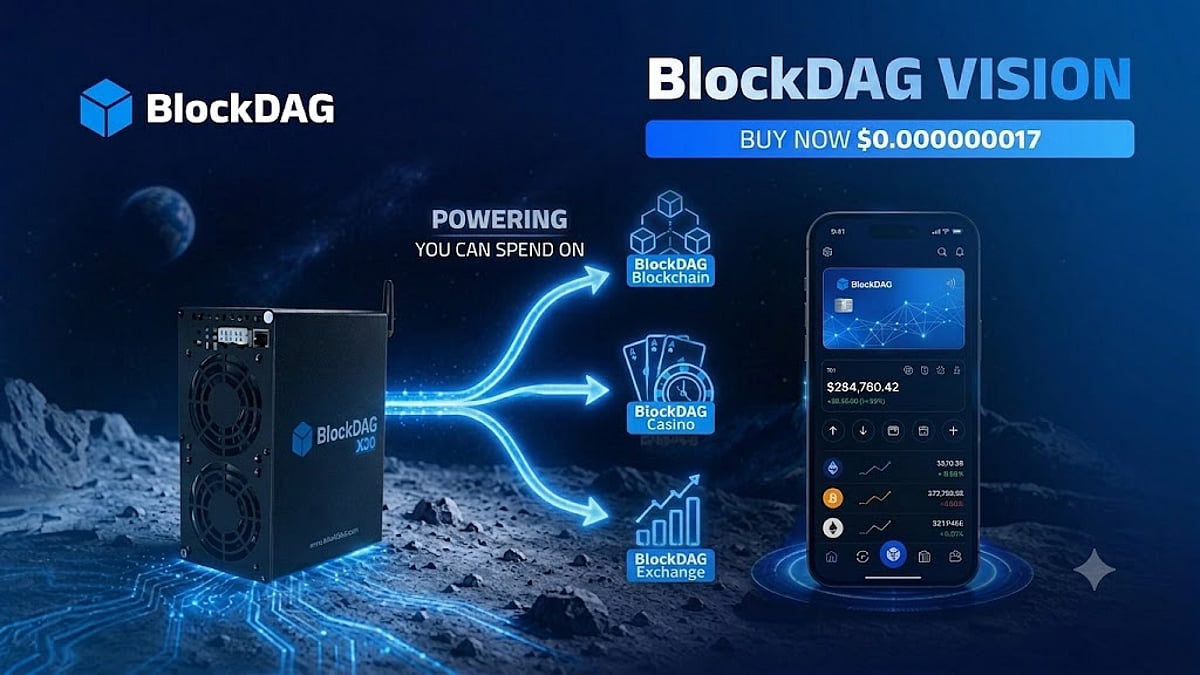
    BlockDAG takes a fundamentally different approach, using physical Proof-of-Work hardware for chain security and user acquisition. The project has begun shipping 22,800 miners across its X10, X30, and X100 product lines, scaling manufacturing toward 2,400 units per week. This physical rollout coincides with a promotional price of $0.000000017 and a planned $0.025 BuyBack target, plus a 22% discount for Live Swap buyers.

    This hardware-first strategy achieves two goals simultaneously. First, decentralized hardware mining distributes hash power, securing the ledger more robustly than concentrated capital pools. Second, physical delivery directly onboards users—each shipped miner converts a retail purchaser into an active network participant receiving ongoing mining rewards into their ecosystem wallet for trading, staking, or spending.

    Geographic diversification strengthens the network further. Deploying hardware nodes across multiple jurisdictions eliminates single-point vulnerabilities and regulatory risks. Additionally, over 3.6 million users employ the X1 mobile app as a frictionless second onboarding layer. Where SUI and Avalanche depend on financial assets locked in their ledgers, BlockDAG merges hardware security with organic user growth.

    Key Takeaways

    • SUI boasts impressive transaction throughput with 4.53 billion historical transactions, but ongoing supply unlocks pressure its $0.68 price.
    • Avalanche demonstrates strong holder commitment with 41.5% of supply staked at $6.60, backed by enterprise initiatives like Hyundai’s stablecoin project and the Helicon testnet launch.
    • BlockDAG differentiates by deploying 22,800 physical mining machines alongside 3.6 million X1 app miners, increasing network participation and scaling device throughput to 2,400 per week.

    For market participants evaluating long-term durability, the strategic distinction is clear: traditional platforms lock capital to secure ledgers, while BlockDAG uses physical hardware distribution to secure its chain while continuously onboarding daily users. This dual-purpose approach positions BlockDAG as a standout network ahead of its main exchange listings.

    Further Information

    Presale: https://purchase.blockdag.network
    Website: https://blockdag.network
    Telegram: https://t.me/blockDAGnetworkOfficial
    Discord: https://discord.gg/Q7BxghMVyu

    Disclaimer: This article is for informational purposes only and does not constitute financial or investment advice. Cryptocurrency investments carry risk; always conduct your own research before making decisions.

  • PI Network Rallies 6.37% as Thin Liquidity and Protocol 26 Upgrade Drive Price Toward $0.085

    PI Network Rallies 6.37% as Thin Liquidity and Protocol 26 Upgrade Drive Price Toward $0.085

    Pi Network’s native token PI posted a 6.37% gain over the past 24 hours, reaching $0.0837, while the broader cryptocurrency market remained mostly flat. Bitcoin slipped 0.11%, and total market capitalization edged lower during the same period. The move placed PI among the strongest performers on July 30, driven primarily by low liquidity and heightened trading activity.

    Low Liquidity Amplifies PI Price Movement

    Pi Network recorded $13.68 million in daily trading volume, a 27.44% increase from the previous day. However, its turnover ratio stood at only 1.49%, indicating shallow market depth. Such conditions allow modest buying pressure to push prices higher when sell orders are limited. Conversely, the same lack of depth can accelerate declines if demand fades.

    PI moved from recent lows near $0.078 and briefly approached the $0.085 area. The rally occurred while Bitcoin and the wider crypto market traded unevenly, suggesting the move was not driven by sector-wide sentiment. No prominent social media trends, exchange announcements, or on-chain events were detected, according to available data. The rebound appears primarily linked to order flow dynamics.

    Traders are now watching whether volume can sustain above recent levels. A sharp drop in activity could weaken the rally and push PI back toward earlier support zones.

    Protocol 26 Upgrade Deadline Draws Attention

    Pi Network is preparing for its Protocol 26 upgrade, with a deadline of August 11 for Mainnet node operators to complete the update and maintain network access. The Core Team described Protocol 26 as part of the final upgrade sequence, with Protocol 27 to follow and complete the current rollout plan. The team stated, “With eight successful upgrades completed over the past few months, these final two upgrades will update the network.”

    Protocol 26 follows Protocol 25, which went live on July 25. The upcoming update aims to introduce new protocol features and improve network functions. The announcement gave traders a clear date to monitor, though the available data does not confirm that the upgrade alone caused the rally.

    PI also tested the upper boundary of a rising parallel channel near $0.084. A close above $0.085 could support another move toward $0.10. However, the outlook depends on sustained demand. A brief upgrade-related trade could fade if volume returns to previous levels.

    Support Levels and August Token Unlocks

    The $0.080 level remains the primary short-term support. If buyers continue to defend that area, PI could retest $0.085. A decisive move above $0.085 would give the recovery more structure. The next widely watched level is near $0.10, last reached on July 20.

    On the downside, a close below $0.080 could weaken the current setup. The price may then fall toward $0.075 or the lower Bollinger Band near $0.074. August token unlocks add another factor. PiScan data shows that approximately 128 million PI tokens may enter circulation during the month, carrying an estimated value of around $10 million at current prices. Additional supply may pressure the market if demand remains limited. July saw about 103 million PI tokens enter circulation, after which PI touched a record low near $0.070 on July 14.

    For now, PI holds a cautiously positive short-term structure above $0.080. Volume, the Protocol 26 deadline, and August unlocks will guide the next move. Market depth remains the central test for buyers.

  • Pi Network Token Drops 10% as Whale Concentration and Token Unlock Schedule Weigh on Price

    Pi Network Token Drops 10% as Whale Concentration and Token Unlock Schedule Weigh on Price

    Pi Network’s native token, PI, has experienced a sharp decline of more than 10% in the past 24 hours, falling back toward its record low after failing to breach the critical $0.10 resistance level. The token is now trading around $0.082, reversing gains from a brief recovery that had lifted it nearly 20% from its July low near $0.07.

    The price drop comes amid growing concerns over wallet concentration and a scheduled release of 775.8 million PI tokens through the end of 2026. Data from PiScan shows that one wallet address among eight tracked holds nearly 494.6 million PI — representing 98.9% of the monitored supply. While this wallet may belong to an exchange, bridge contract, or project reserve rather than an individual holder, its size means any movement could significantly affect market liquidity.

    PI has followed a repetitive pattern for over a year: stabilizing, hitting a record low, rebounding sharply, and then facing rejection. The latest rejection occurred near $0.10, a level that has acted as strong resistance. Without a sustained move above $0.10, the token risks falling below $0.07 and entering price discovery territory with no historical support underneath.

    Token unlocks add further uncertainty. While greater circulating supply can improve market depth if demand is sufficient, it may also increase selling pressure if holders move newly unlocked tokens onto exchanges. PI has already dropped from the top 50 largest cryptocurrencies to outside the top 70, and a further decline could push it out of the top 100 by market capitalization.

    Investors are advised to monitor the $0.07 support level and watch for wallet activity that could signal changes in liquidity. The coming weeks will be critical for Pi Network as it navigates these supply-side pressures and attempts to regain upward momentum.