
Tag: tokenized assets

  • Solana Hits Record Activity With 1B Weekly Transactions, Yet SOL Price Stalls Below Key Resistance

    Solana Hits Record Activity With 1B Weekly Transactions, Yet SOL Price Stalls Below Key Resistance

    Key Takeaways

    • Solana processed over 1 billion non-vote transactions in one week.
    • Tokenized assets on Solana have reached around $3.3 billion.
    • SOL remains below a major resistance zone despite strong network growth.

    Solana has entered another period of strong network expansion. Fresh blockchain data shows that user activity, transaction volume, and adoption continue to rise at a fast pace. The network has become one of the busiest blockchain ecosystems in the crypto market, thanks to its fast transaction speed and low fees. While these achievements have improved confidence in the project, the price of SOL has not matched the pace of this growth. Instead, the token continues to face heavy resistance on the price charts.

    This gap between network performance and market value has become one of the biggest talking points among crypto investors. Many believe the blockchain looks stronger than ever, but the token still needs a major push before it can start a sustained rally.

    Record Transaction Numbers Show Higher Adoption

    One of the biggest highlights is Solana’s transaction count. The blockchain recently processed more than 1 billion non-vote transactions in just one week, one of the highest weekly totals in its history. This number matters as it shows real activity across the network instead of transactions created only to support blockchain operations. More people now use Solana for decentralized exchanges, blockchain games, NFT platforms, payment services, and other applications. The rise in active wallet addresses also supports this trend, which suggests that new users continue to join the ecosystem while existing users remain active. These figures show that demand for Solana’s network continues to grow even during periods when the broader crypto market remains uncertain.

    Tokenized Assets Become a Major Growth Driver

    Another important development comes from tokenized real-world assets. Solana now hosts around $3.3 billion worth of tokenized assets on its blockchain. The network also handles almost 97% of all on-chain tokenized equity trading. This is a major achievement since tokenized assets allow traditional financial products, such as company shares, to move onto blockchain networks. Solana has become a preferred choice for these projects as transactions settle quickly and cost very little. As more financial companies explore blockchain technology, this sector could become one of Solana’s strongest long-term advantages.

    Stablecoin Supply Continues to Rise

    The rise in stablecoin activity is a growing trend in the Solana network. The increased supply of stablecoins means that there is an increased pool of capital from which to trade, lend, borrow, and utilize decentralized finance services. Higher liquidity allows for easier movement of funds between different platforms. This also creates a better trading environment on decentralized exchanges. Stablecoin activity has always been resilient even when there were considerable fluctuations in the markets.

    Institutional Interest Remains Strong

    Large investors also continue to watch Solana closely. Optimism around possible spot Solana exchange-traded products has helped improve long-term market sentiment. Although these expectations have not yet pushed SOL into a major rally, they show that institutional interest continues to build. Many investment firms now see Solana as one of the leading blockchain networks given its ability to process large numbers of transactions without high costs. This growing attention could become an important factor if broader market conditions improve.

    SOL Price Struggles Below Major Resistance

    Despite all these positive developments, SOL has not managed to break above an important resistance level. The token continues to trade below its 100-day exponential moving average, which many traders consider a key technical barrier. Each attempt to move higher has attracted selling pressure. This has limited the token’s ability to build strong upward momentum even as network activity reaches new highs. The contrast between strong blockchain growth and weak price action has surprised many market participants.

    Technical Indicators Show Mixed Signals

    The Relative Strength Index (RSI) remains below levels that usually signal strong buying pressure. At the same time, the Moving Average Convergence Divergence (MACD) points to weaker bullish momentum. These indicators suggest that buyers have not yet taken full control of the market. Until stronger demand returns, resistance levels could continue to slow any price recovery.

    Important Price Levels to Watch

    Analysts believe the $78 to $79 range remains the most important resistance zone for SOL. A successful move above this area could open the door for a rally toward the mid-$90 range. However, another rejection could send the price back toward support between $73 and $74. These levels may decide the next major move for the token over the coming weeks.

    Strong Network Does Not Always Lift the Token Price

    One reason behind this difference is Solana’s fee structure. The network charges very low transaction fees, which makes it attractive for developers and users. However, higher blockchain activity does not always create enough buying demand for SOL itself. As a result, network growth alone cannot guarantee immediate price gains. Investors often wait for stronger market demand before the token begins a sustained upward move.

    Why This Matters

    This divergence proves that record-breaking blockchain adoption does not automatically increase token price. Solana’s massive scaling wins show it is a primary hub for financial activity, but its low-fee model struggles to generate enough token demand to easily shatter major market resistance.

    Long-Term Outlook Remains Positive

    Despite the short-term challenges faced by SOL, the network is continuing to improve in various aspects. Developer activity remains good, validator participation keeps growing, transaction volumes are high, and user adoption is increasing. These indicators make Solana one of the leading Layer-1 blockchains in the industry. Its increasing importance in DeFi, payment software, gaming, NFTs, and tokenized assets means the ecosystem has many possibilities for future growth. At the moment, the blockchain continues to achieve new milestones, but the token still has to reach a point of stable breakthrough from its resistance level before the price performance will fully reflect the network’s potential.

    FAQs

    1. Why is Solana’s network growing? The ecosystem is expanding due to high user transaction counts, low fees, rapid developer adoption, and massive growth in tokenized assets and decentralized finance infrastructure.
    2. How many transactions did Solana recently process? The blockchain achieved a massive performance milestone by processing more than 1 billion non-vote transactions within the span of a single week.
    3. How large is Solana’s tokenized asset market? Real-world tokenized assets built directly on the network have climbed to an aggregate value of approximately $3.3 billion, claiming dominant sector share.
    4. Why is SOL facing resistance? Despite immense network activity, the token remains stuck under key moving averages because low fees mean high throughput does not translate into enough buying pressure.
    5. What could support the next SOL rally? A sustained upward push requires buyers to clear the $78 to $79 resistance zone, backed by broader market volume and spot ETF developments.
  • XRP Ledger Hits $4B in Tokenized Assets: How It Challenges Ethereum and BNB Chain

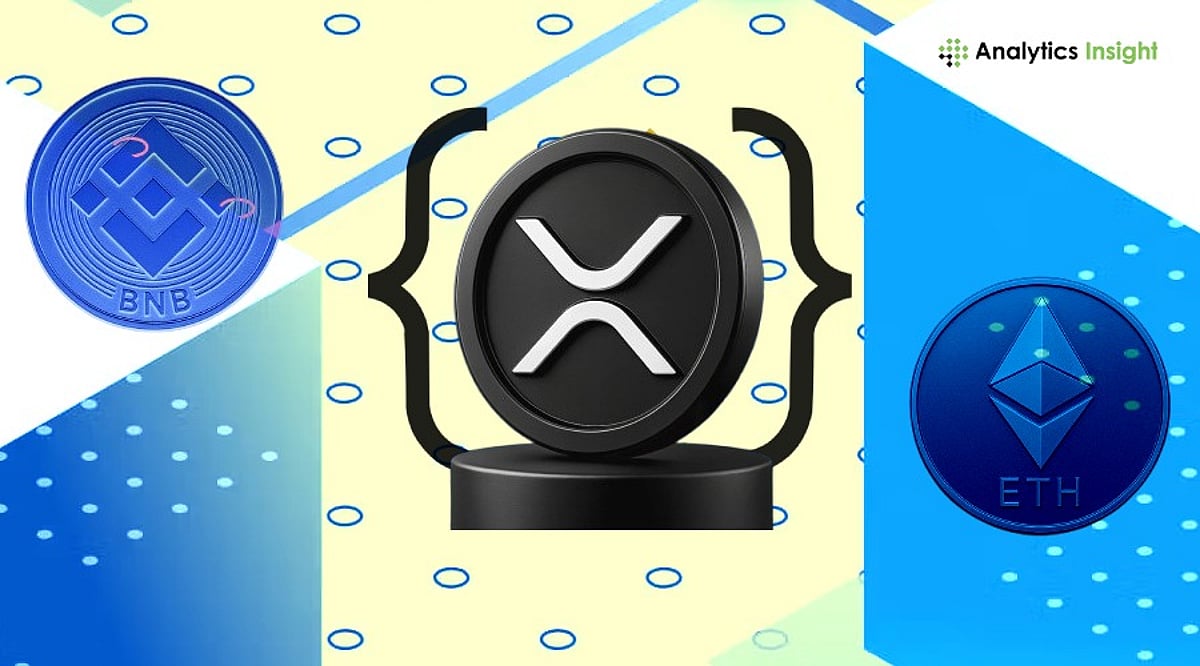
    XRP Ledger Hits $4B in Tokenized Assets: How It Challenges Ethereum and BNB Chain

    The XRP Ledger (XRPL) has achieved a remarkable milestone, with the value of tokenized assets on its network surpassing $4 billion. This represents a dramatic increase from approximately $150 million just one year ago, placing XRPL among the top blockchain networks for real-world asset tokenization and intensifying competition with established platforms like Ethereum and BNB Chain.

    Tokenized assets are blockchain-based digital representations of real-world financial instruments, such as bonds, stocks, real estate, and investment funds. The rapid growth on XRPL underscores rising institutional confidence in blockchain technology for faster, cheaper, and more transparent financial transactions.

    Explosive Growth in One Year

    The leap from $150 million to over $4 billion within twelve months highlights the accelerating adoption of XRPL for tokenization. This growth is driven by a combination of institutional interest, network upgrades, and enterprise demand. Financial institutions are increasingly turning to XRPL for its low transaction costs, high-speed settlement, and robust infrastructure.

    Institutional Adoption Fuels Expansion

    Major financial organizations are leveraging XRPL to tokenize government bonds, treasury products, and investment funds. The network’s established reputation in digital payments, combined with its efficient design, makes it an attractive choice for institutions seeking modern financial solutions. This institutional push has been a key catalyst for the surge in tokenized asset value.

    Network Improvements Support Growth

    Recent upgrades, including the introduction of Multi-Purpose Tokens (MPTs), have enhanced XRPL’s ability to support regulated financial assets and enterprise requirements. These features simplify the issuance and management of digital versions of traditional financial products. Stronger stablecoin activity and broader ecosystem participation further bolster the network’s appeal.

    Implications for Ethereum

    Ethereum remains the dominant force in asset tokenization, thanks to its extensive developer community, smart contract capabilities, and mature DeFi ecosystem. However, the rise of XRPL introduces new competition. Some enterprises may prefer XRPL for its lower fees and faster settlement, especially for regulated financial products. Despite this, Ethereum’s rich ecosystem of interconnected applications, such as lending platforms and decentralized exchanges, gives it a significant advantage.

    Implications for BNB Chain

    BNB Chain has built its reputation on low fees, fast speeds, and a strong retail user base, making it a hub for DeFi and trading. The growth of XRPL is likely to increase competition in institutional tokenization rather than retail finance. BNB Chain remains well-positioned for consumer-focused blockchain services, while XRPL attracts enterprise-level, regulated asset tokenization. Both networks may serve distinct niches in a multi-chain future.

    A Multi-Chain Future

    This milestone does not signal the end of Ethereum’s leadership. Instead, the blockchain industry is moving toward a multi-chain landscape where different networks excel in different areas. Ethereum leads in smart contracts and DeFi, XRPL strengthens in enterprise payments and regulated tokenization, and BNB Chain continues to serve retail users. This specialization allows each network to thrive without displacing others.

    Why This Matters

    XRPL reaching $4 billion in tokenized assets is a clear signal that Wall Street seeks specialized, high-performance infrastructure for digital finance. The rapid growth demonstrates that the market is ready for a multi-chain ecosystem where each network dominates specific use cases, rather than a single platform ruling everything.

    FAQs

    1. What are tokenized assets?
    Tokenized assets are blockchain-based digital certificates representing real-world financial products like bonds, stocks, and real estate, enabling seamless digital trading.

    2. Why has XRP Ledger grown so quickly?
    Rapid growth is driven by institutional adoption, ultra-low transaction costs, high-speed settlements, and network upgrades tailored for enterprise compliance.

    3. Will XRP Ledger replace Ethereum?
    No. Ethereum remains dominant in DApps and smart contracts, while XRPL carves out a specialized niche in regulated institutional finance.

    4. How is BNB Chain affected?
    BNB Chain stays strong in retail finance and community apps, while XRPL attracts the enterprise side of tokenized asset markets.

    5. Why is real-world tokenization important?
    Tokenization modernizes finance with 24/7 market access, fractional ownership, lower costs, instant settlements, and full transparency on a public ledger.

  • Bitcoin ETF Inflows Top $21M, Strike Launches BTC Loan, CASHCAT Soars 718%: Crypto News Roundup

    Bitcoin ETF Inflows Top $21M, Strike Launches BTC Loan, CASHCAT Soars 718%: Crypto News Roundup

    The crypto market witnessed a flurry of activity as Bitcoin spot ETFs saw renewed inflows, Strike introduced a novel Bitcoin-backed loan product, and the meme token CASHCAT skyrocketed over 718%. Meanwhile, crypto hacking losses declined year-on-year, and Solana’s tokenized asset ecosystem continued to expand.

    Bitcoin ETF Inflows Hit $21.44 Million

    According to data from SoSoValue, Bitcoin spot ETFs recorded a total net inflow of $21.44 million yesterday. BlackRock’s IBIT led the charge with a daily net inflow of $54.80 million, bringing its historical net inflow to an impressive $60.26 billion. On the other hand, Fidelity’s FBTC experienced the highest net outflow of $24.92 million, with its total historical net inflow standing at $10.23 billion. The total net asset value of Bitcoin spot ETFs now stands at $77.26 billion, representing an ETF net asset ratio of 6.05%, with cumulative net inflows reaching $51.37 billion.

    Strike Introduces Bitcoin-Backed Loan Without Liquidations

    Strike has launched a new Bitcoin-backed loan product designed to address forced liquidations during periods of extreme market volatility. The key innovation is the removal of margin calls and price-based liquidations, allowing customers to retain their Bitcoin collateral even if the cryptocurrency experiences a sharp decline. However, this added protection comes with trade-offs: borrowers face higher interest rates, shorter repayment periods, and strict repayment schedules. The loans offer a maximum loan-to-value ratio of 45% with six-month terms, and interest rates ranging from approximately 10.7% to 14.2%. While Bitcoin price drops won’t trigger liquidation, borrowers must make timely repayments or risk losing their collateral.

    CASHCAT Surges 718% in 24 Hours

    CASHCAT, a meme token operating on Robinhood’s newly introduced Layer 2 blockchain, surged more than 718% in 24 hours, pushing its market capitalization above $68 million, according to CoinMarketCap DexScan data from July 8. The token’s price stabilized near $0.08365, representing a 962.81% increase since tracking began, with a liquidity volume of approximately $2.6 million. CoinMarketCap lists CASHCAT as unverified, and its social media channels are marked as third-party. Blockchain tracker Lookonchain identified a wallet ending in 0xDE4C that turned $838 into over $1 million. The trader purchased 15.04 million CASHCAT tokens about 20 days ago, selling 13.5 million for a profit of roughly $917,600, with the remaining 1.5 million tokens valued at approximately $133,700.

    Crypto Hack Losses Decline 47% in First Half of 2026

    Losses from crypto exploits fell 46.8% year-on-year to $1.32 billion in the first half of 2026, according to security firm CertiK. However, second-quarter exploit losses rose 59% from the previous quarter to $807.5 million, with attacks becoming more frequent and damaging per event. CertiK cautioned that the lower total does not indicate a safer market. Blockchain intelligence firm TRM Labs recorded 207 crypto hacks in the first half, more than double the 83 incidents from a year earlier—the highest count TRM has measured across any six-month period. Smart contract exploits accounted for 125 incidents (60% of the total) but caused limited financial damage, while infrastructure and operational compromises represented about 15% of incidents but roughly 76% of losses.

    Solana’s Tokenized Assets Reach $8.7 Billion

    In its latest report updated as of July 6, 2026, RWA.xyz revealed that the transfer volume of Solana’s tokenized assets more than doubled previous records amid higher circulation on the blockchain. The total value of assets distributed on the network increased by 36.27% during the same period, reaching $3.48 billion. Network data indicated that the spot volume of tokenized assets on decentralized exchanges grew from $2.69 billion in Q1 2026 to $5.7 billion in Q2 2026.

  • XRP Network Activity Surges 70% as Investors Accumulate During Price Dip

    XRP Network Activity Surges 70% as Investors Accumulate During Price Dip

    XRP is showing fresh signs of strength even as its market price remains under pressure. Recent blockchain data reveals a sharp increase in network activity over the past few weeks, suggesting sustained investor confidence and continued accumulation at lower price levels.

    Daily Active Addresses Jump More Than 70%

    On-chain data shows active wallet addresses surged by over 70% in a short period, rising from approximately 23,000 to nearly 39,500 active addresses by the end of June. This increase indicates higher use of the network for transfers, payments, and other blockchain activity, signaling healthy demand despite falling prices.

    Transaction Volume Continues to Rise

    Daily transactions on the XRP Ledger now stand close to 2.7 million, building on earlier growth reported by Messari, which showed a 35.3% quarter-over-quarter increase in Q1 2026. High transaction volume reflects strong network demand, even as XRP price struggles.

    Investors Start Buying During Market Dip

    The price drop has created buying opportunities for traders. Market data shows strong dip-buying behavior, with investors purchasing tokens during weakness. Meanwhile, open interest in XRP derivatives has dropped sharply, reducing leveraged positions and creating a healthier market structure with lower liquidation risks.

    Ripple Ecosystem Expands Through RLUSD Growth

    Ripple’s stablecoin RLUSD has reached a market capitalization of around $340 million, boosting overall activity within the XRP Ledger ecosystem. Additionally, tokenized real-world assets on the network have surpassed $461 million in total value, indicating rising institutional interest.

    Whale Activity Creates Mixed Market Signals

    Despite strong network data, some analysts note mixed signals from large XRP holders. Active addresses rose roughly 36% over two weeks, but some whales moved substantial tokens to exchanges, suggesting possible selling activity. Analysts remain cautious even as network numbers improve.

    Market Confidence Remains Strong

    The divergence between XRP price and blockchain activity is unusual. While price hovers near the $1 support level, network usage continues to rise across wallet activity, transaction volumes, and ecosystem growth. This decoupling suggests institutional network utility is distancing from speculative market panic.

    XRP Could Prepare for Bigger Move Ahead

    Many analysts believe XRP may be gearing up for a major move. A break above the $1.10 resistance zone could trigger fresh bullish momentum. Key signals include 70%+ growth in active addresses, 2.7 million daily transactions, $340 million RLUSD market cap, and over $461 million in tokenized assets.

    FAQs

    Why has XRP network activity increased recently?

    Network activity surged as investors and institutions accumulate tokens at lower prices, utilizing the XRP Ledger for cross-border transactions and decentralized infrastructure despite the price slump.

    How much did XRP active addresses grow?

    Daily active addresses skyrocketed by over 70%, expanding from about 23,000 to nearly 39,500 wallets.

    How many transactions does the XRP Ledger process daily?

    The network sustains approximately 2.7 million transactions per day, building on 35.3% quarter-over-quarter growth reported by Messari.

    What is RLUSD and why is it important?

    RLUSD is Ripple’s native dollar-pegged stablecoin with a $340 million market cap, driving utility and liquidity into the XRP Ledger ecosystem.

    Can the XRP price recover soon?

    While whale transfers to exchanges warrant caution, the divergence between soaring on-chain usage and depressed prices suggests a strong accumulation floor. Breaking past $1.10 resistance could ignite an aggressive recovery.

    Disclaimer: This article is for informational purposes only and does not constitute investment advice. Cryptocurrencies are highly volatile and may result in loss of capital. Always conduct your own research before investing.

  • Tech Roundup: Samsung Stocks Dip, Indian Startups Thrive Under Digital Rules, Robinhood Unveils Blockchain, and Anthropic Releases Claude Sonnet 5

    Tech Roundup: Samsung Stocks Dip, Indian Startups Thrive Under Digital Rules, Robinhood Unveils Blockchain, and Anthropic Releases Claude Sonnet 5

    Good morning! Here’s your quick roundup of today’s biggest developments across semiconductors, digital policy, enterprise AI, cryptocurrency, and generative AI.

    What’s New Today

    • South Korean technology stocks took a hit after a Nasdaq-led selloff.
    • India’s digital regulatory measures are helping startups scale rapidly.
    • Ford is hiring hundreds of engineers despite the rise of AI automation.
    • Robinhood launched its own public blockchain for tokenized assets.
    • Anthropic released Claude Sonnet 5 with improved agentic AI capabilities.

    Fast-Track Insights

    • Samsung and SK Hynix shares decline amid global tech weakness.
    • India’s digital ecosystem strengthens startup growth.
    • Ford adds 350 engineers to support product development.
    • Robinhood launches a public blockchain for tokenized assets.
    • Claude Sonnet 5 expands AI capabilities with API access.

    Samsung and SK Hynix Shares Fall After Global Tech Selloff

    Samsung Electronics and SK Hynix stocks fell amid an acute selloff in U.S. tech shares on the Nasdaq. The downturn followed rising concerns about valuations tied to artificial intelligence and semiconductor demand. Analysts, however, maintain a long-term growth outlook, citing sustained investments in AI infrastructure and memory chips.

    India’s Digital Rules Strengthen Startup Ecosystem

    An Oxford Economics report indicates that India’s evolving digital regulations are helping startups expand by boosting consumer trust, encouraging innovation, and creating a more predictable business environment. The study highlights that balanced policies are supporting investment, digital adoption, and economic growth, enabling emerging companies to compete more effectively in the technology sector.

    Ford Hires Engineers Despite AI-Driven Automation

    Ford is looking to hire approximately 350 engineers, recognizing that AI cannot fully replace human skills in automobile production. Experts note that while AI can increase productivity, it is not a substitute for human engineering creativity, product design, and safety expertise. The hiring drive reflects the lasting importance of human talent in modern vehicle development.

    Robinhood Launches Public Blockchain for Tokenized Assets

    Robinhood has introduced its own public blockchain, deepening its engagement with digital assets. The blockchain will support tokenized financial products and fast transactions. This development marks a significant step for Robinhood in the blockchain space.

    Claude Sonnet 5 Brings More Agentic AI Capabilities

    Anthropic has launched Claude Sonnet 5, its latest AI model featuring enhanced reasoning, coding, planning, and tool-use capabilities. The model is available through the Claude API, Claude Code, Amazon Bedrock, Google Cloud, and other platforms. Sonnet 5 now serves as the default model for Free and Pro users, while offering developers improved performance at lower API pricing.