

Tag: tokenized funds

  • Ripple Backs ZILO and Licuido to Advance Tokenized Fund Infrastructure on XRP Ledger

    Ripple Backs ZILO and Licuido to Advance Tokenized Fund Infrastructure on XRP Ledger

    Ripple has made strategic investments in ZILO and Licuido, two UK-based firms, to accelerate its tokenized capital markets strategy. The deals aim to strengthen regulated fund issuance, settlement, trading, custody, and collateral mobility on the XRP Ledger (XRPL) and Ripple’s institutional infrastructure.

    Ripple Expands Regulated Fund Infrastructure

    ZILO specializes in transfer agency and fund administration systems for asset managers, wealth firms, and custodians. Its technology creates regulated digital ownership records for investors holding tokenized fund shares. The company recently announced raising $58.7 million in total equity funding. Ripple expects ZILO’s systems to support the creation and management of tokenized share classes on XRPL.

    Licuido operates an investment platform regulated by the UK Financial Conduct Authority (FCA). It facilitates the issuance, distribution, trading, and collateral use of traditional financial assets in digital form. Together, the two companies cover the full lifecycle of a tokenized fund, including investor recordkeeping, issuance, distribution, liquidity, settlement, and collateral movement.

    Nigel Khakoo, Ripple’s senior vice president for trading and markets, highlighted the importance of these investments: “ZILO and Licuido provide core capabilities that are essential to further scaling this shift: regulated digital transfer agency infrastructure and liquidity for issuance and collateral mobility.” He added, “This is just the beginning of the journey, and we see a substantial opportunity to bring huge efficiencies to the investment sector over the next decade.”

    Tokenized Funds Move Toward XRPL

    Ripple plans to integrate both companies’ services with its broader institutional infrastructure. This integration would allow financial firms to issue assets, hold them in custody, transfer ownership, and use them as collateral seamlessly. The model aims to reduce idle collateral in traditional fund structures, where newly issued fund units often face delays before becoming available for trading or financing.

    Ripple wants tokenized funds to be usable immediately upon issuance, connecting fund administration records with trading, custody, payments, and collateral systems through XRPL. This follows Ripple’s partnership with Aviva Investors, which announced plans in February to develop tokenized fund structures on XRPL. The ledger provides built-in tools for asset issuance, trading, escrow, and regulated financial activity.

    Additionally, Ripple recently launched Ripple Mint, a platform for institutional asset issuance and management. It supports the creation, redemption, and administration of tokenized securities, stablecoins, fund units, bonds, and other assets.

    RLUSD Supports Onchain Settlement

    RLUSD, Ripple’s stablecoin, is expected to serve as the cash side of transactions involving tokenized assets. Ripple plans to use RLUSD for delivery-versus-payment settlement, where the asset and payment transfer simultaneously. This reduces settlement risk, which occurs when one side of a transaction completes before the other. RLUSD already supports liquidity and settlement services for several tokenized investment products.

    XRP Price Remains Under Pressure

    Despite these positive developments, XRP’s near-term price action remains weak. XRP traded near $1.06 after falling 1.05% over 24 hours. The token has broken below a late-July symmetrical triangle and trades under key moving averages. The 50-day exponential moving average near $1.09 now acts as immediate resistance. Key support sits between $1.05 and $1.06; a break below that could bring the psychological $1.00 level into play, while a move above $1.09 may ease selling pressure.

    The broader regulatory environment also remains uncertain. The US Senate faces limited time to advance the CLARITY Act before its August recess, while lawmakers continue debating market structure, ethics, stablecoin, and consumer protection rules.

  • Bitcoin ETFs See $84M Outflows, XLM Volume Surges 303%, SHIB Drops 5%: Crypto News Roundup

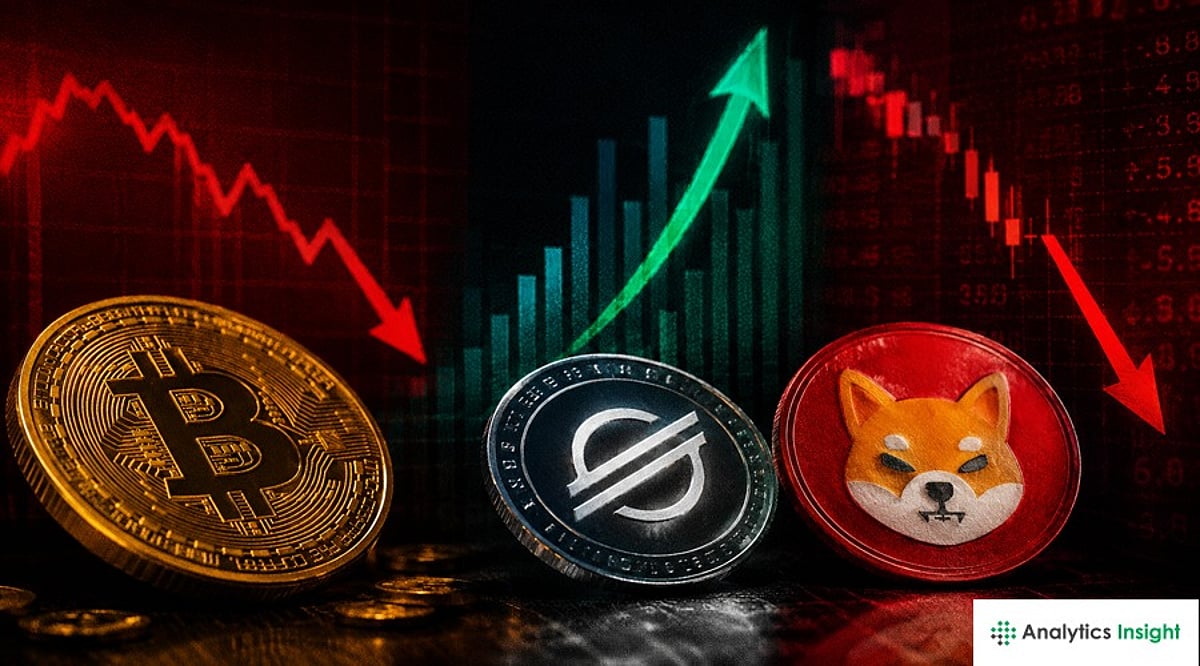
    Bitcoin ETFs See $84M Outflows, XLM Volume Surges 303%, SHIB Drops 5%: Crypto News Roundup

    The cryptocurrency market experienced a series of significant developments, with Bitcoin spot ETFs recording substantial outflows, Stellar’s XLM seeing a massive volume surge, and Shiba Inu declining despite increased token burns. Meanwhile, Malaysia intensified its crackdown on illegal crypto mining, and JPMorgan’s tokenized Ethereum fund expanded sharply.

    Bitcoin ETFs See $84 Million in Outflows

    According to SoSoValue, Bitcoin spot ETFs recorded a total net outflow of $84.86 million yesterday. The Grayscale Bitcoin Mini Trust ETF (BTC) was the only fund to see net inflows, attracting $52.83 million, bringing its total historical net inflow to $2.49 billion. In contrast, Grayscale’s GBTC experienced the highest daily net outflow at $63.69 million, with its total historical net outflow now standing at $27.28 billion. The total net asset value of Bitcoin spot ETFs is $75.34 billion, with an ETF net asset ratio of 6.05% and a historical cumulative net inflow of $51.28 billion.

    Stellar (XLM) Volume Surges 303%

    XLM’s trading volume surged more than 303% in the last 24 hours to $873 million, according to CoinMarketCap. This spike is particularly notable as most major cryptocurrencies, including Bitcoin and Ethereum, saw volume declines of 20% and 15% respectively. The primary catalyst appears to be Stellar’s deployment of the Zipper (Protocol 27) upgrade on mainnet, which introduces authentication delegation for custom accounts and address-bound smart contract credentials. This marks the third major protocol upgrade for Stellar in 2026.

    Malaysia Seizes 75,000 Crypto Mining Rigs

    The Malaysian government has intensified its crackdown on illegal crypto mining, seizing more than 75,000 machines used for cryptocurrency mining. Deputy Home Minister Datuk Seri Dr. Shamsul Anuar disclosed that law enforcement agencies conducted 3,049 raids between 2022 and May 2026, resulting in the detention of 629 individuals linked to illegal mining infrastructure. The operations were coordinated between the Royal Malaysia Police and the state utility company Tenaga Nasional Berhad, targeting electricity theft associated with mining operations.

    JPMorgan’s Tokenized Ethereum Fund Grows 250%

    JPMorgan Asset Management has deployed approximately $800 million across two tokenized funds on the public Ethereum blockchain. The funds, MONY and JLTXX, operate on the bank’s Kinexys digital-asset platform. The newer fund, JLTXX, launched on May 13, 2026, with a $100 million seed investment and grew 250% in its first month, reaching about $695 million by early July 2026. This represents one of the largest tokenized fund deployments by a major US bank.

    Shiba Inu Drops 5% Despite Token Burn

    Shiba Inu fell more than 5% over the past week, indicating that reduced supply alone has not been sufficient to shift market sentiment. According to Shibburn data, the SHIB community burned over 152 million tokens in the past week, lifting the weekly burn rate by 55.77%. A significant portion came from a single-day burn of 110 million SHIB, the network’s largest in six months. Since launch, the community has burned more than 410 trillion SHIB, leaving approximately 585.6 trillion tokens in circulation.

    Key Takeaways

    • Bitcoin ETFs: Total net outflows of $84.86 million, with Grayscale’s GBTC leading outflows at $63.69 million.
    • Stellar (XLM): Volume surged 303% to $873 million following the Zipper Protocol 27 upgrade.
    • Malaysia crackdown: Over 75,000 mining rigs seized and 629 individuals detained in 3,049 raids.
    • JPMorgan tokenized funds: $800 million deployed across two Ethereum-based funds, with JLTXX growing 250% in its first month.
    • Shiba Inu: Fell 5% despite burning over 152 million SHIB in a week, highlighting weak market sentiment.
  • USDGO Stablecoin Supply Crosses $500M as Institutional Adoption Surges

    USDGO Stablecoin Supply Crosses $500M as Institutional Adoption Surges

    USDGO, an enterprise-focused US dollar stablecoin, has surpassed $500 million in circulating supply within four months of its launch, signaling rapid institutional adoption. The token is issued by Anchorage Digital Bank, the first federally chartered crypto bank in the United States, with branding and distribution managed by Hong Kong-listed OSL Group.

    Enterprise Demand Drives Expansion

    Unlike stablecoins that initially grew through cryptocurrency trading, USDGO targets corporate treasury operations, cross-border payments, international transfers, and institutional liquidity. The token crossed $100 million roughly two months after its February launch, and the new $500 million milestone reflects accelerating enterprise demand.

    OSL Group reports partnerships with payment providers and financial infrastructure firms across developed and emerging markets, supporting large-value transfers and commercial payment flows. The ecosystem also includes fiat on- and off-ramp services, digital asset trading, and blockchain and custody partners for secure asset management and high-volume settlement.

    Tokenized Funds Bolster Reserves

    USDGO maintains one-to-one backing through high-quality liquid assets including cash and short-term US government securities. Its reserve structure now incorporates tokenized money market funds from major financial institutions:

    • JPMorgan’s JLTXX tokenized money market fund
    • BlackRock’s BUIDL tokenized liquidity fund
    • Goldman Sachs’ STBXX reserve fund

    These funds connect USDGO’s reserve management with traditional finance products, demonstrating how legacy institutions are increasingly participating in blockchain-based settlement systems. Tokenized money market products alongside cash deposits and Treasury securities enhance liquidity, transparency, and operational efficiency for institutional users.

    Stablecoins Enter Mainstream Finance

    USDGO’s growth reflects a broader trend of stablecoins expanding beyond crypto markets into payments, settlement, treasury management, and liquidity operations. A larger circulating supply enables more transactions and deeper market liquidity, which is critical for enterprise users processing commercial payments and managing international fund transfers.

    Regulatory clarity and institutional participation are intensifying competition among stablecoin issuers. Enterprise-focused projects like USDGO aim to become preferred settlement assets for corporations and payment networks, combining fixed-value stability with regulated issuance and tokenized reserve assets.

    What’s Next?

    With supply growth exceeding $500 million, USDGO is positioned to play a key role in digital finance. Businesses should monitor adoption across treasury management, cross-border transfers, and institutional liquidity as regulated blockchain settlement gains traction.