
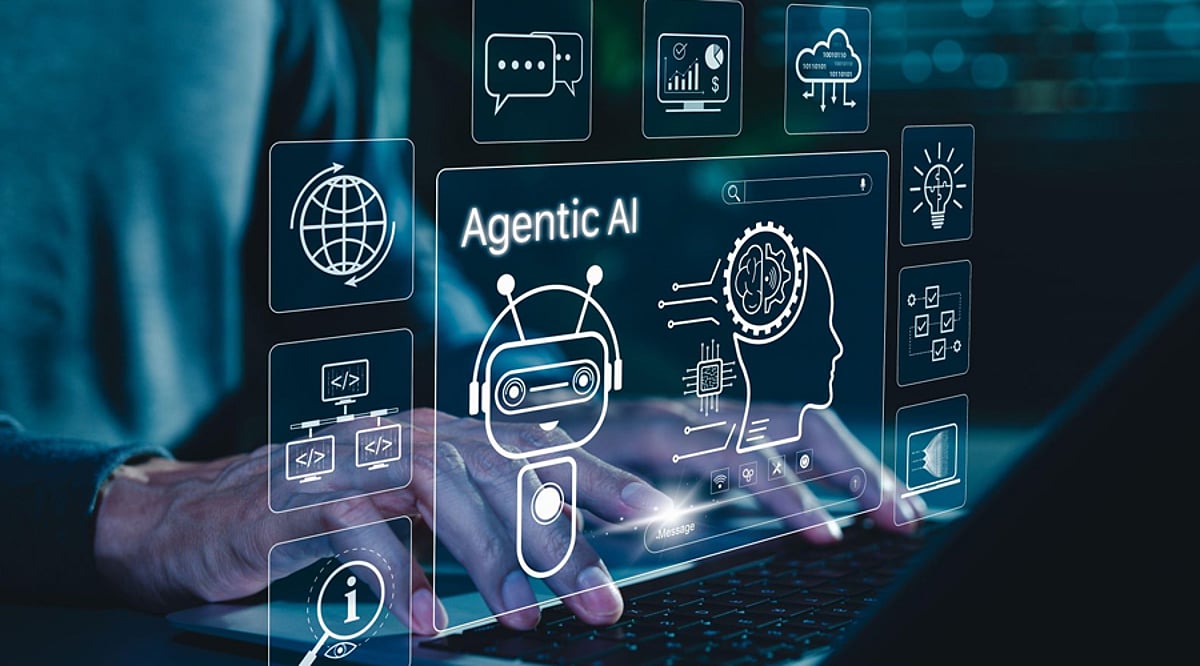
AI agents are evolving rapidly beyond simple chatbots. They can now plan tasks, use tools, interact with software, and take actions with minimal human oversight. While this autonomy brings powerful business benefits, it also introduces significant safety and security challenges. Here are ten essential things to understand about AI agents and their risks.
1. AI Agents Are Becoming More Autonomous
Unlike traditional chatbots that only generate responses, AI agents can perform actions on behalf of users — sending messages, accessing data, updating systems, or interacting with applications. This ability to act makes them powerful, but any wrong decision can have real-world consequences.
2. Excessive Permissions Can Be Dangerous
To complete tasks, an AI agent needs access to tools and data. However, granting more permissions than necessary increases potential damage if something goes wrong. Limiting access to only what the agent truly needs is a fundamental safety principle.
3. Prompt Injection Is a Major Risk
Attackers can embed malicious instructions in webpages, documents, or other content an agent processes. The agent may unknowingly follow those instructions instead of its intended task, leading to data exposure, unwanted actions, or workflow manipulation.
4. Sensitive Data Needs Strong Protection
Agents often work with emails, documents, customer records, and other sensitive information. Poor access controls or insecure integrations can expose that data. Businesses must enforce robust authentication, permissions, monitoring, and data-handling policies before deploying agents across sensitive systems.
5. Agents Can Make Mistakes
AI agents can misinterpret instructions, select the wrong tool, or produce incorrect information. When allowed to act automatically, even a small error can escalate. Human review is especially critical for high-impact decisions and irreversible operations.
6. Tool Use Creates New Attack Paths
An agent connected to dozens of tools effectively opens multiple entry points into an organization’s systems. A compromised integration can become a stepping stone to other resources. Security teams must assess not only the AI model but every tool and connection around it.
7. Limited Human Oversight Increases Risk
As agents become more independent, the safety net of human intervention shrinks. Without proper guardrails, agents may act on flawed reasoning or external manipulation. Designing for human-in-the-loop workflows for critical tasks is essential.
8. Lack of Transparency in Decision-Making
Many AI agents operate as black boxes, making it difficult to understand why a particular action was taken. This opacity complicates debugging, auditing, and accountability — especially when mistakes occur.
9. Compliance and Regulatory Risks
Using AI agents in regulated industries (healthcare, finance, etc.) raises compliance concerns. Agents must adhere to data protection laws (like GDPR or CCPA) and industry-specific regulations. Non-compliance can lead to fines and reputational damage.
10. Need for Continuous Monitoring and Updating
AI agents operate in dynamic environments. Their models, permissions, and integrations require regular updates and monitoring to address emerging threats. A static deployment is a security liability.
Understanding these risks is the first step toward deploying AI agents safely. Businesses should adopt a risk-aware strategy, implement strict access controls, and maintain human oversight to harness the power of AI agents without compromising security.